
Miriam Myth Meaning & Symbolism
A prophetess leads with song, challenges authority, and is struck with leprosy before being healed, embodying the voice and shadow of the feminine divine.
The Tale of Miriam
Listen. In the time of crushing bricks and bitter herbs, when the air tasted of dust and despair, there was a sound beneath the groans. It was the quiet rhythm of a sister’s heart, watching. Her name was Miriam. As a child, she placed her baby brother in a basket of reeds and bullrushes, setting him adrift on the life-giving, treacherous Nile, her eyes the only guardians he had. She followed, a shadow on the bank, until the daughter of Pharaoh drew him from the water. With a courage that was both cunning and pure, Miriam stepped from the reeds and spoke: “Shall I find a Hebrew nurse for the child?” And so, she returned the boy to his own mother’s arms. The deliverance began with a sister’s watchful love.
Years flowed like the great river. The God of the ancestors heard the cries, and with a mighty hand and outstretched arm, brought plagues and parted seas. On the far shore of the Red Sea, with Pharaoh’s chariots swallowed by the returning waters, a silence fell—a collective breath held. Then, Miriam took her timbrel, a simple frame-drum, and all the women followed her. She began to dance, her feet pounding the sand in triumphant rhythm. She lifted her voice, not in a whisper, but in a soaring, prophetic cry that became the first scripture of freedom: “Sing to the YHWH, for he has triumphed gloriously; horse and rider he has thrown into the sea!” The desert echoed with the song of women, led by Miriam the prophetess.
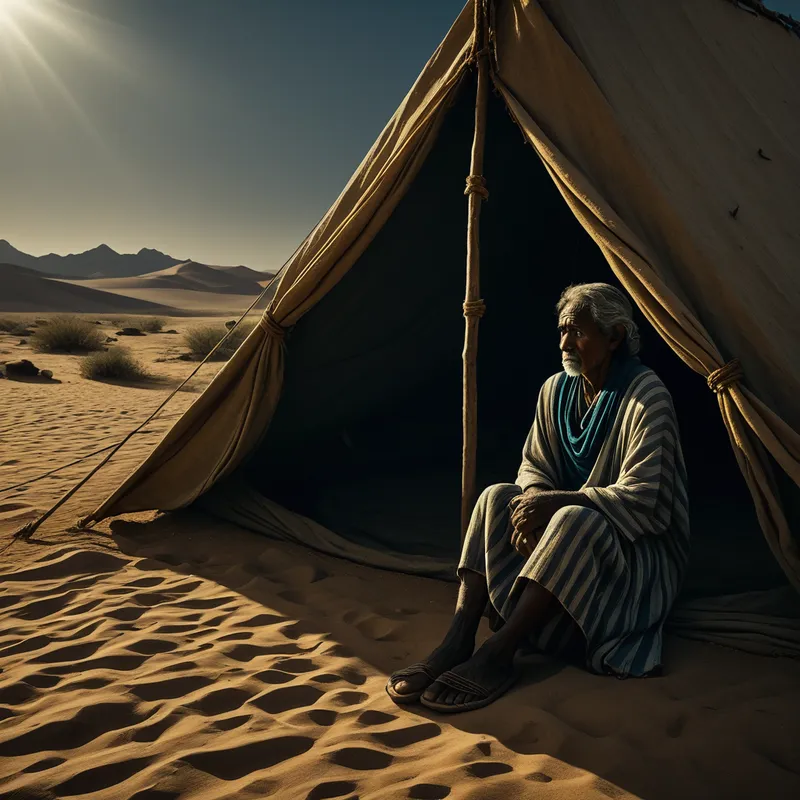
But the wilderness is a crucible. The people grumbled for water, for the familiar flesh-pots of Egypt. At a place called Hazeroth, a different thirst arose—a thirst for recognition. Miriam, with her brother Aaron, spoke against Moses: “Has YHWH spoken only through Moses? Has he not spoken through us also?” The words hung in the dry air, a challenge not just to a brother, but to the structure of authority itself. And the cloud of the divine presence descended, stern and terrible. When it lifted, Miriam was stricken. Her skin was turned tzara’at, white as snow. She was cast outside the camp, into a seven-day exile of utter isolation.
The camp did not move. For seven days, the entire journey of Israel halted, waiting for Miriam to be brought back in. Moses, the leader she had challenged, cried out to God for her healing: “Please, God, heal her now.” After seven days, she was restored, and the people moved on from the desert of paralysis. The final memory the scriptures give is her death and burial at Kadesh. And with her passing, the text notes simply, “the people had no water.” The well that had followed Israel, the legend says, was Miriam’s Well, and it dried up with her. The song ended, and the thirst returned.
Cultural Origins & Context
The figure of Miriam emerges from the foundational epic of the Hebrew people: the Exodus. Her story is woven into the Torah, primarily in the books of Exodus and Numbers. She is not the central lawgiver like Moses, nor the high priest like Aaron, but her role is pivotal and archetypal. Her narrative was preserved and transmitted orally for generations before being codified by priestly and deuteronomic editors, likely during the monarchy and exile periods.
Her societal function is multifaceted. As a prophetess, she represents the legitimate, ecstatic channel of divine communication, a role acknowledged for women like Deborah and Huldah. Her leadership at the Red Sea establishes the song and dance of victory as a communal, female-led liturgical act. The tradition of “Miriam’s Well,” found in later Midrash, assigns to her the nurturing, sustaining principle of water in the barren desert, making her a folk symbol of survival and providence. Her challenge to Moses, however, serves a critical canonical function: it underscores the supreme and unique prophetic authority of Moses while simultaneously documenting the peril of challenging that divinely ordained structure, a lesson for a community defining its hierarchy and orthodoxy.
Symbolic Architecture
Miriam embodies the archetypal power of the Voice and the Source. She is not the law (Moses) nor the ritual (Aaron); she is the inspired utterance, the life-giving flow, and the critical conscience.
The prophetess does not write the covenant; she sings it into being. Her authority flows, like water, from a deep, underground spring.
Her timbrel and song symbolize creative, ecstatic liberation—the body and soul rejoicing as one after a passage through the depths. The tzara’at and exile, however, reveal the shadow of the voice. In the biblical symbolic world, skin disease often manifests as a physical sign of a spiritual or social rupture—here, the “leprous” stain of envy, pride, or rebellious speech. Her exile is a profound symbol of purification. The halted camp shows that the community’s health is tied to hers; her alienation is a collective wound. The seven-day period mirrors a ritual of mourning and cleansing, after which she is reintegrated, transformed.
The final, poignant symbol is Miriam’s Well. It represents the psychic nourishment that the feminine, prophetic, and nurturing principle provides to the collective psyche. When that principle is lost or silenced, the inner desert returns. She is the water that follows, the song that sustains, and the voice that must sometimes be exiled to be purified.

The Dreamer's Resonance
To dream of Miriam is to dream of one’s own voice and its consequences. It may manifest as dreaming of singing powerfully, only to find one’s mouth filling with sand. Or of discovering a hidden, bubbling spring in a barren landscape. It may appear as a dream of confronting a powerful, patriarchal figure (a boss, a father, an internal “Moses”) with a long-suppressed truth, followed by a dream-state of intense isolation—being put “outside the camp.”
Somatically, this process engages the throat chakra and the skin. The dreamer may be working through issues of expression, the fear of being “struck dumb” or punished for speaking out, or the feeling of being “unclean” or unacceptable after asserting themselves. The healing phase of the dream might involve immersion in water or the gentle application of balm. The Miriam pattern in dreams signals a profound negotiation between the desire for authentic, powerful self-expression and the internalized fears of community rejection and personal imperfection.

Alchemical Translation
The myth of Miriam models the alchemical process of solve et coagula—dissolve and coagulate—for the modern psyche seeking individuation. First, one must find the song (the prima materia), that unique, joyful expression of liberation after surviving a great trial. This is the conscious identification of one’s gift and voice.
The wilderness journey cannot begin until the song at the shore is fully sung. Celebration is the first act of sovereignty.
Then comes the necessary rebellion, the challenging of the inner “Moses”—the dominant, perhaps tyrannical, ruling principle of the psyche (the ego, the superego, an old identity). This challenge is essential for growth but carries the risk of the shadow eruption: the “leprosy” of exposed pride, bitter envy, or harsh judgment that temporarily ostracizes a part of the self. This is the solve, the dissolution of the old persona.
The critical stage is the exile and purification. The psyche must allow this conflicted, “stricken” part to sit in silence outside the camp. The entire inner life may grind to a halt during this period of introspection and healing. One must not abandon this exiled self but, like the camp, wait for it. The healing is a divine grace (“Heal her now, O God”) that comes through humble petition and the passage of ritual time.
Finally, the coagula: the return of the healed voice, now humbler and integrated, and the recognition that this voice is itself a well—a sustaining, nourishing source for the entire personality. The individuated self learns that its authentic expression is not just a tool for rebellion but the very water that prevents the soul from dying of thirst in the long deserts of life.
Associated Symbols
Explore related symbols from the CaleaDream lexicon: