
Bari Gongju the Abandoned Princess Myth Meaning & Symbolism
A king abandons his seventh daughter. She later journeys to the underworld to save her parents, becoming a psychopomp goddess of the dead.
The Tale of Bari Gongju the Abandoned Princess
Hear now the tale of the one cast away, the princess of the empty space. In a time when kings were gods and the will of heaven was written in the birth of sons, a queen bore child after child. Six times she labored, and six times the cry of a prince filled the palace halls. The kingdom was secure, the lineage assured. Yet the heavens are not done with their weaving.
A seventh child stirred in the royal womb. The court diviners cast their shells and read the signs: a daughter. A seventh daughter, when six sons already stood in line. To the king, this was not a blessing but a mockery, an excess with no purpose. When the queen’s pains came and the child was born a girl, the king’s heart turned to cold stone. “She is Bari Gongju,” he declared. “Let her be thrown away.”
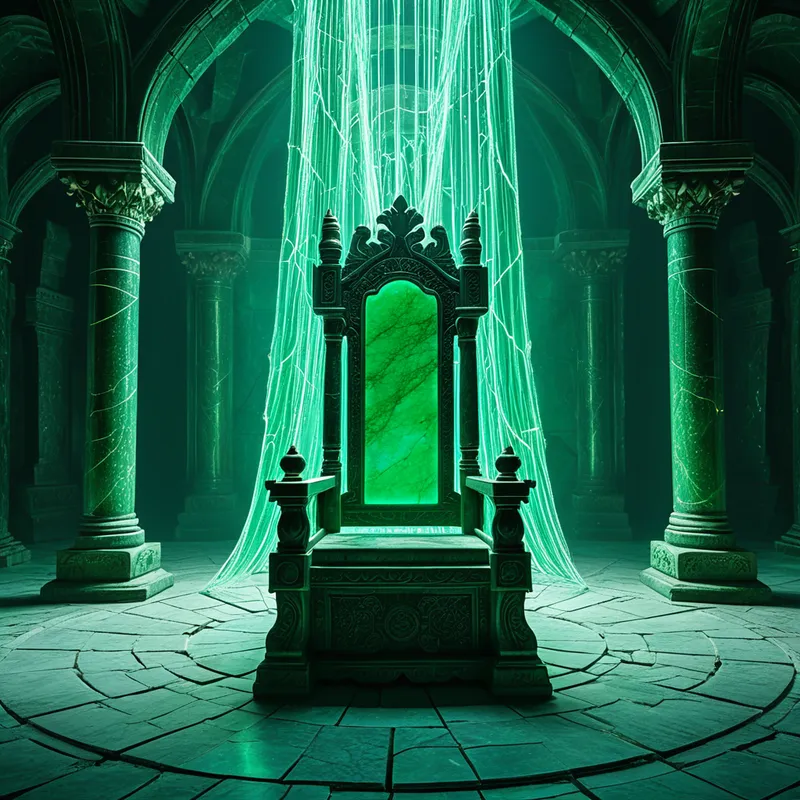
And so, the newborn princess, still unnamed, was placed inside a jade box and cast into the depths of the palace lotus pond. The waters closed over her, a royal tomb of mere inches. But the world beneath the waves is not silent. The Yongwang, the dragon kings of the ocean, heard the injustice. They sent their servants, who lifted the box from the mud and carried it on currents of fate to a distant shore. There, an old, childless couple found the box. Opening it, they found not treasure, but a greater gift: a living child. They named her Bari, “the abandoned one,” and raised her with a love her blood father never knew.
Years flowed like a river. In the palace, a great shadow fell. The king and queen were struck by a wasting sickness, a curse from the heavens for the king’s hubris. Shamans and physicians were powerless. A final oracle spoke: only the Water of Life from the land of the dead, Yomi, could cure them. And only a child they had cast away could fetch it.
Messengers scoured the land and found Bari, now a woman of strength and grace, living humbly with her adoptive parents. When she heard the plea—not of love, but of desperate need—a choice lay before her. The wound of abandonment was fresh, yet the call of destiny was louder. She chose to go.
Her journey was a descent through the layers of the world. She crossed the River of the Dead, where the ferryman demanded a song of her sorrow as payment. She traversed plains of ash and mountains of regret, facing guardians and trials that tested not her strength, but her compassion. In the deepest hall of Yeomna, the king of the dead, she arrived, not as a warrior, but as a supplicant.
Yeomna was moved not by threat, but by her story—the ultimate orphan who chose to save those who orphaned her. He set a final test: she must tend to the restless, forgotten dead for three hundred years. Without hesitation, Bari agreed. For centuries, she became a mother to ghosts, singing lullabies to lost souls, binding their wounds with strips of her own robe. When the time was fulfilled, Yeomna granted her the sacred Water of Life and more: he gave her the seeds of seven sons, making her the mother of the first Mudang shamans.
She returned to the world of light. Her parents lay on their deathbeds. With the water, she revived them. The king, seeing the daughter he had discarded as his savior and a goddess, was shattered by remorse. But Bari’s work was not done. Having drunk from the cup of the underworld, she could not fully return to the land of the living. She became a psychopomp, the divine abandoned one who guides all abandoned souls, the princess who rules the threshold between life and death.

Cultural Origins & Context
The myth of Bari Gongju is not a relic of a forgotten court but the living, breathing heart of Muism and Korean folk religion. It is the central Muga, or sacred narrative, performed by Mudang during the great Gut rituals, particularly those for the dead (Jinogi Gut). Unlike state-sanctioned myths that glorify dynastic founders, this is a story of the people, told by and for women—the female shamans who were often marginalized themselves.
Its function was profound and practical. The ritual recitation of Bari’s journey was believed to actually guide the soul of the deceased through the perils of the afterlife, with the Mudang channeling Bari herself. The myth thus served as a cosmic map and a profound social commentary. It gave voice to the pain of daughters in a rigidly patrilineal society, transformed the “worthless” female child into the most essential savior, and provided a mythic framework for understanding suffering, abandonment, and the ultimate power of chosen compassion over inherited obligation.
Symbolic Architecture
At its core, Bari’s story is an archetypal map of the psyche’s journey through the wound of rejection toward a consciousness that encompasses life and death.
The most profound healing often begins with the wound that was meant to destroy you.
The Abandonment is the primal fracture, the ego’s birth into a world that declares it invalid. The jade box symbolizes both the coffin of the old, rejected self and the protective womb of potential from which a new, destined self must emerge. Bari’s Journey to the underworld is the necessary descent into the personal and collective unconscious. She does not go to slay a monster, but to serve the dead—to consciously integrate the forgotten, painful, and rejected aspects of the self (the ghosts).
The Water of Life is the ultimate symbol of this integration. It is not found in the heights of heaven, but in the depths of the underworld. It represents the transformative insight and life-force that can only be accessed by facing, and tending to, one’s deepest sufferings and losses. Her marriage to the underworld king and birth of shamans signifies that the conscious ego, having made the descent, now holds the mediating power (Mudang) between opposites: life and death, conscious and unconscious, rejected and revered.

The Dreamer's Resonance
When the pattern of Bari Gongju stirs in the modern dreamer, it signals a profound initiation through the archetype of the Orphan. One may dream of being thrust into a container (a box, a room, a car) and cast adrift, or of discovering a hidden, neglected child in a basement or attic—the abandoned inner child. Dreams of searching for a specific, life-giving elixir in a labyrinthine, subterranean landscape point directly to this mythic complex.
Somatically, this can feel like a hollowing out, a deep fatigue or illness that medicine cannot touch—mirroring the king’s curse. It is the psyche’s way of forcing a crisis that demands a descent. The process is one of re-parenting the self. The dream-ego is called to do what Bari did: to go back for the parts of the self that were deemed unacceptable and left behind, not with rage, but with the steadfast, nurturing commitment she showed the underworld ghosts. The resolution in dreams often comes not as a triumphant return to the old life, but as the acquisition of a new role—becoming a guide, a healer, or finding a sense of purpose born directly from the wound.
Alchemical Translation
The alchemy of Bari Gongju is the transmutation of the lead of rejection into the gold of sacred purpose. It models the individuation process with stark clarity.
The path to the Self requires a willing descent into the very place from which you were once expelled.
The first stage, abandonment (nigredo), is the necessary darkening, the confrontation with the shadow of one’s own origins and the world’s cruel judgments. The king’s act represents the one-sidedness of the ruling conscious attitude (patriarchal, utilitarian) that must be overthrown by the neglected feminine principle (relatedness, compassion, connection to the unconscious).
The second stage, the journey and service (albedo), is the purification. Bari does not fight the underworld; she serves it. Psychologically, this is the conscious, patient tending to the complexes, traumas, and “ghosts” in the inner world. It is the hard, unglamorous work of therapy, introspection, and holding space for one’s own pain. The 300-year service signifies that this is not a quick fix but a fundamental reorientation of the personality.
The final stage, return with the elixir (rubedo), is the integration. The Water of Life heals the parental figures—symbolically healing one’s internalized authority and ancestral wounds. But Bari does not stay. Her final role as psychopomp represents the birth of the transcendent function. The individual is no longer identified solely with the healed orphan nor the returning hero, but becomes a vessel for a consciousness that can navigate between all states of being. They become a bridge for others, their authority earned not by birthright, but by the depth of their journey through the dark.
Associated Symbols
Explore related symbols from the CaleaDream lexicon:
- Abandoned — The core state of being cast out, which becomes the catalyst for the entire mythic journey and the source of ultimate spiritual authority.
- Water — Represents the unconscious, the amniotic fluid of rebirth in the jade box, the river to the underworld, and the transformative, healing Water of Life.
- Journey — The essential descent into the underworld, symbolizing the introspective process of confronting the deepest layers of the psyche and one's history.
- Healing — The ultimate goal and gift, achieved not through avoidance but through direct engagement with the source of sickness, both literal and psychic.
- Princess — The archetype of inherent value and potential that is unrecognized by the outer world, requiring a path of ordeal to realize its true, sovereign nature.
- Death — The realm of Yomi, representing the unconscious, the forgotten, and the necessary endings that precede profound renewal and understanding.
- Cup — The vessel that holds the Water of Life, symbolizing the receptive, containing psyche that can hold and administer the transformative elixir gained from the depths.
- Goddess — Bari Gongju's ultimate transformation into a divine psychopomp, representing the emergence of a transpersonal, guiding function from personal suffering.
- Mother — The dual aspect of the rejecting birth mother and Bari's own role as mother to ghosts and to the first shamans, representing the transformation of the nurturing archetype.
- Shadow — The underworld and its inhabitants embody the personal and collective shadow—the rejected, painful, and forgotten aspects that must be integrated for wholeness.
- Ritual — The myth is itself a ritual map, performed to guide souls, reflecting how personal descent and integration can become a structured, sacred process.
- Bridge — Bari becomes the living bridge between the world of the living and the dead, consciousness and the unconscious, symbolizing the ego's role as mediator after integration.