Memory: The Somatic Architecture of the Self
The Somatic Echo
It begins not as a thought, but as a texture. A weight in the chest, dense and cool like river stone. A phantom scent—old paper, ozone, damp earth—that has no source in the waking room. A sudden, inexplicable tightness in the jaw, or a tremor in the hands that feels borrowed from another time. This is memory’s true language: a somatic echo. Before the mind can narrate, before images coalesce into story, the body remembers. It holds the unprocessed ledger of a lifetime in its tissues—every suppressed grief, every unspoken joy, every boundary crossed. In dreams, this ledger opens. We do not simply recall; we are re-immersed. The dream of memory is not a playback but a re-encounter. The past is not dead data; it is a living, architectural force within the psyche, constantly restructuring the foundations of our present.
The Dreamer's Log
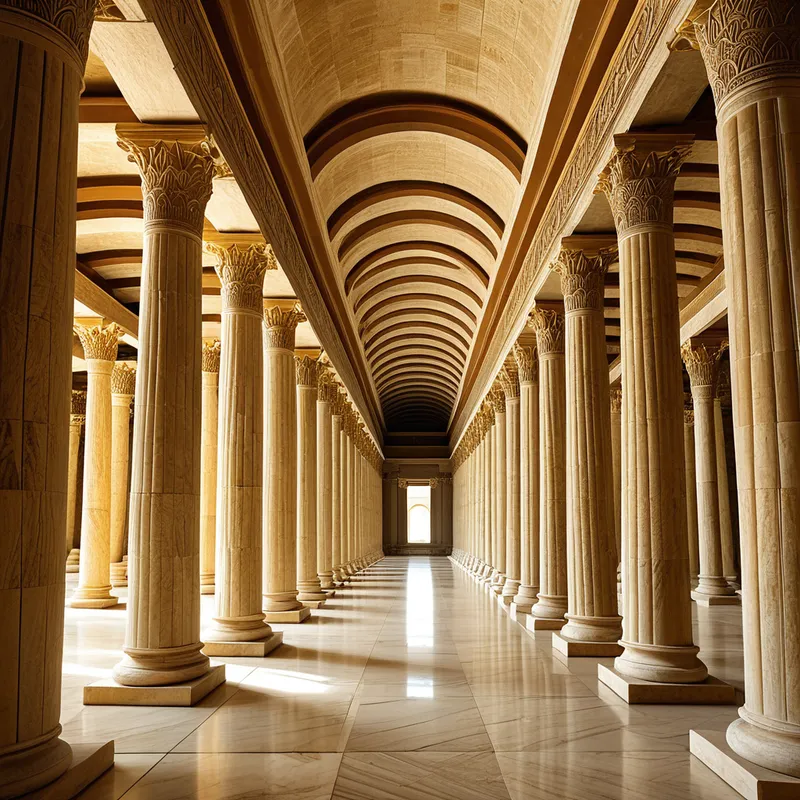
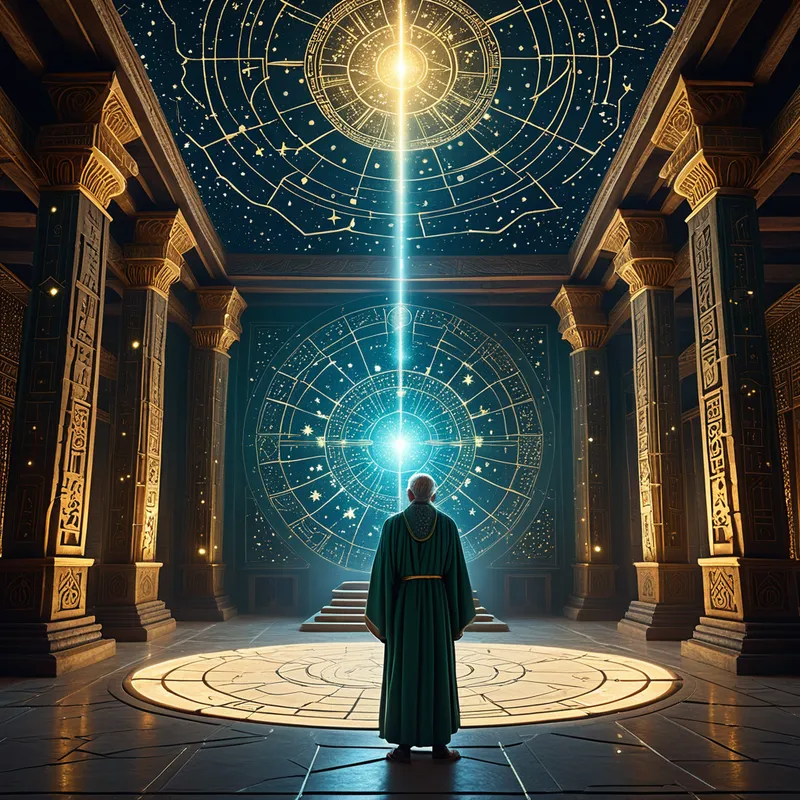
In the dream, I am in a library I know but have never seen. It is infinite, with wings that shift like mist. I am searching for a specific book, one with a blue leather spine and no title. I find it on a shelf that moments before was empty. I open it, but the pages are blank, save for a single, warm, humming glyph in the center of one leaf. I touch it, and a sorrow so vast and ancient floods me that I understand it is not mine alone.
This is the alchemy of retrieval: the blank page is not emptiness, but potential; the glyph is the somatic key, the feeling that unlocks a lineage of experience waiting to be integrated.

The False Lead
A dream of memory is not a simple directive to “remember something important you forgot.” That is the mind’s literalist trap, a scavenger hunt that leads only to frustration. Nor is it merely a sign of nostalgia or regret. The psyche is not a historian obsessed with factual accuracy; it is an alchemist concerned with emotional truth. A recurring dream of a childhood home is not necessarily about the house itself, but about the foundational self that was formed within its walls. The terror is not in the forgotten event, but in the disowned feeling that accompanied it, now rising like a ghost to claim its rightful place in your inner family system. To mistake the symbol for the solution is to remain a tourist in your own depths.
Psychological Architecture
To work with memory in dreams is to engage in the most profound shadow work: the re-membering of the exiled self. We are not unitary beings, but constellations of parts—inner children, protectors, firefighters, managers—each formed in response to moments too intense to fully process. These moments, and the parts born from them, are stored not as narratives, but as somatic-emotional complexes. A dream of a forgotten room is a part of your inner world, walled off and abandoned. A dream of a familiar person acting strangely is a disowned quality of your own, seeking recognition. The process of individuation here is one of re-collection. It is the slow, courageous act of descending into these internal chambers, not to judge or fix the exiled parts, but to witness them. To offer the presence that was missing in the original moment. This is where memory transforms from a haunting into a homecoming. The grief you feel upon waking is not a wound being reopened, but a fragment of your soul knocking at the door, asking to be let back in.
Mythic Resonance
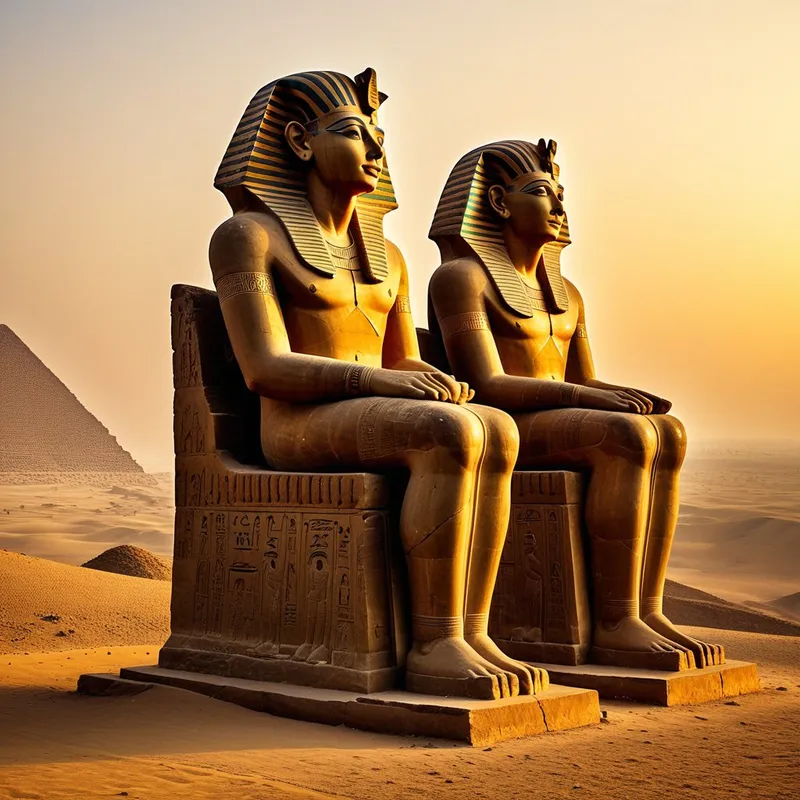
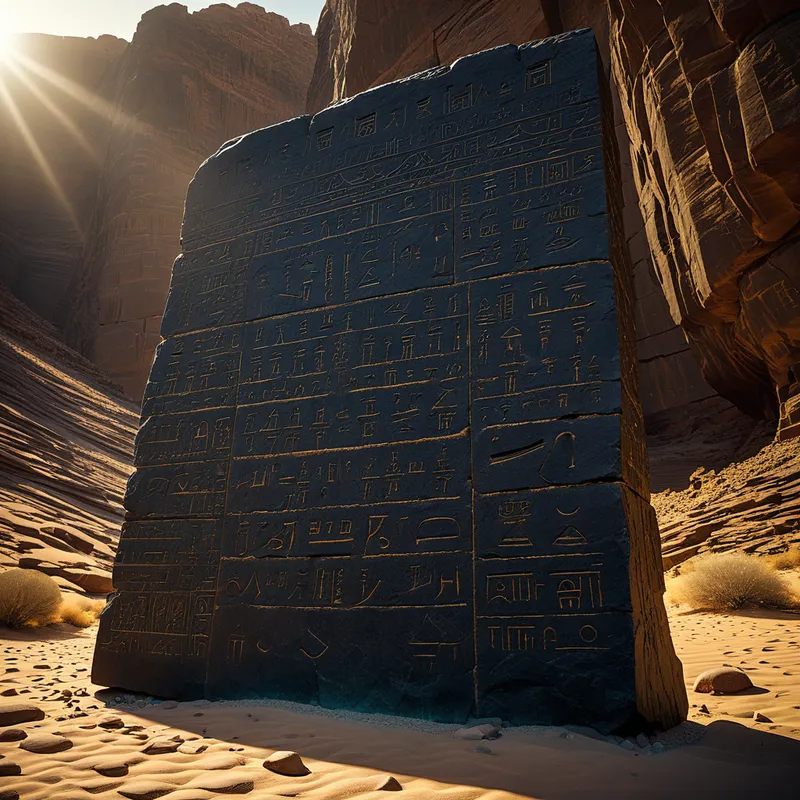
This universal process echoes in the myth of Osiris. The god-king is dismembered, his parts scattered across the land of Egypt. His wife, Isis, does not simply mourn; she embarks on a relentless journey of re-collection. She finds each piece and, through her magic, reconstitutes him, making him whole again—not as he was, but as a ruler of the underworld, transformed by his fragmentation. We are all Isis and Osiris. Our traumas, our forgotten joys, our suppressed instincts are the scattered pieces. The dreaming psyche is Isis, tirelessly seeking in the dark marshes and riverbeds of the unconscious. The act of dreaming a memory is the finding of a piece. The integration upon waking is the act of weaving it back into the living fabric of the self, not to return to a naive past, but to become sovereign over the full spectrum of our experience.
Symbolic Nodes
- Forgotten Rooms/Secret Passages: Undiscovered or walled-off aspects of the self, latent potentials or buried traumas.
- Old Photographs/Film Reels: Frozen moments in time; a sense of observing the self from a detached perspective; memories requiring a new interpretation.
- Ghosts/Phantoms: Unprocessed emotions or unresolved relationships; disowned parts of the personality.
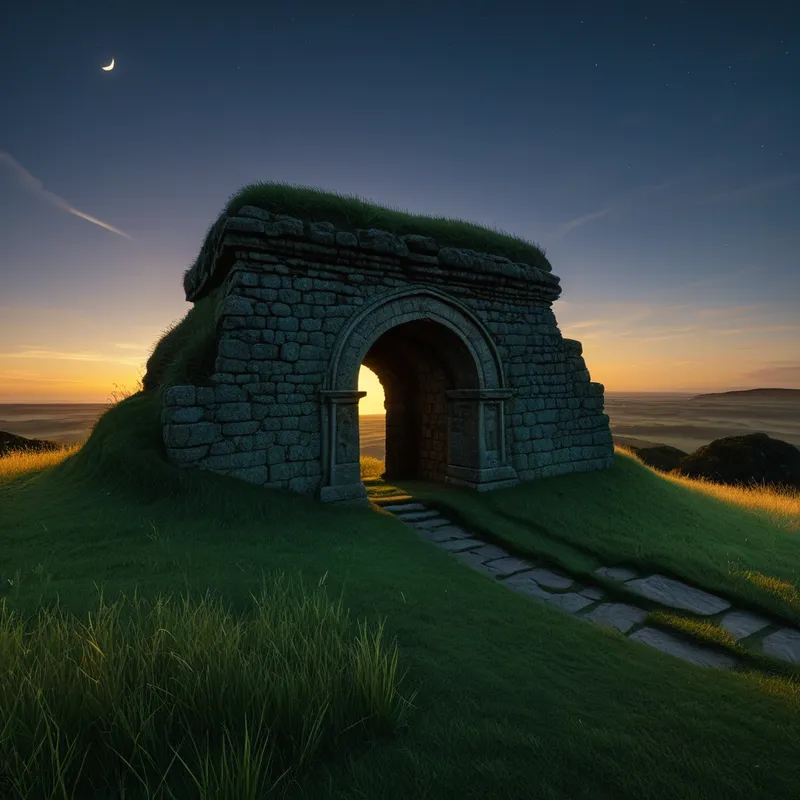
- Ancient or Crumbling Buildings: The foundational structures of the personality (beliefs, core wounds) undergoing inspection or necessary decay.
- Searching for a Lost Object: The quest for a missing part of the self, a lost quality (innocence, passion, voice).
- Re-living a Moment with Different Outcomes: The psyche’s attempt at renegotiation and healing, offering a chance for a new somatic conclusion.
Archetypal Resonance
The figure most active in the theme of Memory is The Magician Archetype. The Magician’s domain is the hidden structure of reality, the transformation of the base into the profound. In memory dreams, you are not a passive victim of recall but the active Magician, working in the laboratory of your own unconscious. The somatic echo is the raw prima materia—the dense, confusing feeling. The dream narrative is the crucible. The act of integration is the transmutation. The Shadow Magician appears when this power is used for illusion rather than truth: obsessively rewriting the past to cast oneself as hero or victim, manipulating internal narratives to avoid present pain, or using intellectual analysis as a shield against the raw feeling. The Magician’s gift is to see that memory is not a record, but a reagent; not a life sentence, but a tool for radical self-creation.
The Alchemical Process
The alchemy of memory is Solutio—the dissolving of rigid forms into their fluid essence. The pressure is the discomfort of the somatic echo, the grief or anxiety that feels attached to the past. The heat is the courageous, sustained attention we bring to it in the liminal space of the dream and the reflective space after waking. We do not fight the memory; we allow it to dissolve us. We let the old, crystalline story—“I was abandoned,” “I am flawed,” “That joy is lost”—be submerged in the waters of present-moment feeling and witness consciousness. In this dissolution, the factual details often become less important than the emotional truth they carried. The fixed identity formed around the memory softens. What reforms is not the original, rigid structure, but a new, more fluid understanding. The grief becomes wisdom. The terror becomes strength. The lost joy becomes a current of vitality available now. You are no longer built upon the memory; you integrate it as one thread in the tapestry of your becoming.

The Integration Protocol
Question 1: Upon waking with the memory-dream’s echo, where in your body does it resonate most strongly? Describe the sensation as if to someone who has never felt it before (e.g., “a cold, metallic humming behind the sternum,” “a dense, velvety sadness in the palms”).
Question 2: If the memory or figure in the dream were a part of your own inner family, what is its primary job? What is it protecting you from, or what long-lost quality is it holding for you?
Question 3: What one-word quality (e.g., resilience, innocence, fury, tenderness) feels buried or frozen within this dream-memory? What would it look like for that quality to flow freely in your current life?
Action 1 (Somatic Anchoring): When the dream’s feeling arises, do not chase the story. Place a hand gently on the area of the body where the echo resides. Breathe into that space for three full cycles. Imagine your breath as a soft, neutral light, not to change the sensation, but to offer it simple, present-moment awareness.
Action 2 (Unstructured Writing): Set a timer for seven minutes. Write from the perspective of the central object, place, or figure from your dream. Let it speak in the first person. Do not edit or direct. Ask: “What do you hold? What do you need me to know?” Let the voice of the exiled part find its language.
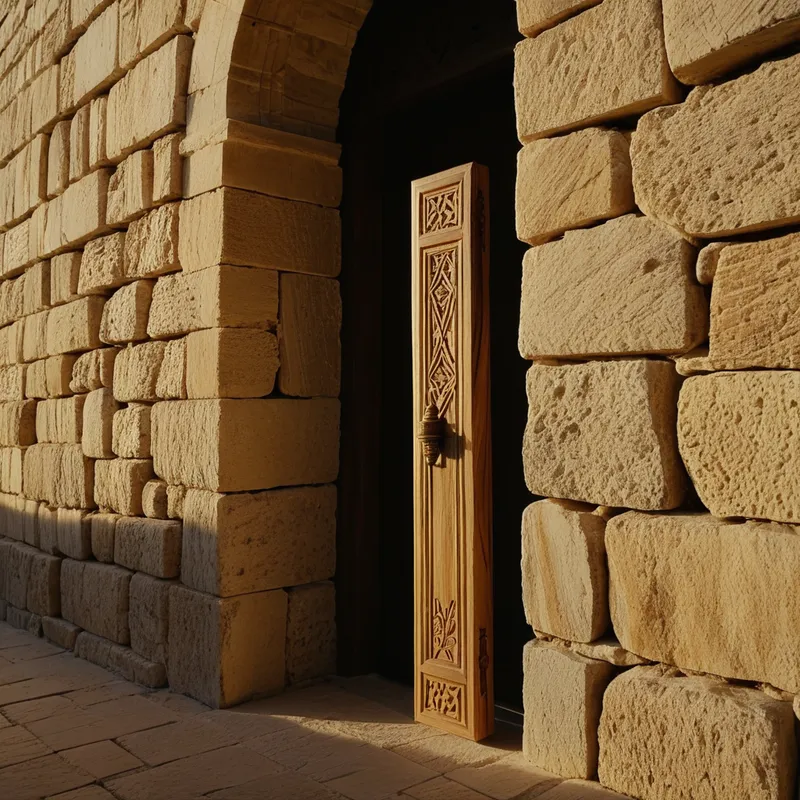
Action 3 (Ritual of Re-Membering): Find a small, natural object—a stone, a leaf, a piece of wood. This object now represents the memory or feeling from the dream. Go to a threshold—a doorway, a garden gate, the shore of a body of water. Acknowledge the object’s long exile. Then, consciously carry it across the threshold with you, symbolizing your choice to integrate this fragment back into the wholeness of your daily life. Keep the object on your altar or desk as a witness.
Final Validation
This work is not for the faint of heart. To re-member oneself is to consent to feel the full weight of what was once too heavy to carry. It is to meet the ghosts in your basement and offer them tea, not an exorcism. The disorientation, the grief, the strange nostalgia are testaments to the reality of your journey—you are not skimming the surface; you are diving for pearls in the dark. Trust the somatics. Trust the symbols. You are not being pulled backward by a dream of memory; you are being called forward by a part of yourself that finally believes you are strong enough, present enough, to hold it. In the alchemical library of your soul, no book is truly lost. Every blank page is an invitation to inscribe a new, more sovereign truth.