Emaki scrolls Myth Meaning & Symbolism
A myth where divine artisans weave the world's stories into living scrolls, binding time, memory, and fate into a sacred, unfolding narrative.
The Tale of Emaki scrolls
In the time before time was measured, when the world was a broth of mist and potential, the Yaoyorozu no Kami gathered. They had sung the islands into being, pulled the sun across the sky, and seeded the forests with spirit. Yet, a profound silence lingered at the heart of creation. The deeds of gods and mortals, the turning of seasons, the tragedies and triumphs—they occurred, shimmered, and then faded into the void like morning dew. The world had no memory.
From this silence arose Hiruko, and with him, Kotoamatsukami. They went to the primordial plain of Takamagahara and knelt before the great Amaterasu, her light illuminating their determined faces.
“Great Radiant One,” they spoke, their voices a harmony of chisel and whisper. “The world is beautiful, but it is fleeting. A story told is a story lost. We feel a great ache, the ache of the forgotten.”
Amaterasu, whose light revealed all things, understood the darkness that comes from being unseen. She plucked a thread from her own divine robe, a filament of solidified dawn. Hiruko caught it, and his hands began to work, not with hammer and anvil, but with a profound, pulling grace. He stretched the thread, spun it, and wove it upon a loom of wind and intention. It became a surface—not quite silk, not quite paper, but a receptive membrane of pure potential.
Then, Kotoamatsukami breathed upon it. His breath was not air, but the essence of name and form. Where it touched the woven dawn, pigment bloomed. Not mere color, but the soul of color: the deep green memory of the first pine, the sorrowful grey of twilight, the fierce red of courage spilled in battle.
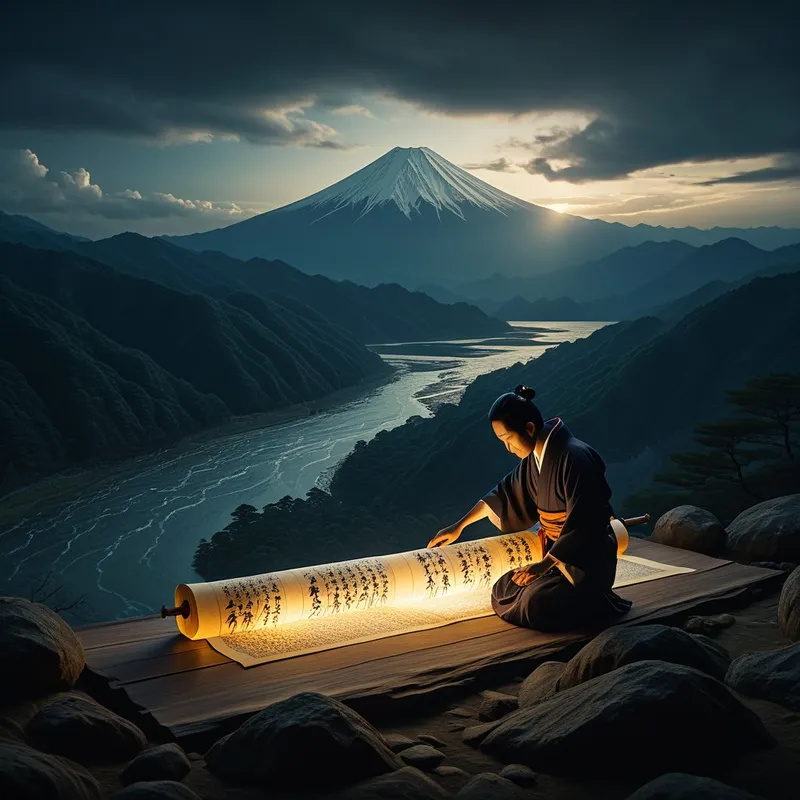
Together, they began the first scroll. Hiruko’s hands guided the flow, the composition, the sweep of line that captured the ma—the sacred pause—between moments. Kotoamatsukami gave voice to the images, and as he spoke, the pigments danced. They painted the quarrel of Susanoo and his exile, the tears of Amaterasu hiding in the Ama-no-Iwato, and her glorious return. They did not paint a single scene, but a flowing, continuous narrative. Time itself was captured, not as a frozen statue, but as a river flowing across the sacred surface.
The other kami gathered to watch. As the scroll unfurled, they did not see a mere record. They relived the events. They felt the tension, the despair, the jubilation. The scroll was not about the story; it was the story, alive and breathing. Amaterasu smiled, and her light glazed the finished work with a protective, eternal sheen. She decreed that these Emaki would be the vessels of the world’s soul, the physical memory of the spirit realm and the human world alike, to be guarded, added to, and revered.
Cultural Origins & Context
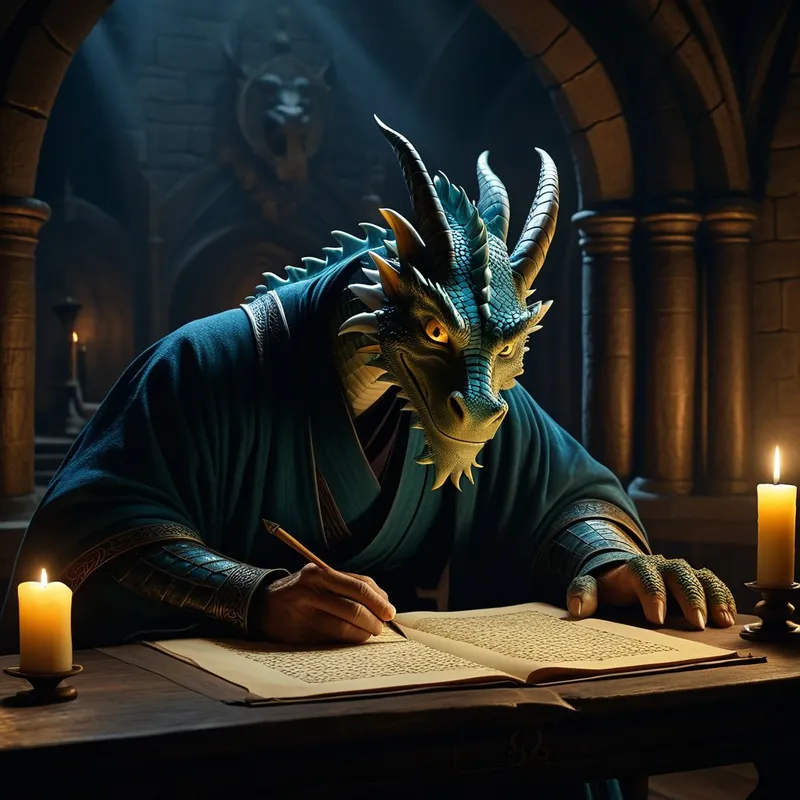
The myth of the Emaki’s divine origin is not found in a single, canonical text like the Kojiki, but is woven from the deeper cultural understanding of art as a sacred act. It emerges from the Shinto worldview where kami inhabit all things, including human crafts. The profound respect for the scribe, the painter, and the storyteller in ancient Japan was rooted in this belief: they were channels for a divine function.
Historically, Emaki flourished from the Heian to the Kamakura periods, often commissioned by the aristocracy or temples. They were not mere books but ritual objects. To "read" an Emaki like the Genji Monogatari Emaki or the Gaki Zōshi was a participatory, performative act. One would slowly unroll the scroll from right to left with one hand while rolling it closed with the other, literally pulling the narrative through time and space, becoming an active participant in the story’s revelation. The myth justifies this practice: the viewer is re-enacting the primordial unfurling of memory by Hiruko and Kotoamatsukami, communing with the living story.
Symbolic Architecture
At its core, the myth of the Emaki scrolls is a profound metaphor for consciousness itself. The blank, woven dawn represents the undifferentiated psyche, the unus mundus or the void of potential. The pigments of name and form are the archetypal forces that structure experience.
The scroll is the individuating psyche, where the chaos of event is transformed into the coherence of narrative.
The continuous, flowing format is key. Unlike a framed painting, the Emaki denies a single, totalizing perspective. It forces a sequential, temporal engagement. This symbolizes the nature of life and the psyche: we cannot see our whole story at once. We experience it moment by moment, rolling the past closed as we unfurl the future, yet the entire narrative exists simultaneously as a complete, but unseen, whole. The emaki itself becomes an shintai, a dwelling place for the kami of Memory and Meaning.
The Dreamer's Resonance
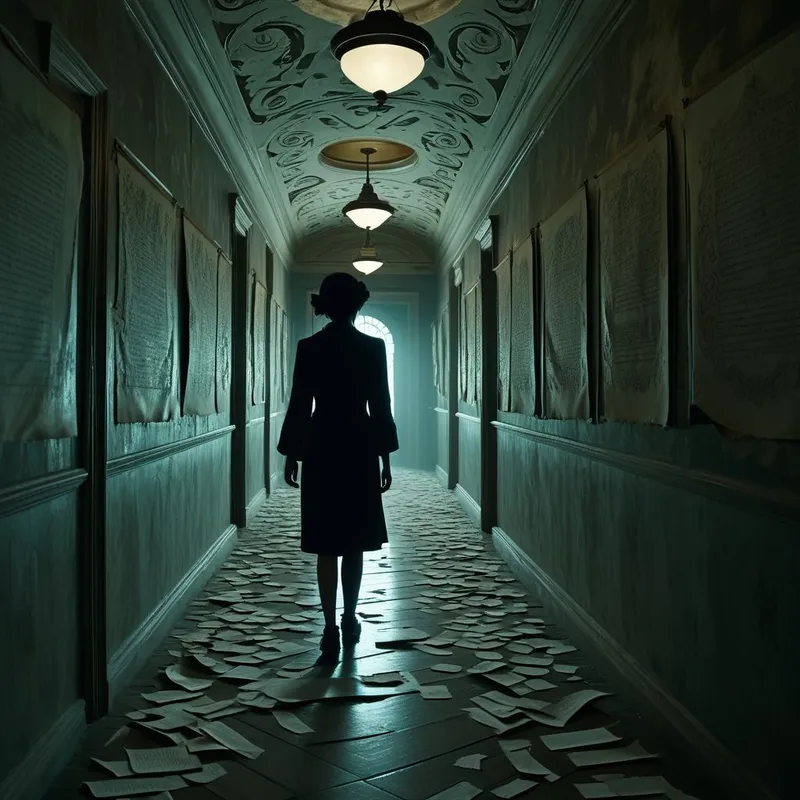
When the motif of the living scroll appears in modern dreams, it often signals a profound process of psychic integration and narrative reconstruction. The dreamer may find themselves in a library of endless scrolls, desperately searching for one with their name, or they may be trying to paint on a scroll where the images keep shifting.
Somatically, this can feel like a pressure in the hands and eyes—the tools of creation and perception. Psychologically, it indicates the ego confronting the Self’s grand narrative. A fragmented, torn scroll suggests trauma or a life story that feels incoherent. A scroll that unfurls into a blinding light may point to an encounter with numinous, overwhelming meaning. The act of carefully re-rolling the dream-scroll is as significant as unrolling it; it speaks to the need to consciously integrate understood experiences back into the fabric of the unconscious, to "put things in order" at a soul level.
Alchemical Translation
The alchemical journey modeled by this myth is the opus of creating a coherent Self from the massa confusa of lived experience. We are all Hiruko and Kotoamatsukami in our own inner sanctum.
The prima materia is the raw data of our lives: sensations, emotions, events, and memories. The separatio is the painful but necessary process of distinguishing these elements, giving them "name and form" through reflection and language (Kotoamatsukami’s breath). The coniunctio is the weaving of these separated elements into a flowing, meaningful narrative on the loom of our consciousness (Hiruko’s craft).
Individuation is not the creation of a static masterpiece, but the perpetual, sacred practice of unfurling and re-rolling one's own story, adding new pigments of understanding with each pass.
The modern individual often suffers from a fractured narrative—a sense of being a series of disconnected episodes. The myth instructs us to become the artisan of our own Emaki. We must take up the tools of introspection and creative expression to weave our disparate parts into a continuous scroll. We learn that our past is not a locked archive but a living section of a scroll still in progress. To heal is to repair the torn sections. To grow is to courageously unroll into the blank space, trusting that the pigments of our essence will emerge to guide the next scene. In doing so, we perform the divine function: we give memory to the world of our soul, and in that act of sacred remembrance, we become whole.
Associated Symbols
Explore related symbols from the CaleaDream lexicon: