
La Casa de los Espíritus Myth Meaning & Symbolism
A myth of a house built from memory and song, haunted by ancestral spirits, where the living must learn to listen to the whispers of the past.
The Tale of La Casa de los Espíritus
Listen, child, and let the trade wind carry you back. Before the maps were drawn, when the sea and the sky were in constant, whispered conversation, there was a builder named Eduán. He was not the first to come to the shore, but he was the first who understood that a home is not built against the world, but with it.
He did not cut the first tree he saw. He sat with the forest for a full cycle of the moon, listening. He heard the gossip of the parrots, the deep hum of the ceiba’s roots in the earth, the stories the waves told the sand. When he finally raised his machete, it was to a mahogany that had been struck by lightning—a tree that had already sung its death song. “I will give your song a new shape,” he whispered to the spirit within the wood.
And so he built. But he built not with nails of iron, which forget, but with pegs of hardened guayacán wood, which remember. He mixed the mortar not just with sand and water, but with the salt of his own sweat and the crushed petals of hibiscus, the color of blood and life. As he fitted each beam, he did not merely hammer; he sang. He sang the lullabies his great-grandmother had crooned, the work songs of the cane fields, the forgotten prayers to old gods whose names were now just a feeling in the breeze.
With each song, a strange thing happened. The house… absorbed. The grain of the wood seemed to shift, holding the melody. The plaster walls, when touched, felt warm, like skin holding a memory of sun. When Eduán placed the final rafter, a silence fell—a deep, listening silence. That night, as the first stars pierced the indigo sky, he saw them.
They were not frightening. They were like heat haze rising from the earth at noon, but shaped like people. A woman rocking in a chair that wasn’t there, humming. A man with hands calloused from nets, mending an invisible line. A child chasing a ghost of a firefly. They were the Espíritus, the ones whose songs were in the wood, whose sweat was in the mortar. The house was not haunted; it was alive. It had become a vessel, La Casa de los Espíritus.
Generations lived within its walls. To those who listened—who spoke respectfully to the corners at dusk, who left a little coffee in the cup for the unseen guest—the house whispered back. It would creak a warning before a storm. The scent of specific flowers would bloom in a room to comfort a grieving heart. But to those who came with arrogance, who tried to silence the past with loud modernities, the house grew cold. Whispers became wails in the night. Objects would move. A deep, profound loneliness would settle in the inhabitant’s chest, a feeling of being rootless in a place full of roots.
The ultimate test came generations later with a great-great-granddaughter, Marisela. She returned from distant cities, her head full of concrete dreams, and found the house old and strange. She wanted to strip its “old-fashioned” wood and paint its walls a sterile white. The first night she stayed, a tempest of memory struck—not from outside, but from within the very walls. She was flooded with sensations not her own: the ache of a back bent in the field, the sweet taste of a first mango, the terror of a hurricane’s approach, the joy of a child’s birth on the kitchen floor.
She fell to her knees, overwhelmed. And then, she did what Eduán had done. She did not fight. She listened. She began to hum a fragment of a song that rose unbidden to her lips. The storm within calmed. The air grew warm. She understood then that the house was not a prison of the past, but a bridge. Her task was not to live in the past, but to let the past live through her, to weave her own song into the eternal chorus held within the walls. She became the new listener, the new caregiver of the symphony of spirits, and the house sighed, content, its purpose fulfilled for another age.
Cultural Origins & Context
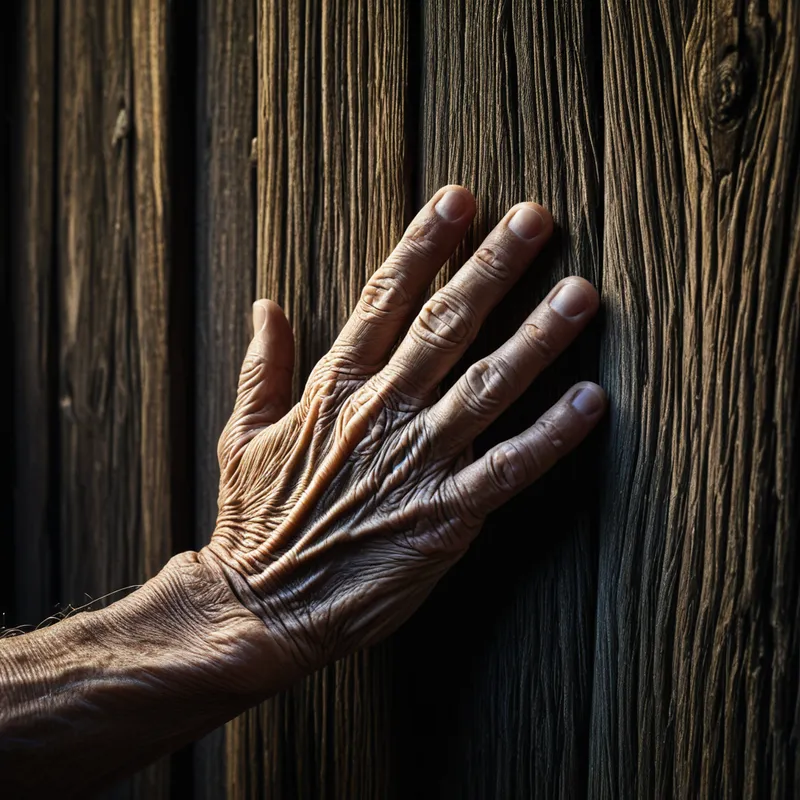
This myth, in its myriad local variations, is a cornerstone of oral tradition across the Spanish-speaking Caribbean, particularly in Puerto Rico, the Dominican Republic, and coastal regions. It is not a story confined to a single sacred text, but a living narrative told by los ancianos on front porches at dusk, a story used to teach children respect for their elders and their home. Its societal function is profound: it is a myth of cultural survival.
Born from the crucible of history—the violent confluence of Taíno, African, and European lineages—the myth addresses a central psychic wound: dislocation. Enslaved Africans were violently severed from their ancestral lands; Taíno peoples were displaced and decimated; European colonists often arrived as desperate exiles. In this context, the physical house becomes a desperate, magical attempt to create a permanent, spiritual anchor. The house is a fortress of memory against the erasing forces of time, slavery, and colonialism. It teaches that identity is not just carried in blood, but is embedded in place, in song, and in the active, respectful communion with those who came before. The myth was a way to explain the palpable, often comforting, presence of ancestors in daily life, legitimizing spiritual practices that syncretized African ancestor veneration, Taíno animism, and folk Catholicism.
Symbolic Architecture
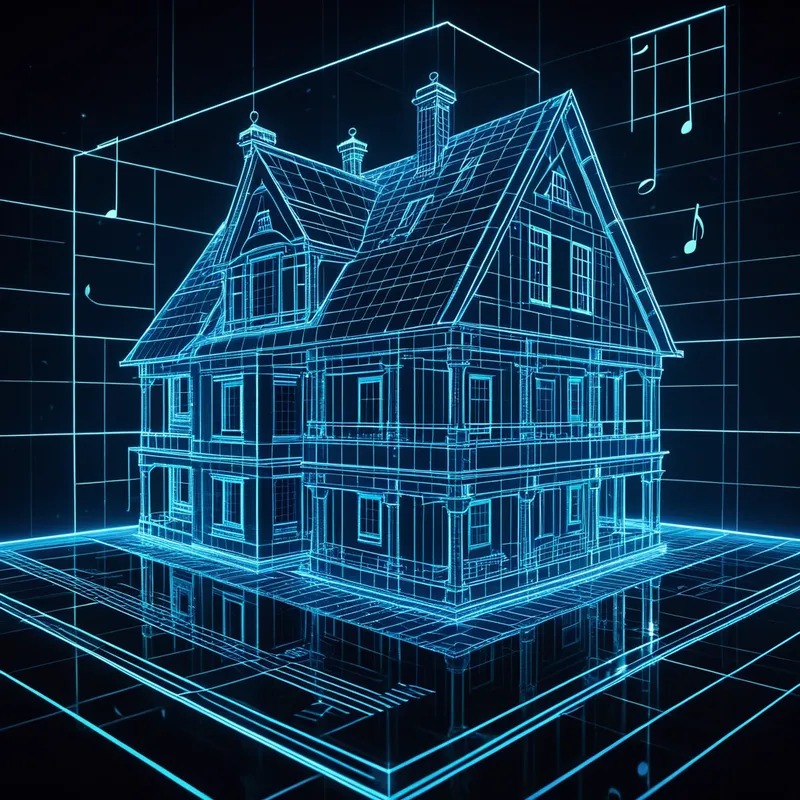
The myth presents a complete cosmology of the psyche. La Casa is the Self in its fullest Jungian sense. It is not the tidy, conscious ego (which would be a single, well-lit room), but the entire structure, from polished floorboards to dusty, spider-webbed attic, from solid foundation to restless, echoing basement.
The house built from sung wood is the psyche constructed from lived and inherited experience. Its ghosts are not invaders, but the foundation.
The building materials are critical. The lightning-struck mahogany represents trauma transformed into strength. The mortar mixed with sweat and blossoms signifies the alchemy of labor and beauty, struggle and joy, that creates a cohesive identity. The spirits are the autonomous complexes and ancestral imprints within the personal and collective unconscious. They are the patterns of behavior, the emotional legacies, the talents, and the wounds passed down.
Eduán, the builder, represents the conscious ego’s initial, respectful engagement with the unconscious raw material. Marisela’s journey is the later stage of development, where the modern ego, alienated from its depths, must face the storm of what it has ignored or tried to whitewash. Her triumph is not exorcism, but integration. She does not evict the spirits; she learns their language and adds her own verse to their song.
The Dreamer's Resonance
When this myth pattern erupts in modern dreams, it signals a critical phase of psychic integration. To dream of discovering strange, ancestral rooms in one’s own house, or of a home that is impossibly vast and inhabited by unknown yet familiar figures, is to dream of La Casa.
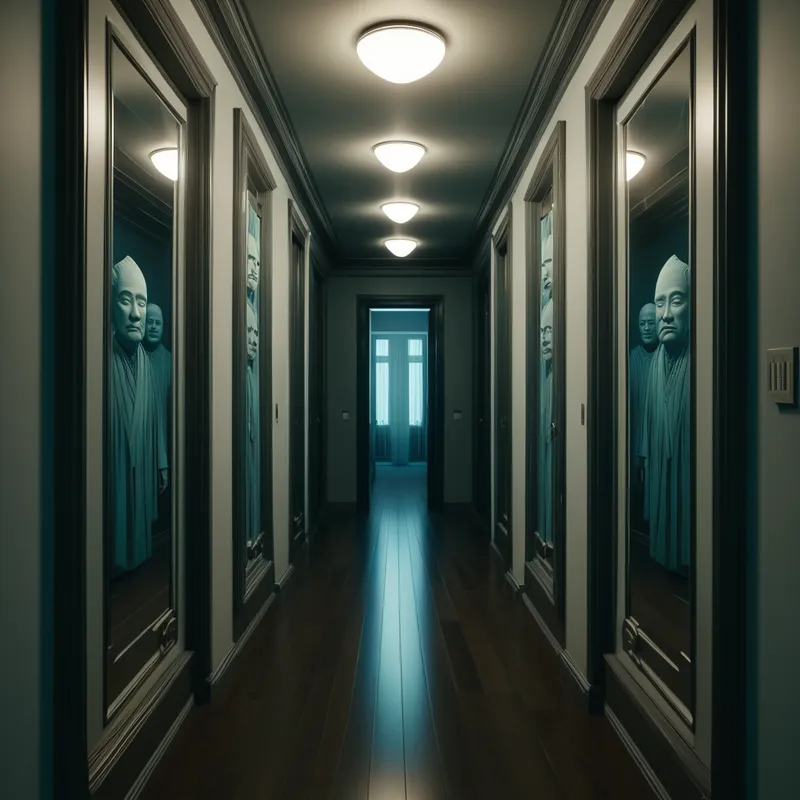
The somatic experience is key. One might feel the “house” in the dream as an extension of their own body—a creak in the floorboard echoing a joint pain, a draft corresponding to a sense of emotional chill. The psychological process is one of confronting the inherited psyche. The “spirits” that appear may manifest as dream figures representing familial traits: the critical grandmother, the absent father, the rebellious aunt, not as they were, but as archetypal forces they carried. The dreamer is being asked to “listen to the walls”—to pay attention to the automatic thoughts, the knee-jerk emotional reactions, the unexplained talents or fears that feel older than their own lived experience. The haunting is not a curse, but a call to acknowledge denied or unseen parts of the self. A nightmare version of this dream is the ego’s panic when faced with this overwhelming inner population. A peaceful version is the ego learning to co-exist, to leave out the symbolic “cup of coffee”—an offering of attention and respect.
Alchemical Translation
The myth is a perfect map for the alchemical process of individuation. The prima materia, the base matter, is the disparate, raw inheritance of the individual—their genetics, their family history, their cultural trauma and joy. Eduán’s careful listening and singing is the nigredo phase, the respectful engagement with this dark, unknown material.
The construction of the house is the albedo, the washing and ordering of this material into a coherent structure—the formation of a conscious personality. But this is only the first step. The arrival and eventual storm of the spirits represents the rubedo, the critical, often fiery confrontation with the contents of the unconscious that the conscious structure now contains.
Individuation is not building a new house on empty land. It is the lifelong renovation of La Casa de los Espíritus you were born within, learning to host all its inhabitants.
Marisela’s breakdown and subsequent humming is the coniunctio, the sacred marriage. It is the moment the conscious ego (Marisela) surrenders its arrogance of control and enters into a creative relationship with the unconscious (the spirits). She does not become possessed by them; she becomes their custodian and collaborator. Her modern life becomes the new room added to the house, her contemporary song woven into the ancient chorus. The ultimate goal is not a sterile, spirit-free home, but a vibrant, inhabited oikos—a psychic household where all parts, past and present, conscious and unconscious, are acknowledged, respected, and contribute to the life of the whole Self. The house stands, then, not as a museum, but as a living, breathing organism of time, a sanctuary where every ghost is finally at home, and every living soul is finally whole.
Associated Symbols
Explore related symbols from the CaleaDream lexicon: