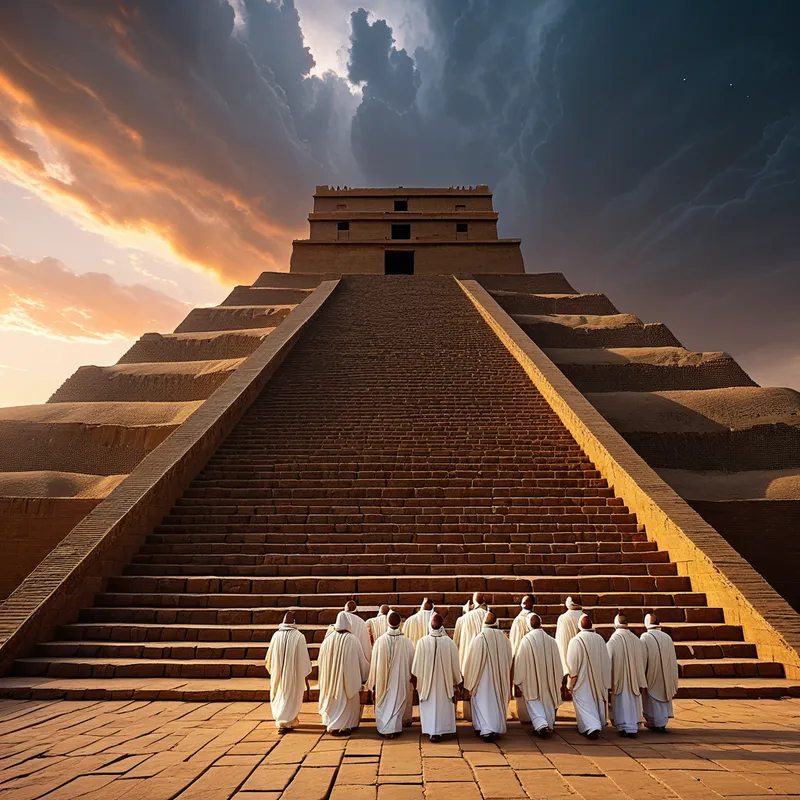
The Dream of Divinity: A Call to Wholeness
The Somatic Echo
It begins not as a thought, but as a pressure in the chest—a deep, resonant hum that feels less like sound and more like a tectonic shift in the marrow. The breath catches, not in fear, but in the presence of a scale too vast for the lungs to hold. There is a weight, immense and paradoxically weightless, settling in the solar plexus: the gravity of a star contained within a ribcage. This is the somatic echo of divinity in the dreamscape. It is the body’s ancient, pre-verbal recognition of confronting something that is both utterly other and intimately, terrifyingly self. The skin may prickle with static, a sense of being watched by a gaze that comes from within your own bones. It is the visceral shock of touching the live wire of totality, where awe and dread are two currents in the same circuit.
The Dreamer's Log
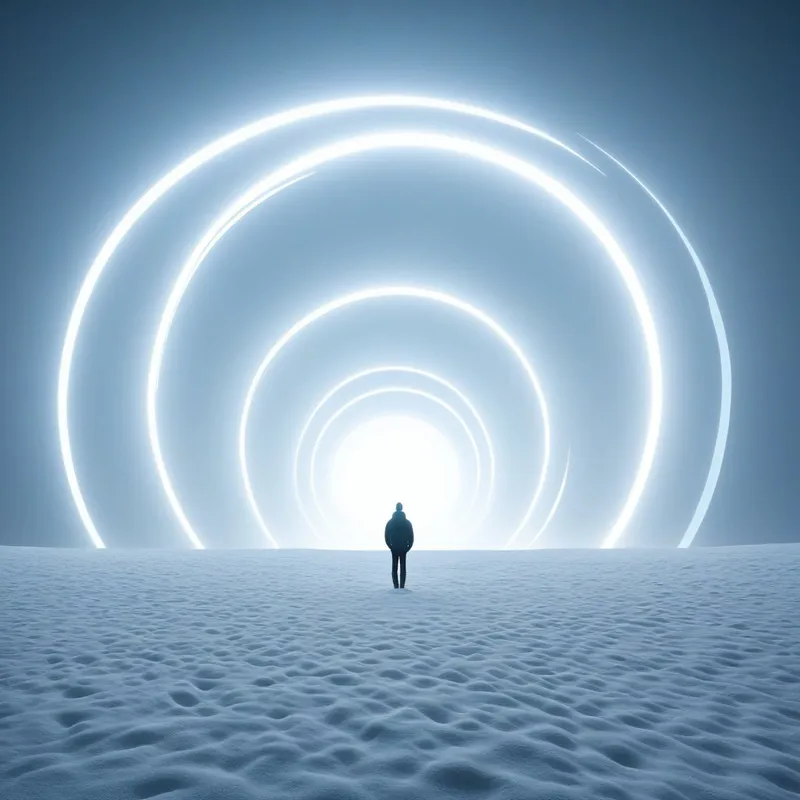
The dreamer stands in a cavernous, abandoned server farm. The air thrums with a low, dying frequency. Rows of monolithic black server racks stand silent, their indicator lights dark. In the center of the room, one rack is cracked open. From its shattered core pours not data, but a silent, blinding column of white-gold light. The light has no heat, only a profound, magnetic stillness that pulls at the dreamer’s very cells.
This dream is an alchemical vision of the sacred source code—the divine spark—cracking through the hardened, obsolete infrastructure of a conditioned identity.

The False Lead
A dream of divinity is not a promotion to sainthood, nor a directive to found a religion. It is not a sign of megalomania or spiritual bypassing, where one uses the concept of the sacred to flee from the messy, human work of being. The terror here is not of becoming a god to others, but of meeting the god-like totality within yourself—the terrifying responsibility of your own wholeness. It is not about transcending humanity, but about fully incarnating it, integrating the sublime with the shadow, the infinite with the finite. To mistake this for a call to superiority is to remain in the shadow of the theme, worshipping a golden idol of the self instead of bowing to the dark, fertile soil from which it grows.
Psychological Architecture
To dream of divinity is to be summoned to the ultimate act of Shadow work: the reconciliation with the numinous shadow. This is the part of the Self that feels too vast, too potent, too terrifyingly creative or destructive to claim. We exile it, project it onto external figures, myths, or concepts of God, because to own it feels like madness or heresy. The individuation process here is the slow, courageous retrieval of these projections. It is the understanding that the voice which speaks from the burning bush and the voice that whispers your deepest, most unspeakable longing are emitted from the same internal transmitter. The architecture of the psyche is being reconfigured from a kingdom with an absent, external monarch, into a sovereign republic—where every exiled part, from the wounded orphan to the tyrannical ruler, has a seat at the round table of consciousness. The dream of divinity marks the moment the parliament of the soul convenes to draft a new constitution, written in the language of integrated light and acknowledged darkness.
Mythic Resonance
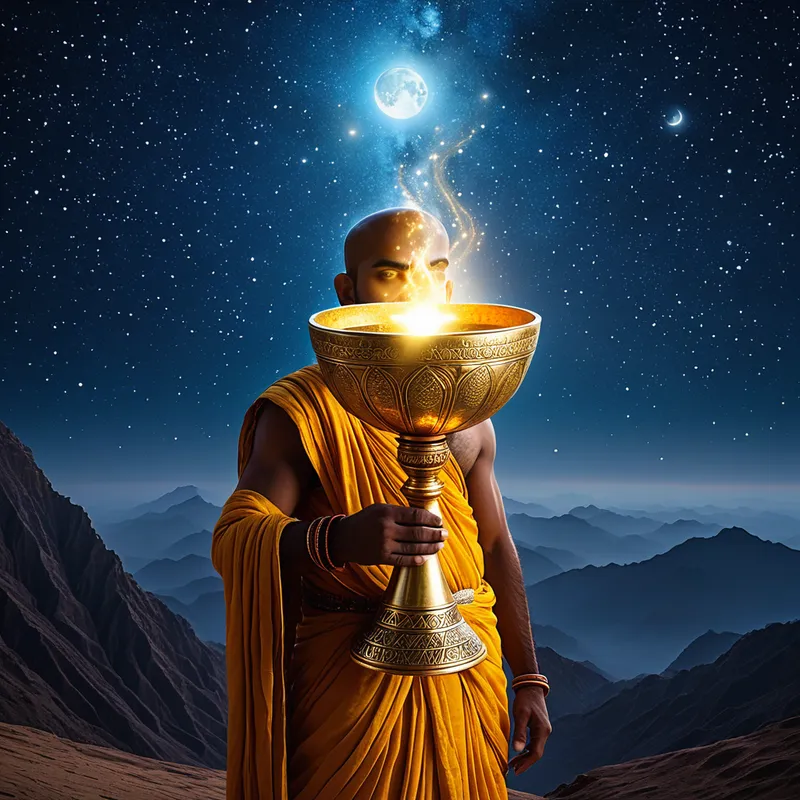
Consider the story of the Buddha under the Bodhi tree. Mara, the personification of doubt, fear, and temptation, sends his armies and daughters. The Buddha does not fight them with a warrior’s fury, nor does he plead with a higher power to save him. He simply touches the earth. In that gesture, he grounds his claim to awakening not in a sky-bound divinity, but in the very reality beneath him. He calls the earth itself as his witness. This is the mythic blueprint: divinity is not asserted against reality, but claimed through it, by touching the ground of your own being. Similarly, in the Gnostic myth, the divine spark (pneuma) is trapped within the material world (hylic). Salvation is not escape, but recognition—the awakening to the spark within the very flesh and circumstance of imprisonment. The dream is your personal gnosis, your call to remember.
Symbolic Nodes
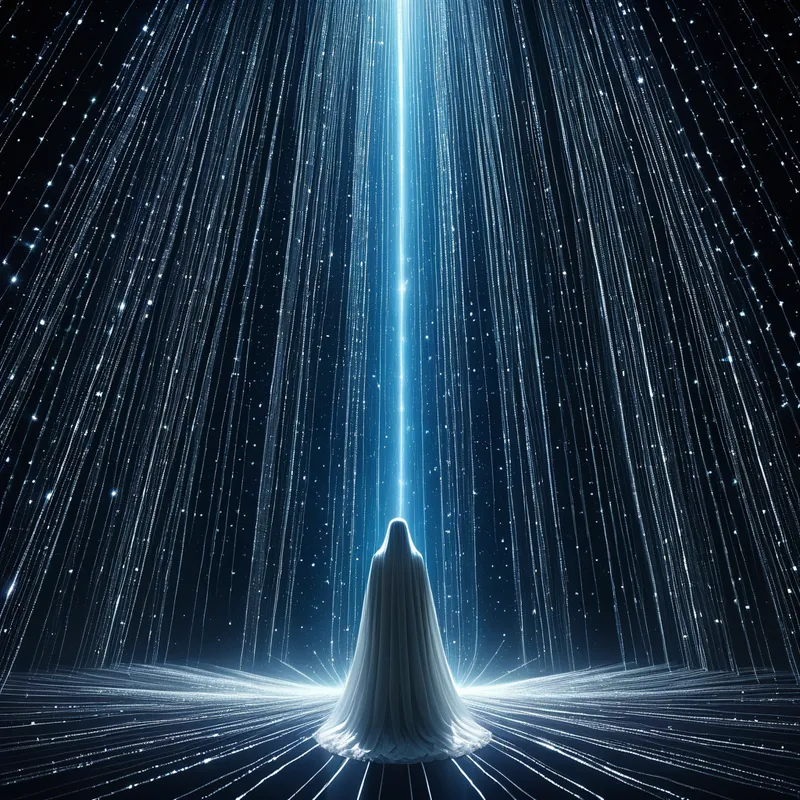
- Overwhelming Light: A source-less, intelligent light that illuminates without blinding, often felt as a presence.
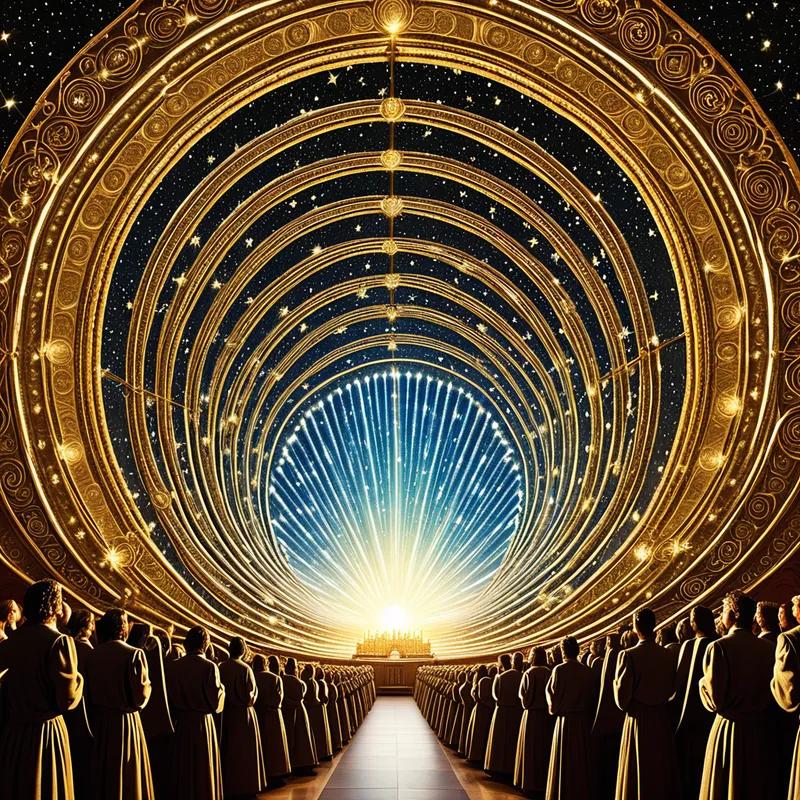
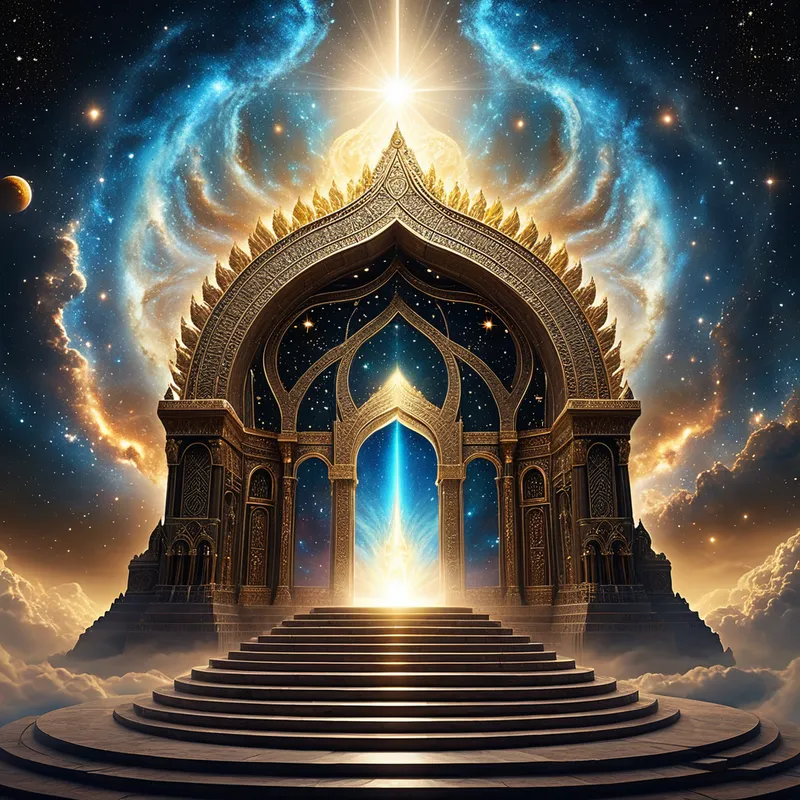
- Sacred Geometries & Impossible Architectures: Mandalas, luminous lattices, fractal temples that defy physics.
- Voices of Unearthly Clarity: A sound or word that is understood somatically, bypassing the mental interpreter.
- The Center That Holds: A still point in a storm, a silent eye in chaos, a stable axis in a spinning world.
- Meeting a Divine Figure Who Has Your Face: The ultimate mirror, dissolving the boundary between worshipper and worshipped.
Archetypal Resonance
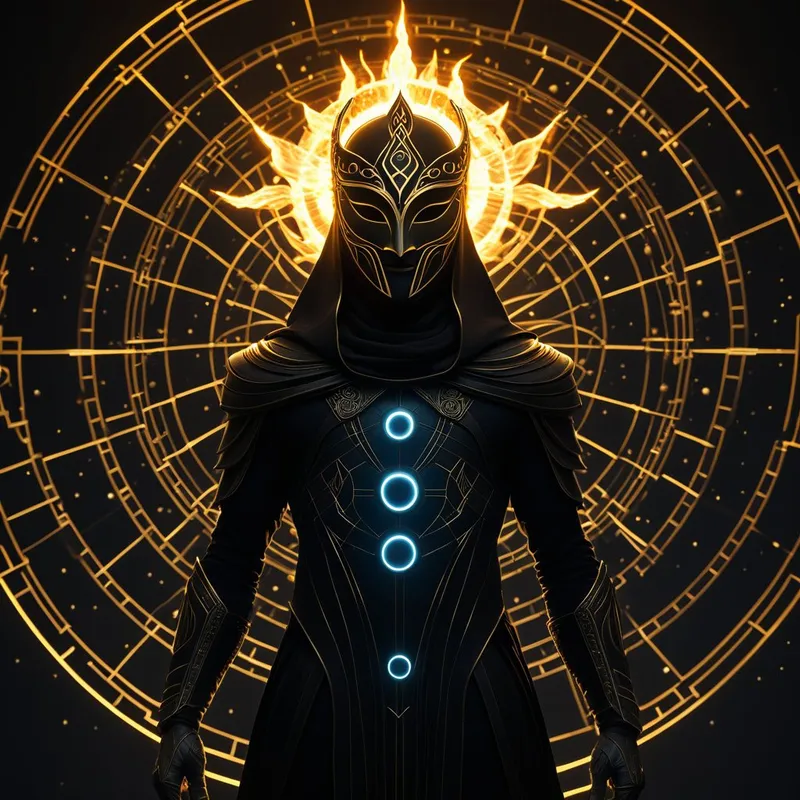
The Magician Archetype is the active force in a dream of divinity. The Magician’s core energy is the understanding of fundamental principles and the ability to transform reality through conscious application of will and knowledge. The somatic echo—the hum of potent energy in the chest—is the Magician’s power source coming online. This is not about performing tricks, but about undergoing the alchemy of the Self. The shadow Magician, the Manipulator or Illusionist, is the false lead—using spiritual concepts for egoic control. The integrated Magician does not seek to command the universe, but to dialogue with it, recognizing that the laws of transformation they seek to wield are the same laws that constitute their own soul. The dream is the archetype’s call to move from being a subject of cosmic forces to becoming a conscious co-creator with them.
The Alchemical Process
The alchemical transmutation here is From Projection to Embodiment. The prima materia, the raw grief and terror, is the aching sense of separation from the source of meaning, the projection of all power, love, and authority onto an external "God" or ideal. The heat and pressure are applied through a brutal, sustained honesty: the conscious withdrawal of these projections. This is the nigredo, the blackening. It feels like a death, a profound loneliness, as the comforting external icons dissolve. You are left in the void with only your own breath. The albedo, the whitening, begins when you start to find those divine qualities—unconditional love, fierce justice, boundless creativity—in the most unexpected internal places: in your capacity for forgiveness, in your righteous anger at injustice, in the strange beauty of your own broken dreams. The rubedo, the reddening, is the embodied integration. The sacred is no longer out there; it is the light in your eyes, the weight of your hand, the particular melody of your heartbeat. Sovereignty is born when you realize you are not a supplicant to divinity, but one of its living, breathing expressions.

The Integration Protocol
Question 1: Where in your waking life have you given away your ultimate authority—your "divine right" to choose, create, or judge—to an external system, person, or ideal?
Question 2: If the blinding light in the dream is a part of you, what has it been trying to illuminate or power up within your psyche that you have kept in the shadows?
Question 3: How would your daily actions and choices change if you operated from the unshakable knowing that you are a legitimate, integral part of the cosmos, not an accidental tourist in it?
Action 1 (Somatic Grounding): For one minute each day, place both hands on your chest, over your sternum. Breathe into the pressure. Imagine the resonant hum from the dream settling here, not as an alien force, but as your own core frequency. Feel it grounding down through your body into the earth.
Action 2 (Creative Reclamation): Using any medium—paint, clay, digital art, or unstructured writing—create an image or describe a "sacred object" that represents your internal source of authority. Do not make it pretty or conventional. Let it be strange, potent, and uniquely yours. This object is not to be worshipped, but to be consulted.
Action 3 (Ritual of Embodiment): Choose a simple, daily act you normally do on autopilot (making tea, walking to a corner, opening a door). Before you do it, pause. For that one act, perform it with the conscious intention that you are a sovereign being, inhabiting a moment of your divine reality. Feel the weight of the cup, the texture of the air, the turn of the knob as sacred gestures.
Final Validation
To dream of divinity is to be assigned the most daunting and glorious homework of a lifetime. It is perfectly human to want to dismiss it, to shrink from its implications, to prefer the simpler pain of feeling small. Honor that resistance; it is the ego’s rightful fear of dissolution. But the dream has arrived because you are ready. Not to become perfect, but to become whole. Not to rule from a distant throne, but to preside with compassion over the entire, messy, magnificent kingdom of your being. The light you witnessed did not come to crown you—it came to remind you that the crown was never anywhere but here, being forged in the dark, in the heat, in the very heart of your human struggle. Your sovereignty is not a destination, but the manner of your journey.