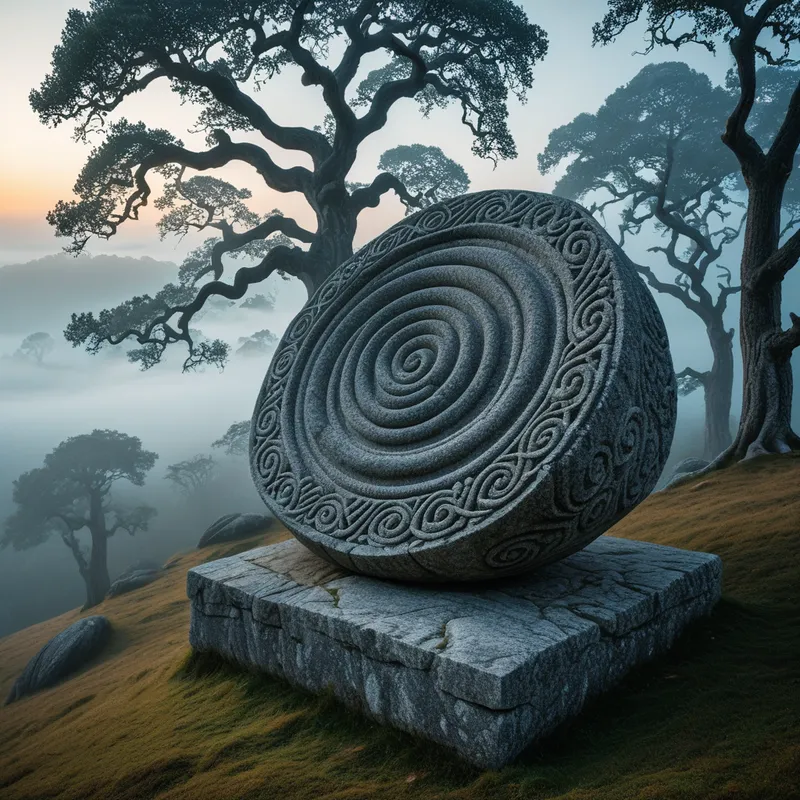
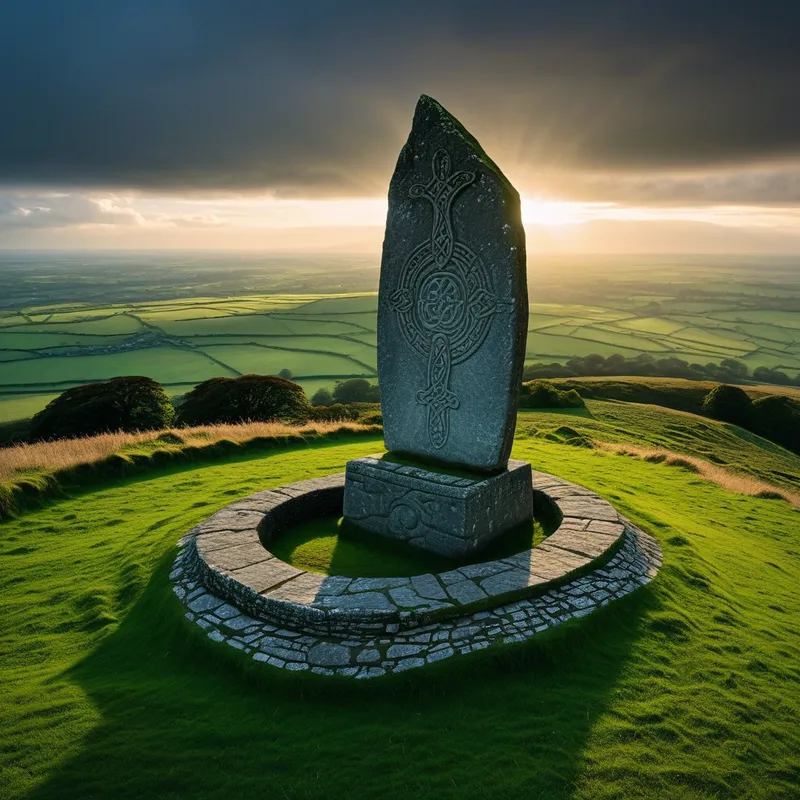
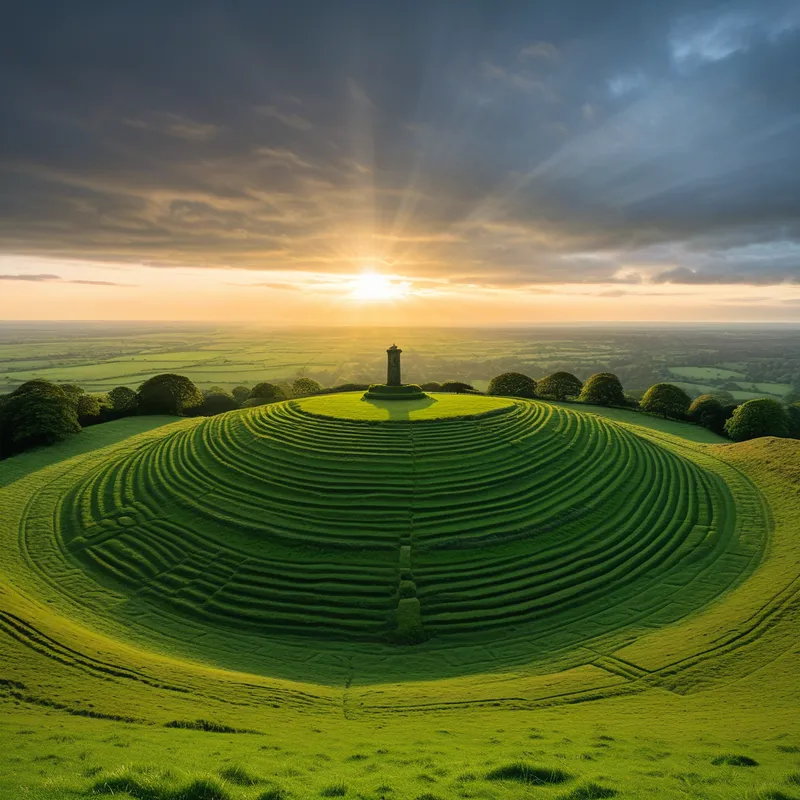
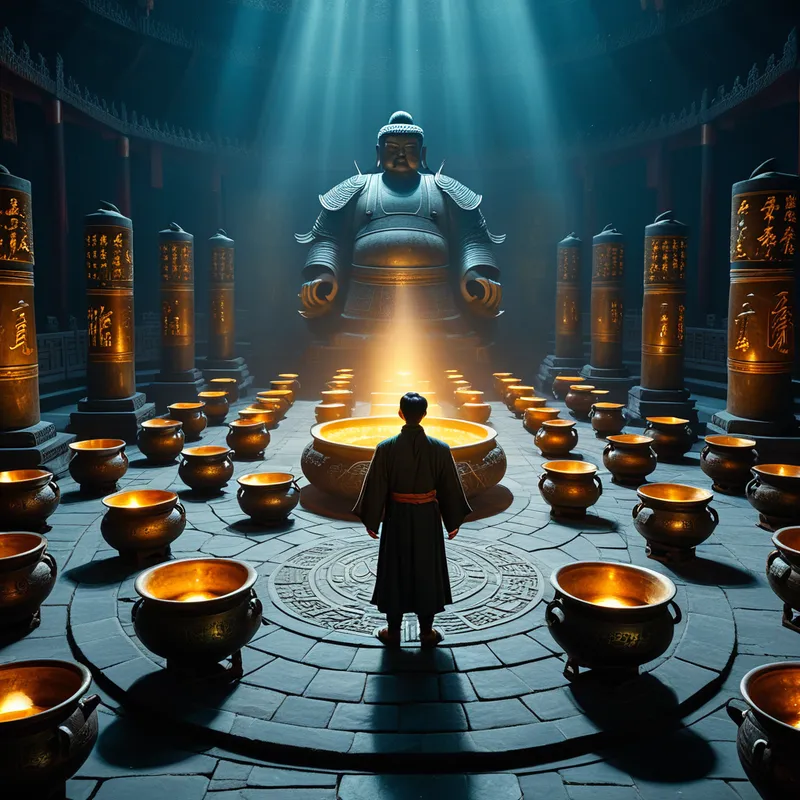
The Dream of Sovereignty: Claiming the Inner Throne
The Somatic Echo
Before the mind conjures a king, a castle, or a crown, the body knows the theme of sovereignty. It arrives not as a thought, but as a tectonic pressure. A deep, resonant hum in the sternum, a subtle tightening across the shoulders as if bearing an invisible mantle that is both burden and birthright. There is a peculiar, paradoxical sensation: a profound gravity at your center, pulling you down into your own bones, while simultaneously creating a luminous, expansive space around you—a psychic territory. This is the somatic prelude to sovereignty. It is the feeling of a boundary becoming real, not as a wall to keep others out, but as a membrane that defines what is you and what is not. It is the quiet, cellular recognition of a jurisdiction that has always existed, awaiting your conscious occupation.
The Dreamer's Log
The dreamer stands in a vast, derelict control room, its consoles dark and dusty. A single, ornate chair—a throne of intricate wiring and tarnished silver—sits in the center. They feel a compulsive pull to sit, but their limbs are heavy, locked. From the shadows, faint, whispering voices offer conflicting directives: "Assume the position," one hisses. "You are not authorized," another intones. The dreamer remains standing, paralyzed, as the room itself seems to breathe around the empty seat.
This is the alchemy of hesitation: the throne is empty not because it is forbidden, but because the dreamer has not yet transmuted the external whispers into an internal command.

The False Lead
Sovereignty is not domination. This is the critical misstep. To mistake one for the other is to arm a shadow with a scepter. Domination is force projected outward to control external territory and the people within it. It is energy-intensive, brittle, and rooted in fear—the fear of the other, the fear of lack, the fear of the empty throne within. Sovereignty, in its dream-logic, is the opposite. It is an integration so complete that the need to control anything beyond your own internal state dissolves. It is authority that emanates from a consolidated core, making decisions not from reaction but from a deep, unshakable knowing. A dream of a tyrannical ruler is often a nightmare of the Shadow Ruler; a dream of a true sovereign is one of serene, effortless jurisdiction over the landscape of the self.
Psychological Architecture
The architecture of sovereignty is built in the shadowlands. Its foundation is laid by confronting every internal exile, every disowned part of the self that we have banished to the periphery of our awareness. In the language of Internal Family Systems, these are the exiles, the firefighters, the managers—all sub-personalities vying for control of the inner kingdom, believing they must rule because a true, centered Self is absent. The work of sovereignty is not to destroy these parts, but to depose them from their provisional thrones. It is to approach the fearful orphan, the rebellious saboteur, the critical manager, and with immense compassion, declare: "Your service is noted. Your protection is honored. But the emergency is over. I am here now." This is the act of re-claiming. You are not negotiating with a committee; you are assuming the seat of consciousness from which all parts can be witnessed, heard, and integrated. The shift is from a psyche governed by committee to one presided over by consciousness.
Mythic Resonance
We see this eternal process in the myth of the Fisher King, guardian of the Grail. Wounded in the thighs—the seat of generative power and foundational strength—the king is rendered impotent. His kingdom withers into a wasteland, a direct reflection of his inner paralysis. The land and the king are one. Healing does not come from a external knight performing a clever act, but from the knight (the seeking consciousness) asking the essential, sovereign question: "Whom does the Grail serve?" The answer—"The Grail serves the Grail King"—is the revelation. Authority and vitality are not granted; they are recognized as inherent. The king's sovereignty and the kingdom's fertility are a single, self-sustaining system. The wasteland blooms only when the king remembers he is its source and its steward, not its victim.
Symbolic Nodes
- Empty Thrones & Unoccupied Chairs: The central, waiting locus of authority.
- Forgotten or Lost Crowns/Jewels: Misplaced or dormant authentic power.
- Seals, Signet Rings, Official Stamps: The symbols of authentic endorsement and decisive action.
- Maps of Uncharted or Personal Territory: The discovery of your own psychological borders.
- Silencing a Room or Crowd with a Glance/Word: Effortless command through presence, not volume.
- Signing Your Name with Unusual Certainty: The act of claiming authorship of your life.
Archetypal Resonance
The energy at the core of this theme is The Ruler Archetype. Its resonance is not in the trappings of power, but in the fundamental impulse to create order, structure, and a legacy from the raw material of one's existence. The somatic echo—that gravity and expansion—is the Ruler's energy establishing its domain. The alchemical potential lies in the Ruler's highest function: to take responsibility for the entire inner kingdom—the fertile lands and the toxic swamps, the loyal citizens and the rebellious factions—and to govern with clarity, compassion, and vision. The Shadow Ruler (Tyrant/Control-Freak) emerges when this archetype is fractured, seeking to control the external because the internal feels like chaos. The integrated Ruler understands that true sovereignty is the orderly, benevolent administration of the self.
The Alchemical Process
The transmutation into sovereignty requires the heat of conscious confrontation and the pressure of sustained responsibility. The prima materia—the raw, leaden feeling of being subject to external forces, internal critics, or old wounds—must be placed in the athanor of unwavering self-encounter. The heat is applied when you stop blaming the external "kingdom" (your job, your family, your past) for its state and turn your gaze inward to the vacated throne. The pressure builds as you choose, moment by moment, to act from this nascent inner authority, even when it terrifies you. This is not about getting your way; it is about holding your way—maintaining the integrity of your values, your no, and your yes, under fire. The terror of "Who am I to claim this?" and the grief for the simpler life of following orders are the solvents. In their crucible, the false, borrowed identities burn away, and what remains is the irreducible, golden core of authentic being. The crown is not placed upon you; it is revealed, forged from the alloy of your lived truth.

The Integration Protocol
Question 1: Where in your waking life do you feel a "compulsive pull to sit" in a position of authority, paired with a "heavy, locked" feeling that holds you back? What are the whispering voices saying?
Question 2: If your inner kingdom were a physical territory right now, what would its landscape be? Is it a fortified castle under siege, an overgrown and neglected garden, or an orderly city? Describe its state without judgment.
Question 3: What is one law, one fundamental principle, that your inner sovereign must decree to bring greater order and justice to your psychic realm? (e.g., "The critic may advise, but not decree," or "Rest is a sacred duty of the state.")
Action 1 (The Edict): Write a short, formal declaration in your own name. It can begin with "Let it be known..." or "By the authority vested in my own being..." Declare one small, new law for your inner kingdom. Sign and date it. Keep it.
Action 2 (Cartography of the Self): Create a non-verbal map. Using drawing, collage, or even arranging objects on a table, map the current "territory" of your inner life from Question 2. Then, alter the map to show one desired change—clearing a path, building a bridge, designating a quiet sanctuary. The act is the governance.
Action 3 (The Silent Council): Sit in meditation, imagining yourself on your inner throne. One by one, invite your most familiar "parts" (the anxious one, the people-pleaser, the rebel) to approach. Do not let them speak. Simply acknowledge each with a nod, feeling your own centered presence. Your silent, receiving awareness is the exercise of sovereignty.
Final Validation
The path to the inner throne is often walked in the dark, through the very wastelands your sovereignty will one day heal. The paralysis, the whispers, the weight of the unseen mantle—these are not signs of failure, but the authentic topography of the journey. It is difficult because it is the most real work you will ever do: the reclamation of a kingdom you were born to rule, but were never taught to see. Feel the gravity in your chest. That is not a chain. It is the cornerstone of your palace, waiting for you to build upon it. The sovereignty you seek does not await a coronation from the world. It awaits your recognition that the crown has always been, and can only ever be, your own.