The Dream of Craftsmanship: Forging the Self in the Psyche's Workshop
The Somatic Echo
Before the image of a tool, the blueprint, or the half-finished sculpture arrives, the dream of craftsmanship announces itself in the body. It is a deep, resonant ache in the bones of the hands—not a pain of injury, but the phantom memory of a grip, of pressure applied and released. It is a low hum in the solar plexus, the steady thrum of a latent potential waiting to be directed. The breath becomes measured, intentional, syncing with an invisible rhythm of creation. There is a weight in the shoulders, not of burden, but of responsibility—the sober gravity of the one who must shape what is formless. This is the somatic ground from which the dream rises: a physical knowing that you contain both the raw material and the latent skill to work it. You are the quarry and the quarryman.
The Dreamer's Log (Case Vignette)
I am in a room that is both a dusty attic and a cleanroom laboratory. On a simple wooden table lies a beautiful, hand-thrown ceramic bowl, now cracked clean through. I feel a profound grief. Then, my hands—without my conscious bidding—reach for a crucible. I don't pour molten gold to repair the crack; instead, I carefully place the shimmering liquid into the fracture itself, where it solidifies, not as a patch, but as a luminous vein holding the pieces in a new, deliberate tension.
The alchemical interpretation: The psyche is not seeking to erase the break, but to consciously integrate the fracture as the most essential feature of the whole, transmuting flaw into design.

The False Lead
This theme is not about worldly productivity, hobbyist distraction, or the ego’s desire for perfect, admired output. To dream of a masterfully finished violin and assume it signifies a call to take up music is to mistake the symbol for the instruction manual. The dream workshop is internal. The unfinished chair is not a prophecy of a failed DIY project; it is the psyche’s snapshot of an unresolved internal structure—a belief, a relationship pattern, a way of perceiving—that remains in a state of becoming. The terror here is not of making a mistake, but of refusing to pick up the tools at all, leaving the soul’s blueprint to gather dust in the dark.
Psychological Architecture
Craftsmanship, in the deep psyche, is the principle of conscious formation. It is Shadow work of the most tangible kind. Here, the Shadow is not a monster in a cave, but the pile of discarded scraps under the workbench: the rejected emotions, the un-lived potentials, the memories deemed too brittle or misshapen to use. Individuation is this craft. It is the patient, often frustrating labor of retrieving those scraps, feeling their texture, and understanding their inherent properties. Can this shard of old grief be ground into a pigment? Can this twisted strand of anger be annealed into a supportive wire? The process demands you become intimately acquainted with your own rough edges, not to smooth them away, but to learn how they fit into the emerging totality. You are building a vessel capable of holding your own complexity.
Mythic Resonance
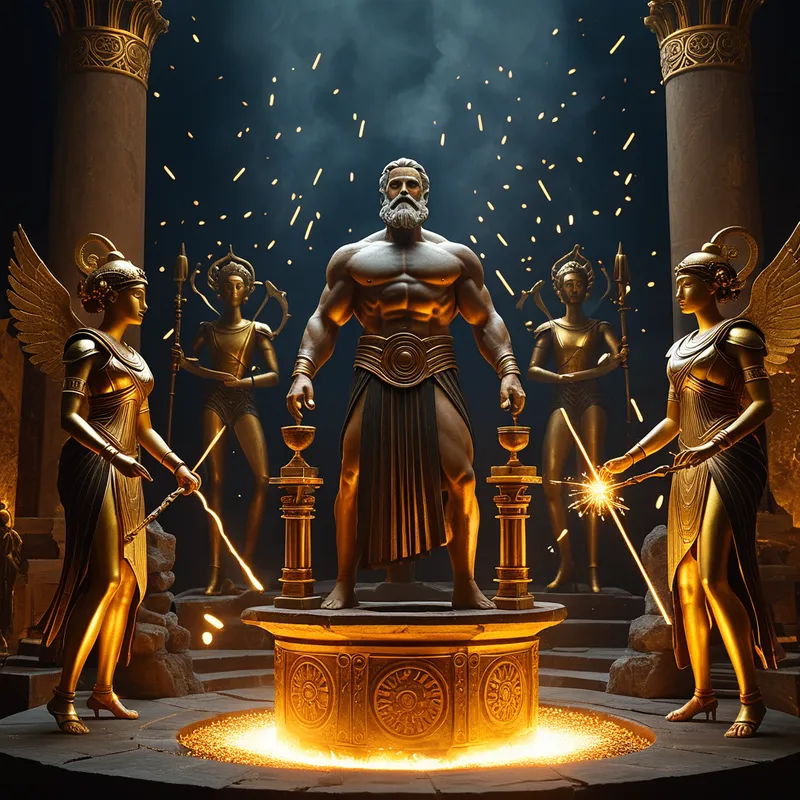
We see this eternal process in the figure of Hephaestus, the Olympian smith. Cast out from Olympus for his imperfection, he did not languish. In the volcanic depths of his forge, he turned his exile into his sovereignty, crafting the very infrastructure of the divine realm—thrones, weapons, automatons. His lameness, his rejection, became the grounding force for his genius. His myth tells us the workshop is often founded in the place of our wounding, and our unique power is forged in the heat of that initial fracture. Similarly, the Golem of Jewish mysticism is not just a creature of clay, but a dream of craftsmanship pushed to its existential limit: the imposition of form upon the inert, the breath of purpose into the shaped earth, a profound meditation on the responsibilities of the creator to the created.
Symbolic Nodes
- Specific, Often Simple Tools: A single chisel, a worn hammer, a precise scalpel. The tool’s nature hints at the required psychological operation (cutting away, joining, measuring).
- Unfinished Objects: A boat without a mast, a clock with missing gears, a tapestry with loose threads. These represent psychic structures in medias res.
- Raw vs. Refined Materials: A block of uncut marble beside a polished sphere; a tangle of copper wire next to a sleek circuit. This juxtaposition illustrates the journey from potential to actualization.
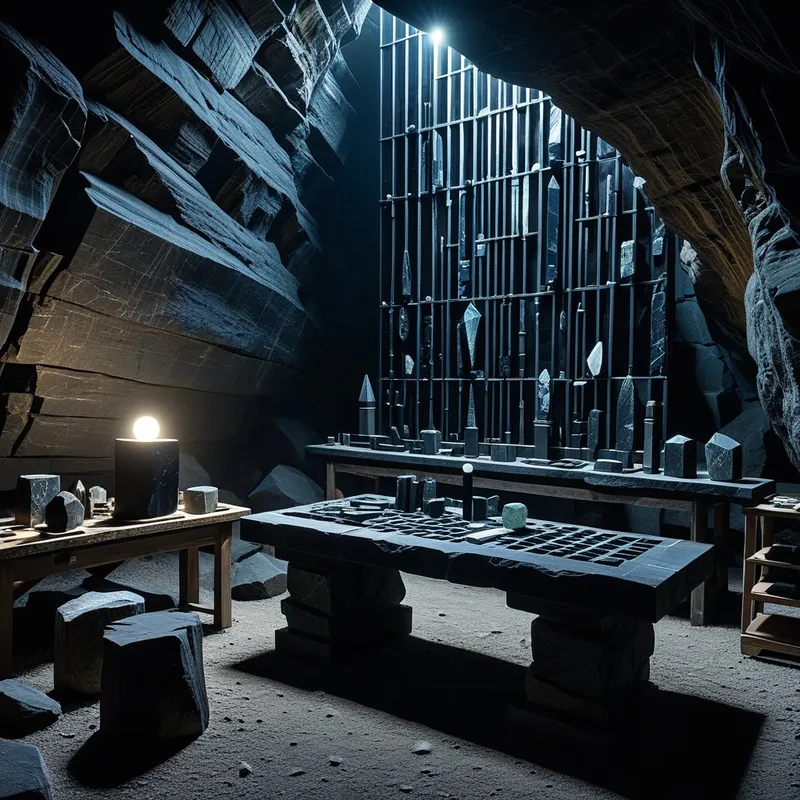
- The Workshop Itself: Be it a cluttered garage, a sterile lab, or a sunlit studio, this space is the temenos—the sacred container where the work is permitted to happen.
- Blueprints & Schematics: Often partially obscured or written in a cryptic language, representing the soul’s innate, but not yet fully conscious, design.
Archetypal Resonance
The energy at the core of the craftsmanship dream is that of The Creator Archetype.
The Creator does not merely make; it imposes meaningful order. Its somatic echo is that focused hum in the hands and solar plexus—the channeled desire to give form to the formless. In its fullness, this archetype brings vision into reality, building bridges between imagination and the tangible world. Its shadow, however, is the peril of this process: the work can become a sterile obsession, the product more important than the soul that made it, or the vision can collapse into solipsistic fantasy, a creation that speaks only to itself. The alchemical potential of the craftsmanship dream is to invoke the Creator’s power while tempering it with the humility of the craftsman—the one who serves the material and the process, not just the ego’s desire to be seen as the originator.
The Alchemical Process
The transmutation here is from raw potential to embodied form. The prima materia is the chaotic swirl of your unlived life, your unresolved history, your latent gifts. The heat is applied through focused attention—the sustained, often uncomfortable act of staying with the material, feeling its resistance, listening to what it wants to become rather than forcing it into a preconceived mold. The pressure is the constraint of choice. To shape is to exclude; to craft this particular vessel is to not craft a thousand others. This necessary grief—the mourning of infinite possibilities for the sake of one actuality—is the forge’s fire. The terror is the blankness of the block; the grief is the chips that fall away. Sovereignty is earned in the moment your hand, guided by a deep, impersonal knowing, makes the cut that reveals the form hidden within.

The Integration Protocol
Question 1: Where in your waking life do you feel the most potent "raw material"—an unshaped emotion, a dormant skill, a fragmented experience—aching for your conscious attention and formation?
Question 2: What is the one "tool" (a quality like patience, discernment, courage) you consistently avoid picking up in your internal workshop, and what unfinished project does its absence maintain?
Question 3: If your life right now is a half-built structure, what single, next piece—not the entire blueprint—is waiting to be fitted into place?
Action 1 (Somatic Grounding): For five minutes, hold a simple, textured object (a stone, a piece of wood, a lump of clay). Close your eyes. Explore its shape, weight, and temperature with your hands only. Do not think of what it could be. Simply know it as it is. This grounds the craftsman's primary relationship: witness to material.
Action 2 (Creative Expression): Using any medium (pen, voice memo, drawing), describe or depict your inner "workshop." Is it cluttered or barren? Warm or cold? Well-lit or shadowy? What one tool is on the bench? Do not analyze. Let the image speak. This externalizes the psychic container.
Action 3 (Ritual Engagement): Intentionally begin a small, physical craft project you are likely to abandon (a sketch, a simple repair, a loaf of bread). Commit not to finishing it perfectly, but to engaging with three distinct phases: preparing the materials, the active work of shaping, and the act of setting it down. Observe where your mind rebels. This ritualizes the process, separating it from the product.
Final Validation
The dream of the workshop can feel like a summons, and summons are burdens before they become blessings. To feel the weight of the tool is to feel the weight of your own becoming, and that is a profound and frightening responsibility. It is easier to admire the finished works of others, or to lament the quality of your own raw stone. But the dream arrives not to chastise your unfinished state, but to anoint you as the only possible artisan for your own soul. The cracked bowl is not evidence of failure; it is the prerequisite for the gold. Pick up the tool. Feel its familiar, ancient weight. The first cut is always the deepest, and it is always the beginning.