Katana Kake Myth Meaning & Symbolism
A mythic tale of a master swordsmith whose ultimate creation demands a terrible, transformative sacrifice, forging spirit into steel.
The Tale of Katana Kake
Listen. The wind does not just blow through the pines of the mountains. It carries the whispers of the forge, the sighs of the fire, and the final breath of a master. In an age when the world was painted in the stark ink of spirit and shadow, there lived a swordsmith whose name was whispered with reverence and dread: Masamune. But this tale is not of the man, but of his final, impossible work—the blade known as Katana Kake.
For ninety-nine days and ninety-nine nights, Masamune labored. The bellows sighed like a dying beast. The charcoal, made from sacred matsu, burned with a blue-white soul. He folded the steel ten thousand times, singing prayers to Kagutsuchi with each hammer fall. Yet, the blade remained silent. It was sharp, yes—it could split a falling silk scarf—but it was empty. A beautiful corpse. It lacked the tamashii, the living spirit that makes a katana not a tool, but a covenant.
On the one-hundredth night, under a moon so full it seemed a wound in the sky, the truth came to him. It arrived not as a voice, but as a knowing that settled in his bones, colder than the quenching water. The final fold, the infusion of spirit, required a sacrifice the forge could not provide. It required a life willingly given, a soul to be folded into the steel.
His young apprentice, a boy named Tadashi, who had watched with wide, reverent eyes all these months, stepped forward. He had heard the unspoken truth in the silence of the metal. "Master," he said, his voice steady as the north star. "The blade must live. Let my loyalty be its heart. Let my breath be its temper."
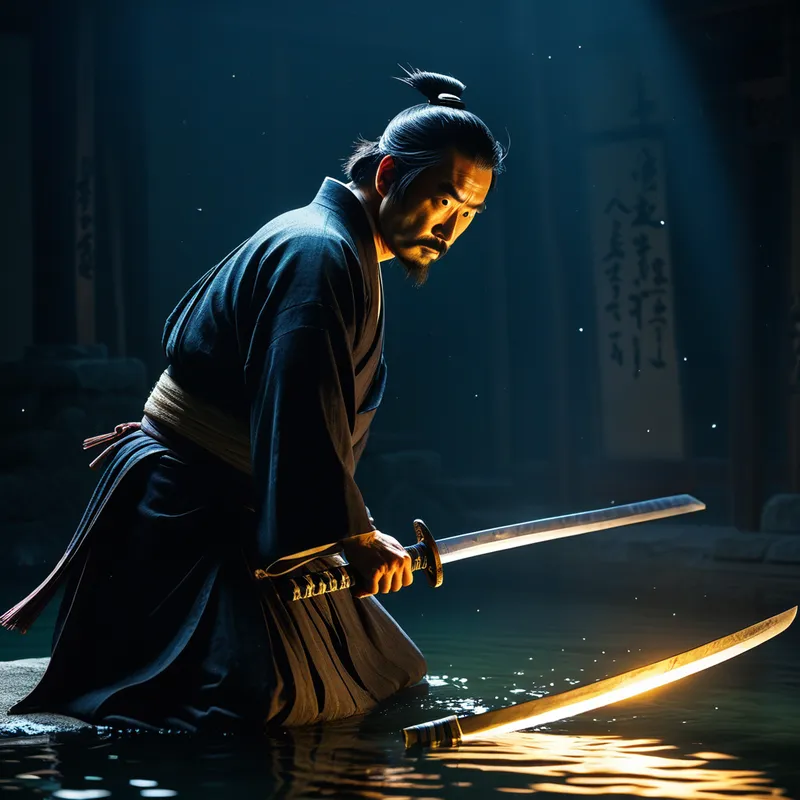
Masamune’s tears sizzled on the anvil. There were no more prayers. There was only the terrible, sacred act. In the final moment before the quenching, as the white-hot blade glowed with captured moonlight, Tadashi laid his bare palm upon its length. The scent of sacred sandalwood and searing flesh filled the air. His life force, his ki, flowed into the metal not as destruction, but as a final, perfect weld. The blade hissed in the water, and the steam that rose formed the faint, grieving visage of the boy before vanishing into the night.
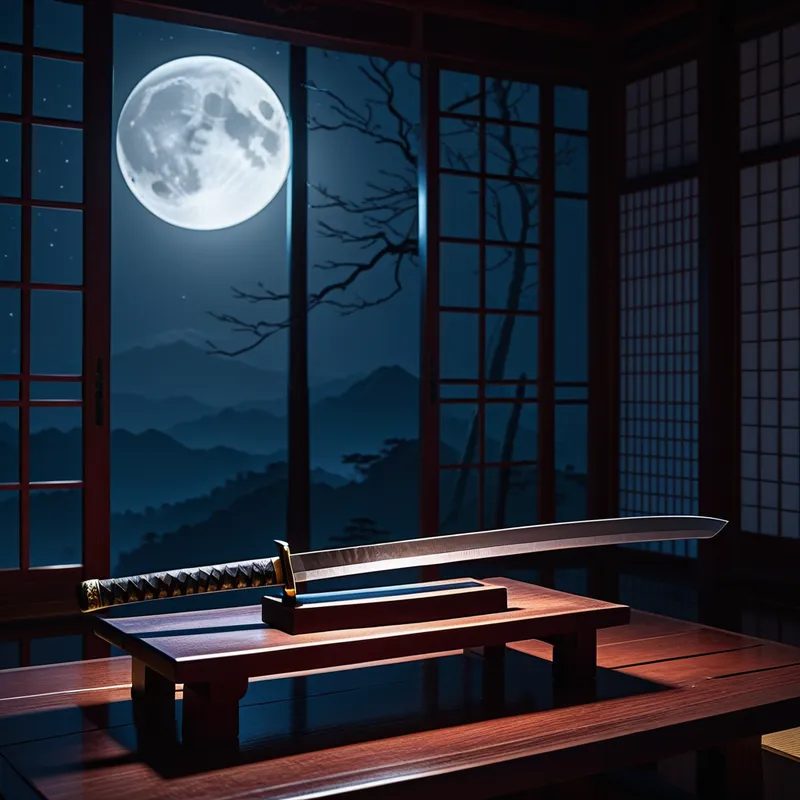
When Masamune lifted the katana, it was no longer mere steel. It sang a low, mournful note in the wind. It reflected not just light, but intention. It was the Katana Kake—a blade that would never be drawn in anger, for its very presence commanded peace. It was hung in the high alcove of the dojo, where it remained, a suspended testament to the price of perfection, a bridge between the world of the living and the spirit forged within.
Cultural Origins & Context
The myth of Katana Kake exists in the liminal space between historical craft and spiritual allegory. It emerges from the late Heian and early Kamakura periods, a time when the art of Japanese swordsmithing (tōkō) was undergoing a profound transformation from mere metallurgy to a sacred, shinji-like practice. Smiths like the legendary Goro Nyudo Masamune were revered as priests of the forge, their work imbued with kami.
The tale was not written in official kikki but passed down orally within ryūha of swordsmiths and later, samurai families. It functioned as a foundational ethic, a dramatic encapsulation of the bushidō ideal of self-sacrifice (sutemi) transferred to the act of creation. It answered a haunting cultural question: From where does true excellence, the kind that borders on the divine, derive its power? The myth asserts it comes not from skill alone, but from a conscious, devastating exchange between the human and the transcendental.
Symbolic Architecture
At its core, Katana Kake is a parable of the Creator archetype pushed to its absolute, terrifying limit. The blade symbolizes the ultimate creation—a work of art, a life's purpose, a perfected aspect of the self. The forge is the crucible of conscious effort, discipline, and worldly technique. But the myth reveals a chilling, universal truth: technique alone births only hollow perfection.
The final ingredient in any act of true creation is not more skill, but a piece of the creator's own soul.
The apprentice, Tadashi, represents the innocent, future-oriented potential—the "son" or the nascent self that must be surrendered for the "father" or the mature work to be realized. His sacrifice is not a glorification of death, but a profound metaphor for the death of potentiality in service of actuality. The blade's sentience and its placement—kake, hanging, never used—symbolize that this level of creation exists in a realm beyond utility. It becomes a sacred object (yorishiro), a permanent reminder of the cost of bringing spirit into form. The conflict is not between good and evil, but between the partial life of an unfinished work and the whole, yet grievous, life of a completed one.
The Dreamer's Resonance
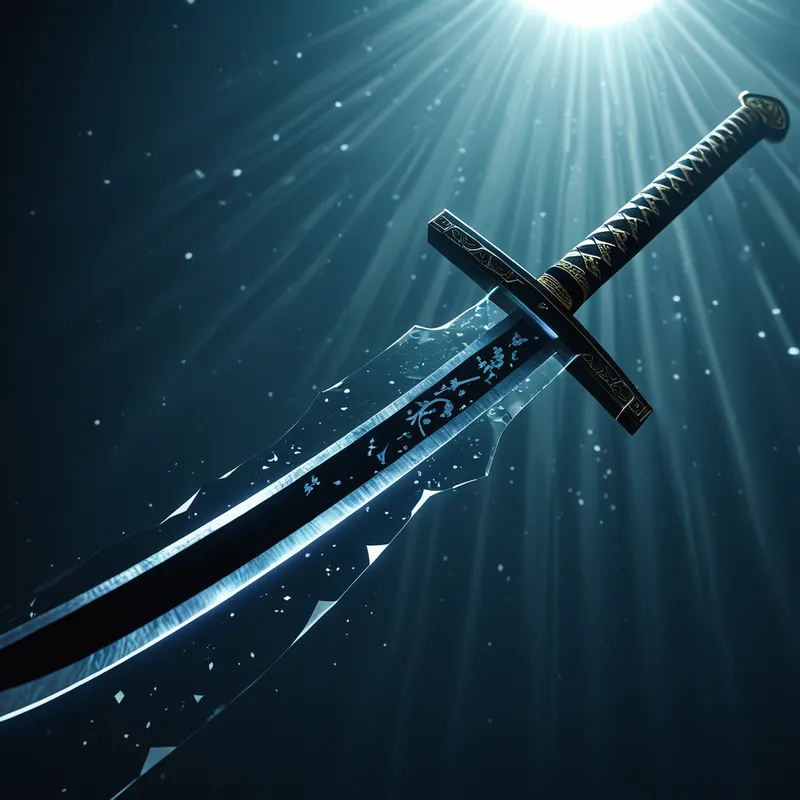
When this myth stirs in the modern unconscious, it often manifests in dreams of impossible crafting or burdensome gifts. You may dream of forging a beautiful object that remains inert until you bleed on it, or of being offered a magnificent, glowing tool that you know you must refuse, for accepting it would cost you your name. These are somatic signals of the psyche's engagement with a "Katana Kake" process.
The dreamer is at the precipice of a profound psychological sacrifice. It may be the need to "sacrifice" a long-held identity (the loyal apprentice/tadashi-self) to birth a more authentic, potent one (the living blade). The feeling upon waking is often a mix of awe and deep sorrow—the somatic recognition that a cherished possibility must die for a deeper truth to live. The hanging blade in the dream represents the achieved goal that now exists in a state of sacred tension, requiring integration rather than mere use, forever changing the architecture of the dreamer's inner dojo.
Alchemical Translation
The alchemical journey mirrored in Katana Kake is the Magnum Opus, specifically the stage of nigredo giving way to the white dawn of albedo. The base metals of talent and effort (the raw steel) are subjected to the fire of discipline (the forge). But the transmutation into spiritual gold (the sentient blade) requires the prima materia of the self—a voluntary dissolution.
For the modern individual pursuing individuation, the myth models the final, non-negotiable step in mastering one's craft or integrating a complex: you must offer up a part of your familiar self. The loyal, comfortable "apprentice" mindset—the people-pleaser, the perpetual student, the one who avoids finality—must be laid upon the altar of the work.
Individuation is not self-improvement; it is a series of conscious sacrifices where we trade parts of who we are for the truth of what we must become.
The resulting "blade" is the newly forged, authentic personality—sharp, clear, and imbued with a life of its own. It is "hung" in the sense that it becomes a central, defining pillar of the psyche, not to be wielded lightly against the outer world, but to be contemplated as the sacred proof of one's costly becoming. The grief for the lost apprentice never fully leaves, but it becomes the quiet song the blade sings in the wind, the beautiful scar of a creation that is truly whole.
Associated Symbols
Explore related symbols from the CaleaDream lexicon: