
The Square and Compass Myth Meaning & Symbolism
The myth of the divine carpenter Lu Ban, who receives the tools of the Square and Compass to build order from chaos, establishing the foundation of civilization.
The Tale of The Square and Compass
In the time before time was measured, when the sky was a formless broth of stars and the earth a churning clay yet unfired, chaos was the only craftsman. Rivers ran in circles, mountains slumped like sleeping beasts, and the dwellings of humanity were little more than frightened huddles against the wind. The people looked to the heavens and saw no pattern, only a great, unsettling swirl.
Then, from the heart of the sacred Mount Kunlun, there emerged a man whose soul was not born of the earth alone, but tempered in the forge of the celestial. His name was Lu Ban. He was no ordinary mortal; his eyes held the calm of still pools that reflected not just the world, but its underlying bones. He was a carpenter, but his hands itched to build more than stools and doors. He felt the world’s crookedness in his own spine, a constant ache for the true, the straight, the balanced.
Driven by this sacred discontent, Lu Ban climbed. He left the murmuring villages and ascended into the cloud-veiled peaks where the air grew thin and the whispers of the wind spoke in the language of dragons. For forty days and nights he climbed, his fingers bleeding on the cold stone, his spirit wrestling with the formless dread of the primordial. At the summit, where the earth met the throat of heaven, he collapsed, not in defeat, but in utter, empty receptivity.
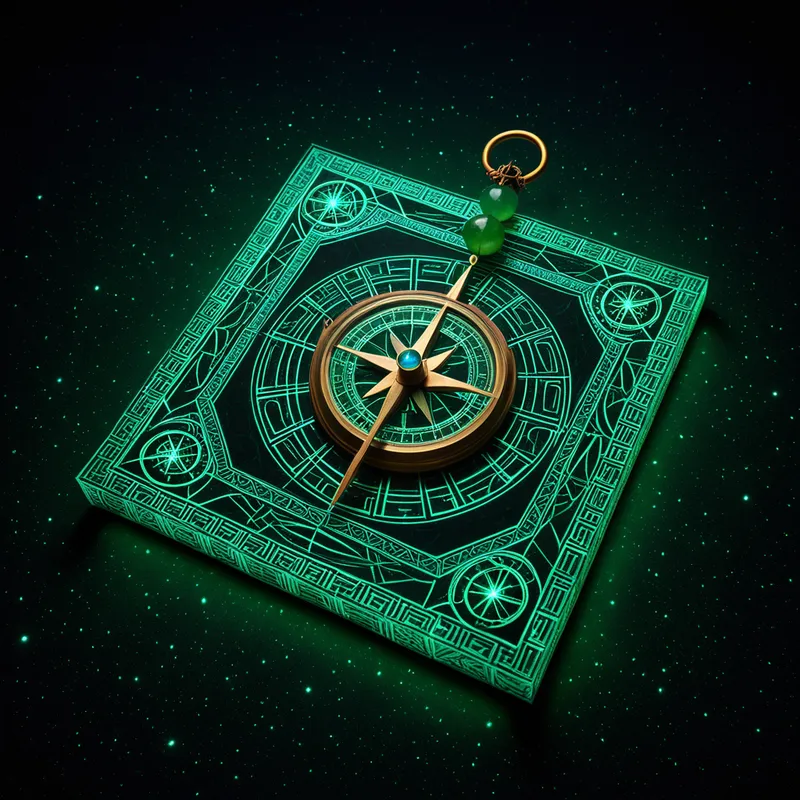
It was then the vision came. Not in a blaze of light, but in a profound silence that parted like a curtain. From the swirling mists of the Hundun, two shapes condensed. They descended not with fanfare, but with the inevitable, gentle certainty of a falling leaf. One was the Square, a right angle of immutable jade, cool and heavy with the patience of the earth. The other was the Compass, a pair of bronze legs joined at a pivot, light and poised with the potential of the heavens.
A voice, which was the mountain’s voice and the sky’s voice and the voice of his own deepest marrow, spoke without sound: "With these, measure the immeasurable. With these, give form to the formless. The Square for the earth, for the moral spine. The Compass for the heaven, for the encompassing spirit. Where they meet, the human world shall stand."
Lu Ban awoke, the tools resting in his palms. He felt their power not as magic, but as law—the first law of making. His descent was a transformation. Where he placed the Square, crooked trees straightened; leaning rocks found their footing. With a sweep of the Compass, he traced the course of a raging river, and its waters slowed into a benevolent curve, nurturing the land. He returned to the people and did not speak of gods or dragons. He simply built. He raised the first true roof, its beams perfectly plumb and level, a shelter that did not fight the wind but guided it. He built bridges that spanned chasms with graceful arcs, marrying the Square’s strength with the Compass’s sweep.
Where chaos had reigned, order blossomed—not a rigid, dead order, but a living geometry. Villages became towns, aligned with the stars and the seasons. The people learned the crafts, and in the straight grain of wood and the perfect circle of a wheel, they found a reflection of a cosmos that was no longer alien, but a home they could comprehend and, miraculously, contribute to. Lu Ban, the carpenter, had become the architect of the human world, using the divine gifts of the Square and the Compass to build the very idea of civilization from the ground up.
Cultural Origins & Context
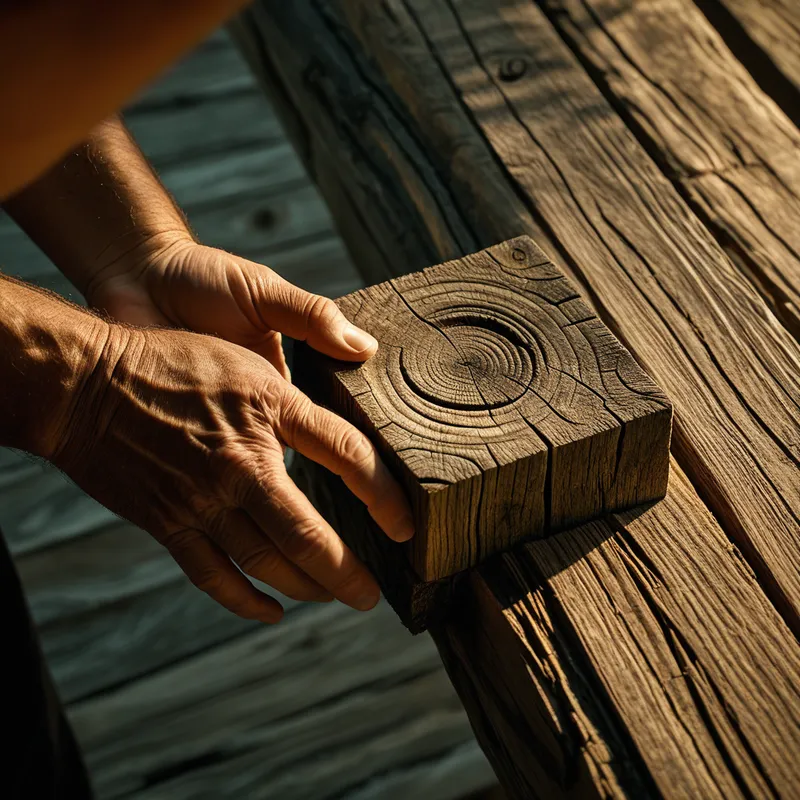
The figure of Lu Ban (also known as Gongshu Ban) straddles the line between historical master craftsman and mythic culture hero. His lore is woven deeply into the fabric of Chinese cosmology and practical philosophy. While not part of the canonical, state-sponsored myth cycles like those of the Yellow Emperor, his stories were propagated orally by guilds of carpenters, stonemasons, and builders—the very hands that shaped the material world of China. He is the patron saint of artisans, a testament to the profound spiritual and social status of craftsmanship.
This myth served a vital societal function. In a culture that prized harmony between humanity (Ren), earth (Di), and heaven (Tian), the Square and Compass were not mere tools but ritual implements and cosmological models. They physically enacted the Yin and Yang of creation: the masculine, assertive straight line (Square) and the feminine, receptive circle (Compass). The myth legitimized the artisan’s work as a sacred, world-sustaining act, transforming manual labor into a spiritual practice of aligning the human realm with the cosmic order.
Symbolic Architecture
At its heart, this myth is about the imposition of conscious principle onto unconscious matter. The Square and Compass are the primordial symbols of differentiation, the first act of perception that separates "this" from "that," right from wrong, center from periphery.
The Square is the archetype of the Boundary. It represents law, morality, structure, and the defining edge that gives shape to the formless. It is the backbone, the ethical spine, the 90-degree angle of decisive action. Psychologically, it is the function of Thinking and Sensation—the faculties that measure, categorize, and build stable realities.
The Compass is the archetype of the Horizon. It represents vision, spirit, inclusion, and the sweeping embrace of possibility. It is the circle of the psyche, the encompassing soul, the 360-degree field of awareness. Psychologically, it is the function of Intuition and Feeling—the faculties that envision, connect, and relate to the whole.
The myth tells us that true creation, whether of a building, a society, or a coherent Self, requires both. The Compass without the Square is boundless, aimless fantasy. The Square without the Compass is rigid, soul-crushing dogma. Lu Ban’s genius—and the myth’s profound instruction—is in their marriage.
The Dreamer's Resonance
When the symbols of the Square and Compass appear in modern dreams, they signal a profound process of inner re-structuring. The dreamer is likely at a point of psychic chaos or moral ambiguity—a "Hundun" of their own life. Perhaps a career path has dissolved, a relationship lacks boundaries, or a core belief has been shattered.
To dream of fumbling with a Square that won’t stay true speaks to an erosion of personal integrity or a fear that one’s foundational principles are flawed. The somatic sensation may be one of vertigo or a crooked spine. Conversely, to dream of a Compass spinning wildly, unable to find north, indicates a loss of direction, purpose, or spiritual center. The feeling is one of existential dizziness.
The healing dream is one where the dreamer uses the tools. Drawing a perfect circle around a chaotic emotion, or squaring off a messy life situation, signifies the ego’s courageous attempt to collaborate with the archetypal Self. It is the psyche’s innate Lu Ban, beginning the sacred work of rebuilding the inner world from the blueprint of the soul.
Alchemical Translation
The journey of Lu Ban is a perfect allegory for the Jungian process of Individuation. We begin in chaos (the unexamined life, the identification with the persona or the shadow). The climb up Mount Kunlun is the arduous, often lonely, work of introspection—confronting the unconscious.
The reception of the tools is the conjunction, the sacred marriage of opposites within the psyche. The Square is the conscious mind’s need for order and identity; the Compass is the unconscious mind’s wisdom and boundless potential. To hold both is to achieve a transcendent function.
The alchemical work is not to choose between discipline and spirit, but to discover the point where the straight line of your will touches the circle of your destiny. That point of tangency is the seat of the true Self.
The descent and building represent the final, crucial stage often overlooked: manifestation. Individuation is not complete in the mystical vision alone. It is fulfilled only when that integrated consciousness is applied to the "building" of one’s actual life—in straight, honest relationships (Square) and expansive, compassionate engagements with the world (Compass). We each are Lu Ban, tasked with using the inherited, archetypal tools of order and vision to construct a life that is both structurally sound and spiritually resonant, a humble yet magnificent temple within the boundless cosmos.
Associated Symbols
Explore related symbols from the CaleaDream lexicon: