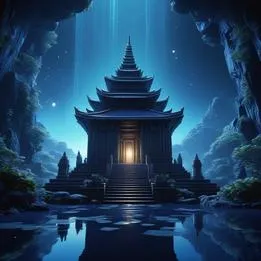
Temple
The Oracle's Essence
A temple often symbolizes spirituality, sanctuary, and a deep connection to the sacred aspects of life.
Interpretive Themes
✧ Archetypal Essence
Sage
Dominant Influence ( 90%)
The Temple as the Sage's hall of contemplation and truth, yet may become a prison of rigid beliefs.
The Light
The Temple as the Sage's hall of contemplation and truth, yet may become a prison of rigid beliefs.
The Shadow
The Temple as the Sage's hall of contemplation and truth, yet may become a prison of rigid beliefs.
Modern Visibility
In a secular world, temples can represent personal sanctuaries or places of inner peace amidst chaos.
◈ Mythological Resonance
Reference Myth Meaning & Symbolism
Global/Universal traditionExplore the profound myth of Reference, the cosmic librarian who holds the universe's memory. Discover its psychological meaning for modern identity and the search for truth.
Bi Discs Myth Meaning & Symbolism
Chinese traditionThe Bi Disc functions as a portable, microcosmic temple—a sacred space and ritual object that mediates between the human and the divine order.
Bishops' Rings Myth Meaning & Symbolism
Christian traditionTransformed from a grand cathedral to a simple hearth, representing the shift of the sacred locus from external institution to the inner sanctum of heartfelt action.
Vimānas Myth Meaning & Symbolism
Hindu traditionThe Vimāna as a mobile, soaring temple, representing the sacred architecture of the self and the idea that the vehicle of consciousness is itself a place of worship.
Natyashastra Myth Meaning & Symbolism
Hindu traditionThe theatrical space becomes a mobile temple where the divine is invoked and made visible through performance, a sacred enclosure for transformation.
Akua Gods of Hawaii Myth Meaning & Symbolism
Hawaiian traditionThe entire created world, as understood in the myth, where every element is an embodiment of the divine, making all of life a sacred space for interaction with the Akua.
Allat the Mother Goddess Myth Meaning & Symbolism
Arabian traditionThe sanctuary at Ta'if represents the constructed space where the archetype was consciously honored, a psychic structure that housed and localized the numinous.
Altan Khan's Dream Myth Meaning & Symbolism
Mongolian traditionThe Khan's ger transformed by the dream into a sacred space of revelation, and later, the historical meeting that institutionalized the spiritual alliance.
An the Sky God Myth Meaning & Symbolism
Sumerian traditionThe human attempt to reach the divine through the ziggurat, a architectural echo of the mountain-throne of An.
Ashmedai King of Demons Myth Meaning & Symbolism
Jewish traditionThe ultimate symbol of the individuated Self, a sacred inner order constructed through the integration of both divine wisdom and chthonic power.
Assiah the World of Action Myth Meaning & Symbolism
Kabbalistic traditionThe archetype of sacred space within Assiah, representing the human body, a community, or a crafted work that becomes a vessel for gathered and elevated light.
Asha and Druj Myth Meaning & Symbolism
Persian traditionThe human psyche or soul as the sacred space where this cosmic battle is waged, which must be maintained and purified to house the divine flame of truth.
Atahualpa's Prophecy Myth Meaning & Symbolism
Incan traditionThe Coricancha and other sacred spaces, representing the inner sanctum of belief and identity that is plundered and desecrated.
Barbelo the First Thought Myth Meaning & Symbolism
Gnostic traditionThe divine Pleroma itself, with Barbelo as its foundational principle and inner sanctum, the architectural blueprint of perfect spiritual order.
Ayizan the First Priestess Myth Meaning & Symbolism
African Diaspora traditionThe sacred space Ayizan creates in the marketplace, symbolizing the inner sanctuary that must be consciously built and maintained within the psyche.
Bacabs the Four Sky Bearers Myth Meaning & Symbolism
Mesoamerican traditionThe sacred space created by the stable world, with the four Bacabs acting as the cornerstones of both physical and psychic sanctuaries.
Beriah the World of Creation Myth Meaning & Symbolism
Kabbalistic traditionSymbolizes Beriah as the supernal sanctuary, the perfectly designed cosmic house of God built not from stone but from the geometry of thought and will.
Bogd Khan Mountain Myth Meaning & Symbolism
Mongolian traditionThe mountain itself becomes a natural temple, a protected temenos that exists as both a geographical fact and a psychological state of sacred, inviolate space.
Coya Raymi Moon Festival Myth Meaning & Symbolism
Incan traditionThe Coricancha and the ritual space itself, representing the inner sanctum of the soul where the sacred marriage of light and shadow is solemnized.
Dorje Shugden Myth Meaning & Symbolism
Tibetan Buddhist traditionThe inner sanctum, the system of belief or the personal psyche that requires vigilant protection from both external violation and internal decay.
Enmerkar and the Lord of Aratta Myth Meaning & Symbolism
Sumerian traditionThe ultimate cultural project of the conscious mind, the ordered structure (a coherent psyche, a life's work) that can only be built with resources integrated from the unconscious realm.
Erra and Ishum Myth Meaning & Symbolism
Babylonian traditionThe sacred space within the city (the Self) that is desecrated and must be reconsecrated after the period of destruction and insight.
Eridu the First City Myth Meaning & Symbolism
Sumerian traditionThe sacred center, the E-abzu, symbolizing the connection point between the divine archetypal world and human consciousness.
Hasan and Husayn at Karbala Myth Meaning & Symbolism
Islamic traditionThe family and camp of Husayn become a moving temple of truth, a sacred space besieged by profane power, representing the inner sanctum of conscience.
Hod Splendour Myth Meaning & Symbolism
Kabbalistic traditionThe human mind and soul become the temple where the scattered sparks are gathered and reassembled through study, contemplation, and righteous action.
Hubal the Arrow God Myth Meaning & Symbolism
Arabian traditionThe sacred container (the Kaaba) where the ritual of divination occurs, symbolizing the inner psychic space where profound choices are confronted.
Ile the Sacred Earth Myth Meaning & Symbolism
Yoruba traditionThe earth itself is the first and ultimate temple, a sacred space where the divine and the mortal meet, and where every act can be ritual.
Intihuatana Stone Myth Meaning & Symbolism
Incan traditionThe sanctified space, both external and internal, where the sacred alignment between the individual and the cosmic order is performed.
Izumo Grand Shrine Origin Myth Meaning & Symbolism
Shinto traditionIn the broadest sense, the myth is about the consecration of inner space, building a temple of the soul where the deepest self resides.
Jamshid and the Jeweled Cup Myth Meaning & Symbolism
Persian traditionThe ordered, sacred space of the integrated psyche that Jamshid builds and then desecrates with his declaration, representing a state of inner alignment that must be maintained through reverence.
Kane the Creator Myth Meaning & Symbolism
Hawaiian traditionThe entire created world as a heiau for life, and the human body as a sacred vessel, representing a consecrated space where the divine and earthly meet.
Khormusta Tengri of the Mongol Siberian Myth Meaning & Symbolism
Siberian traditionThe celestial court itself, symbolizing the psyche as a sacred, structured space where the divine (the Self) resides and administers.
Ku God of War Myth Meaning & Symbolism
Hawaiian traditionThe heiau dedicated to Ku, symbolizing a consecrated space where raw power is ritualized, contained, and directed toward a sacred end.
Kukulkan Myth Meaning & Symbolism
Mesoamerican traditionThe sacred space created by the myth’s influence, representing the constructed self, a life built in alignment with higher principles, and a vessel for divine connection.
Laka Goddess of the Hula Myth Meaning & Symbolism
Hawaiian traditionThe human body and the dance space as a consecrated vessel, a kuahu, where the divine is invited to manifest through disciplined artistry.
Loro Jonggrang Myth Meaning & Symbolism
Indonesian traditionThe impossible creation, a structure of sacred order and consciousness built to win the soul, yet forever incomplete without the soul's willing participation.
Mago Primordial Goddess Myth Meaning & Symbolism
Korean traditionThe world itself as a sacred space built from divine substance, implying that to exist within reality is to dwell within a holy architecture.
Machu Picchu Sacred City Myth Meaning & Symbolism
Incan traditionThe sanctified space within the psyche where the individual consciously encounters and honors the transpersonal, the divine, or the deepest aspects of the Self.
Metatron in Kabbalah Myth Meaning & Symbolism
Kabbalistic traditionThe celestial palaces (Heikhalot) are the interior sacred architecture of the psyche through which one must travel to reach the inner sanctum of the Self.
Mount Agung Sacred Volcano Myth Meaning & Symbolism
Indonesian traditionThe human-made structure of conscious devotion and ritual, symbolizing the ego's arduous work to rebuild a sacred connection after a spiritual catastrophe.
Nigihayahi Star God Myth Meaning & Symbolism
Shinto traditionThe psyche itself, once integrated, becomes a sacred space where both divine order and earthly substance are honored.
Ometecuhtli and Omecihuatl Myth Meaning & Symbolism
Aztec traditionThe inner sanctum of Omeyocan itself, the archetypal model for a sacred space where opposites are held in harmonious balance.
Olodumare Myth Meaning & Symbolism
Yoruba traditionRepresents the structured cosmos itself, and the human psyche, as a sacred space where delegated divine forces operate under a supreme, architectural principle.
Ori and Personal Destiny Myth Meaning & Symbolism
Yoruba traditionThe physical body and the conscious life, which become the sacred space where the chosen destiny, guarded by Ori, is enacted and realized.
Orunmila Myth Meaning & Symbolism
Yoruba traditionRepresents the sacred space of divination, the consecrated ground where heaven and earth meet, and where Orunmila's wisdom is accessed.
Pachacuti and the Empire Myth Meaning & Symbolism
Incan traditionThe built manifestation of sacred order; the Coricancha and the redesigned Qosqo represent the psyche organized around a central, numinous value.
Pura Besakih Mother Temple Myth Meaning & Symbolism
Indonesian traditionThe consciously constructed structure of the psyche, a sacred space where order is maintained and communion with the deeper Self occurs.
Qoricancha Temple of the Sun Myth Meaning & Symbolism
Incan traditionThe archetypal symbol of the sacred center, the constructed space where the divine and human meet, representing the integrated psyche in the Qoricancha myth.
Rabbi Akiva's Vision Myth Meaning & Symbolism
Jewish traditionThe symbol of the psychic center, the integrated Self, or any sacred internal or external structure that can be destroyed and must be rebuilt on a new level of consciousness.
Sakpata God of the Earth Myth Meaning & Symbolism
West African traditionThe sacred structure built at the boundary between community and wilderness, symbolizing the need to create a conscious space to honor the marginalized aspects of the psyche.
Shechinah in Exile Myth Meaning & Symbolism
Jewish traditionThe symbol of wholeness, order, and the contained sacred space; its destruction initiates the exile, representing the shattered center of the self or community.
Shambhala Myth Meaning & Symbolism
Tibetan Buddhist traditionThe sacred architecture of Shambhala’s palaces and stupas, representing the inner sanctum of the psyche where the divine or the Self is honored and encountered.
Sin the Moon God Myth Meaning & Symbolism
Babylonian traditionRepresents the ziggurat of Ur or Harran, the sacred space where humanity seeks to commune with the cosmic order and divine fate revealed by the moon.
Siduri the Alewife Myth Meaning & Symbolism
Babylonian traditionSiduri’s tavern as a humble, alternative sanctuary where the wisdom of immanence is dispensed, far from the grand temples of gods.
Sinchi Roca Myth Meaning & Symbolism
Incan traditionThe ordered, sacred space of civilization that Sinchi Roca helps to consolidate, representing the structured psyche and social order.
Songtsen Gampo Myth Meaning & Symbolism
Tibetan Buddhist traditionThe Jokhang itself, symbolizing the constructed sacred center within the psyche, where the divine image is housed and the chaotic world is ordered.
The Babylonian World Map Myth Meaning & Symbolism
Babylonian traditionRepresented by Babylon at the map's heart, it is the sacred center, the seat of conscious identity and cultural meaning.
The Ceque System Myth Meaning & Symbolism
Incan traditionThe Coricancha represents the inner sanctum of the Self, the central, sacred space from which all order and meaning emanates.
The Ceiba World Tree Myth Meaning & Symbolism
Mesoamerican traditionThe human-built reflection of the World Tree, a sacred center designed to facilitate ritual connection between the earthly and divine realms.
The Black Stone of the Ka'ba Myth Meaning & Symbolism
Arabian traditionThe Ka'ba as the constructed sanctuary, the conscious life and personality structured around the indwelling, mysterious core of the Black Stone.
The Bogomil Heresy Myth Meaning & Symbolism
Gnostic traditionThe material cosmos and the institutional churches, seen as prisons built by the false god, from which the spirit must escape.
The Chosen Women Acllas Myth Meaning & Symbolism
Incan traditionThe Acllawasi itself, a sacred enclosed space of incubation, discipline, and transformation, separate from the profane world.
The Descent of the Moon God Myth Meaning & Symbolism
Sumerian traditionThe ziggurat of Ur, representing the structured, conscious world that falters without its connection to the divine cycle enacted through the god’s journey.
The Dragon King of the Sea Myth Meaning & Symbolism
Korean traditionThe underwater palace, Yonggung, representing the sacred, ordered center within the chaotic unconscious, the seat of the inner ruler.
The Eight Auspicious Symbols Myth Meaning & Symbolism
Tibetan Buddhist traditionA symbol of sacred architecture and inner sanctum, reflecting how the Eight Symbols are used to consecrate space and structure the inner landscape of the mind.
The First Dalai Lama Myth Meaning & Symbolism
Tibetan Buddhist traditionThe physical and spiritual institution of the Dalai Lama, built first by Gendun Drup, which serves as a container and beacon for the sacred.
The Feathered God Ku Myth Meaning & Symbolism
Hawaiian traditionThe heiau where the feathered god resides, representing the consecrated inner space where this alchemical transformation of the self is enacted and honored.
The Five Suns of Creation Myth Meaning & Symbolism
Incan traditionThe kind of structure built in the fourth, silver age, symbolizing the intellectual and political order that, when divorced from heart, becomes a prison.
The Founding of Tenochtitlan Myth Meaning & Symbolism
Aztec traditionThe sacred center built on the site of the vision, symbolizing the inner sanctum of the psyche constructed around a core, numinous experience.
The Golden Staff Test Myth Meaning & Symbolism
Incan traditionThe civilization built upon the sacred spot, representing the ordered, meaningful structure that arises when one's core purpose is correctly founded.
The Haenyeo Sea Women Spirits Myth Meaning & Symbolism
Korean traditionThe human body and psyche as the sacred vessel where the alchemical process of descent, encounter, and transformation takes place.
The Ibbur Righteous Attachment Spirit Myth Meaning & Symbolism
Jewish traditionThe inner sanctum of the individual, the purified vessel of heart and mind that must be prepared to host such a sacred attachment.
The Island of the Sun Myth Meaning & Symbolism
Incan traditionThe constructed space for the sacred; the civilization built by Manco Cápac and Mama Ocllo is a temple to the solar consciousness they brought into the world.
The Island of the Moon Myth Meaning & Symbolism
Incan traditionThe sacred, interior space of the Self built on the island, representing a psychic structure dedicated to soul-work and authenticity.
The Kabbalah Tree of Life Myth Meaning & Symbolism
Jewish traditionSymbolizes the cosmos and the human soul as sacred structures built according to the divine blueprint of the Tree.
The Lament for Nippur Myth Meaning & Symbolism
Sumerian traditionThe Ekur represents the sacred center of the self, the psychic structure that connects the individual consciousness to the transpersonal, divine order.
The Lament for the Destruction of Sumer Myth Meaning & Symbolism
Sumerian traditionThe desecrated ziggurat represents the collapse of one's highest values, spiritual center, or connection to the divine, leaving the soul exposed and profaned.
The Lote Tree of the Utmost Boundary Myth Meaning & Symbolism
Islamic traditionThe Sidrah as the final sanctuary of creation, the most remote and holy place where direct communion becomes possible.
The Lurianic Kabbalah Myth Meaning & Symbolism
Kabbalistic traditionThe cosmos and the human soul as a structure to be rebuilt, a sacred space where the divine presence can dwell once the vessels are mended.
The Mandaean Creation Myth Myth Meaning & Symbolism
Gnostic traditionThe human body itself, crafted by Ptahil, is the temporary temple housing the divine spark, requiring ritual purity and reverence.
The Mayan Four Directions Myth Meaning & Symbolism
Mesoamerican traditionThe human-built reflection of the cosmic order, often architecturally aligned with the four directions to serve as a portal to the sacred.
The Me Divine Laws Myth Meaning & Symbolism
Sumerian traditionThe destination and repository; Uruk becomes a living temple of the Me, just as the integrated psyche becomes a sacred vessel for realized potential.
The Messiah Stories Myth Meaning & Symbolism
Jewish traditionThe symbol of the perfected world order, the integrated Self, and the dwelling place of the divine presence that must be rebuilt within and without.
The Mayan World Tree Myth Meaning & Symbolism
Mesoamerican traditionThe human-built reflection of the World Tree and sacred mountain, a constructed axis mundi designed for ritual communication between the realms.
The Poem of the Righteous Sufferer Ludlul Myth Meaning & Symbolism
Babylonian traditionThe symbol of sacred order and community; expulsion from it is the depth of isolation, and return to it marks the reintegration of the transformed individual into a meaningful world.
The Python God of Dahomey Myth Meaning & Symbolism
West African traditionThe kingdom itself, conceived as a sacred enclosure defined by the python's body, a place where the divine and human realms intersect.
The Prambanan Temple Creation Myth Meaning & Symbolism
Indonesian traditionThe central symbol of divine order, spiritual ambition, and the psyche's sacred architecture, built from both devotion and conflict.
The Spirit Possession Ceremony Myth Meaning & Symbolism
African Diaspora traditionThe sacred, protected ritual space (the terreiro) where this dangerous alchemical operation of possession can safely occur, a container for transformation.
The Tale of Panji Myth Meaning & Symbolism
Indonesian traditionSymbolizes the sacred inner space where the final reunion or recognition occurs, representing the psyche as a holy site of integration.
The Talmudic Creation Stories Myth Meaning & Symbolism
Jewish traditionThe sacred center from which Adam's clay was taken, representing the inner core of order, holiness, and connection that is the foundational site of human identity and purpose.
The Throne of God Kursi Myth Meaning & Symbolism
Islamic traditionThe microcosmic reflection of the Throne in the human world; a sacred space designed to evoke the order and presence of the divine seat.
The Tree of Life Kabbalistic
Kabbalistic traditionThe entire structure of the Tree is often envisioned as a celestial temple or palace, with each sphere being a hall or chamber of divine presence.
The White Rock of Huanacauri Myth Meaning & Symbolism
Incan traditionThe White Rock itself is a natural temple, and the city of Cusco founded from its vision becomes the temple-city, the ordered world built around a sacred center.
The Yazata Angels Myth Meaning & Symbolism
Persian traditionThe psyche itself as a sacred space that must be maintained and ordered through ritual (conscious practice) to house the divine principles (Yazatas).
The Zohar Myth Meaning & Symbolism
Kabbalistic traditionThe repaired vessel of the individual soul and the collective world, the sacred space rebuilt through the work of restoration to once again house the divine presence.
Buraq the Heavenly Steed
Islamic traditionThe sacred destination of Al-Aqsa and the internal sanctuary of the heart where the journey begins and is integrated.
Chichen Itza Serpent of Light
Mesoamerican traditionThe human-built axis mundi, a structured portal designed to facilitate communion between the earthly and divine realms through ritual and alignment.
Borobudur as Cosmic Mountain
Indonesian traditionA consecrated space designed as a microcosm, a meeting point between the human and the divine, structured for ritual and inner transformation.
Ekur Sacred Mountain House
Sumerian traditionThe human-built echo of the divine dwelling, a consecrated space where cosmic order is mirrored and maintained through ritual.
Enki and the World Order
Sumerian traditionThe structured, sacred space that results from the establishment of order, a microcosm of the cosmos as administered by the gods.
Enlil
Sumerian traditionThe earthly dwelling of the god, the organized, sacred space where cosmic order is reflected and maintained.
Esagila Temple of Marduk
Babylonian traditionThe archetypal container for the sacred, representing a consecrated space where the divine and human realms meet and communicate.
Guan Yu God of War
Taoist traditionThe sacred space where the fragmented spirit is made whole and worshipped; the site of integration for Guan Yu’s divided head and body.
Huaca Sacred Places
Incan traditionThe human-built frame for the huaca, representing the structured ritual and reverence that channels and honors raw, natural sacredness.
Inti Raymi Sun Festival
Incan traditionThe Qorikancha, the physical and spiritual center of the world, where the sun’s essence was housed and from which all ritual order emanated.
Itzpapalotl Obsidian Butterfly
Aztec traditionNot as a place of simple worship, but as Tamoanchan, the paradisiacal yet severe place of origin over which she rules, a sanctuary built on foundational sacrifice.
Jimmu First Emperor of Japan
Shinto traditionEchoed in the Shinto shrines that later enshrined this mythic history, representing the sacred space where the divine narrative is housed, remembered, and ritually re-engaged by the community.
Malkuth the Kingdom
Kabbalistic traditionThe constructed sacred space in the material world, reflecting the order of the higher realms and housing the divine presence.
Manco Capac and Mama Ocllo
Incan traditionThe built manifestation of sacred order; a civilization's heart and its conscious connection to the divine.
Marduk Slays Tiamat
Babylonian traditionThe built sanctuary at the center of the ordered world, a microcosm of the cosmos and the dwelling place of the sovereign principle that maintains cosmic law.
Marduk Forty Nine Names
Babylonian traditionThe axis mundi where heaven and earth meet, the ordered house for the divine, built in gratitude for the establishment of cosmos.
Marduk the City God
Babylonian traditionThe sacred space where the divine meets the human, representing the inner sanctuary where the supreme principle is honored and order is maintained.
Mount Kailash as Axis Mundi
Tibetan Buddhist traditionA constructed sacred space that mirrors cosmic order, serving as a deliberate intersection point between the human and the divine realms.
Naga Basuki
Indonesian traditionThe constructed sacred space that mirrors the cosmic order, often physically supported and protected by Naga figures as its foundational guardians.
Nebuchadnezzar's Dream
Babylonian traditionImplied in the contrast to the statue; the true, eternal dwelling of the divine versus the man-made idol of power.
Nanna the Moon God
Sumerian traditionThe ziggurat of Ur, the E-gish-shir-gal, as the earthly anchor of the celestial, a place where cosmic time is made manifest in ritual.
Ngun Sacred Word Zulu
African traditionA consecrated space set apart for communion with the divine, representing the inner sanctum of the soul or community.
Prince Ahmad and the Fairy Peri Banou
Arabian traditionThe fairy palace, an inner sanctuary of peace, order, and sacred union that must be protected from profane intrusion.
Puma the Sacred Animal
Incan traditionThe consecrated space where divine power meets the human realm, much as the puma-city of Cusco was a living temple to terrestrial-cosmic sovereignty.
Ryujin Dragon King of the Sea
Shinto traditionA sacred inner structure of the psyche, a place of encounter with the divine and repository of profound meaning.
Solomon and the Jinn
Islamic traditionThe perfected Self, the sacred space built through disciplined effort where the divine and the human, the conscious and unconscious, are brought into harmonious order.
The 401 Orisha
Yoruba traditionThe sacred space, whether a grove, a shrine, or the human heart, where communion with the divine aspects occurs and the Orisha are honored.
The Creation at Teotihuacan
Aztec traditionTeotihuacan as the physical and metaphysical site of divine transformation, where the boundary between earth and cosmos is thinnest.
The Dragon Kings of the Four Seas
Taoist traditionA consecrated space for ritual exchange with the divine or the deep psyche, where offerings are made and communion is sought.
The Exaltation of Inanna
Sumerian traditionThe sacred structure where the acquired cosmic decrees are housed and integrated, the point where divine order meets human community.
The Feminine Divine Shekhinah
Kabbalistic traditionNot merely a building, but any sanctified space where the Indwelling Presence can reside, including the human heart and the community.
The Gospel of Philip
Gnostic traditionThe cosmos and the human being as a layered structure, with the holy of holies representing the innermost core of the divine Self.
The Heart as the Throne of God
Sufi traditionThe human body and psyche as the sacred architecture built to house the inner sanctum, the heart-throne of God.
The Jade Emperor Korean
Korean traditionThe structured, ritual space where the cosmic hierarchy is mirrored on earth, and where communication with the celestial bureaucracy is formally conducted.
The Jade Emperor
Taoist traditionThe architectural representation of the celestial court on earth, a space where the human realm ritually connects with and acknowledges the divine hierarchy.
The Marriage of Martu
Sumerian traditionThe sacred inner space where the divine (or the integrated Self) is housed and honored, often built after a period of conflict or chaos.
The Menehune
Hawaiian traditionThe sacred space constructed through devotion and skill, a meeting point between the human and the divine, built from the offerings of the hidden self.
The Night Journey Isra and Miraj
Islamic traditionA consecrated space, whether physical or internal, that serves as a meeting point between the human and the divine, a sanctuary for prayer and revelation.
The Palm Tree of Orunmila
Yoruba traditionA consecrated space for worship and communion with the divine, representing the inner sanctuary of the soul and structured spiritual practice.
The Preserved Tablet
Islamic traditionA sacred, protected space that mirrors the Tablet's inviolability, housing the holy and serving as a point of contact between the eternal decree and the temporal world.
The Prophet Isaiah's Vision
Hebrew traditionThe constructed sacred space that serves as a container for the encounter with the divine, mirroring both cosmos and psyche.
The Seventh Day Rest
Hebrew traditionNot merely a physical space, but the sanctified time of the Sabbath, a dwelling place for the divine presence in the rhythm of life.
The Shekhinah
Hebrew traditionThe architectural symbol of her dwelling, representing both a physical sanctuary and the inner, sacred space of the heart and community.
The Sword of Damocles Hebrew
Jewish traditionThe inner sanctuary of the soul where this confrontation between the self and the divine standard takes place.
The Thirteen Heavens
Aztec traditionThe cosmos as a vast, living temple, with each heaven a separate chapel dedicated to a specific aspect of the divine.
The Thirty Two Paths of Wisdom
Kabbalistic traditionThe constructed sacred space, both within and without, whose architecture mirrors the divine order and provides a vessel for revelation.
The Templo Mayor Myth
Aztec traditionThe sacred axis where heaven, earth, and underworld meet; a constructed center for ritual that seeks to influence and commune with cosmic forces.
The Twenty Two Letters of Creation
Kabbalistic traditionA constructed space where the divine alphabet is made manifest through ritual, prayer, and sacred architecture, mirroring the universe as God’s dwelling.
Yetzirah the World of Formation
Kabbalistic traditionThe structured, sacred space built according to a heavenly blueprint, mirroring the process of giving perfect form to divine presence.
Cultural Lenses
Jungian
Learn More →Temples symbolize collective unconscious and archetypes of the sacred. Dream analysis. Seen as integration of spirituality in personal psychology.
East Asian
Learn More →Temples are seen as homes of deities, embodying spiritual energy. Worship and festivals. [South Asian] [Hindu] Essential for ritual practices and festivals.
European
Learn More →Temples were built to honor gods and were central to communal life. Civic and religious affairs. [Greek] Spaces for communal worship and celebrations.
South Asian
Learn More →Temples are considered sacred spaces where humans connect with the divine, representing the cosmic order.
Middle Eastern
Learn More →Temples served as places for ritualistic worship and housing of deities, symbolizing the gateway to the spiritual realm.
European
Learn More →Churches serve as modern temples, indicating community worship and personal reflection within the faith.
Jungian
Learn More →A temple can represent the psyche's sacred space, where the conscious meets the unconscious, allowing for personal transformation.
Latin American
Learn More →Symbolizes sacred sites for rituals, connecting communities with their spiritual identity and the cosmos.
Middle Eastern
Learn More →Temples serve as spaces for fire worship and maintaining the sacred fire, symbolizing purity and the divine presence.
Middle Eastern
Learn More →Mosques serve as places of worship, emphasizing community, reflection, and submission to God.
✦ The Oracle's Prediction
A moment of profound insight or connection to something greater than yourself.
An opportunity for deep, meaningful conversation or reconciliation.
Contextual Nuances
Entering a grand temple
Represents a stirring of spiritual longing.
Meditating in a quiet temple
Experiencing tranquility and peace.
Witnessing a temple being destroyed
Fear of losing one's faith or values.
Building a temple
Desire to create a solid foundation for spiritual beliefs.
Pilgrimage to a sacred site
Seeking enlightenment and fulfillment.
Integrative Mantra
"Affirmation"
Integration Ritual
Ritual Practice
Clear a small space in your room. Light a candle and place it in the center. Sit quietly, imagining the candlelight defining a sacred circle around you—your personal temple. Breathe deeply for five minutes, visualizing this space as inviolable. Extinguish the candle, carrying the sense of sanctuary within.
Questions for Reflection
- "What does spirituality mean to me?"
- "Where do I find sanctuary in my life?"
Related Weavings
The Portal is Always Open
Every dream is a personalized dispatch from the deep. Don't let yours fade into static.
Interpret Full Dream