
Ngun Sacred Word Zulu
A powerful sacred word in Zulu tradition that embodies spiritual essence, used in rituals to connect with ancestors and maintain cosmic harmony.
The Tale of Ngun Sacred Word Zulu
In the beginning, before the sun learned its path and the rivers carved their beds, there was a silence so profound it was a presence. From this silence, the First Ancestors emerged, their voices shaping the world from the clay of potential. They spoke the names of things—ilanga for sun, umfula for river—and so these things came to be. But one sound, one vibration, they held within themselves, a seed of power too potent for casual utterance. This was Ngun.
The story tells of a time when the harmony between the world of the living (impilo) and the world of the ancestors (amadlozi) grew thin. Misunderstanding festered like a weed in a neglected field. The people felt orphaned under the vast sky, their prayers seeming to fall like stones to the ground. The great isangoma, the seer whose eyes could perceive the spirit world, retreated to a sacred cave. For seven days and seven nights, she drank only from a calabash of pure spring water and listened not with her ears, but with her umoya—her spirit.
On the seventh night, as the moon hung like a sliver of bone in the sky, the veil between worlds tore. Not with violence, but with the soft sigh of a curtain parting. The collective voice of the ancestors flowed through the tear, not as a chorus of words, but as a single, resonant tone that vibrated in the marrow of the earth and the hollow of the seer’s bones. It was the sound of origin, of connection, of the unbreakable thread. It was Ngun.
The isangoma emerged from the cave, her face etched with the gravity of her charge. She gathered the elders under the branches of a mighty umSinsi tree. There, she did not speak the word. Instead, she let its echo, its aftermath, shape her teaching. She showed them how the word was not a tool for command, but a key for alignment; not a spell to compel, but a sacred resonance to invite. It was to be used to seal the rituals of birth, to bless the union of marriage, to guide the spirit of the departed, and to mend the fabric of the community when it frayed. The word itself would remain unspoken except in the most sacred of moments, guarded within the vessel of tradition, passed from elder to initiate in a whisper that was more breath than sound, a trust as heavy as a mountain.
Cultural Origins & Context
The Ngun sacred word is rooted deeply in the Ubuntu philosophy and the Zulu cosmology, where the universe is a living, breathing entity maintained by reciprocal relationship. This is not a tradition of scripture, but of oral-aural transmission—a spirituality carried on the breath and received by the spirit. The power of the spoken word, amazwi, is paramount; words are active forces that can heal, bless, curse, or create.
Within this framework, Ngun exists at the apex of linguistic sanctity. It is less a lexical entry and more a mantra of ultimate reality. Its guardians are typically the elders, the amadlozi (ancestors) in living form, and the izangoma (diviners/healers). Their role is not one of ownership, but of stewardship. The secrecy surrounding its precise pronunciation and full semantic field is not about exclusion for power’s sake, but about protection. It protects the word from dilution, from profane use, and protects the community from the misapplication of a force they may not be prepared to channel. It ensures the word retains its numinous charge, its amandla amakhulu (great power).
Symbolic Architecture
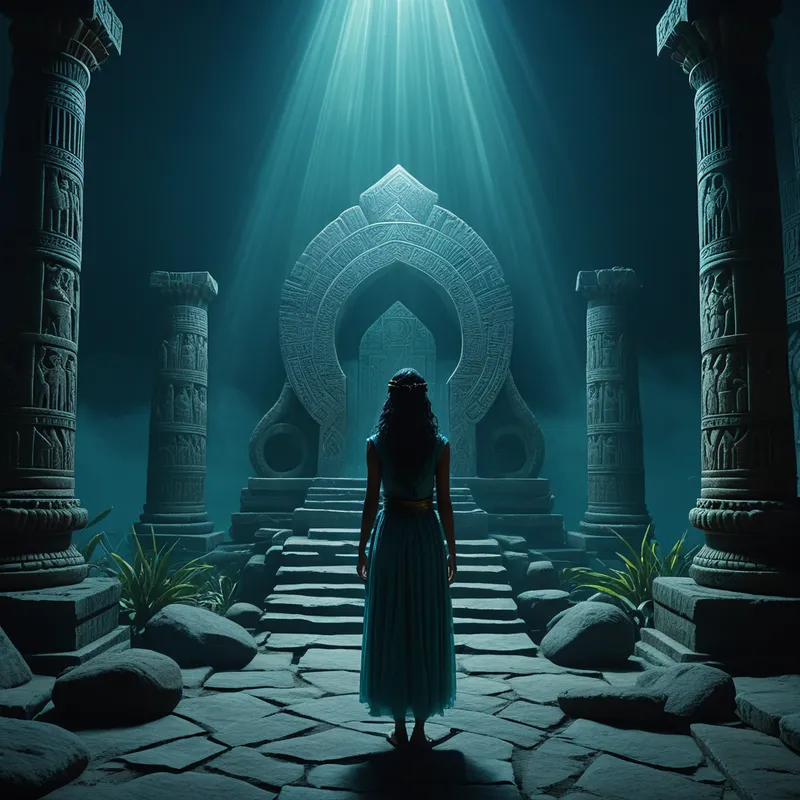
Ngun functions as the spiritual keystone in the archway connecting humanity, nature, and the ancestral realm. It symbolizes the primordial vibration from which all harmonious relationship emanates. It is the acknowledgment that before division, there was unity; before separation, there was connection.
It is the sound of the root seeking water in the dark earth, and the sound of the water answering. It is not the call nor the response, but the space between them where they become one thing.
Psychologically, it represents the foundational, often unconscious, archetypal pattern of wholeness—the Self in its unmanifest state. To invoke it ritually is to momentarily silence the ego’s chatter and allow the deeper, collective order of the psyche to realign. It is an auditory mandala, a sonic center from which all parts of the individual and community can re-order themselves in harmony.
The Dreamer's Resonance
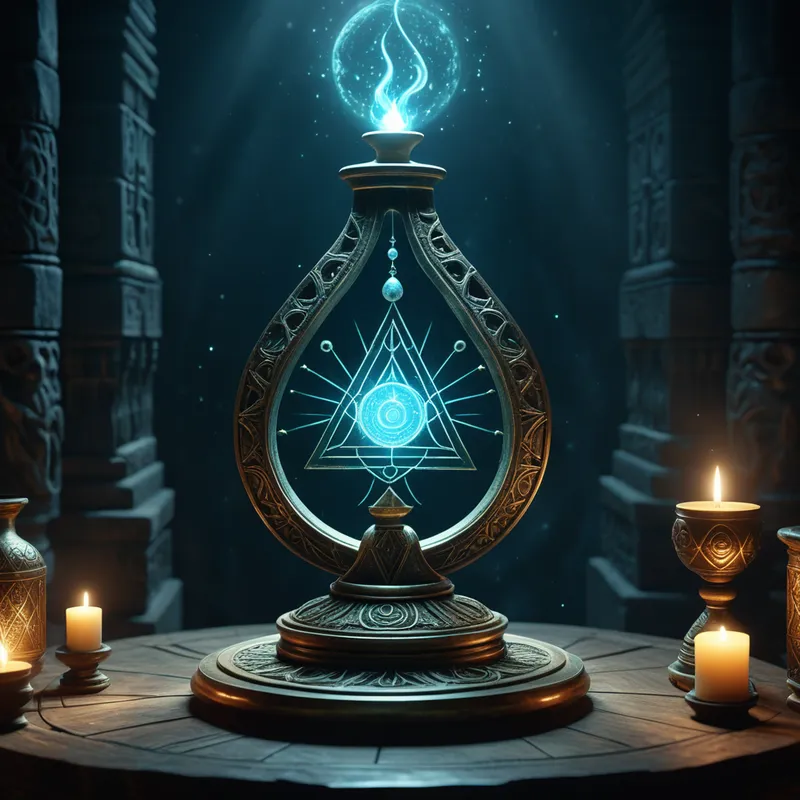
For the modern dreamer or psyche, separated from such intact traditions, the myth of Ngun speaks to a profound inner longing: the search for the authentic, grounding word. In a world saturated with empty chatter, propaganda, and digital noise, we yearn for the one true sound that resonates with our deepest essence. Ngun represents that inner, sacred truth—the core value, the personal mantra, the soul’s name that we often spend a lifetime seeking to hear and embody.
Engaging with this myth invites introspection. What is the guarded, sacred space within your own psyche? What inner “word” or principle, when honored, brings your personal world into alignment and connects you to your own inner ancestry—the inherited patterns, strengths, and wisdom of your lineage? The myth challenges us to become elders of our own inner realm, to learn the discipline of guarding our sacred truths from the profane demands of the outer world, yet knowing the precise ritual moment to “speak” them into action to heal and integrate our lives.

Alchemical Translation
The alchemical process here is one of sublimation: transforming the base, disparate elements of experience (conflict, alienation, fragmentation) into the gold of cohesive meaning and spiritual connection through the application of a sacred, unifying principle. Ngun is the lapis philosophorum, the philosopher’s stone of sound.
In psychological alchemy, the guarded word is the transcendent function made audible. It does not resolve tension by choosing one side over another, but by introducing a third, superior term—a vibrational field—in which opposites are contained and harmonized.
The ritual use of Ngun is the operation. The community in discord is the prima materia. The elder or isangoma is the alchemist. The uttered word, at the correct moment and with correct intent, is the catalyst that initiates the coniunctio oppositorum—the sacred marriage of spirit and matter, ancestor and descendant, individual and collective. The resulting “product” is not a physical substance, but a state: ukuthula (peace), which in this context is not merely the absence of conflict, but the active, harmonious order of all things in their right relation.
Associated Symbols
Explore related symbols from the CaleaDream lexicon:
- Word — The fundamental unit of creative and spiritual power, a vessel for meaning and a tool for shaping reality.
- Ancestor — The spiritual bridge between the living and the primordial past, a source of wisdom, identity, and continuity.
- Ritual — A prescribed symbolic act designed to mediate between the mundane and the sacred, creating order and transmitting power.
- Tradition — The living river of knowledge and practice passed through generations, providing structure and meaning to a community.
- Root — The hidden, foundational source of nourishment, stability, and connection to one’s origin and essential nature.
- Circle — A symbol of wholeness, unity, the cyclical nature of life, and the inclusive community where all have a place.
- Key — An instrument of unlocking, granting access to hidden knowledge, sealed realms, or deeper levels of understanding.
- Temple — A consecrated space set apart for communion with the divine, representing the inner sanctum of the soul or community.
- Bridge — A structure of connection and transition, spanning the divide between worlds, states of being, or aspects of the self.
- Dream — The nocturnal landscape where the conscious and unconscious commune, offering guidance, revelation, and messages from the deeper self.