The Architecture of Becoming: Dreams of Time
The Somatic Echo
Before the mind can parse the symbolism, the body knows. A dream of time announces itself not as a thought, but as a visceral pressure in the chest—a tectonic weight of too late or a dizzying, hollow vertigo of endless waiting. It is the gut-clench of a missed connection, the leaden fatigue of a journey with no terminus, or the electric jolt of a deadline that arrived yesterday. This is the somatic echo: the physical registration of your psyche’s relationship to its own unfolding. It is the feeling of history as a substance, too dense or too thin, and of the future as a structure either collapsing or refusing to be built. You wake not with an idea, but with a bodily truth: your internal clockwork is out of sync with the story you are trying to live.
The Dreamer's Log
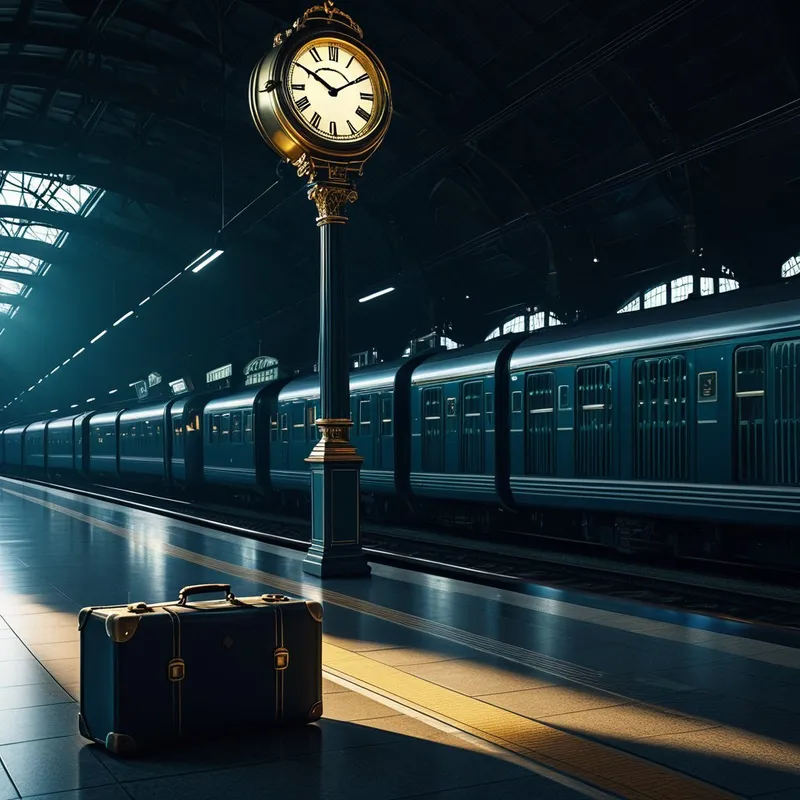
I am standing in a grand, empty train station under a vaulted glass ceiling. The platform is deserted. A single, ornate brass clock on the wall has no hands, yet I know, with absolute certainty, that my train left an eternity ago. There is no anger, only a profound, quiet grief for a departure I never witnessed.
This dream is not about missing a literal train. It is the psyche’s alchemical report: the conscious ego has become estranged from its own crucial timing, mourning a potential self that embarked without its awareness.
The False Lead
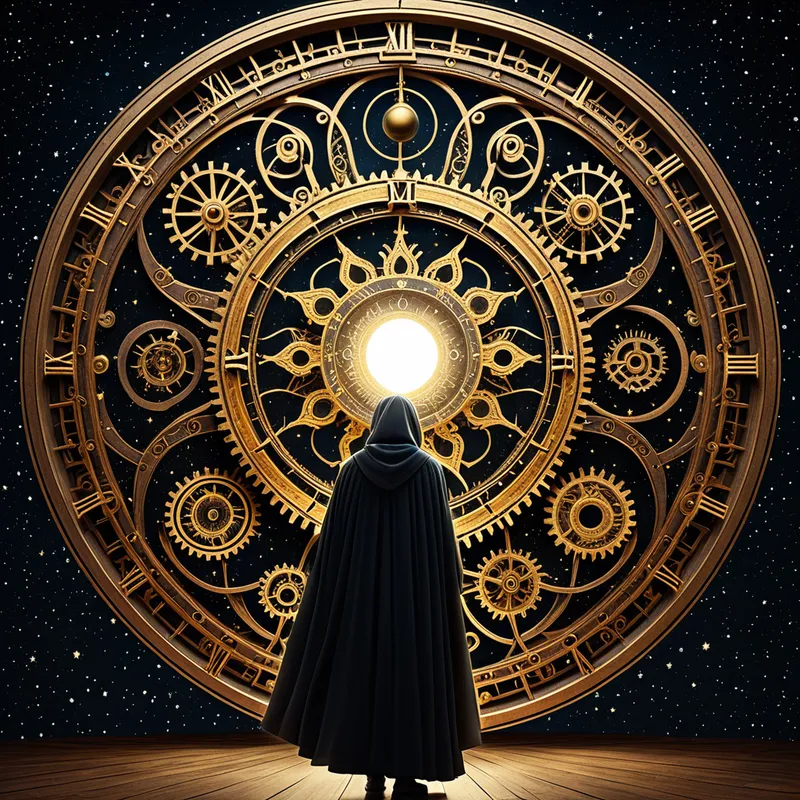
Do not mistake this theme for simple anxiety about punctuality or nostalgia for the past. A dream of time is not a warning about poor scheduling. It is a profound signal about the architecture of the self. The terror of a stopped watch is not about being late for a meeting; it is the chilling encounter with a part of you that has ceased to develop, frozen in a trauma or a fixed identity. The grief of a speeding calendar is not about busyness; it is the mourning for a life perceived as passive, happening to you rather than being shaped by you. The false lead is to literalize the symbol. The true path is to ask: Which part of me feels timeless, and which part feels devoured by time?
Psychological Architecture
Here, we move into the shadow work. Dreams of time expose the fault lines between our internal factions—the exiled parts holding old wounds, the managerial parts racing against imagined clocks, and the frozen child parts who believe time stopped the moment they were hurt. Individuation, in this realm, is the arduous process of temporal integration. It demands we descend into the basement of the psyche and sit with the exile who lives in perpetual 1998, feeling the full heat of their unchanged pain. It requires we confront the inner tyrant who drives us with the whip of “not enough time,” sensing the terror of meaninglessness that fuels its rule. This is not mental analysis; it is an experiential negotiation. You are not fixing a clock. You are becoming the sovereign who can hold multiple timelines—the wounded past, the frantic present, the potential future—within the same compassionate awareness, allowing them to finally communicate. The goal is not a perfectly ticking life, but a psyche where time becomes a medium for meaning, not a measure of lack.
Mythic Resonance
This universal firmware runs deep. Consider Chronos, the Greek Titan of time, who devoured his children—a stark myth of the ego’s fear that time consumes all our creations, our potential selves. We enact this when we sabotage new beginnings, convinced they will be swallowed by obligation or decay. Juxtapose this with the story of Aion, the god of unbounded, cyclical time, often depicted as a serpent eating its own tail. This is the mythic image of the integrated self, where end and beginning are revealed as a single, eternal process. The dream of the stopped clock is the cry of the Chronos complex. The dream of cyclical, returning patterns is the whisper of Aion, hinting that what feels like linear loss is part of a vaster, regenerative circuit.
Symbolic Nodes
- Broken/Handless Clocks & Stopped Watches: A frozen internal state; a dissociated part; a refusal to acknowledge a necessary ending or beginning.
- Speeding Vehicles/Missed Departures: The perceived acceleration of life outside your control; a critical juncture where the psyche felt bypassed.
- Waiting Rooms & Empty Platforms: The somatic experience of suspension; a life lived in deferral to some future permission or external salvation.
- Time Travel & Anachronisms: The psyche’s attempt to repair history or warn the present; dialogue between different developmental stages of the self.
- Repeating/Déjà Vu Loops: An unresolved complex demanding integration; a pattern seeking recognition until its lesson is fully felt.
Archetypal Resonance
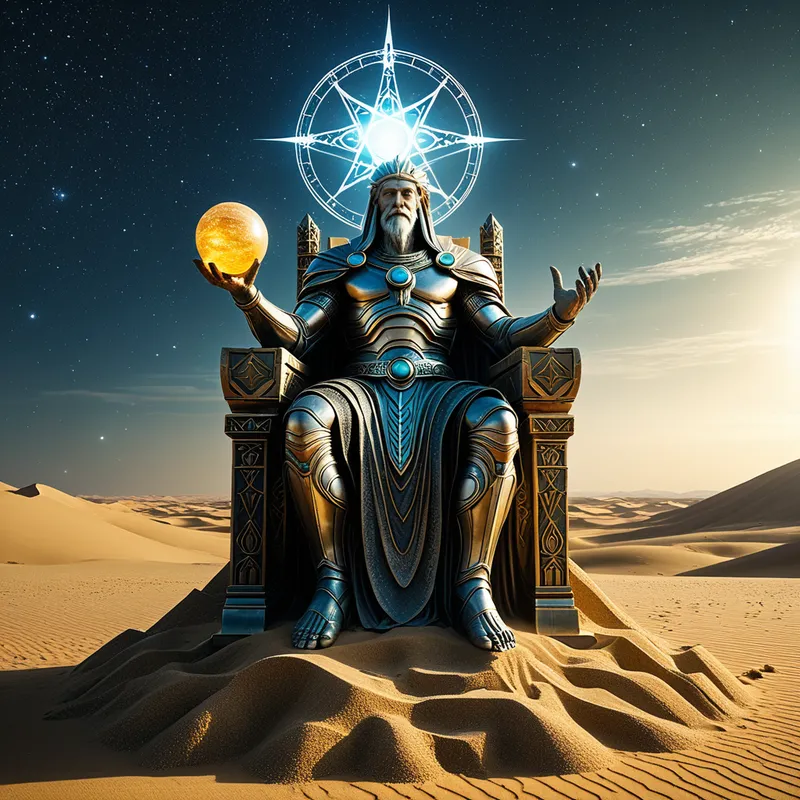
The energy at the core of the time dream is that of The Ruler Archetype, specifically in its shadow manifestation. The Shadow Ruler is the internal control-freak and tyrant whose sovereignty is based on fear, not order. It seeks to command time itself—to rigidly schedule existence to ward off chaos, or to freeze a moment of perceived safety into a permanent regime. The somatic echo of leaden pressure or frantic haste is the body’s rebellion against this tyrannical, brittle governance. The alchemical potential lies in the maturation of this archetype: to move from the Shadow Ruler’s desperate, linear control to the true Ruler’s capacity to hold benevolent, cyclical order. This is the shift from trying to possess time to becoming a skilled steward of your own becoming, establishing inner governance that allows for both structure and flow, legacy and innovation.
The Alchemical Process
The transmutation here is of Chronos into Kairos. Chronos is quantitative, tick-tock time—the source of pressure and scarcity. Kairos is the qualitative, opportune moment—the pregnant right time for a shift. The alchemical heat is applied in the conscious, felt-sense immersion into your personal temporal wounds. It is the pressure of asking, “Where in my body do I feel ‘too late’?” and staying with the answer, not to fix it, but to let it speak its truth. It is the crucible of grieving the timeline you thought you’d have—the marriage, the career, the recognition—allowing that grief to dissolve the ego’s rigid blueprint. This intense psychological process burns away the identity forged in regret or hurry. What remains is not more time, but a different relationship to it. Sovereignty emerges when you can discern the Kairos within the Chronos—when you can feel, somatically, the right moment to speak, to rest, to begin, not because a clock says so, but because your integrated being aligns with the necessity of the now.
The Integration Protocol
Question 1: If the feeling in this dream (the haste, the wait, the freeze) were a part of me, how old would it be? What is it trying to protect me from?
Question 2: What one story about my past or future do I treat as an immutable, linear fact? What would happen if I imagined it as a cycle or a spiral instead?
Question 3: Where in my current life am I waiting for permission from an external clock (age, milestone, other people’s schedules) to live a more authentic desire?
Action 1 (Temporal Grounding): For one minute, place one hand on your heart and one on your abdomen. Breathe. Feel the absolute present of your heartbeat and breath. Silently acknowledge one thing from the past you are carrying (a regret, a memory) and one thing from the future you are pulling toward you (a hope, a fear). Do not change them. Just feel them held in the container of your present body.
Action 2 (Unstructured Writing): Set a timer for 10 minutes. Write a letter from your present self to your life exactly five years from now. Do not censor. Describe the textures, rhythms, and emotional weather of that life, not just the achievements. Then, write a one-sentence reply back from that future self.
Action 3 (Ritual of Release & Invitation): Find a small stone. Holding it, imbue it with a finished timeline—a regret, an old story, a “should have been.” Go to a body of moving water (or a sink). Thank the stone for its service and let it go, watching the water carry the symbol away. Then, turn and face a new direction. Stand still for a moment, physically opening space for a new, unhurried timeline to find you.
Final Validation
The disorientation is real. To feel time slip through your fingers or solidify around your ankles is one of the most profound terrors the psyche can present. It shakes the very foundation of a coherent self. Honor that fracture. This grief, this vertigo, is not a sign that you are broken, but that you are in dialogue with the deepest structures of your soul. You are being invited not to manage time better, but to become more intimate with the timeless essence that you are—the consciousness that can witness the clock, the calendar, the missed train, and yet remain, fundamentally, the vast space in which all timelines unfold and are, ultimately, reconciled.