The Dream of Liberation: An Alchemy of Unbinding
The Somatic Echo
Before the image forms, before the story begins, the body knows. It is a specific, hollow ache in the center of the chest—not of sadness, but of vacancy. A phantom limb sensation for a weight that has been carried so long its absence is a shock. The breath comes easier, yet feels unfamiliar, as if the lungs are remembering a forgotten capacity. There is a lightness in the limbs that borders on vertigo, a subtle trembling in the hands that is not fear, but the raw, ungrounded current of potential. It is the visceral echo of a cage door swinging open after you had memorized every bar. The body, that faithful scribe of the psyche, registers the structural shift first: the silent collapse of an internal dam, the unknotting of a cord tied around the heart. This is the somatic prelude to liberation.
The Dreamer's Log
I am in a cavernous, forgotten server room, all cold concrete and the hum of dormant machines. Thick bundles of glowing cables, like luminous vines, are wrapped tightly around my torso, pinning my arms. I am not struggling. I simply look down at them, and one by one, the knots begin to loosen and fall away of their own accord. The cables retract into the walls, and the only thing left in the silence is a profound, echoing spaciousness where the bindings used to be.
This dream is an alchemical dissolution: the conscious self, in a state of surrendered witness, allows the internalized systems of constraint to simply decommission themselves, revealing the innate spaciousness they concealed.

The False Lead
Liberation is not mere escape. It is not the frantic flight from a burning building, leaving everything behind in a cloud of smoke and panic. That is evasion, a reaction to external pressure. True liberation is an internal, architectural event. It is not about changing your location, but about changing your foundation. It is also not the euphoric, manic high of a sudden, impulsive decision—the "I quit!" fantasy that quickly curdles into regret. That is the Shadow Rebel in a tantrum, confusing destruction for freedom. Liberation is a quieter, more profound recalibration. It is the difference between throwing off a blanket and realizing you were never actually cold.
Psychological Architecture
To dream of liberation is to encounter the deepest strata of Shadow work. Here, the psyche is not battling a monster; it is auditing a government. It is the slow, meticulous process of identifying every internalized law, every silent agreement, every "should" and "must" that was installed not from your essence, but from your environment: family systems, cultural scripts, trauma responses, the silent tyranny of "normal." This is the architecture of the adapted self.
The individuation process here is one of sovereign reclamation. It asks: Which of these walls are load-bearing for my soul, and which are merely holding up a façade I no longer inhabit? The terror is not of the unknown ahead, but of the known behind—the grief for the identity that must be deconstructed, the relationships that may shift, the safe, familiar prison you are choosing to leave. The work is in sitting in that server room, feeling the cables of obligation and expectation, and having the courage to no longer believe they are part of your skeleton.
Mythic Resonance
This universal firmware runs through the myth of Ariadne. She is not the hero who slays the Minotaur; she is the one who provides the thread that allows for navigation and return from the labyrinth. Her thread is not a weapon, but a tool of orientation. Liberation is not the slaying of the beast (which represents a primal, disowned part of the self), but the gaining of a means to traverse the complex, self-constructed maze without being lost to it. The myth whispers that the key is not destruction, but a new kind of connection—one that grants sovereignty over the inner landscape.
Similarly, the Buddhist parable of the raft speaks directly to this theme. The raft (doctrine, practice, a former identity) is essential for crossing the river of suffering. But upon reaching the far shore—the state of liberation—to hoist the raft onto your back and carry it forever is a profound misunderstanding. The final act of liberation is the graceful, grateful letting go of the very vehicle that made the journey possible.
Symbolic Nodes
- Unlocking Doors/Cages: The mechanism of release is presented, often without a visible key.
- Shedding Skin/Molting: A biological, inevitable process of outgrowing a former shape.
- Broken Chains/Falling Ropes: Constraints losing their tensile strength, their authority revealed as illusion.
- Taking Flight (Unaided): Rising without vehicle or wing, a pure expression of inherent ability.
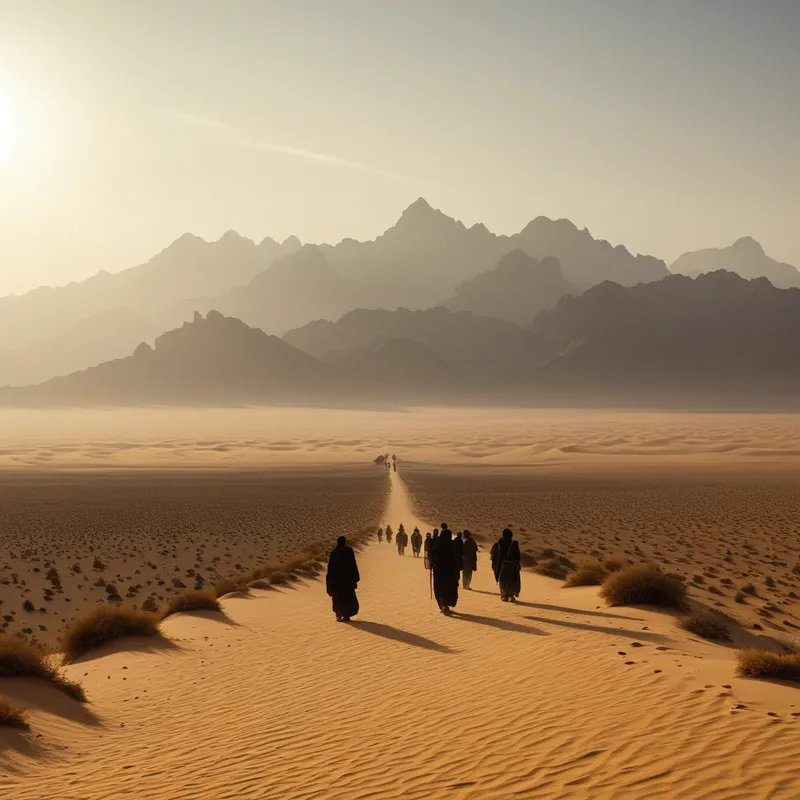
- Wide, Empty Landscapes: Vast deserts, calm seas, star fields—images of sheer potential and uncluttered horizon.
- Silent, Empty Rooms: Internal space cleared of psychic furniture, awaiting new purpose.
Archetypal Resonance
The energy of liberation resonates most powerfully with The Rebel Archetype. Not its shadow expression of chaotic destruction, but its pure form: the sacred destroyer of outmoded structures. The Rebel’s core question is "What must be broken?" This archetype provides the catalytic courage to challenge internalized authority and declare the sovereignty of the Self over the System. Its somatic echo is that electric jolt of "no" that clarifies into a deeper "yes." The alchemical potential of the Rebel is to transmute the raw material of righteous anger and frustration into the disciplined, focused fire that melts the locks on our own cages, not to burn down the world, but to finally step out of a prison we helped build.
The Alchemical Process
The alchemy of liberation is Solutio—the dissolving operation. But this is not a gentle melting. It is the application of the solvent of ruthless self-honesty to the calcified structures of the persona. The "heat" is the unbearable tension between who you have been and who you are becoming. The "pressure" is the weight of grief for the self you are letting die.
The process begins with corrosion: a slow, aching recognition that the old forms no longer fit, that they chafe and restrict. This leads to dissolution: the terrifying, necessary stage where identities, beliefs, and life structures lose their solidity and begin to break down into their component parts. This feels like chaos, like falling apart. The final stage is coagulation: not a return to the old shape, but a precipitation of a new, more authentic form from the clarified essence. The terror of the flood is transmuted into sovereignty when you realize you are not the debris being carried away; you are the water itself, finding its own level.

The Integration Protocol
Question 1: In the dream, what was holding me? Name it not as a person or a single event, but as a rule, a silent contract, or an inherited belief. What was its first language?
Question 2: What became possible in the dream space once the constraint was gone? Did I move, speak, see, or feel something that felt forbidden or impossible in my waking life?
Question 3: Where in my body do I feel the most persistent, familiar tension or heaviness? If that sensation could speak one sentence of liberation, what would it say?
Action 1 (Somatic Unbinding): For five minutes, sit in silence and focus only on your breath. With each exhale, imagine you are not breathing out air, but gently dissolving a single, invisible thread that runs from the center of your chest to an old obligation. Do not force it; simply let the breath be the solvent.
Action 2 (Manifesto of the Empty Room): Take a blank page. At the top, write "What is Allowed in the Space Now?" Do not write goals or to-do lists. Write permissions. "Silence is allowed." "Ugliness is allowed." "Rest is allowed." "Changing my mind is allowed." Let it be a creative, unstructured declaration of the new internal architecture.
Action 3 (Ritual of the Returned Key): Find a small, physical object—a stone, an old key, a ring. Hold it and imbue it with the energy of one constraint from your dream or reflection. Go to a crossroads—a park bridge, a stream, an intersection. Thank the object for the lesson its constraint taught you, then leave it there. Walk away without looking back. You are not abandoning a part of yourself; you are returning a tool you have outgrown to the world.
Final Validation
The path of liberation is paved with the ghostly bricks of your former shelters. To feel grief for their loss is not a failure of courage; it is a testament to your humanity. That shelter, however constricting, once served you. Honor that. And then, feel the new wind on your skin. It is not hostile. It is the atmosphere of your own becoming. The dream is not a promise of ease, but a map to your own sovereign territory. The cage door is open. The hardest, most liberating step is the first one: to stop rehearsing your captivity, and to finally walk out into the terrifying, magnificent expanse of your own ungoverned being.