Dionysian mysteries - ecstatic Myth Meaning & Symbolism
A mythic journey where ecstatic rites dissolve the ego, revealing the raw, creative life force beneath civilization's mask, leading to profound psychological rebirth.
The Tale of Dionysian mysteries - ecstatic
Listen. The world you know is a veil, a thin skin stretched over a drum that beats with a wilder rhythm. To hear it, you must leave the city walls, the measured speech, the straight roads. You must go to the mountain, Olympus’s wilder cousin, where the pines claw at the sky and the night air is thick with the scent of soil and crushed pine needles.
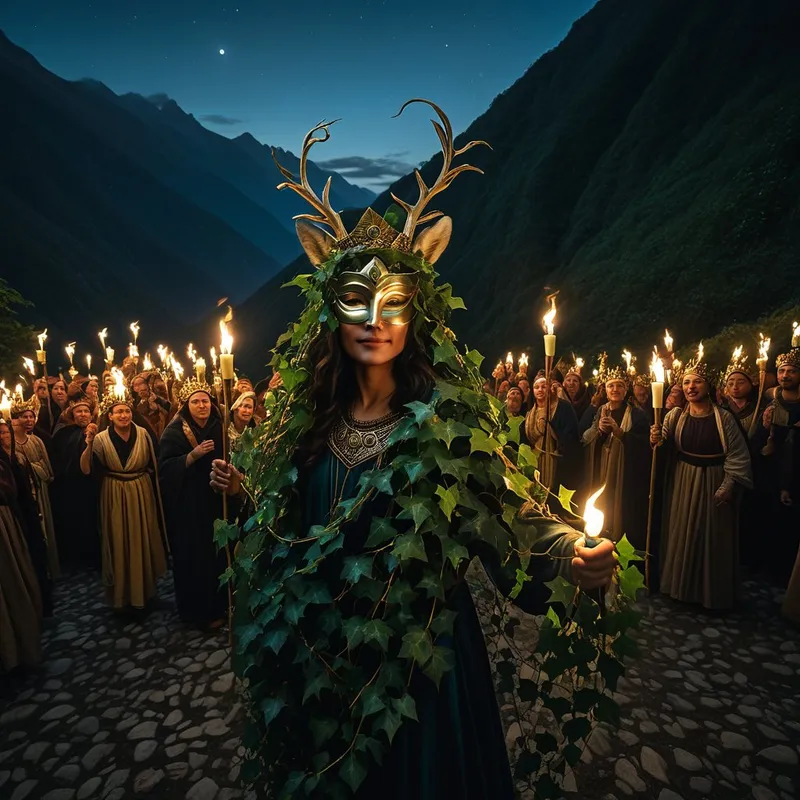
He arrives not with a herald’s trumpet, but with the scent of wine and damp earth. He is Dionysus, the twice-born, the god who comes. His hair is dark ivy, his eyes hold the deep, unfathomable purple of the grape at dusk. In his hand is the thyrsus, a wand that is both weapon and key. He is followed not by soldiers, but by a throng of women who have left their looms and their children. They are the Maenads, their feet bare and sure on the rocky path, their voices lifted in a cry that is neither song nor scream, but the sound of the veil tearing.
The procession climbs. Torches gutter in the wind, casting long, dancing shadows that look more alive than the people who cast them. The rhythm of handheld drums, the thrum-thrum-thrum of the tympanon, becomes the only heartbeat. The god’s presence is a pressure in the air, a buzzing in the blood. He offers not wisdom, but wine from a skin that never empties. To drink is not to become drunk, but to become other. The careful self, the citizen, the mother, the daughter—it begins to soften at the edges, to blur.
Then comes the oreibasia, the mountain-running. It begins as a dance, a circling of the torchlight. But the god’s pulse in the drumbeat quickens. The dance becomes a run, a flight through the dark woods. Brambles tear skin, but there is no pain, only a fierce, animal vitality. The civilized mind shatters. Language dissolves into cries that mimic the wolf and the night bird. They are no longer women of Thebes or Corinth; they are vessels for the god, possessed by enthousiasmos—the god within.
In this state of ekstasis—literally, standing outside oneself—they perform the impossible. They handle serpents without fear. With their bare hands, they tear apart a bull, a living sparagmos (rending), and consume the raw flesh, the omophagia. It is not savagery, but a sacrament. They are consuming the god’s embodied strength, taking the wild, untamed life into themselves. In that moment of ultimate dissolution—of ego, of identity, of societal form—they touch the raw, pulsing core of existence. They become one with the life force that grows the vine and moves the predator.
As dawn’s grey light filters through the trees, the frenzy subsides. The Maenads awaken, as if from a deep, collective dream. They are exhausted, stained with earth and wine, but their eyes are clear in a new way. They gather quietly. There is no shame, only a profound, weary peace. They have been broken apart and remade. They descend the mountain, not as fugitives, but as initiates. They carry a secret in their bones: the memory of the self undone, and the profound, terrifying wholeness that lies beneath.
Cultural Origins & Context
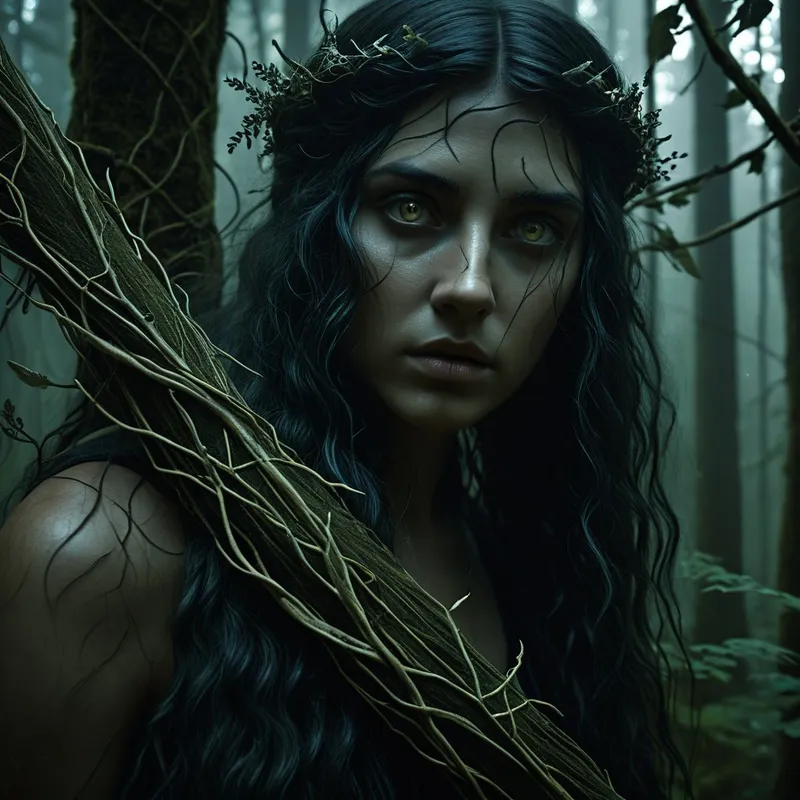
The Dionysian Mysteries were not a single, codified religion but a pervasive current of ecstatic practice in the ancient Greek and later Greco-Roman world. Unlike the official, state-sanctioned cults of Zeus or Athena, which upheld civic order, the Mysteries of Dionysus operated at the margins—in the wilderness, and crucially, outside the control of the patriarchal polis. They were primarily, though not exclusively, associated with women, offering a sanctioned, sacred space for the expression of energies and emotions rigorously suppressed in daily life: unchecked ecstasy, rage, and a primal connection to nature.
The rites were secret, or mystical, passed down through initiation. What we know comes from fragmentary reports, often from hostile outside observers, and from the profound echoes in Greek tragedy, particularly the plays of Euripides (The Bacchae being the prime document). Their societal function was deeply paradoxical. They acted as a pressure valve, allowing the chaotic, irrational, and feminine-dominated forces of life to be ritually expressed in a controlled, sacred context, thereby preventing those same forces from erupting destructively within the city walls. They acknowledged a truth the civic order denied: that civilization is built upon, and constantly threatened by, a wilder, more ancient power.
Symbolic Architecture
At its heart, the Dionysian mythos is an elaborate symbolic map of the psyche’s underworld, where the structures of ego and persona are not strengthened, but deliberately dismantled.
The ecstatic rite is not an escape from the self, but a descent into its molten, pre-personal core. To be enthused is to have the god within, to be displaced from the driver's seat of consciousness.
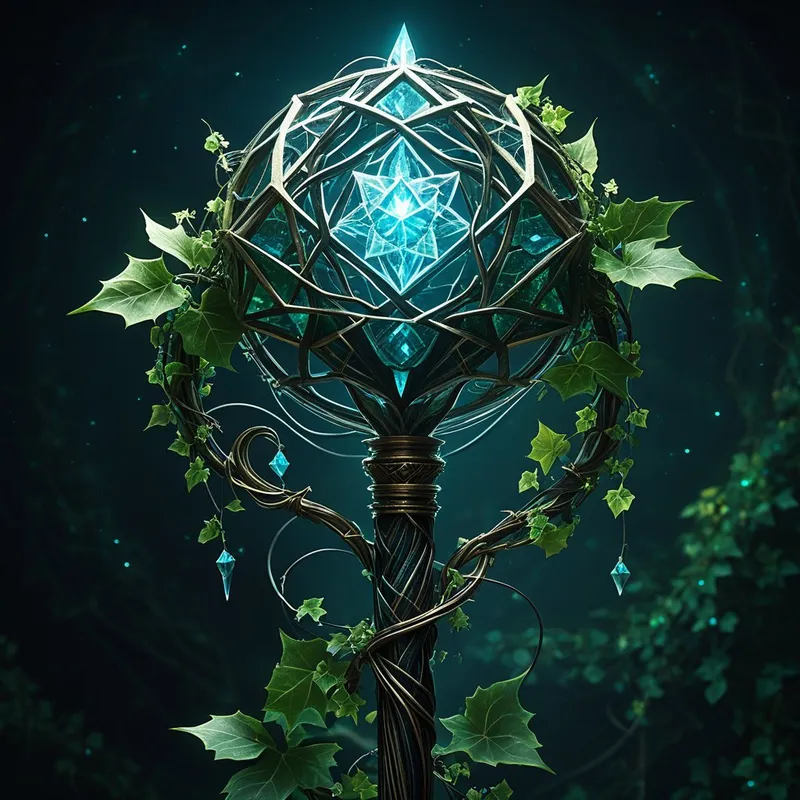
The god Dionysus himself symbolizes the undifferentiated life force—the libido or creative energy in its raw, amoral, and unstoppable form. He is the vine that cracks stone, the instinct that overrules reason, the collective frenzy that overthrows kings. The thyrsus is the paradox of this power: a gentle fennel stalk crowned with a fertile pine cone, capable of conjuring springs of wine or milk, yet also a weapon. It represents the channeling of chaos into a directed, transformative force.
The sparagmos (rending) and omophagia (raw eating) are the central, shocking symbols. Psychologically, they represent the complete deconstruction of the ego’s defenses and identifications. One must be torn apart—one’s cherished self-image, one’s social persona—to ingest and assimilate the raw, vital, "animal" energy one has disowned. The mountain wilderness is the inner landscape of the unconscious, where the rules of the conscious "city" no longer apply.
The Dreamer's Resonance
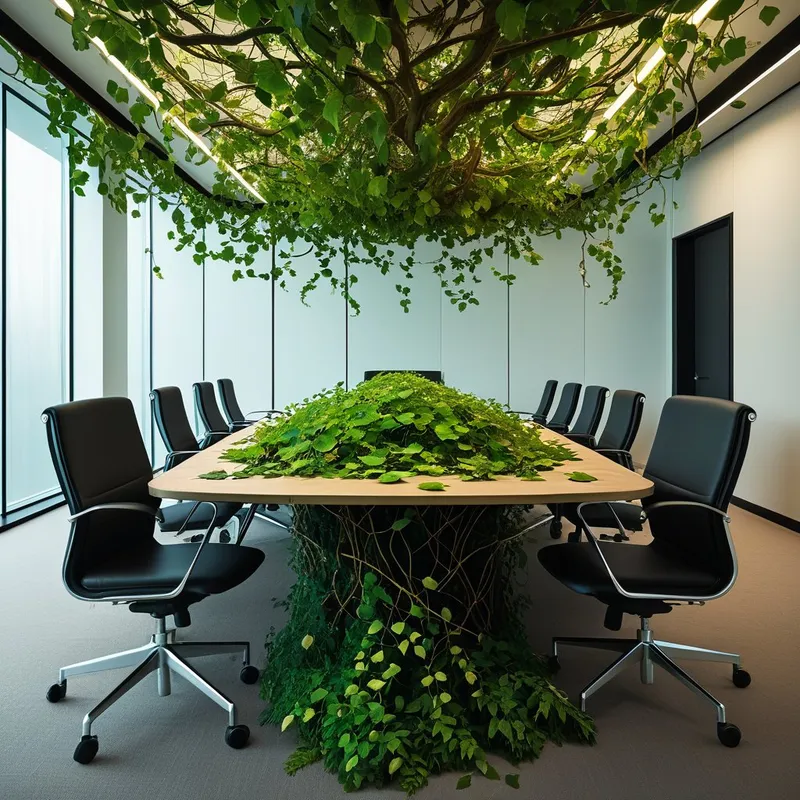
When this mythic pattern stirs in the modern dreamer, it often manifests as dreams of overwhelming, chaotic vitality breaking into ordered life. You may dream of your house being overrun by wild plants or animals. Of a formal gathering erupting into a wild, rhythmic dance. Of finding yourself in a forest at night, feeling terror that seamlessly flips into a sense of immense, boundless power.
Somatically, this process feels like a buildup of pressure—anxiety, restless energy, irritability—that has no logical outlet. The psyche is signaling that a part of the self, often tied to instinct, creativity, or the body, has been too rigidly contained. The dream is an invitation to a sacred ekstasis. The psychological process is one of controlled disintegration. The ego, which normally experiences such dreams as threats, is being asked to temporarily surrender its governance, to allow a more primal layer of the psyche to communicate, express, and ultimately, reintegrate.
Alchemical Translation
The alchemical journey mirrored in the Dionysian Mysteries is the Nigredo—the blackening, the descent into the chaotic prima materia. For the modern individual pursuing individuation, the myth models a necessary and terrifying phase: the voluntary dissolution of the adapted personality.
One does not become whole by adding more light, but by reclaiming the sovereignty of the darkness within. The thyrsus is only wielded by one who has been torn apart by the Maenads of their own soul.
The conscious ego, identified with its roles and rationality (the King Pentheus), must consent to its own ritual unmasking and dismemberment. This is not a passive breakdown, but an active, sacred engagement with the shadow—the wild, emotional, instinctual, and often "uncivilized" aspects of the self. The "wine" is the intoxicating, truth-revealing engagement with this material. The ecstatic dance is the somatic release that allows the body to process what the mind cannot yet understand.
The triumph is not in avoiding the rending, but in surviving it. The initiate who descends the mountain at dawn has undergone the Albedo. They have seen the chaos and been reformed by it. They now carry an unshakable, embodied knowledge: beneath the persona is a vast, creative, and amoral force. To integrate this is not to become a savage, but to become truly human—a being who can wield the thyrsus of creative power because they are no longer afraid of the wildness it taps into. The final mystery is that liberation is found not in greater control, but in a sacred, disciplined surrender to the deeper current of one’s own existence.
Associated Symbols
Explore related symbols from the CaleaDream lexicon: