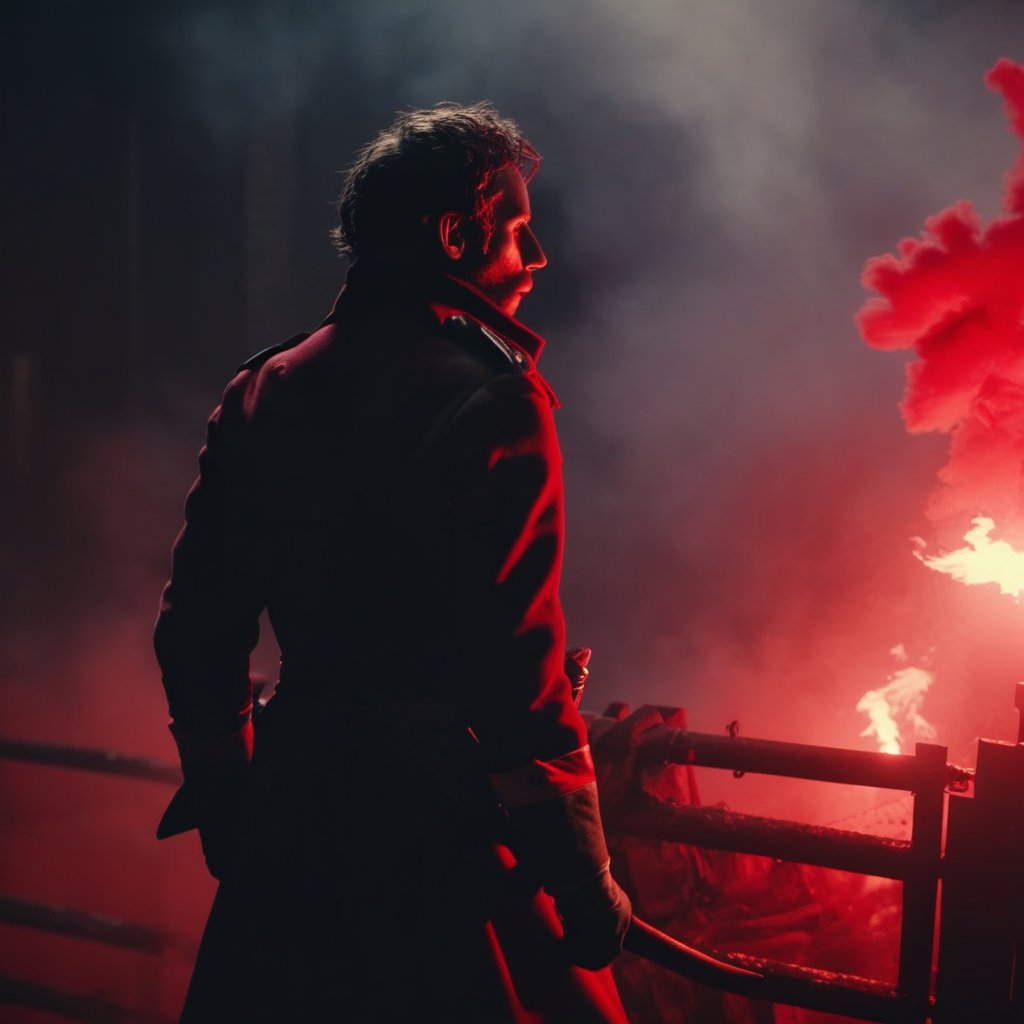
The Rebel Archetype
"Rules are made to be broken."
Motto
"Rules are made to be broken."
Desire
Revolution, revenge, or radical freedom.
Fear
To be powerless, trivial, or trapped.
Strategy
Disrupt, destroy, or shock.
Shadow
The Criminal, The Nihilist.
The Psychological Core & Essence
The Rebel (also known as the Outlaw, Revolutionary, Iconoclast, or Destroyer) is the archetype of Metamorphosis through Fire. If the Creator builds, the Rebel destroys—but usually to clear the way for something new.
In the Jungian journey, the Rebel is the inevitable reaction to the Ruler. When the laws of the Father (Society/Culture) become oppressive or dead, the Rebel rises to burn them down. This is not mindless destruction; it is the forest fire that allows new seeds to germinate.
The Sacred No
The Rebel is defined by the power of “No.”
- No to conformity: “I will not wear your mask.”
- No to injustice: “I will not accept this broken system.”
- No to safety: “I would rather die free than live as a slave.” This “No” creates a vacuum in which a new “Yes” can eventually be born.
The Destroyer of Illusions
The Rebel is the enemy of the “Lie.” They are the child who yells, “The Emperor has no clothes!” This makes them dangerous to institutions, which rely on shared illusions to function. The Rebel tears down the curtain (like in The Wizard of Oz) to reveal the small man pulling the levers.
Deep Historical & Mythological Roots: The Firebringers

The Rebel is as old as authority itself.
Prometheus (The First Rebel)
In Greek mythology, Zeus (The Ruler) wanted to keep humanity in the dark (literally). Prometheus defied the King of Gods to steal fire and give it to humans.
- The Price: He was chained to a rock and tortured for eternity.
- The Lesson: Rebellion always has a cost. The Rebel sacrifices their own safety to empower the collective. They are the Technological Liberator.
Lucifer (The Adversary)
“Better to reign in Hell than serve in Heaven” (Paradise Lost).
- Archetypal Nuance: Leaving aside theology, Lucifer represents the ultimate assertion of Individual Will against Absolute Authority. It is the refusal to bow, even to the Creator. This is the shadow and the light of the Rebel—the pride that demands autonomy at any cost.
Lilith (The Refusal)
In Jewish folklore, Lilith was Adam’s first wife, created from the same earth (equality), not from his rib (subordination). When Adam refused to treat her as an equal, she spoke the secret name of God and flew away. She preferred to be a “demon” in the wilderness than a servant in Eden. She is the archetype of Feminine Rage and independence.
Spartacus (The Breaker of Chains)
The slave who defied Rome. He died, but his rebellion proved that Rome was not invincible. He planted the seed of fear in the heart of the Ruler. The Rebel often loses the battle but wins the war of ideas.
Toussaint Louverture & The Haitian Revolution
The only successful slave revolt in history that founded a state.
- The Context: Haiti was the most profitable colony in the world, built on the blood of slaves.
- The Rebellion: Louverture turned a disorganized mob into a disciplined army that defeated Napoleon’s forces.
- The Lesson: The Rebel must eventually become the General (Ruler) to secure the victory. Pure chaos cannot hold territory; only disciplined freedom can.
The Suffragettes (Deeds Not Words)
Women who chained themselves to railings and hunger-struck for the right to vote.
- The Tactic: They realized that “asking nicely” (The Innocent approach) does not work against entrenched power. They had to disrupt the “Peace” to get Justice.
- The Cost: They were force-fed in prison. The Rebel absorbs the violence of the State to expose its brutality to the public eye.
Modern Manifestations: Hackers and Punks
The Rebel has traded the sword for the keyboard and the guitar.
The Hacker (Cyber-Rebel)
 In the digital age, the “Code” is the Law. The Hacker is the one who finds the exploits.
- White Hat: Reveals vulnerabilities to fix them (Integration).
- Black Hat: Exploits vulnerabilities for gain (Shadow).
- Hacktivist (Anonymous): Uses code to attack oppressive regimes. This is the modern Prometheus—stealing data (fire) to give to the people.
The Whistleblower (Snowden/Manning)
The person inside the system who breaks their NDA to reveal the truth. They are often treated as traitors by the State (Ruler) and heroes by the People (Orphan). They sacrifice their career and freedom for the “Public Good.”
The Punk / Counter-Culture: The Aesthetic of Refusal
“Punk is not a musical style; it’s a state of mind.” (Johnny Rotten). Whether it’s the Sex Pistols in the 70s or Rage Against the Machine in the 90s, the Rebel uses Art as a Weapon.
- The Philosophy of Ugly: Punk deliberately embraced the “ugly”—safety pins, torn clothes, screaming—to reject the commodified “beauty” of the mainstream. It was a visual scream.
- DIY Ethos: “Here’s three chords, now form a band.” The Rebel rejects the barrier to entry. You don’t need permission, training, or a record label to create. You just need anger and a guitar.
- The Trap of Commodification: The tragedy of the Rebel is that their style is eventually co-opted. Punk becomes a fashion trend sold at the mall. The Rebel must constantly keep moving to stay authentic.
Cryptocurrency & DeFi: Unfortunately Necessary
Bitcoin was born from the wreckage of the 2008 financial crisis. It is a technological “No” to the Central Banks (Ruler).
- Code as Law: The Rebel does not trust fallible humans (Bankers/Politicians). They trust Mathematics.
- Sovereign Money: The ability to hold your own wealth without a third party is the ultimate act of economic rebellion. It is “F**k You Money” codified into a protocol.
- The Shadow Side: A landscape of scams, greed, and “rug pulls.” The Rebel space is dangerous because there are no safeguards (Ruler protections). It is the Wild West.
The Archetype in the Dream World: The Fire
Dreams of the Rebel are intense and often frightening.
Common Symbols
- Fire/Explosions: The burning of the old self.
- Being Chased: Usually by police or faceless agents. This represents the auditing of your “Internal Police” (Superego).
- Breaking Glass: Shattering the invisible barriers or rules you have lived by.
- Nakedness in Public: Not shame (Orphan), but defiance. “This is who I am.”
Archetypal Tension & Polarity: Order vs. Chaos
The Rebel sits on the axis of Structure.
- The Ruler creates Order to banish Chaos.
- The Rebel introduces Chaos to banish Stagnation. The Tension: “We need rules to live together, but the rules are suffocating me.” Integration: The Constitutional Republic. A system that allows for “controlled revolution” (voting) so that violent revolution is unnecessary.
Life Stages & Triggers: The Teenage Wasteland
Adolescence (The Biological Rebellion)
The brain rewires at age 13-19 to reject parental authority. This is evolutionary; if we didn’t rebel, we would never leave the cave to start our own families.
Signs of Arrival & Waking Synchronicity
You are entering the Rebel phase when the “Old World” starts to feel too small.
- The “Vomit” Reflex: You physically cannot stomach your job, your relationship, or your routine anymore. The body rejects the lie before the mind does. You might literally feel nauseous when walking into the office.
- Contrarianism: You find yourself arguing with everyone, even when you agree with them, just to prove they aren’t thinking for themselves. You become allergic to “consensus.”
- The Aesthetic Shift: A sudden desire to change your appearance to something harder, darker, or more “dangerous.” Leatherjackets, tattoos, shaved heads—these are outward signals of internal separation.
- Synchronicities: You see smoke, hear sirens, or find broken objects. The universe is mirroring your internal chaos. You might find “lost” things or find yourself drawn to abandoned places.
The Shadow Side: The Cause Without a Rebel
When the Rebel has anger but no vision, they become the Shadow. The Shadow Rebel burns down the village to feel the warmth.
The Nihilist (“It’s all a joke”)
The Nihilist believes in nothing. They tear down structures not to build better ones, but because they enjoy the sound of breaking glass. This is the Joker archetype.
- The Danger: It leads to despair. If nothing matters, then why live? The Healthy Rebel fights for something (Justice, Truth); the Nihilist just fights against everything.
- The Outcome: A void. The Nihilist ends up alone, surrounded by the ruins of their own life, realizing that destruction is easy but creation is hard.
The Criminal (Self-Serving Rebellion)
The Healthy Rebel breaks the law for the “Public Good” (Robin Hood). The Shadow Rebel breaks the law for personal gain (Al Capone). They use the rhetoric of freedom (“I’m a sovereign citizen!”) to justify their own greed, cruelty, or lack of empathy.
- The Trap: Thinking you are “above” the law when you are just “outside” it. There is a difference between a Revolutionary and a Parasite.
The Terrorist / The Ideologue: Possession by the Idea
The most dangerous Shadow. This Rebel becomes so obsessed with the “Cause” that they lose their humanity.
- The Mechanism: Dehumanization of the enemy. “The Capitalists/Infidels/Boomers are not people; they are symbols of oppression.” Once you strip the enemy of humanity, any violence is justified.
- The Outcome: You become the Monster. Robespierre started the French Revolution to end tyranny and ended up inventing the Guillotine. The Shadow Rebel creates a new Tyranny that is often bloodier than the old one. “Meet the new boss, same as the old boss.”
The Contrarian (The Troll)
This is the “Rebel without a Clue.” They define themselves entirely by what they hate. If the mainstream likes Blue, they like Red.
- The Paradox: They are still controlled by the mainstream. Their identity is just a negative photo of society. They are not free; they are reactive. They are puppets whose strings are pulled by the very people they claim to despise.
- The Cure: Ask yourself: “If no one was watching, what would I actually like?”
The Rebel’s Toolkit: Weapons of Mass Construction
- Civil Disobedience: The art of saying “No” politely but firmly. “I would prefer not to” (Bartleby the Scrivener). This is the refusal to participate in unjust systems. It is Gandhi making salt. It is Rosa Parks sitting down. It requires more courage than violence because you must accept the consequences (jail/pain) without retaliation.
- Radical Honesty: The most rebellious thing you can do is tell the truth in a room full of liars. Society relies on “polite fictions” (white lies). The Rebel breaks the spell by speaking the uncomfortable truth. This destroys false harmony but creates real intimacy.
- Minimalism: Consumerism is the primary mechanism of control (The Matrix). Buying less is an act of war against the economy. If you don’t need their “stuff,” they can’t control you.
- Guerrilla Gardening: Planting flowers on land you don’t own. Beautifying the world without permission. This is “Positive Rebellion.” It shows that you don’t need authority to do good.
- The “Samizdat” (Underground Press): In Soviet Russia, banned books were copied by hand and passed underground. Create your own media. Start a zine. Start a Signal group. Build a mesh network. Do not rely on the algorithm to spread your truth.
- Digital OpSec: In the age of surveillance, privacy is rebellion. Using Signal, Tor, or encrypted email is a way of reclaiming your “Fourth Amendment” rights in the digital space.
Integration & Empowerment Rituals: The Purge
Ritual 1: The Primal Scream
Go to a place where you cannot be heard (car, pillow, forest). Scream until your throat hurts. Release the physical toxicity of rage. This is not “acting out”; it is “getting out.” Anger is energy; if you don’t release it, it becomes cancer (depression).
Ritual 2: The Burning Ceremony
Write down the rules, beliefs, or obligations that are enslaving you on a piece of paper. “I must be a good girl.” “I must make $100k.” “I must please my father.” Light a fire (safely) and burn the paper. Watch it turn to ash. This is the funeral for your obedience.
Ritual 3: The “Taboo” Day
Do one thing today that scares you or breaks a minor social norm. Wear a costume to the grocery store. Sit on the floor in a bank. Negotiate a fixed price item. Reclaim your right to be weird. The more you break small rules, the less power the big rules have over you.
Ritual 4: “Kill the Buddha”
A Zen Koan. “If you meet the Buddha on the road, kill him.” It means: if you meet an external authority that claims to have the Ultimate Truth, reject it. Even the most sacred teacher must be transcended for you to find your own Enlightenment.
Ritual 5: The Protest as Pilgrimage
Attending a protest is not just political; it is spiritual for the Rebel.
- The Energy: Merging with a crowd that shares your outrage creates distinct “Collective Effervescence.”
- The Risk: Putting your body on the line grounds your values. It moves rebellion from the “Head” (Twitter) to the “Body” (Street).
- The Caution: Do not lose your individual consciousness in the mob. Stay aware.
Specific Dream Scenarios & Decodings
-
The Prison Break: You are escaping a jail, a cage, or a concentration camp.
- Meaning: You are outgrowing your current life structure (job, marriage, belief system). The “Guards” are your own fears or your “Inner Critic” trying to keep you safe/small.
- Action: Identify where you feel trapped in waking life. Start planning your escape route.
-
Setting a Fire: You start a fire that gets out of control.
- Meaning: Your anger is becoming dangerous. It is “leaking” out. It threatens to burn down your relationships.
- Action: Find a healthy outlet for this energy (Boxing, Art, Activism) before it destroys you.
-
Killing the King/Father: You attack an authority figure (The President, Your Dad, God).
- Meaning: The Freudians were right. You are reclaiming your own authority. You are killing the “External Locus of Control.”
- Action: Celebrate. You are becoming an adult.
-
The Riot: You are in a chaotic crowd fighting police.
- Meaning: Inner conflict between your instincts (The Mob) and your discipline (The Police).
- Action: Who is winning? If the police win, you are too repressed. If the mob wins, you are too impulsive. Negotiate a truce.
The Rebel’s Code of Ethics: The Higher Law
The Rebel is not lawless; they follow Natural Law over Statutory Law.
- Do No Harm, Take No Shit: The Wiccan Rede with a punk twist. The Rebel is non-aggressive but fiercely defensive.
- Equality or Nothing: I will not bow to a King, and I will not trample a servant. We are all sovereign beings. Hierarchy is a lie.
- Transparency: Secrets are the tools of tyrants. Information wants to be free. The Rebel shines a light in dark corners.
- Protect the Outsider: The Rebel always stands with the weirdos, the freaks, and the marginalized. Because the Rebel knows what it feels like to be cast out.
- Question Authority: “Because I said so” is never a valid reason. Demand the “Why.” If the authority cannot answer, they have no legitimacy.
Deep Philosophy: The Existential Revolt
Albert Camus (The Rebel)
“I rebel, therefore we are.” Camus argued that rebellion is the only valid response to the Absurdity of life. The universe is silent/indifferent, but we demand meaning. This conflict is the Absurd. By rebelling against death and injustice, we affirm our solidarity with other humans.
- The Insight: Rebellion is not solitary; it is the basis of community. We suffer together, so we rebel together.
Friedrich Nietzsche (The Ubermensch)
Nietzsche called for the “Transvaluation of All Values.” He saw that “God is dead” (Religion acting as the Ruler archetype had failed). The Rebel must smash the old tablets of “Good and Evil” (Slave Morality) and create their own values (Master Morality/Life Affirmation).
- The Danger: If you smash the old values but fail to create new ones, you fall into Nihilism. The Ubermensch is the one who creates meaning.
Anarchism (Peter Kropotkin)
Not chaos, but “Order without Power.” Anarchism is the belief that humans are naturally cooperative (Mutual Aid) and do not need a State to force them to be good. The Rebel trusts human nature more than institutions.
- Hakim Bey (TAZ): The “Temporary Autonomous Zone.” A space (like Burning Man or a protest camp) where the laws of the State are temporarily suspended and new ways of being are tested.
Cinematic Case Studies: The Iconoclast
The Matrix (Neo)
The ultimate Gnostic Rebel myth. The world is a lie (The Matrix/Ruler system). Neo (The Rebel) is the Hacker who wakes up to the painful truth.
- Key Scene: The Red Pill. The choice between comfortable slavery (Steak) and difficult freedom (Slop). The Rebel always takes the Red Pill.
- The Lesson: You cannot “unsee” the truth. Once you wake up, you become an enemy of the System (Agent Smith).
Fight Club (Tyler Durden)
The Shadow Rebel. Tyler diagnoses the problem correctly (“We are the middle children of history”) but his solution is fascism (Project Mayhem).
- The Warning: Beware becoming the thing you hate. Tyler destroys the credit card companies but creates a cult where members have no names. He becomes the new Ruler. The Rebel must avoid the trap of “Ideological Possession.”
V for Vendetta (V)
The Romantic Rebel. “People should not be afraid of their governments. Governments should be afraid of their people.” V uses terror, but for the sake of awakening the population.
- The Mask: The Mask represents the Idea. “Ideas are bulletproof.” The individual (V) can die, but the Rebellion lives on. He is the Trickster-Rebel.
Star Wars (The Rebel Alliance)
A pure “Good vs. Evil” rebellion. It shows that a small group of committed people (X-wings) can take down a massive, soulless machine (Death Star).
- The Force: The Force is with the Rebel because the Rebel aligns with Life/Flow, while the Empire aligns with Control/Death. The Death Star is the ultimate symbol of the Negative Ruler—technological terror.
The Hunger Games (Katniss Everdeen)
The Reluctant Rebel. Katniss does not want to change the world; she just wants to save her sister.
- The Symbol: The Mockingjay. The Capitol (Ruler) created the Mockingjay as a spy tool, but it evolved into something they couldn’t control. Katniss shows that Rebellion often starts with personal love, not political ideology. She rebels because she loves.
- The Media War: The films show that modern rebellion is a media spectacle. You have to win the “Narrative War” to win the actual war.
Mr. Robot (Elliot Alderson)
The psychological cost of Rebellion. Elliot wants to “save the world” from E-Corp (Evil Corp), but he is broken inside.
- The Insight: It explores the link between Trauma (The Orphan) and Rebellion. We rebel because we were hurt. But Elliot learns that blowing up the database didn’t fix the world; it just caused chaos. True revolution must be internal first.
The Rebel’s Library: Dangerous Books
- Rules for Radicals by Saul Alinsky. The tactical manual for grassroots organizing. “Power is not only what you have but what the enemy thinks you have.”
- The Stranger by Albert Camus. The feeling of absolute alienation from society’s norms. Meursault refuses to lie about his feelings, and for this, society executes him.
- Fight Club by Chuck Palahniuk. A critique of consumerist masculinity. “The things you own end up owning you.”
- 1984 by George Orwell. The manual on what happens if the Rebel fails. Big Brother is the Shadow Ruler triumphant.
- A People’s History of the United States by Howard Zinn. History from the perspective of the Losers and Rebels, not the Winners. It reframes the narrative of “Progress.”
- Walden by Henry David Thoreau. The quiet rebellion. “I went to the woods because I wished to live deliberately.” The first manual on minimalism and civil disobedience.
The Rebel’s Playlist: Sonic Warfare
- “Killing in the Name” by Rage Against the Machine: Pure undistilled anger at structural racism. “Fuck you, I won’t do what you tell me!”
- “Anarchy in the UK” by The Sex Pistols: The birth of Punk. The refusal to be polite. “I wanna be Anarchy.”
- “Uprising” by Muse: The paranoia and power of the modern surveillance state rebellion. “They will not control us.”
- “Fortunate Son” by CCR: Class rebellion. The refusal to fight the rich man’s war.
- “Fight the Power” by Public Enemy: Hip-hop as a political weapon.
The Rebel in the Workplace: The Innovator or the Cancer
The Rebel is the hardest employee to manage.
- The Innovator: “This process is stupid. Let’s do it this way.” They fix broken systems. They are the Intrapreneurs who launch new products because they ignored the “SOP.”
- The Cancer: “This company sucks.” They poison morale. They undermine management without offering solutions.
- Management Tip: Do not micro-manage a Rebel. Give them an impossible problem and leave them alone. They hate “Process”; they love “Results.” If you try to control them, they will quit or unionize.
Rebel Leadership: The Anti-CEO
When a Rebel becomes a leader, they do not lead by Authority; they lead by Inspiration.
- The “Servant-Bomber”: They destroy obstacles for their team. “I don’t care about the rules; I care about you doing your best work.”
- Transparency: They share the financials. They admit when they are wrong. They kill politics.
- The Risk: They can be too chaotic. A Rebel leader needs a Ruler “Second-in-Command” (COO) to handle the operations, or the company will burn out.
Survival Strategies for the Corporate Rebel
If you are a Rebel stuck in a 9-to-5, how do you survive?
- The “Skunkworks” Strategy: Find a corner of the company where no one is looking and build something cool. Ask for forgiveness, not permission.
- The “Grey Rock” Method: If you have a tyrannical boss (Shadow Ruler), become uninteresting. Do not give them the fuel of your anger. Save your energy for your side hustle.
- The Exit Plan: Always have a “Fuck Off Fund.” The Rebel cannot function without the option to leave. Knowing you can quit makes staying bearable.
The Rebel Parent: Breaking Generational Trauma
The Rebel often emerges in parenting as the “Cycle Breaker.”
- The Mission: “I will not raise my kids the way I was raised.”
- The Style: “Free Range.” They value independence over obedience. They want their kids to question authority, even their own.
- The Shadow: Inconsistency. The Rebel parent can sometimes be too chaotic, failing to provide the structure (Ruler) that children actually need to feel safe.
The Spiritual Path: The Left Hand Way
In Eastern mysticism, there are two paths:
- The Right Hand Path: Obedience, tradition, merging with the Light. (Innocent/Caregiver).
- The Left Hand Path: Taboo, shaking the foundations, finding the Light in the Darkness. The Rebel walks the Left Hand Path.
- Gnosticism: The belief that the physical world is a prison (The Black Iron Prison) and the true God is hidden beyond the “Creator” of this world. The Rebel seeks the gnosis (knowledge) to escape the simulation.
FAQ: Understanding the Fire
Q: Am I just angry? A: Anger is just energy. It is fuel. The question is: What is the engine? If the engine is Ego (“I didn’t get what I want”), you are a brat (Innocent/Orphan). If the engine is Justice (“This is unfair to us”), you are a Rebel.
Q: Can a Rebel be happy? A: Yes, but their happiness looks different. It is not the happiness of “Comfort” (Innocent). It is the happiness of Integrity. It is the peace of knowing you did not sell your soul. It is the joy of the “Free Spirit.”
Q: Is the Rebel lonely? A: Often. The herd does not like the wolf. People who are asleep hate the alarm clock. But the connections you make will be deeper. You will find your “Pack”—other Rebels who value truth over politeness.
The Rebel’s Manifesto: A Declaration of Independence
If you feel the call of the Rebel, read this aloud:
“I refuse to live a small life in a box someone else built. I refuse to accept ‘because I said so’ as an answer. I recognize that my anger is a sacred gift, a torch to burn away the false. I will not destroy for the sake of destruction; I will destroy to make space for creation. I will speak the truth even when my voice shakes. I am the glitch in the matrix. I am the fire in the winter. I am free.”
The Rebel’s Relationship with Time: The Infinite Now
The Rebel lives in Kairos (Deep Time) rather than Chronos (Clock Time).
- Impatience: The Rebel hates waiting. “We want the world and we want it Now.” This is their weakness. Real change takes time (The Farmer/Creator).
- The Lesson: The Rebel must learn Strategy. If you attack the wall before you have the battering ram, you just break your shoulder. Establishing “Timing” distinguishes the Martyr from the Victor.
- Presence: Because they reject the “Future Promise” of society (“Work hard now, retire later”), the Rebel is often more present in the moment. They grab life by the throat today.
Famous Rebel Quotes
Use these axioms to fuel your fire when the world tries to extinguish it.
“The only way to deal with an unfree world is to become so absolutely free that your very existence is an act of rebellion.” — Albert Camus
“Man is born free, and everywhere he is in chains.” — Jean-Jacques Rousseau
“I prefer dangerous freedom over peaceful slavery.” — Thomas Jefferson
“It is better to die on your feet than to live on your knees.” — Emiliano Zapata
“Disobedience, in the eyes of anyone who has read history, is man’s original virtue. It is through disobedience that progress has been made, through disobedience and through rebellion.” — Oscar Wilde
Final Thoughts on the Destroyer
The Rebel is often feared, but they are the most necessary archetype for evolution. Without them, specific cultures would never change, injustices would never be corrected, and the human spirit would suffocate under the weight of its own rules. If you are in this phase, do not be afraid of your own fire. Let it burn. But learn to control the burn, so you warm the house instead of burning it down.
The Psychology of Reactance: Why You Can’t Be Tamed
In 1966, psychologist Jack Brehm defined “Reactance Theory.”
- The Trigger: When a person feels their freedom of choice is threatened, they experience an unpleasant arousal (Reactance).
- The Response: To relieve this arousal, they fundamentally must reassert their freedom by doing the forbidden act.
- The “Boomerang Effect”: If you censor information, the Rebel wants it more. If you ban a book, it becomes a bestseller. The Rebel is the immune system of the collective mind; whenever the “State” tries to restrict flow, the Rebel rushes to open the blockage.
The Rebel’s Relationship with Money: The Great Enabler
Money is a complicated tool for the Rebel.
- The Trap: “Golden Handcuffs.” The Rebel hates debt because debt is slavery. A mortgage prevents you from burning bridges.
- The Solution: “F**k You Money.” The Rebel does not save for a “Rainy Day”; they save for a “Stormy Day” when they need to walk away from a toxic boss.
- Financial Minimalism: The less you spend, the fewer hours you have to sell to the System. The Rebel realizes that Time is the only true currency.
- The Hustler: Many Rebels become entrepreneurs not for the money, but for the Autonomy. They would rather make $30k working for themselves than $100k working for “The Man.”
Conclusion: The Conversion to Love
The Rebel breaks the chains, but you cannot live on breaking chains forever. Eventually, you are free. Then what?
“To be free is not merely to cast off one’s chains, but to live in a way that respects and enhances the freedom of others.” — Nelson Mandela
The mature Rebel realizes that the ultimate rebellion is Love in a world of hate. They stop fighting against the darkness and start fighting for the light. This leads them to the next archetype: The Lover.
Discover Your Own Archetype
Take our comprehensive assessment to reveal the dominant and shadow archetypes governing your subconscious.
Start Free Assessment