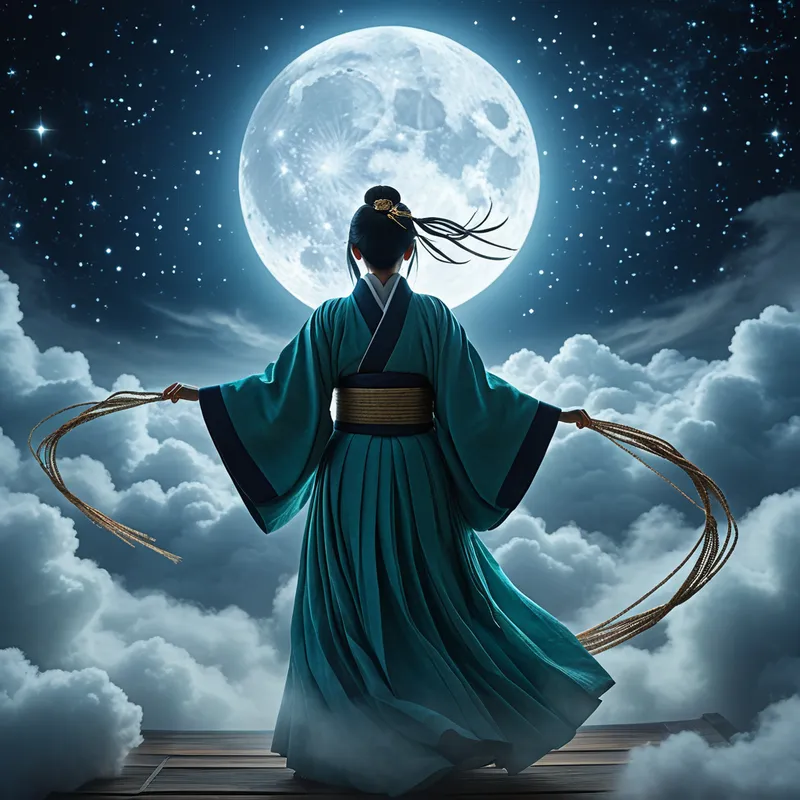
Nobori Myth Meaning & Symbolism
A myth of sacred ascent, where a soul climbs a celestial rope to transcend the mortal world, embodying the ultimate journey of spiritual and psychological liberation.
The Tale of Nobori
Listen, and hear the tale whispered by the wind in the ancient cryptomeria, a story from the time when the fabric between the worlds was thin as silk.
In the Age of the Gods, when Nihon was young and raw, the realms were not so distant. Takamagahara hung close, a shimmering possibility just beyond the mountain peaks. But a sorrow had settled upon the land. The first ancestors, the mighty kami who had shaped the islands, began to fade. Their luminous forms grew heavy with the substance of the earth; their divine breath became the same air that mortals breathed. They felt the pull of Yomi, the dark and polluted realm below, calling them to a final, silent rest.
Among them was a kami of particular radiance, whose essence was the clear light of the morning star. This kami looked upon the descending path of its kin with a profound unease. To descend into Yomi was to be defiled, to be trapped. A longing, pure and fierce, burned within—not for the darkness below, but for the sublime heights above. It yearned not for an end, but for a return to the original, undifferentiated source, to the pure chaos of potential that existed before form.
This kami went to the shore of the world, where the sea of Ame-no-Minaka-Nushi met the vault of the sky. There, it began a ritual of immense concentration. It gathered the last vapors of its divine power, the fading echoes of creation. From its own substance, it began to weave. It spun threads of intention, of unyielding desire for ascent. It plaited strands of moonlight caught on the waves and filaments of starlight pulled from the firmament. For seven nights and seven days, it wove without cease, until before it hung a single, resplendent cord—the Ama-no-Nobori.
The rope was a paradox: solid as rock yet light as a sigh, finite in its beginning but vanishing into infinity above. The kami grasped it. With the first pull, the earth groaned in farewell. With the second, the winds of the middle world gathered to push it onward. The kami began to climb, hand over hand, foot over foot, leaving behind the weight of manifested form.
The ascent was the trial. The rope thrummed with the kami’s own resolve. Below, the world receded into a beautiful, bittersweet painting—the green islands, the silver rivers. Around it, the air grew thin and charged with a different music, the humming of the spheres. It did not look back, for to look back was to doubt, and doubt was gravity. It climbed through zones of sheer memory, through layers of collective joy and sorrow, through the silent, watchful space where time itself unravels into eternity.
It climbed until the rope ended not at a place, but in a state—a brilliant, merciful dissolution. The kami did not arrive; it unbecame. Its individual consciousness flowed back into the great, nameless source, Musubi, like a raindrop returning to the ocean. It achieved not death, but a perfect, liberated transcendence. The rope, its purpose fulfilled, remained—a faint, shimmering path etched into the cosmos, a testament that the journey from form back to formlessness was possible.
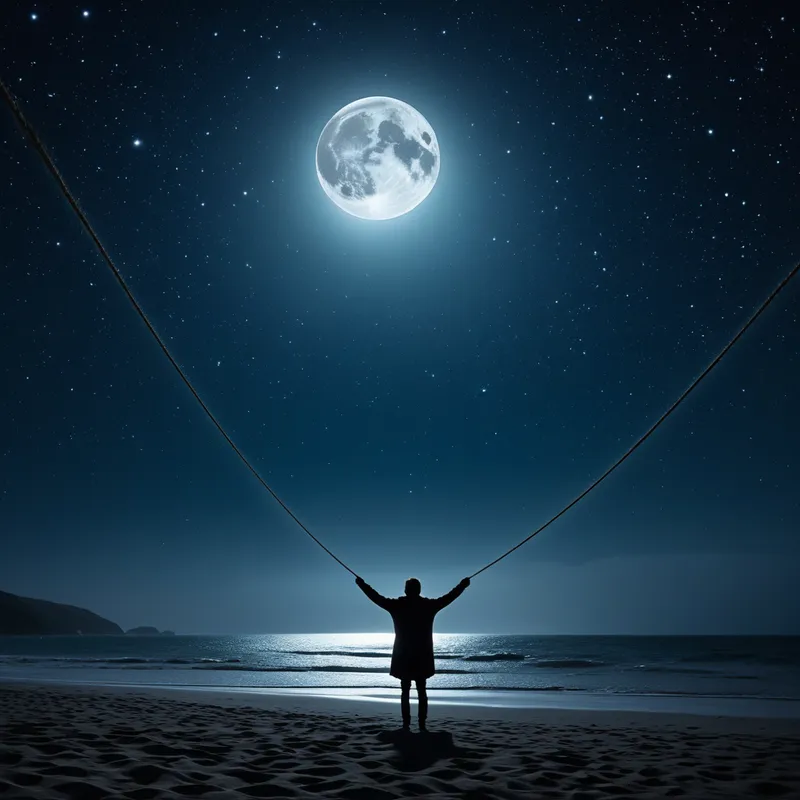
Cultural Origins & Context
The concept of Nobori is less a single, codified myth with a named hero and more a profound mythological motif deeply embedded in the Shinto and broader Japanese cosmological worldview. It finds its roots in the earliest chronicles, the Kojiki and the Nihon Shoki, where the dynamic movement between realms is a fundamental principle.
This motif of ascent stands in direct contrast to the more commonly narrated descent into Yomi, as tragically experienced by Amaterasu's brother, Susanoo. While Yomi represents a passive, inevitable end marked by pollution and stagnation, Nobori represents an active, willful return. It was a narrative preserved not necessarily for popular entertainment, but within the esoteric teachings of Shinto priests (kannushi) and ascetic practitioners (yamabushi). For the yamabushi, who undergo severe mountain austerities, their physical climb up sacred peaks like Mount Omine is a literal enactment of this spiritual Nobori, a ritualized death-and-rebirth aimed at acquiring spiritual power (reiryoku) and returning to the source.
Societally, the myth functioned as a cosmological reassurance. It presented an alternative to the finality of the grave. It affirmed that the spirit (tamashii) was not eternally bound to the cycles of decay but possessed, in its purest form, the potential for a glorious, upward trajectory—a liberation from the cycle of birth and death (samsara), a concept that later syncretized with Buddhist ideas of enlightenment (satori).
Symbolic Architecture
At its core, the myth of Nobori is a master symbol of vertical integration. The rope is the central, transformative artifact.
The rope is not a ladder given by the gods; it is the soul's own longing made manifest, woven from the very fibers of its will to transcend.
It represents the axis mundi, the world pillar connecting Heaven, Earth, and the Underworld, but with a crucial directional focus: upward. Psychologically, this is the connection between the conscious ego (the earthly realm), the personal and collective unconscious (the middle, psychic space), and the transcendent function or Self (the celestial source). The climb is the arduous process of individuation—not a journey outward to conquer, but inward and upward to integrate and unify.
The fading kami symbolizes the ego or psyche that has become burdened by the "world"—by complexes, persona, trauma, and the sheer weight of lived experience. It feels the pull of the shadow (Yomi), the passive dissolution into unconsciousness. The active choice to weave the rope is the ego's decision to engage in the transformative work, to take responsibility for its own salvation. The dissolution at the end is not annihilation, but the ego's humble surrender to a greater, transpersonal totality. It is the realization that one's true nature was never the isolated climber, but the entire expanse of sky into which it merges.
The Dreamer's Resonance
When the motif of Nobori appears in modern dreams, it signals a profound psychic shift. The dreamer is not merely having a dream; they are in the myth.
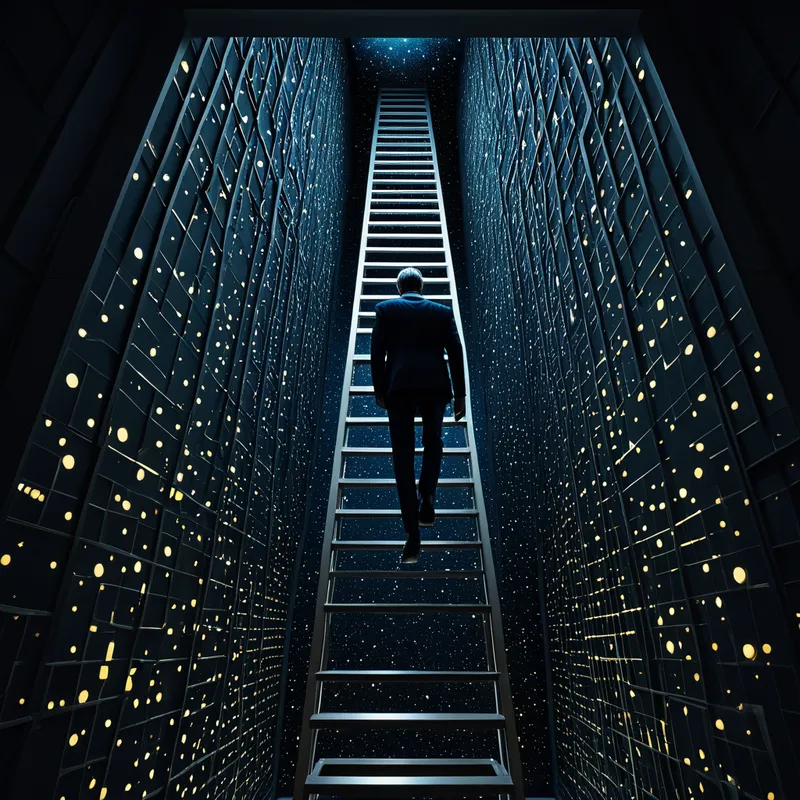
You may dream of climbing a endless staircase in a familiar-yet-alien building, a frail rope bridge over an abyss, or a sheer cliff face you must ascend. The somatic experience is key: you will feel the strain in your muscles, the burning in your lungs, the dizzying fear of looking down. This is the psyche somatizing the effort of integration. You are pulling up contents from the unconscious—a repressed memory, a neglected talent, a shadow aspect—into the light of consciousness. The climb is the struggle to hold this new, often uncomfortable, awareness.
If the rope or path breaks, it speaks to a crisis of faith in the process, a fear that the transformative work is too dangerous or that the ego will be lost. Dreaming of reaching the top and merging with a brilliant light or vast sky often accompanies major life breakthroughs, spiritual awakenings, or the resolution of a long, internal conflict. It is the dream-ego experiencing, momentarily, the peace of the Self.
Alchemical Translation
The alchemical process mirrored in Nobori is the sublimatio—the distillation and elevation of the base material into its highest, most rarified state. The "base material" is the leaden, suffering, or confused psyche. The "heat" of the process is the intense focus and will of the kami, the disciplined attention of the dreamer, the committed practice of the modern individual in therapy or introspection.
The goal of the ascent is not to become a better version of your earthly self, but to discover that your earthly self is a temporary, partial expression of something boundless.
For us, the weaving of the rope is the daily, often mundane, work of self-reflection: journaling, active imagination, honest conversation, creative expression, mindful practice. Each act of conscious attention adds a strand. The climb is the application of that woven understanding to our lives—making the difficult choice, speaking the hard truth, changing the paralyzing pattern.
The final "dissolution" is translated into modern psychological terms as the achievement of a non-ego-centric perspective. It is the state where one acts not from the fragile, defensive ego, but from a place of alignment with a deeper, more compassionate wisdom. You have not vanished; you have become more fully, authentically present, because you are no longer only the climber. You are also the rope, the sky, and the very impulse to ascend. You have, in essence, come home to the source that was within you all along, completing the sacred circuit between the human and the divine.
Associated Symbols
Explore related symbols from the CaleaDream lexicon: