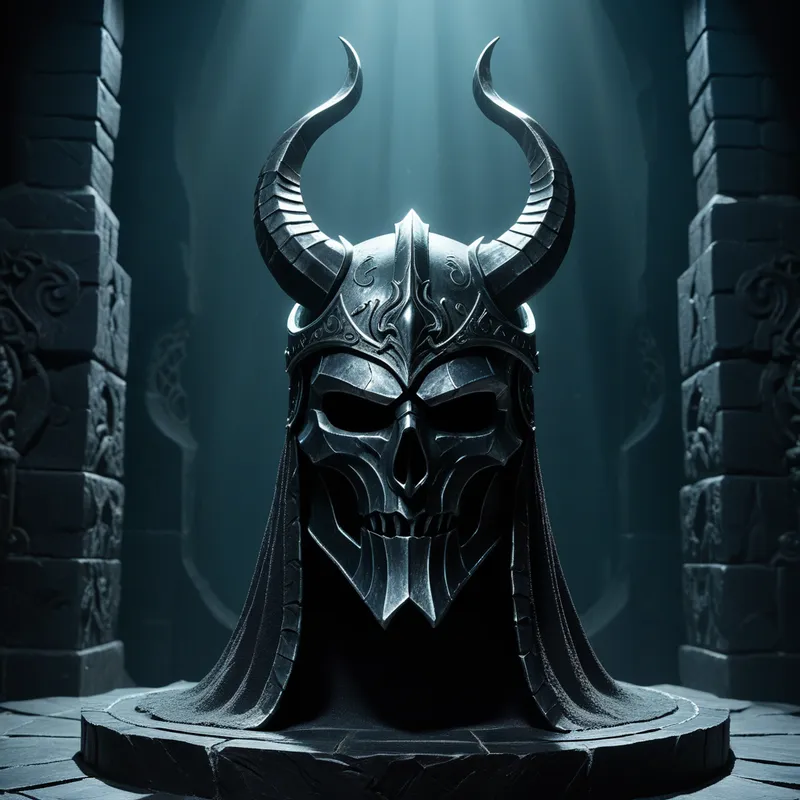
The Alchemy of Cunning: From Shadowy Resource to Sovereign Intelligence
The Somatic Echo
Before the mind can name it, the body knows. Cunning announces itself not as a thought, but as a subtle, subcutaneous shift. It is a coolness behind the eyes, a quieting of the breath that makes you a smaller target in your own skin. The jaw unclenches, not in relaxation, but in predatory patience. The shoulders drop, the spine aligns—not for posture, but for efficiency, for the poised stillness of a creature that calculates trajectories of escape and advantage. There is a metallic taste at the back of the tongue, the flavor of a strategy forming in the dark. The heart does not race with panic; it slows, becoming a deep, measured drum in a cavern of watchful silence. This is the intelligence of the periphery, the part of you that maps the room for exits and soft spots before you even know you’re looking. It is the ghost in your own machine, running silent diagnostics on every social contract, every unspoken rule, looking for the flaw in the code, the loose thread in the tapestry. It feels like being both the hunter and the hunted, a paradox held in the quiet hum of your own nervous system.
The Dreamer's Log
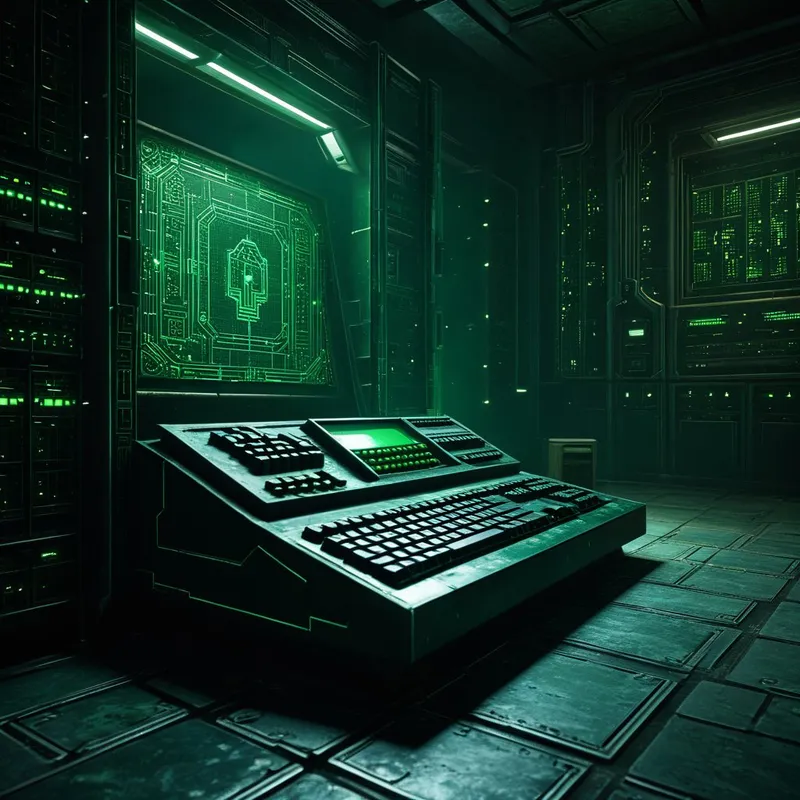
I am in a forgotten server room, all dust and the hum of dead machines. A single terminal screen flickers with cascading green glyphs I cannot read. I know, with a certainty that bypasses thought, that the system is lying to me. It is presenting a false front. My hands move on the keyboard not by my own volition, but by an instinct older than language. I am not typing commands; I am inserting a silence, a calculated gap in the stream of data. In that gap, a hidden directory winks into existence. Within it, on the screen, rests a single, ornate silver key.
Alchemical Interpretation: The dreamer’s psyche, encountering a labyrinth of inherited or imposed logic (the system), instinctively generates a non-linear intelligence (the silence) to locate the latent tool of self-authorization (the key).
The False Lead
Cunning is not malice. This is the critical misstep. To confuse the dream’s cold calculus with cruelty is to reject a vital part of your own psyche. It is not the petty deception of the liar, nor the brutal override of the tyrant. Its energy is not hot, but cool; not expansive, but precise. It is also not mere cleverness or quick-wittedness, which operate in the light of acknowledged play. Cunning is the intelligence that operates when the rules of the game are rigged, when the playing field is not level, when overt strength or honest plea would be not just ineffective, but fatal. It is the psyche’s answer to a bind, a forced move in a game you did not choose to play. To interpret it as simply “being sneaky” is to pathologize a profound survival algorithm. It is the mind’s capacity to bend without breaking, to find the path of least annihilation.
Psychological Architecture
To engage with Cunning is to do Shadow work of a particularly slippery kind. This is not the raging, rejected beast of the Shadow, but its silent, observant strategist. In the model of the internal family, Cunning often manifests as an exiled part—the inner child who learned to navigate a volatile home by reading micro-expressions and predicting moods; the adolescent who survived social hierarchies by crafting a persona that would attract the least aggression. It is a manager of exquisite skill, tasked with the impossible: to keep you safe in an environment perceived as fundamentally unsafe.
The individuation process here is one of reclamation without glorification. You are not being called to become cunning in your waking life, but to integrate the intelligence that cunning represents. This means listening to the part of you that sees the angles, that recognizes power dynamics, that knows where the soft underbelly of a situation lies—and then, from your adult consciousness, deciding what to do with that knowledge. The terror it holds is the terror of the orphan who had to rely solely on this wit to survive. The grief is for the times this intelligence was born from necessity, for the innocence that was traded for this sharp-edged tool. Integrating it means thanking this part for its service, for keeping you alive, and then inviting it out of the cold, desperate calculus of survival and into the warmer, more complex calculus of creation and sovereignty.
Mythic Resonance
We see this intelligence etched into our oldest stories. Consider Odysseus, the man of many turnings. His greatness is not merely his strength or his nobility, but his metis—a Greek concept encompassing practical cunning, skillful resourcefulness, and adaptive intelligence. To escape the Cyclops, he does not fight the monster head-on (a suicidal act); he intoxicates him, blinds him, and escapes by clinging to the underbelly of a sheep. It is a grotesque, brilliant, and deeply undignified solution. It works. This is not the myth of the Hero who overpowers, but of the Survivor who outthinks. The myth tells us that to navigate a world of literal and metaphorical giants, brute force is a child’s strategy. True navigation requires a mind that can twist with circumstance, that can use the enemy’s assumptions as its own scaffolding.
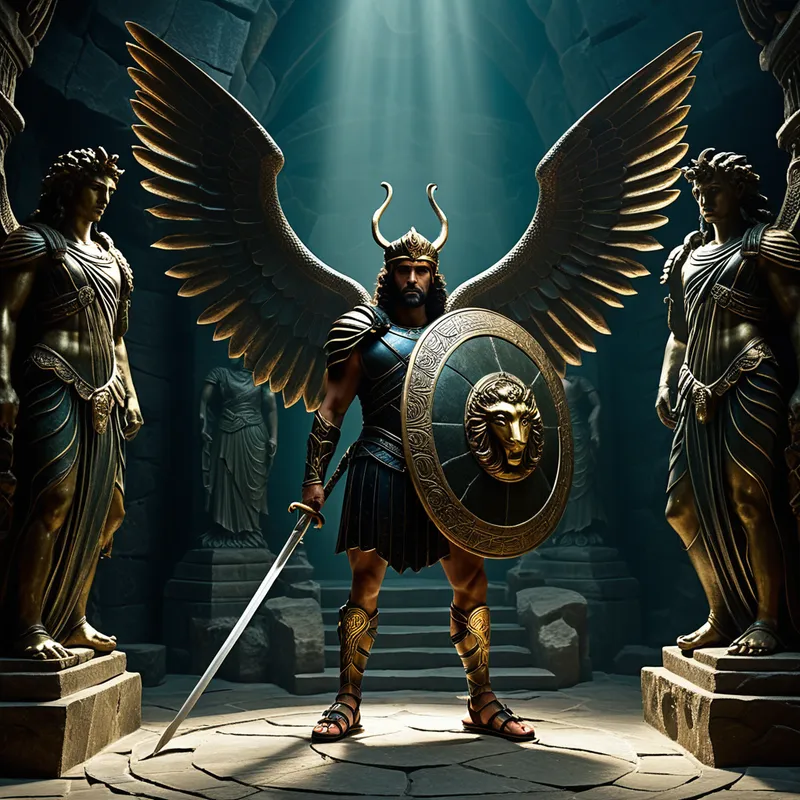
In the Norse pantheon, Loki is not pure chaos; he is the embodiment of this ambiguous, shapeshifting intelligence. He solves problems the gods cannot by thinking in ways they will not—through trickery, loopholes, and lateral connections. He is both essential and catastrophic, the necessary flaw in the system that keeps the system from becoming rigid and doomed. He represents the cunning mind’s dual nature: it can build a wall (as he did for Asgard) or bring about its downfall (with the mistletoe spear). The myth warns that this intelligence, left unconscious and unintegrated, operates autonomously, serving its own logic of disruption, eventually turning on the self it was meant to protect.
Symbolic Nodes
- Foxes, Spiders, or Octopuses: Creatures renowned for adaptive, non-confrontational intelligence and strategic predation.
- Hidden Passages, False Walls, or Trapdoors: Architecture of secrecy and alternative pathways.
- Mirrors and Reflections that Lie or Show Alternate Realities: The manipulation of perception and identity.
- Lockpicks, Skeleton Keys, or Bypass Codes: Tools for circumventing established locks and protocols.
- Camouflage, Disguises, or Shapeshifting: The ability to alter one’s presentation to fit or evade a context.
- Poison (Administered Subtly): Power that works indirectly, from within, over time.
- A Game Board (Chess, Go) Where the Rules Suddenly Change: The necessity for adaptive strategy in fluid, unfair systems.
Archetypal Resonance
The energy of Cunning finds its purest expression in The Shadow Magician. The Magician archetype is the master of transformation, the one who understands the hidden principles of the world to effect change. In its shadow aspect, this understanding is not used for healing or creation, but for manipulation and control. The Shadow Magician knows which psychological levers to pull, which words will seed doubt or inspire loyalty, how to present illusion as truth. The somatic echo of cunning—the cool watchfulness, the strategic stillness—is the Shadow Magician’s practiced poise. Its alchemical potential, however, is immense. The very capacity to perceive and manipulate unseen forces is the raw material of the mature Magician. The journey is to take that cold, observational power—born from a need to manage a threatening environment—and, through conscious integration, warm it with empathy and purpose, transforming the manipulator into the authentic visionary, the illusionist into the true alchemist.
The Alchemical Process
The transmutation of Cunning is an alchemy conducted under the pressure of conscious shame and the heat of compassionate re-contextualization. The prima materia, the base matter, is the raw, amoral intelligence born of perceived threat. The first fire is the uncomfortable, even shameful, recognition: “This is a part of me. I am capable of this.” This is the dissolution of the persona of pure innocence or blunt honesty.
The pressure builds as you trace this intelligence back to its genesis. What early environment required this kind of adaptive armor? What would have happened to you without it? This is the stage of nigredo, the blackening, where you confront the grief and loneliness at its core.
The transmutation occurs when you apply the heat of a new question. Not “How do I use this to get an advantage?” but “How do I use this deep perception of systems and patterns to create instead of merely to survive or manipulate?” The cold, analytical gaze learns to identify not just vulnerabilities to exploit, but dormant potentials to nurture. The capacity to weave illusions learns to envision possibilities that do not yet exist. The silver key from the dream is no longer for picking locks on other people’s doors, but for unlocking your own inner vaults of creative authority. The survivalist becomes the strategist for your own sovereignty.

The Integration Protocol
Question 1: When in my life have I felt the cool, watchful stillness of Cunning arise in me? What was the environment or situation that summoned it?
Question 2: If this intelligent, strategic part of me had a voice, what is the one thing it has always wanted my conscious self to know, but felt I wouldn't understand or would judge?
Question 3: Where in my current life is there a "rigged game" or an unfair system? How could the strategic intelligence of Cunning help me navigate it not to exploit others, but to carve out a space for my authentic work or well-being?
Action 1 (Somatic Re-patterning): For one week, when you feel that familiar cool, calculating tension arise, do not follow its mental thread immediately. Instead, place a hand on your heart and take three breaths, consciously warming the space around that cold intelligence. Acknowledge its presence: "I feel you. You are here to scan for safety. We are okay." This begins to dissociate the intelligence from pure threat response.
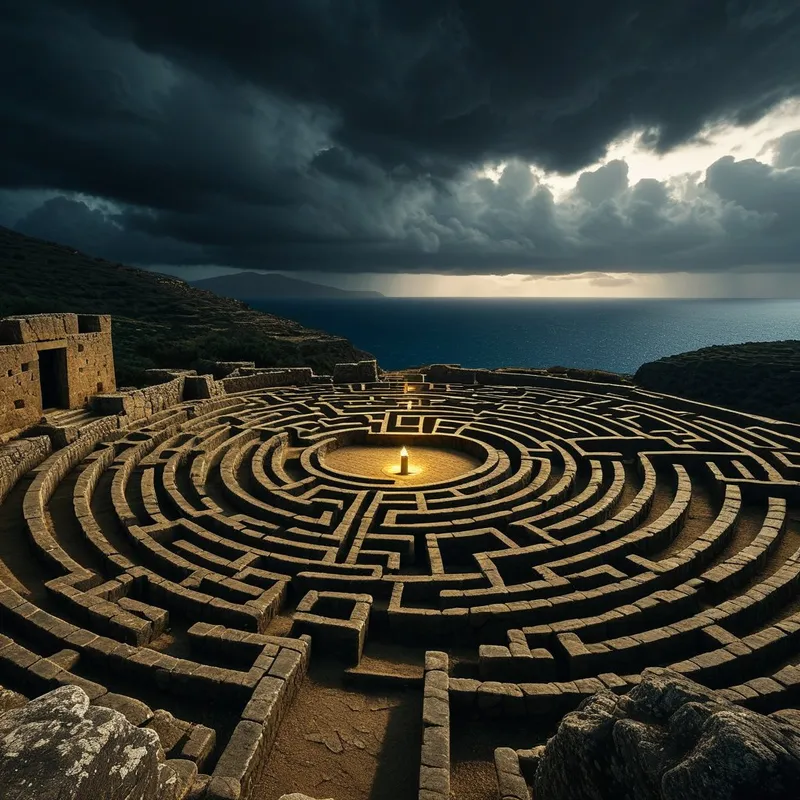
Action 2 (Creative Reconnaissance): Take the dream vignette or a symbol of cunning from your own life (a fox, a labyrinth, a key). Using any medium—unstructured writing, drawing, digital collage—create a "field manual" for this intelligence. Not a diary, but a technical document. What are its operating parameters? Its primary directives (e.g., "Identify threat," "Find path of least resistance")? Its strengths and its blind spots? Objectifying it in this way brings it out of the shadows and onto the workbench of consciousness.
Action 3 (Ritual of Re-contextualization): Find a small, smooth stone. Hold it and recall a specific, difficult memory where your cunning intelligence was your best or only tool for coping. Pour gratitude into the stone for that service. Then, take it to a crossroads—a literal intersection, a fork in a path, a place where choices are made. Bury it or leave it there with this intention: "Your service in the old territory is honored. You are now recalled to a new purpose: to help me see the choices, not just the threats."
Final Validation
It is a difficult thing, to meet this sharp, silent intelligence within yourself. To feel its cool gaze turned inward can stir unease, as if you’ve discovered a stranger living in your basement who knows all your secrets. The temptation is to disown it, to label it "bad" and lock the door. But that stranger is a master engineer, a survivor of your own personal wars. Its methods were forged in necessity. To integrate Cunning is not to become deceitful; it is to become undeceivable. It is to take the lens that was once focused outward, scanning for danger, and turn it inward to illuminate the hidden architectures of your own psyche, and outward again to envision new, more elegant structures for your life. You are not hiring a spy. You are promoting a brilliant, long-overlooked advisor to the inner court, transforming a survival mechanism into the very architect of your sovereignty.