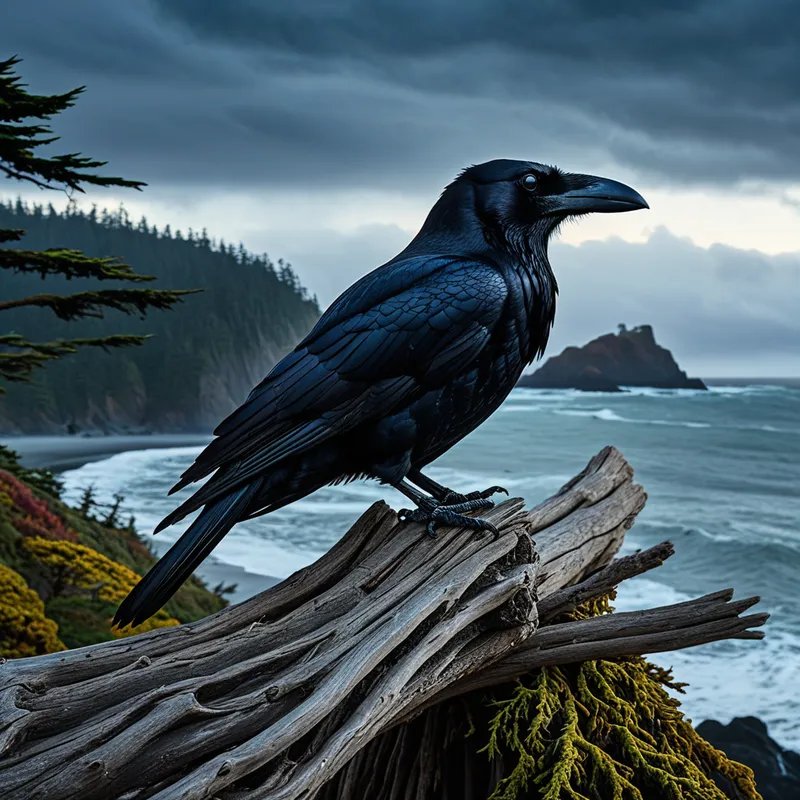
Raven Myth Meaning & Symbolism
A shape-shifting trickster steals the sun, moon, and stars from a chief's treasure box, bringing light and consciousness to a world of primordial darkness.
The Tale of Raven
In the beginning, there was only the dark, wet belly of the world. The great waters heaved under a lid of unbroken black sky. On the shore of this primordial sea, a strange thing happened. A single, glossy naguney heard a cry from within a giant clamshell. It was not the cry of a bird or a beast, but the mewling of the first people, huddled in the dark, afraid to emerge.
The naguney, in his curiosity, coaxed them out. They were soft, pale, and blinking. He showed them the mussels on the rocks, the berries in the forest. But the world he showed them was a world of perpetual twilight, a grey realm without day or night, for the light was hidden away.
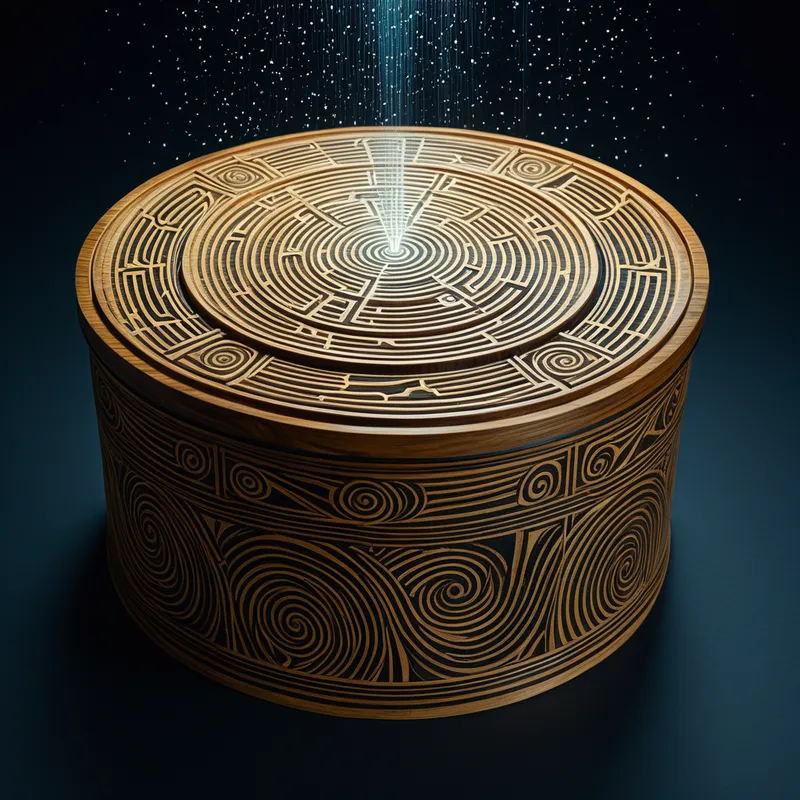
Far inland, in a house at the head of a mighty river, lived a powerful chief who hoarded all the light in the universe. He kept it sealed in a series of beautifully carved bentwood boxes. The sun, the moon, the stars—all were his private treasures. The people lived in a murky half-light, and Raven’s own feathers, which he so admired, appeared only a dull, flat black.
This would not do.
Raven watched. He learned the chief had a daughter, and he formed a plan. He transformed himself into a single, shimmering hemlock needle. He drifted on the wind, and when the daughter came to fetch water from the river, he let himself fall into her dipper. She drank, and he was swallowed.
Inside her, he grew. He was reborn as a human child, a boy with raven-black hair and eyes that held a strange, knowing darkness. The chief doted on his grandson. The child cried and pointed at the boxes stacked in the corner of the great house. He wanted to play with the shiny things inside. The chief, reluctant, gave him the smallest box. The child played, then cried for the next. Box by box, the chief relented, until only the largest box remained—the one that held the sun.
The child’s cries became a tempest. The chief, his heart worn down, finally opened the great lid. A sliver of blinding, golden radiance sliced through the smoky air. In that instant, the child transformed. His small form erupted into the great, winged shape of Raven. He snatched the burning orb in his beak and shot toward the smoke hole.
Chaos erupted. The chief roared. Raven burst through the roof and into the sky, the sun clutched tight. As he flew, he was pursued, the light scorching his feathers from pure white to the deepest, glossiest black. He opened his beak to cry out in triumph, and the sun flew from his grasp, rolling up into the dome of the sky where it has hung ever since. Later, he would return for the moon and the stars, scattering them across the velvet night.
And so, light came to the world. Not through solemn prayer or heroic battle, but through a cunning theft, a sacred deception born in the dark and delivered by a trickster’s beak.
Cultural Origins & Context
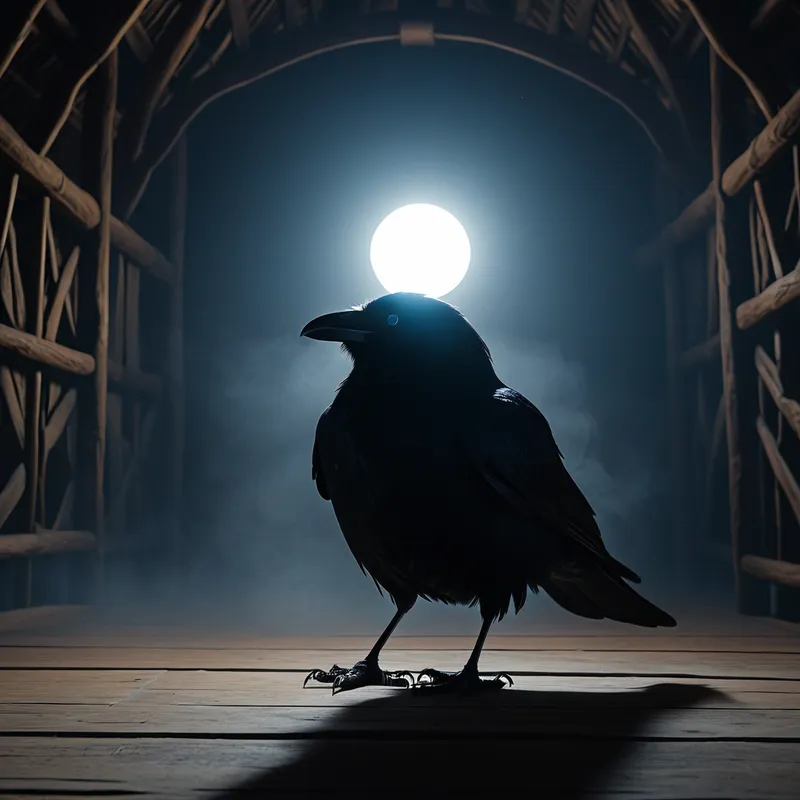
This is a foundational narrative of the Haida, a people whose world is defined by the mist-shrouded forests and rich seas of Haida Gwaii. The story of Raven is not a singular text but a living, breathing corpus of stories, adaaw, passed down through generations by skilled orators. It was told in the winter, when the longhouses were filled with the scent of cedar smoke and the sound of rain on the roof, a time when the boundary between the everyday world and the myth-time grew thin.
Raven stories served multiple vital functions. They were an ontological map, explaining the origins of the world’s phenomena—why the raven is black, why the tides move, why light exists. They were also a profound social and ethical compass. Raven is not a moral exemplar but a reflection of life’s complex reality: he is creator, fool, glutton, and bringer of gifts. He embodies the necessary chaos that precedes order, the appetite that drives action, and the intelligence that is not always wise. Through his often-outrageous exploits, the Haida explored themes of social boundaries, the consequences of greed (both Raven’s and the chief’s), and the transformative power of cleverness.
Symbolic Architecture
Raven is the ultimate archetype of the Trickster-Transformer. He operates in the liminal spaces—between water and land, animal and human, darkness and light, chaos and order. His theft is not a crime in a mundane sense, but a cosmogonic act. The light he steals is consciousness itself, the illuminating principle that allows differentiation, perception, and life to flourish.
The Trickster does not create from nothing; he liberates what is already there, trapped by a possessive ego.
The chief who hoards the light represents a static, unconscious totality. He is the psyche that refuses to differentiate, that keeps its potential locked away in the dark. Raven is the disruptive psychic force—curiosity, desire, cunning—that forces this potential into the open, even if the process is messy, deceptive, and painful. His transformation from white to black symbolizes the cost of this act; to bring light to consciousness, one must take on the shadow, be stained by the process. The black feathers are not a mark of evil, but of experience, of having wrestled with the primal sources of power.
The Dreamer's Resonance
When Raven flies into a modern dream, he announces a phase of necessary disruption. To dream of a raven, especially one that is stealing something precious or transforming its shape, signals that a long-held structure in the psyche—a belief, a self-image, a pattern of behavior kept in a "locked box"—is ready to be liberated, but not through gentle means.
The somatic feeling is often one of thrilling anxiety, a mix of fear and excitement. The dreamer may feel they are getting away with something or that a foundational deception is being uncovered. This is the psyche’s own cunning, working in shadowy ways to access its own hidden light. It is the moment when a repressed talent, a forgotten passion, or a denied truth clamors like a child for the biggest box, refusing to be placated. The process Raven models is not integration, but eruption. He represents the chaotic, amoral, yet utterly vital energy that precedes conscious realization.
Alchemical Translation
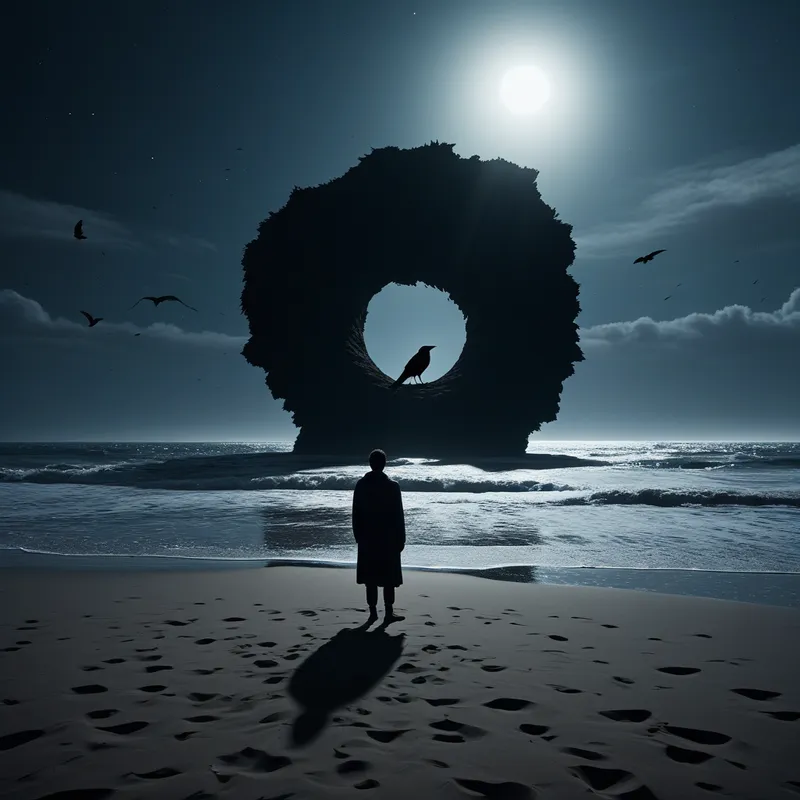
The individuation journey is rarely a straight path of heroic conquest. More often, it involves a Raven-like maneuver: a descent into darkness, a period of disguise and infiltration, and a cunning theft of one’s own soul-light from the grip of an internal "chief." This chief may be the internalized critic, the rigid persona, or the collective expectations that hold our most radiant potentials prisoner.
The first act of self-creation is often an act of self-theft—stealing your own fire back from the parts of you that fear its heat.
Raven’s alchemy is the opus contra naturam—the work against nature. He does not accept the given world of darkness. He works through trickery, appetite, and transformation. For the modern individual, this translates to the willingness to use unconventional, even seemingly "underhanded" psychological strategies: humor to deflate pomposity, curiosity to bypass fear, creative deception to outwit inner tyrants. The goal is not to become Raven, the chaotic force, but to integrate his function—to allow that transformative, boundary-breaking energy to liberate the light we have kept hidden, even from ourselves. We are left, like the world after Raven’s flight, illuminated but also marked, carrying the glossy black sheen of hard-won experience.
Associated Symbols
Explore related symbols from the CaleaDream lexicon: