The Dream of Boundaries: The Architecture of the Self
The Somatic Echo
It begins not as a thought, but as a pressure. A clenching in the solar plexus, a tightening across the shoulders as if bracing against an unseen weight. It is the visceral hum of a force field you didn’t know you had activated, a low-grade ache in the jaw from words swallowed. This is the body’s knowing—a pre-linguistic intelligence that maps the frontier of the self. It is the feeling of a skin that is both too thin, absorbing every vibration from the world, and too thick, a carapace that isolates you in a silent chamber. The dream of boundaries arrives first in this somatic echo: a deep, cellular negotiation between the longing to merge and the imperative to remain distinct. It is the ancient, biological truth that life itself requires a membrane.
The Dreamer's Log
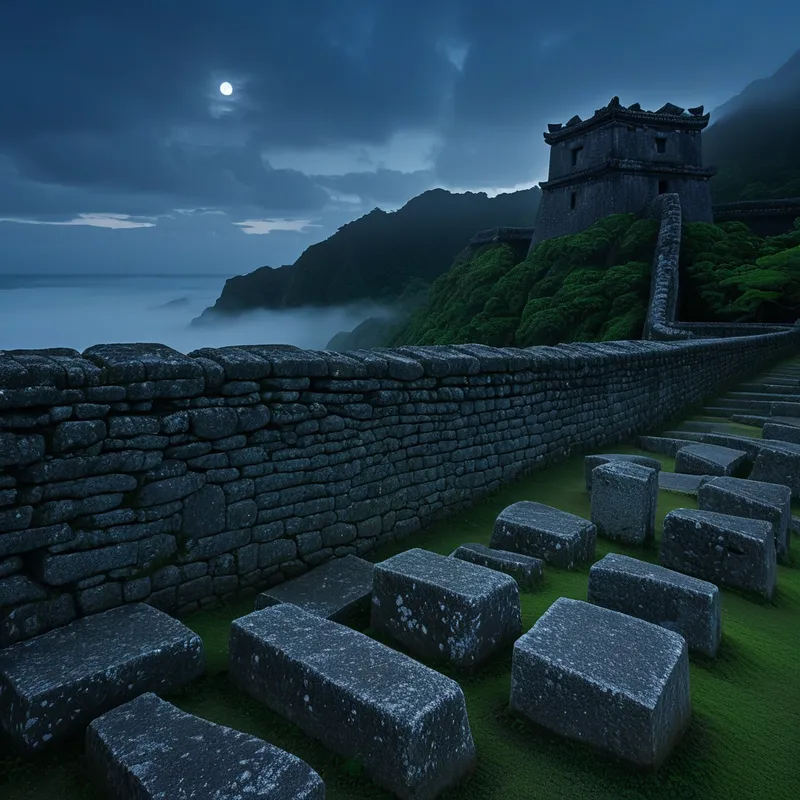
I am in a vast, humming server room, all cold blue light and the scent of ozone. My task is crucial, but I cannot reach the central terminal. Between me and my purpose stands a wall—not of steel or code, but of rough, ancient stone, covered in glowing moss and wet with condensation. It feels profoundly out of place, a relic from a forgotten world obstructing the future. I press my palm against it; it is warm, and it pulses like a living thing.
This dream is not about a literal obstacle, but about the psyche presenting its own foundational structure as the very thing that must be consciously encountered. The alchemical interpretation: The ancient, living wall is not an error to be deleted, but the core substrate of the self that must be acknowledged before any new code can be written.

The False Lead
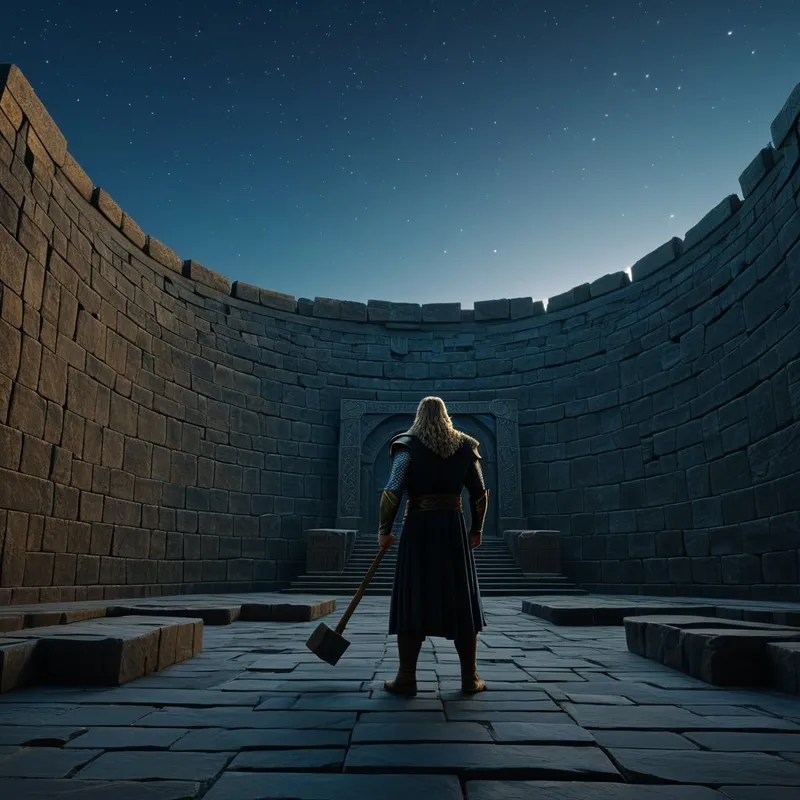
Do not mistake this theme for mere social conflict or a simple need for assertiveness. A dream of boundaries is not a tutorial on saying "no." That is the surface grammar. The deeper syntax speaks to the very architecture of identity. It is not about erecting fences against a hostile world, but about discerning where you end and the world begins—and more terrifyingly, where the world ends and you begin. This is the work of structural integrity, not perimeter defense. The false lead is believing the boundary is only external, when its most critical negotiation is internal, between exiled parts of the self that have been walled off or parts that have bled out, unbounded, into everything around them.
Psychological Architecture
To work with boundaries in dreams is to enter the psyche’s drafting room. Here, the shadow work is one of cartography. You are mapping the internal family system of your soul—where does the Inner Child hide, unprotected? Where has the Inner Critic built a fortress so impregnable it stifles all creative life? Where have you, in a bid for love, dissolved your borders entirely, creating a psychic no-man's-land? Individuation in this realm is the slow, deliberate process of becoming a sovereign state. It requires treaties with inner rebels, diplomatic relations with wounded orphans, and the compassionate dissolution of tyrannical internal regimes. The terror lies in the dissolution of old, familiar walls; the grief, in realizing some connections were only ever invasions. The goal is not a walled city, but a coherent, permeable entity with conscious gates.
Mythic Resonance
Consider the myth of Psyche and Eros. Psyche is forbidden to look upon her divine lover. This is the ultimate boundary condition, set not from malice, but to preserve the mystery and container of their sacred union. When she breaks it, illuminated by her own doubt and curiosity, she is cast into a wilderness of trials. The boundary was not a cage, but the necessary vessel for a certain kind of knowing. Its violation initiates the alchemy—Psyche must forge her own sovereignty, task by impossible task, to rebuild a relationship not on secrecy, but on earned wholeness. The boundary, first external and imposed, becomes internal and earned. Or recall the Wailing Wall in Jerusalem, a physical remnant of a temple’s boundary that has become a site of profound emotional release and prayer. It shows how a structure meant to separate can, through human longing, become a membrane of deepest connection—the solid stone transmuted by touch and tear into a conduit.
Symbolic Nodes
- Walls, Fences, Moats: The classic images of separation, their condition (crumbling, imposing, transparent) holds the key.
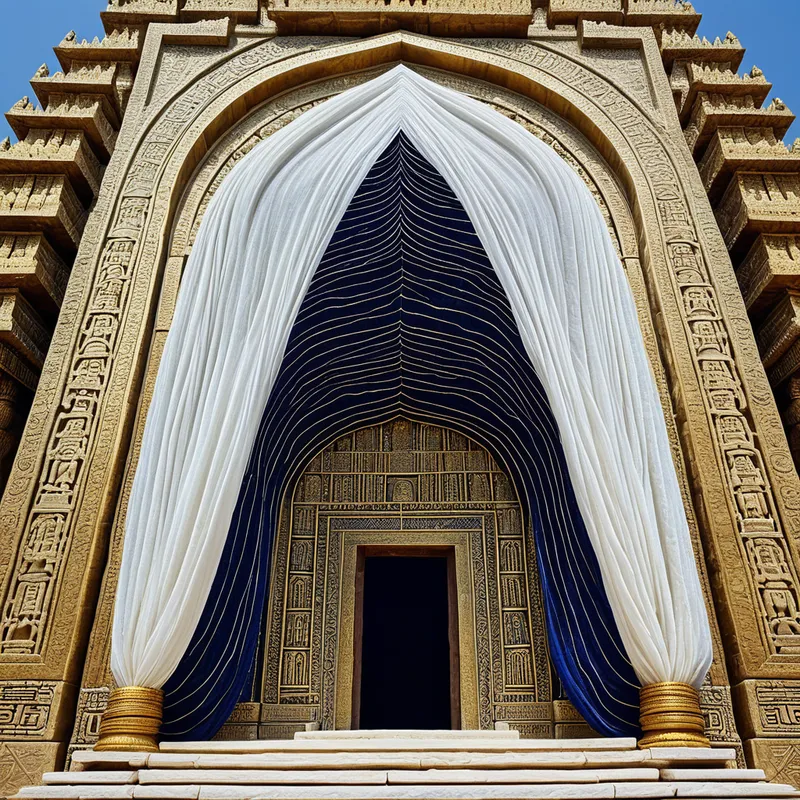
- Skin, Membranes, Veils: Somatic boundaries; torn skin, translucent veils, breathing membranes speak to permeability and vulnerability.
- Doors, Gates, Bridges, Thresholds: The dynamic aspects; locked, open, revolving, guarded, or missing entirely.
- Force Fields, Energy Barriers: Modern metaphors for psychic or emotional buffers, often shimmering or humming.
- Containers: Vessels, cups, rooms, houses. Is the container sound, leaking, overflowing, or shattered?
- Merged or Entangled Objects: Two trees grown into one, wires hopelessly tangled, symbols of lost distinction.
Archetypal Resonance
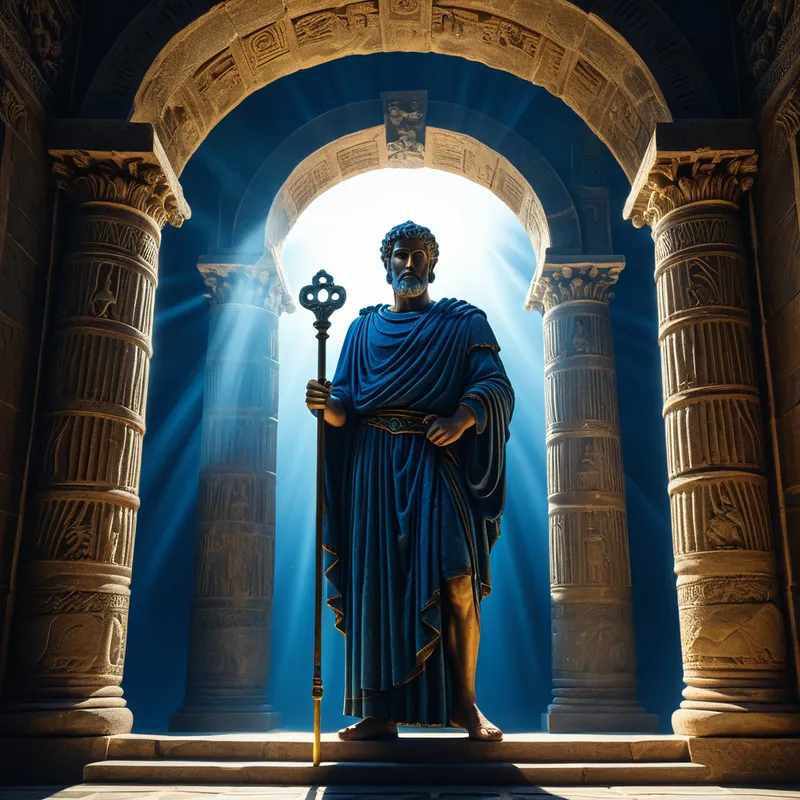
The theme of Boundaries finds its most potent resonance in the energy of The Ruler Archetype. This is not the Ruler as external authority, but as the internal sovereign tasked with the ultimate responsibility: defining the kingdom of the self. The somatic echo—the pressure in the core—is the Ruler feeling the weight of the crown, the burden of establishing law, order, and sacred space within one’s own being. Its shadow, the Tyrant, manifests as rigid, fear-based control that walls off the inner kingdom from life itself, or as the Abdicator who lets chaos reign with no boundaries at all. The alchemical potential of this archetype in boundary dreams is the conscious transition from chaos or tyranny to benevolent sovereignty—establishing internal governance that allows for both secure containment and graceful exchange with the world.
The Alchemical Process
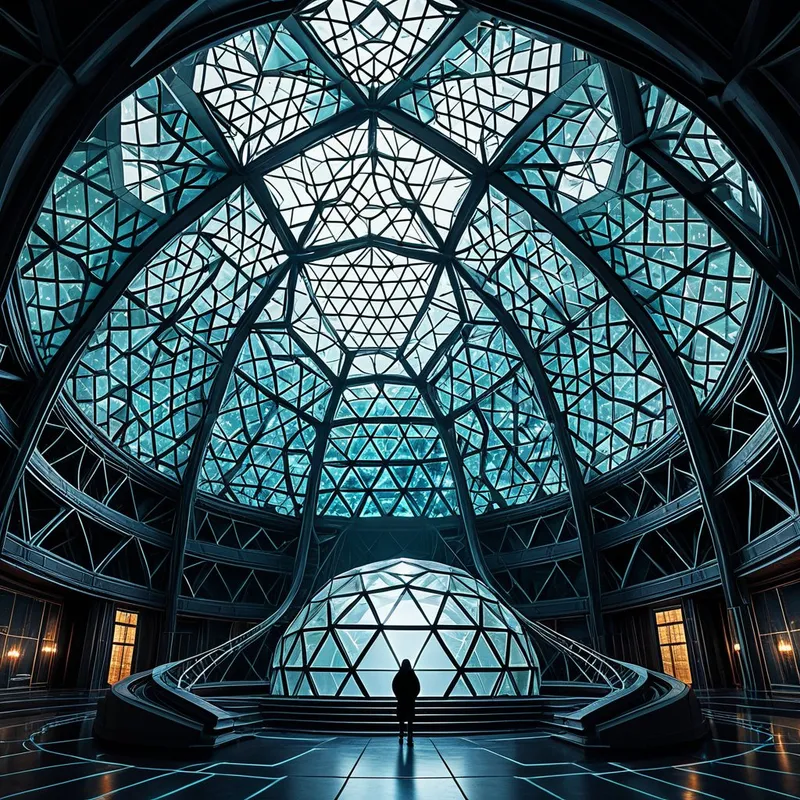
The transmutation here is one of state change, from a reactive territory to a responsive sovereignty. The initial nigredo, the blackening, is the felt sense of invasion or isolation—the grief of lost integrity or the terror of suffocating confinement. The heat is applied through conscious feeling. You must sit in the discomfort of the clenched jaw, the tight chest, and ask: "What part of me is defending here? What is it afraid will happen if this wall comes down?" The albedo, the whitening, is the insight: seeing the blueprint of your internal kingdom, recognizing the exiled parts, the over-fortified citadels. The rubedo, the reddening, is the integration. It is the slow, deliberate work of redesign. This is not demolition, but conscious architecture. You may choose to lower a drawbridge to a long-exiled emotion, or you may choose to fortify a neglected border with self-respect. The pressure is the sustained attention required to hold this complexity without collapsing into the old, binary story of "walls up" or "walls down." The gold produced is psychic sovereignty: the fluid, authentic authority to be both contained and connected, distinct in your being yet engaged with the world.
The Integration Protocol
Question 1: In the dream, was the boundary structure protecting something precious, or was it imprisoning something vital? How does this mirror a dynamic in your waking life?
Question 2: If you could personify the "voice" or energy of the wall/fence/barrier in your dream, what would it say its primary function is? Is it afraid, angry, weary, or resolute?
Question 3: Where in your body do you feel the most resonant "yes" and the most resonant "no"? How can you begin to let those somatic signals, not just your thoughts, guide your boundaries?
Action 1 (Somatic Cartography): For one day, track the somatic echo. Without acting on it immediately, simply note in a journal where in your body you feel a flinch, a tightening, or a softening in interactions. Just map the frontier.
Action 2 (Creative Threshold): Using any medium—clay, paint, collage, or digital art—create a representation of a boundary that feels "right" to you now. Don't create what you think you should have; create what your body whispers it needs. Is it a woven net, a crystal lattice, a waterfall, a frequency?
Action 3 (Ritual of Conscious Passage): Choose a literal threshold in your home (a doorway, a gate). For one week, pause for a full breath each time you cross it. Use the inward breath to consciously gather your energy inward; use the outward breath to consciously step forward. This ritualizes the act of choosing your own presence across borders.
Final Validation
To dream of boundaries is to be entrusted with the most delicate and powerful task of incarnation: the shaping of a self. It is wearying, this constant negotiation. It can feel lonely to define your edges, and terrifying to soften them. This difficulty is not a sign you are doing it wrong; it is the signature of the work itself, the friction of soul meeting world. You are not building walls out of fear. You are, with each conscious choice, each respectful inner treaty, and each honoring of your somatic truth, performing the sacred alchemy of becoming a coherent vessel. You are learning to hold your shape so you may truly touch, and be touched, without dissolving. The boundary, in the end, is not what separates you from life—it is what makes your particular, precious encounter with life possible.