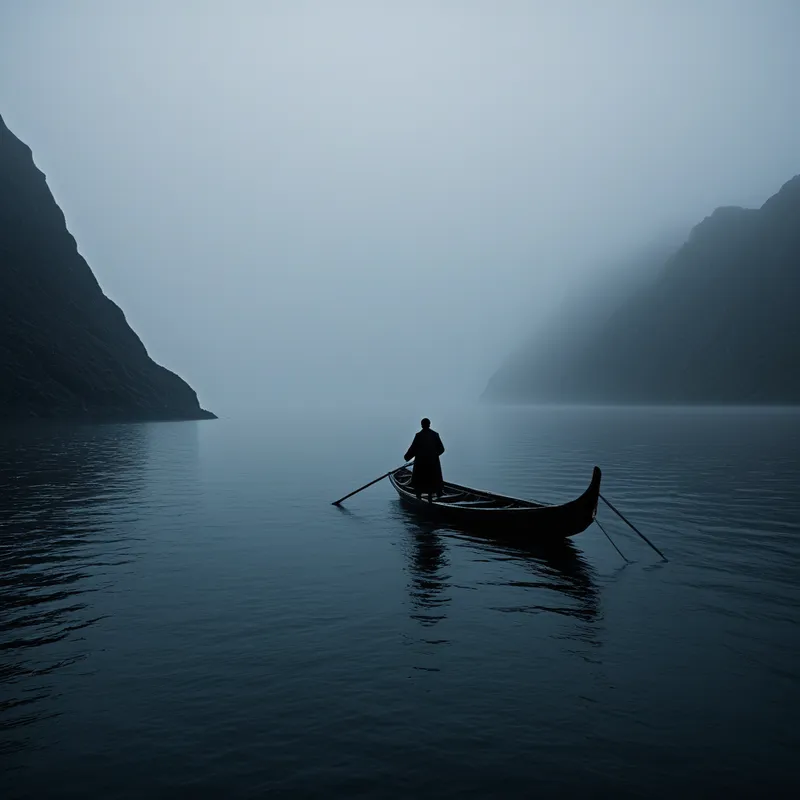
The River Styx shore in Greek Myth Meaning & Symbolism
The dark, sacred river that forms the final boundary of the living world, where oaths are sworn and souls are ferried into the realm of Hades.
The Tale of The River Styx shore in Greek
Listen. Beyond the last grove of whispering poplars, beyond the final meadow where the sun’s warmth grows thin and memory itself begins to fray, there lies a shore. This is no shore of golden sand or crashing surf. This is a margin of crushed black pebbles and cold, sucking mud, lapped by waters that hold no reflection. This is the shore of the River Styx.
Here, the air is still and heavy, a perpetual twilight that drinks sound and hope alike. The river itself flows wide, deep, and silent, a ribbon of liquid obsidian coiling through a landscape of grey rock and withered reeds. Its far side is swallowed by mist, a wall of gloom that promises the realm of Hades and his queen, Persephone. This is the ultimate frontier, the un-crossable line—until he appears.
From the mist, a shape glides: a shallow, black boat, prow carved like a raven’s beak. Poling it is Charon. His form is shrouded in a ragged cloak, his face a leathery map of eternity, eyes like chips of flint. He does not speak. He only waits, his pole planted in the unseen depths below.
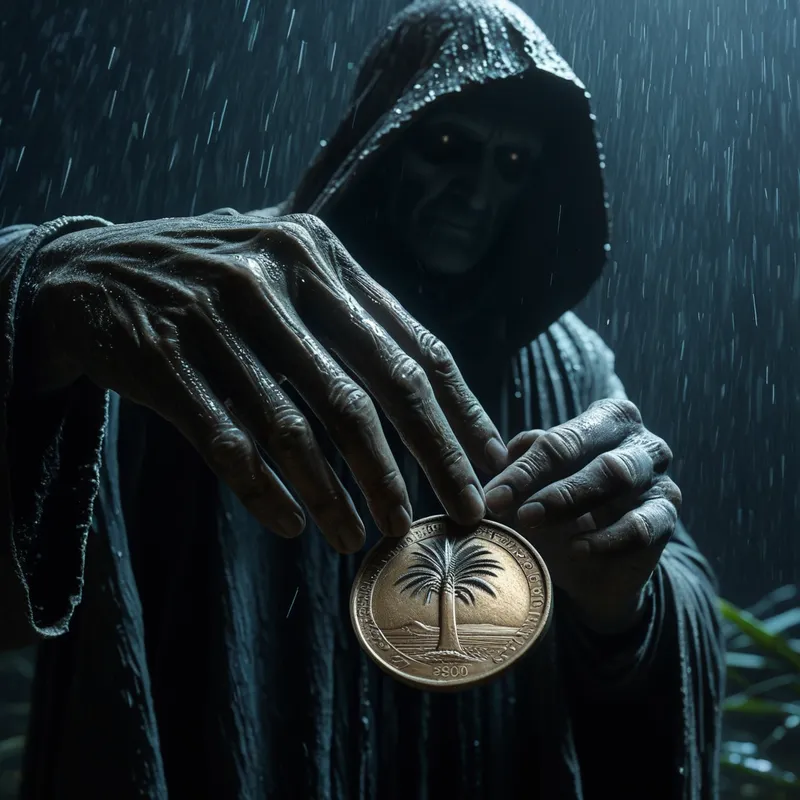
To this desolate bank come the shades. They drift like smoke, insubstantial, their features blurred echoes of the lives they left. They are drawn by an invisible current to this final muster. But passage is not free. Each shade must offer the fare: an obol, a coin placed upon their tongue or eyes by the living who loved them. A shade without the coin wanders the barren shore for a hundred years, a whisper among the stones.
The only sounds are the soft lap of water, the crunch of Charon’s pole finding purchase, and the faint, despairing sighs of those turned away. This is the law, ordained by the gods themselves. For the Styx is more than a boundary; it is a witness. Its water, drawn from a sacred spring, is the unbreakable seal of divine oaths. Even the Olympians swear by it, knowing that to break such an oath brings a year of breathless, senseless stupor. The river that carries the dead also binds the living with the most terrible of promises.
So the boat loads, one by one. A shade steps from the black stones into the blacker boat. Charon poles off, and the craft is swallowed by the mist, carrying its passenger into the silence of judgment, to the fields of Asphodel or the torments of Tartarus. The shore remains, eternal and empty, waiting for the next murmur from the world above, the next soul to complete its journey to the end of all journeys.
Cultural Origins & Context
The myth of the Stygian shore is not a single story but a foundational piece of the Greek cosmological map, emerging from the oral traditions of the Geometric and Archaic periods (c. 900-500 BCE). It was systematized in epic poetry, most authoritatively in Homer’s Odyssey (Book 10 and 11) and Hesiod’s Theogony, where the Styx is named as one of the primordial Oceanid nymphs, the daughter of Oceanus and Tethys.
This myth was not merely entertainment; it served critical societal functions. It provided a concrete geography for the afterlife, answering the profound human question, “What happens next?” The ritual of the obol—placing a coin in the deceased’s mouth—was a direct, practical magic born from this belief, a final act of care to ensure a loved one’s safe passage. The story was told by bards at feasts, depicted on funeral vases, and referenced in tragic plays, reinforcing cultural norms about piety (eusebeia), the importance of proper burial rites, and the absolute power of an oath sworn by the Styx. It was a collective agreement on the shape of the unknown, making the unimaginable transition of death feel navigable, if solemn and strict.
Symbolic Architecture
The shore of the Styx is the ultimate symbol of the liminal threshold. It is not life, nor is it yet the full reality of death. It is the in-between, the moment of transition where one identity is shed and another must be assumed.
The coin is not payment for a service, but the symbolic weight of a completed life, the earned passage from one state of being to another.
The river itself, as the water of unbreakable oaths, represents the binding power of the word, the psychic weight of a promise that, if broken, severs the swearer from the nourishing flow of consciousness (symbolized by the gods’ enforced stupor). Charon is the archetypal psychopomp, the necessary, neutral facilitator of transition. He is not judge nor jailer, but the operator of the mechanism. He demands the fare not out of greed, but as the keeper of the law of exchange: nothing of significance crosses a major boundary without a token of worth, without an acknowledgment of cost.
The forgotten souls wandering the shore represent the psychological state of being stuck—unmourned, unresolved, unable to integrate a past experience or trauma into the narrative of the self. They are the ghosts of unfinished business.

The Dreamer's Resonance
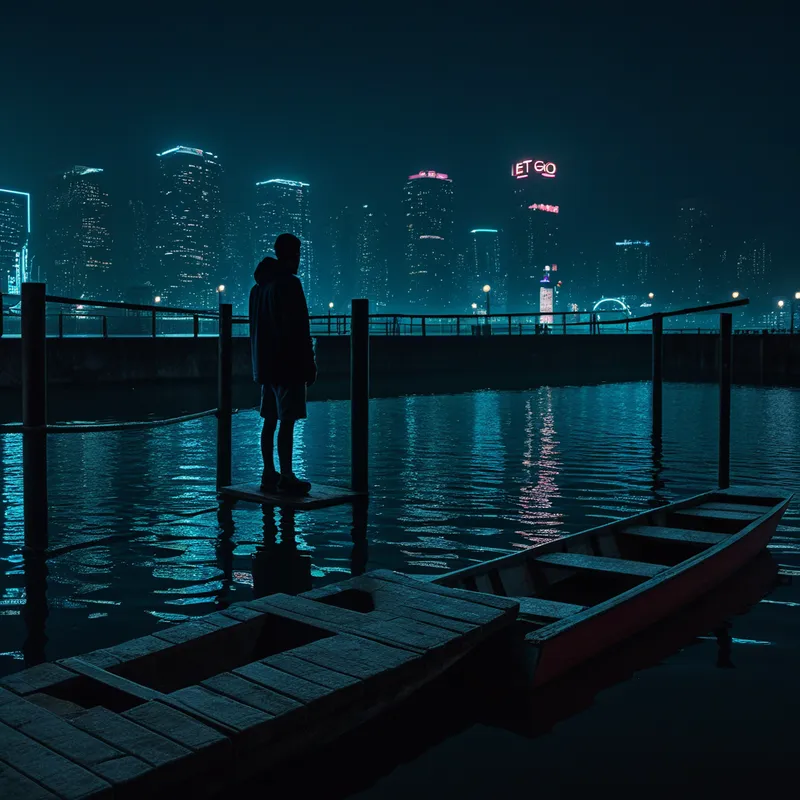
When the Stygian shore appears in modern dreams, the dreamer is standing at a profound internal boundary. The dark water may manifest as a vast, still lake at the edge of a forest, a wide, empty highway at night, or the threshold of a massive, dark doorway.
Somatically, one might feel a chilling cold, a sense of profound stillness, or the weight of a heavy decision. Psychologically, this is the dreamscape of irrevocable choice, of ending, and of necessary release. The dreamer may be waiting for their “Charon”—a therapist, a moment of insight, a external catalyst—to facilitate a crossing they cannot make alone. To dream of having no coin is to feel unprepared for a looming ending or transformation, gripped by a fear that one has not “earned” the right to move on or that one will be left behind. To dream of paying the coin and boarding the boat is often a sign of the psyche consenting to a deep, necessary change, however fearful.
Alchemical Translation
In the alchemical process of individuation—the journey toward psychic wholeness—the Stygian shore represents the nigredo, the blackening. It is the crucial, desolate phase where the old, outmoded structures of the ego must be dissolved in the “black waters” of the unconscious.
To swear by the Styx is to commit one’s entire being to a transformative process, knowing there is no turning back without severe psychic cost.
The modern individual’s “obol” is the conscious sacrifice offered at this threshold. It may be a cherished identity (“the successful one,” “the victim”), a long-held grievance, or a comfortable illusion. Placing this coin in the mouth—the organ of speech and consumption—signifies giving voice to and finally “swallowing” a hard truth about oneself. Charon is the inner function that enforces this law of the psyche; it is the Self’s demand for integrity before passage is granted.
Crossing the Styx, therefore, is not about dying, but about the death of a psychic complex. The soul is ferried not to oblivion, but to the “underworld” of the personal unconscious, where it will stand before the inner “Hades” and “Persephone”—the ruling dynamics of one’s hidden depths—for assessment and integration. The one who makes this crossing willingly, paying the required fare, undergoes the alchemical transmutation. They move from the leaden weight of stagnation (psychic death) to the possibility of a new, more authentic existence, having sworn the ultimate oath to their own becoming.
Associated Symbols
Explore related symbols from the CaleaDream lexicon: