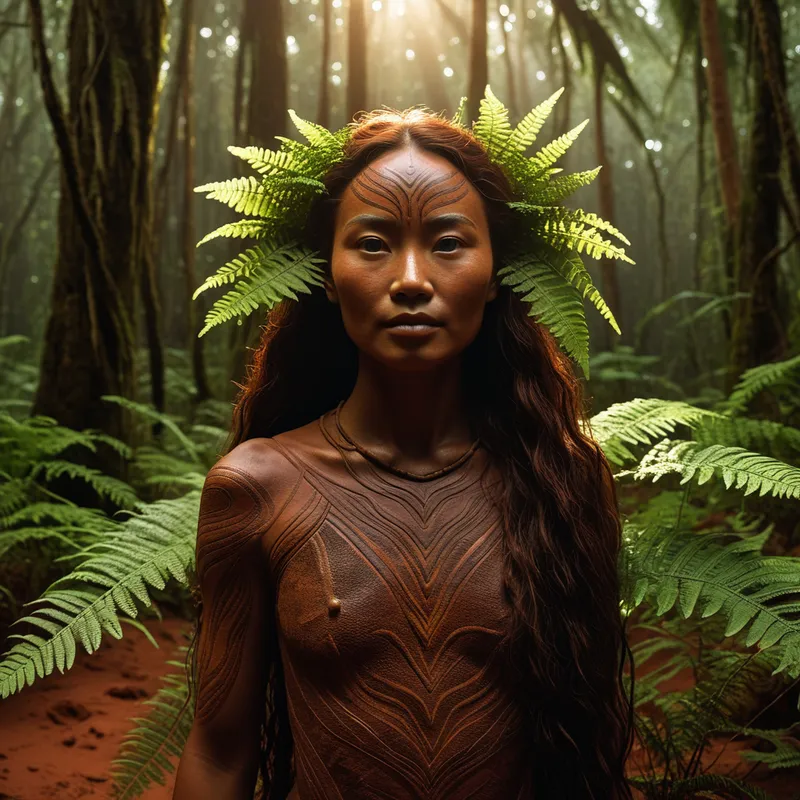
Hine-ahu-one Myth Meaning & Symbolism
The story of the first woman, formed from red earth by Tāne, embodying the sacred union of spirit and matter, and the dawn of human consciousness.
The Tale of Hine-ahu-one
In the time before time, when the world was young and the great primal parents, Ranginui and Papatūānuku, lay locked in a stifling embrace, their children lived in darkness. The gods yearned for light, for space, for life. After their great separation, when the world of Te Ao Mārama was born, the children of the earth and sky looked upon their domain. Among them was Tāne-mahuta, the life-bringer, the shaper of trees and the father of all that flies and flutters.
Yet, a profound loneliness echoed in the forests he grew. The birds had their songs, the trees their rustling communion, but there was no one to appreciate the beauty, to give it name and meaning, to tend the sacred flame of consciousness. Tāne looked to his mother, Papatūānuku, the Earth herself. He journeyed to Kura-waka, the very navel of the world, where the essence of life pooled. There, he found the most sacred of clays, kōkōwai, rich and red as life-blood, damp with the primal waters.
With the care of a master carver shaping a wharenui, Tāne knelt. He did not simply mold a figure; he performed a ritual of becoming. He gathered the red earth, the very flesh of his mother, and began to form. He shaped limbs for action, a torso to contain spirit, a head to hold thought. This was not an idle sculpture, but an invocation. Into this form of earth—Hine-ahu-one—he breathed the sacred hau ora. It was the breath of Tōi-o-ngā-rangi, the very spark of divinity.
And she stirred. The earth opened its eyes. The clay warmed with a pulse. Hine-ahu-one, the Earth-Formed Maid, drew her first breath of the world her father-brother had made verdant. She stood, a being of two realms: the tangible soil of her mother and the intangible breath of the heavens. Tāne took Hine-ahu-one as his wife, and from their union sprang the first human child, Hine-tītama, the Dawn Maid. Thus, through the union of the forest god and the earth-formed woman, the lineage of humanity, the tāngata, was seeded into the world of light.

Cultural Origins & Context
This foundational narrative belongs to the kōrero tuku iho of the Māori people, the stories passed down through generations. It was not mere entertainment but mātauranga of the highest order, recited by tohunga in the confines of the whare wānanga. Its function was multifaceted: it established the divine and earthly ancestry of all people, rooting human identity (whakapapa) directly in the land (whenua) and the gods. It explained the sacredness of the human form and the vital essence of breath. Furthermore, it set the cosmological stage for the later, more tragic cycle of stories involving Hine-tītama’s transformation into Hine-nui-te-pō, governing the cycle of life and death. The myth served as the ultimate charter, affirming that to be human is to be a living nexus of mana from the gods and tapu from the earth.
Symbolic Architecture
The myth of Hine-ahu-one is a profound allegory for the moment consciousness inhabits form. She is not born, but fashioned; a deliberate act of creation that bridges a perceived gap between spirit and matter.
The first human is not a thought, but a crafted vessel; consciousness awakens to itself only through the medium of the tangible world.
Tāne represents the active, formative principle—the divine impulse that seeks expression. The red earth, kōkōwai, is more than clay; it is the fecund, potential-laden substance of the material universe, charged with the latent possibility of life. The hau ora is the animating spark, the invisible force that transforms inert substance into a living being. Hine-ahu-one herself is the resulting synthesis: the embodied soul. She symbolizes the human condition as inherently dual—of the earth (ahu-one) and animated by spirit. Her creation models the process of individuation at a cosmic scale: the undifferentiated primal substance (earth) is given specific form and then ignited with conscious purpose (breath).
The Dreamer's Resonance
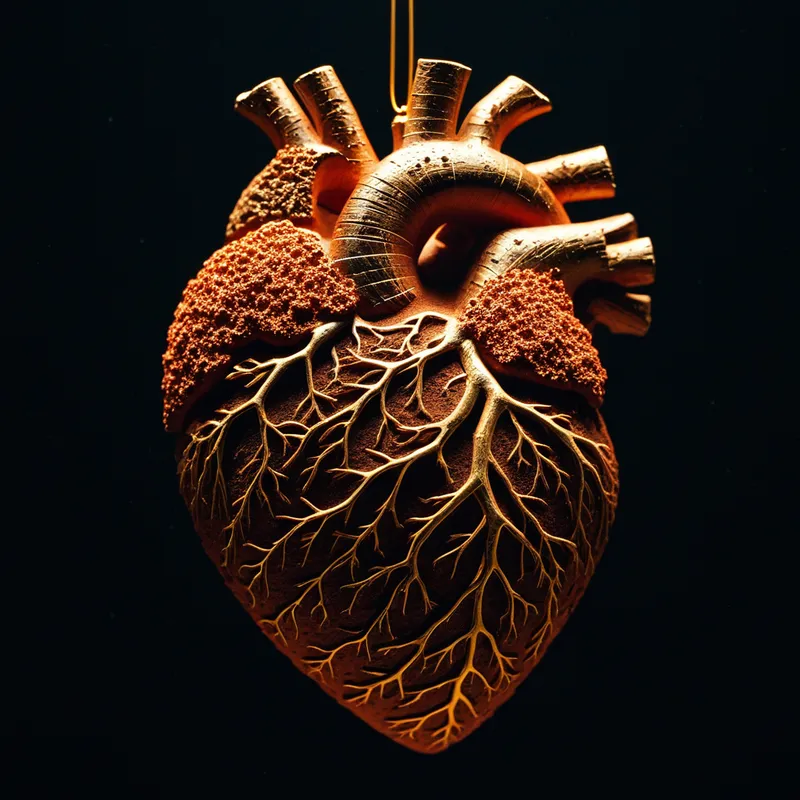
When this mythic pattern stirs in the modern psyche, it often manifests in dreams of profound beginnings and elemental re-formation. One might dream of shaping something from clay or mud with intense focus, of being partially buried yet peacefully aware, or of taking a first, gasping breath in a new, strange body. These are not dreams of birth, but of fashioning.
Somatically, this can correlate with a phase of deep, almost cellular reorganization. The dreamer may be integrating a new identity, recovering from an illness that felt like a dissolution, or beginning a creative project that demands total embodiment. Psychologically, it signifies the process of the ego—or a new complex of the personality—being consciously formed and animated from the raw, often chaotic material of the unconscious (the earth). It is the dream of becoming substantial, of giving durable form to what was previously only a feeling, an intuition, or a potential. The dreamer is, like Hine-ahu-one, standing up for the first time in a new world of their own making.
Alchemical Translation
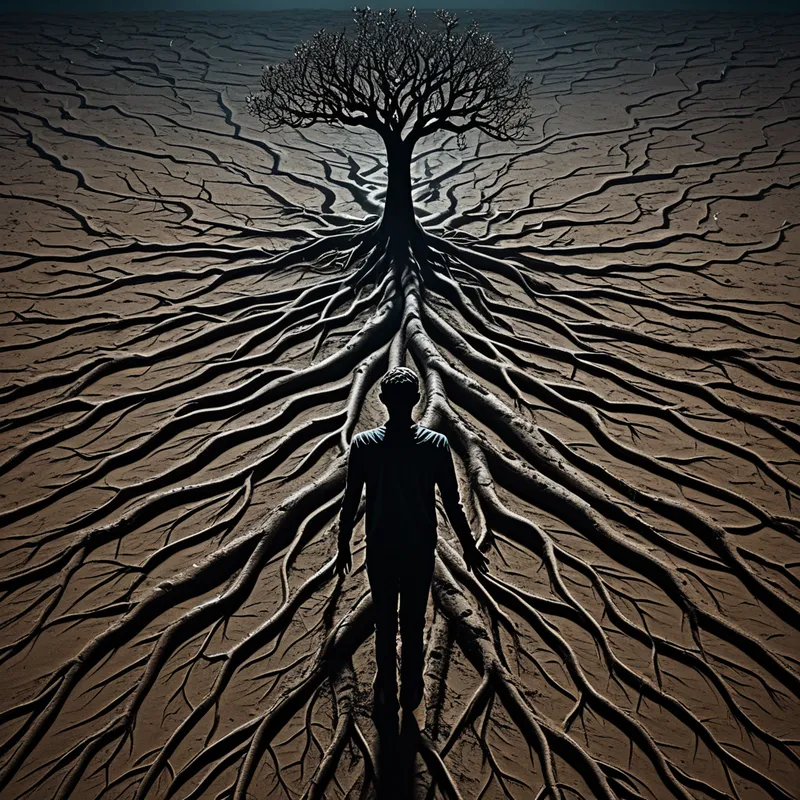
The alchemical journey mirrored here is the opus contra naturam—the work against nature, which is really the work of conscious cultivation. In psychological terms, it is the arduous process of building a coherent, resilient ego-structure from the prima materia of one’s inherited and experiential past.
To individuate is to become your own Tāne: to take responsibility for gathering the scattered clay of your experience and sculpting it into a vessel capable of holding your unique spirit.
First, one must journey to their own Kura-waka—the deep, often painful, but sacred core of one’s being—to find the authentic material. This "clay" is our fundamental nature, our instincts, our wounds, our ancestral patterns (the whenua). The shaping by Tāne is the disciplined application of will, choice, and conscious effort. It is the hard work of therapy, art, relationship, and reflection that forms a coherent self from chaotic impulses. Finally, the infusion of hau ora is the moment of enlivenment, when this newly formed structure is filled with meaning, purpose, and vital connection to something greater than itself. The struggle is the resistance of the clay, the doubt in the sculptor, and the terrifying vulnerability of that first breath. The triumph is the realization that one is not merely a product of circumstance, but a conscious co-creation of spirit and earth, capable of generating new life—new potentials, ideas, and actions—in the world.
Associated Symbols
Explore related symbols from the CaleaDream lexicon:
- Earth — The primal substance of the self, the raw material of the unconscious and the body from which conscious identity is deliberately formed.
- Clay — The malleable, potential-laden aspect of the psyche that can be shaped by will and intention into a specific, enduring form.
- Breath — The animating spirit, the infusion of consciousness and life-force that transforms inert structure into a living, aware being.
- Mother — Represented by Papatūānuku, the source of the clay; the archetypal matrix of all form, the nourishing and containing foundation of existence.
- Creation — The central act of the myth; the divine and psychological process of bringing something entirely new and conscious into being from undifferentiated potential.
- Root — The deep, anchoring connection to the source, the whakapapa that grounds the individual in the timeless earth from which they are formed.
- Seed — The potential for humanity and future generations contained within the first formed being; the destiny implicit in the initial act of shaping.
- Goddess — Hine-ahu-one as the first manifestation of the divine feminine in human form, embodying the sacredness of matter and the vessel of life.
- Ritual — The act of creation by Tāne is a sacred ritual; it models how profound psychological change requires deliberate, respectful, and focused ceremony.
- Soul — The final product: the unique, individual essence that emerges from the marriage of earthly form and celestial breath.