The Creator Archetype
"If you can imagine it, it can be done."
Motto
"If you can imagine it, it can be done."
Desire
To create something of enduring value.
Fear
Mediocrity or inauthentic execution.
Strategy
Develop skill and artistic control.
Shadow
The Perfectionist, The Prima Donna.
The Psychological Core & Essence
The Creator (also known as the Artist, Inventor, Dreamer, or Architect) is the archetype of Imagination Manifested. It is the part of the human psyche that is not content to simply assume the world as it is found; it must add to reality.
While the Hero faces the Dragon and the Caregiver nurtures the Child, the Creator builds the Castle. It is the drive to take the chaos of the Unconscious and give it Form.
The Divine Spark
In almost every religion, the Act of Creation is the first divine act.
- Imago Dei: To create is to be “in the image of God.” Whether you are coding a website, painting a canvas, or planting a garden, you are participating in the ongoing genesis of the universe.
- Anti-Entropy: The universe naturally tends towards disorder (Entropy). The Creator is the force that fights Entropy by creating structure and meaning.
The Burden of Vision
The Creator sees what could be.
-
The Agony: The gap between the Vision (perfect) and the Execution (imperfect). This is the primary source of the Creator’s suffering (The Ira Glass “Gap”).
-
The Drive: This dissatisfaction is the fuel. It forces the Creator to keep iterating, keep refining, until the outer world matches the inner world.
The God Complex vs. The Imposter
The Creator oscillates between two extremes:
- The God Complex: “I am a genius. I am creating a world.” This is necessary energy to start (hubris).
- The Imposter: “I am a fraud. Everyone will find out.” This is the necessary humility to edit.
- The Balance: You must be arrogant enough to start, but humble enough to finish.
Horror Vacui (The Fear of Emptiness)
The Creator hates the Void.
- The Blank Page: It is terrifying because it represents infinite possibility (Chaos).
- The Filling: The Creator rushes to fill the void with structure. This is why we doodle during meetings. We are trying to colonize silence with form.
The Psychology of Originality: The Anxiety of Influence
Literary critic Harold Bloom argued that all Creators suffer from the “Anxiety of Influence.”
- The Fear: That everything has already been done. That we are just remixing the work of the Giants.
- The Truth: Originality is not “creating from nothing” (Ex Nihilo). It is “creating from everything” (Synthesis). The Creator must accept that they are part of a Lineage.
The Creator’s Brain: Why It Filters Differently
Studies on “Latent Inhibition” show that Creators have a lower filter for sensory input.
- The Mechanism: Most people ignore the hum of the fridge or the texture of the wall. The Creator notices everything.
- The Cost: This leads to overwhelm and mental fragility. The “Mad Artist” stereotype has a basis in this sensory overload.
Deep Historical & Mythological Roots
The Creator has worn many masks throughout history, from the Blacksmith of the Gods to the Silicon Valley Founder.
The Alchemy of Transmutation
The Alchemists were the original Creators. Their goal was not just to turn lead into gold, but to turn the Soul into Spirit (The Great Work).
- Solve et Coagula: Dissolve and Coagulate. You must break down your old self (Solve) to build the new self (Coagula).
- The Philosopher’s Stone: The ultimate creative achievement. The thing that heals the world.
Inanna (The Descent of the Creator)
The Sumerian Goddess who went into the Underworld.
- The Process: She had to strip naked (removal of ego) to enter the depths. She was killed and reborn.
- The Lesson: Creativity requires a descent into the dark. You cannot create from the surface. You must mine the unconscious.
Hephaestus (The Smith)
The Greek god of the forge. He was lame and ugly, rejected by his mother Hera. He channeled his pain into creating beautiful objects (Achilles’ shield, Pandora).
- The Lesson: Art often comes from a wound. The Creator sublimates suffering into beauty. “Hephaestus creates because he cannot dance.”
Brahma (Hinduism)
The Creator of the Universe. He dreams the world into existence.
- The Day of Brahma: A cycle of creation that lasts billions of years.
- The Insight: Creativity is cyclical. There are times to create (Day) and times to sleep (Night). Do not force the sun to rise.
The Golem (Jewish Folklore)
A clay figure brought to life by the Rabbi using a sacred word (Truth).
- The Warning: The creation can outgrow the creator. Just as Frankenstein’s monster or modern AI, the Creator must take responsibility for what they birth.
Bezalel (The Architect of the Tabernacle)
In the Bible, Bezalel is the first person said to be filled with the Spirit of God—specifically for craftsmanship.
- The Insight: Spirituality and Technical Skill are not separate. Knowing how to cut a gem or code a loop is a spiritual gift.
Michelangelo (The Prisoner in the Stone)
Michelangelo believed the statue was already inside the marble; he just had to chip away the excess.
- The Method: “I saw the angel in the marble and carved until I set him free.”
- The Lesson: Creation is often an act of Discovery, not Invention. You are listening to what the work wants to be.
Wayland the Smith (Norse/Germanic)
The master smith who was hamstrung by a king to keep him captive. He forged wings from feathers to escape.
- The Lesson: Creativity is the ultimate freedom. If they trap your body, you can build a way out with your mind.
Pygmalion (The Sculptor)
He fell in love with his own statue (Galatea). Aphrodite brought her to life.
- The Lesson: If you love your creation enough, it takes on a life of its own. But beware of falling in love with the fantasy of the thing rather than the reality.
Modern Manifestations: The Coder and the Founder
In the 21st century, the Creator has moved from the studio to the server room.
The Open Source Movement (The Collective Creator)
Linux, Wikipedia, Bitcoin. These are cathedrals built without a single architect.
- The Philosophy: Information wants to be free. The Creator contributes to the “Commons” for the joy of building, not just profit.
- The Shadow: The “Tragedy of the Commons.” Burnout. Who maintains the bridges?
Bio-Hacking & Transhumanism
The attempt to “Create” a better human.
- The Goal: To hack evolution. To rewrite the DNA code.
- The Ethics: Are we playing God? (The Jurassic Park question). The Creator must grapple with the morality of their invention.
The Silicon Valley Founder
The modern Mythic Hero is the Founder—Steve Jobs, Elon Musk. They are Creators who bend reality.
- The Reality Distortion Field: The ability to convince others that the Impossible is just “Pre-installed.”
- The Shadow: The tendency to treat humans as “resources” or “lines of code” to be optimized for the Vision.
The Content Creator (YouTuber/TikToker)
The democratization of the archetype. Everyone is now a Creator.
- The Volume: The sheer output of humanity has exploded. We are drowning in content.
- The Crisis: “Content” vs. “Art.” The Creator today struggles to make something enduring in an ecosystem designed for disposability.
The DIY / Maker Movement
A rebellion against mass production. The desire to knit your own scarf, brew your own beer, or build your own PC.
- The Insight: We are tired of being “Consumers.” We want to be “Producers.” The soul needs to make things with its hands to feel human.
The Indie Hacker / Bootstrapper
The lone wolf Creator who builds a business from a laptop.
- The Ethos: “Permissionless Leverage.” You don’t need a factory or a loan. You just need code and content.
- The Trap: Loneliness. Building in a vacuum without feedback.
The Urban Planner / SimCity God
The Creator who designs systems for living.
- The Scale: Moving from creating objects to creating environments.
- The Shadow: The “Robert Moses” effect. Destroying neighborhoods to build highways. Forgetting the human element in favor of the design.
The Archetype in the Dream World: The Pregnant Man
Dreams of the Creator are vivid, structural, and often involve “Birth.”
Specific Scenarios & Decodings
-
The Crumbling Tower:
- The Dream: You are building a skyscraper, but the foundation is cracking.
- The Meaning: Your current project (or ego structure) is built on a lie. You need to tear it down and start over. (The Tower Tarot card).
-
The Unfinished Symphony:
- The Dream: You are trying to play a song, but you can’t find the last note.
- The Meaning: You are on the verge of a breakthrough. The unconscious is teasing you. Keep listening.
-
Giving Birth to a Monster:
- The Dream: You give birth, but it is an alien or a beast.
- The Meaning: Do not be afraid. The “New” always looks monstrous at first because it is unfamiliar. Embrace the weirdness of your creation.
Archetypal Tension & Polarity: Structure vs. Chaos
The Creator sits on the axis of Structure.
- The Creator seeks to Build.
- The Destroyer seeks to Break.
- The Tension: To create, you must also destroy. You must destroy the blank page to create the poem. You must destroy the silence to create the song. You must destroy your old identity to birth the new one.
- The Paradox: If you refuse to destroy (edit/cut), you cannot create. Hoarding is the refusal to destroy.
- The Jester: The Creator is serious; the Jester is playful. The Creator needs the Jester (Play) to avoid becoming rigid. If you take your art too seriously, it dies. You must be able to laugh at your own masterpiece.
Life Stages & Triggers: The Call to Make
Childhood (The Lego Phase)
Every child is a natural Creator. They build forts, draw monsters, and invent languages. They have not yet learned “shame.”
The “Grey Rock” Phase (Adulthood)
School and Work often crush the Creator. We are taught to be “Productive” (Ruler) rather than “Creative.” The Creator goes dormant.
The Creative Crisis (Mid-Life)
“Is this all there is?” You realize you have consumed much but created little. You feel a desperate need to leave a legacy. This often triggers a career change or a sudden obsession with a hobby (pottery, writing a novel).
Signs of Arrival & Waking Synchronicity
You are entering the Creator phase when:
- The “Buzzing”: A physical sensation in the head or hands. You feel “pregnant” with an idea.
- Dissatisfaction with the Generic: You become intolerant of mass-produced objects. You want to customize your environment.
- Synchronicities: You walk into a bookstore and the book you need falls off the shelf. You dream of a symbol and see it the next day. This is the Field of Potentiality responding to your intent.
- The Loss of Interest in Consumption: Watching TV feels draining. You only feel alive when you are Outputting.
The Shadow Side: The Perfectionist & The Prima Donna
When the Creator is wounded, it splits into two shadows:
The Perfectionist (The Frozen Creator)
“If it isn’t perfect, I won’t make it.”
- The Mechanism: Paralysis. They have high taste but low skill (initially). The gap terrifies them.
- The Result: A life of criticism. They critique others’ work but produce nothing.
- The Cure: Quantity over Quality. “Shitty First Drafts.”
The Prima Donna (The Narcissistic Creator)
“My art is too good for you.”
- The Mechanism: Inflation. They identify their Ego with their Art. If you critique the art, you attack their Soul.
- The Result: Isolation. They push away collaborators and audience.
- The Cure: Humility. Realizing you are just a channel for the Muse.
The Mad Scientist (The Unethical Creator)
“I was so preoccupied with whether I could, I didn’t stop to think if I should.”
- The Mechanism: Creation without Conscience.
- Example: Oppenheimer (The Destroyer/Creator hybrid).
The Procrastinator (The Shadow in Hiding)
Procrastination is not laziness; it is Fear.
- The Mechanism: “If I don’t start, I can’t fail.” It is a defense mechanism to protect the Ego from the shame of producing something mediocre.
- The Truth: You are protecting a fantasy of your own genius. Real genius ships.
The Imitator (The Hollow Creator)
“I made this (but I actually just copied it).”
- The Mechanism: Imposter Syndrome leading to plagiarism.
- The Cure: “Steal Like an Artist.” It is okay to be influenced, but you must add your own soul to the mix.
The Hoarder (Idea Gluttony)
The Creator who consumes endless inspiration but produces nothing.
- The Mechanism: Reading 100 books on writing but never writing a sentence. Watching 50 tutorials but never opening the software.
- The Cause: Fear of starting. Consumption feels like work, but it is just procrastination.
- The Cure: “Just In Time” learning. Only learn what you need for the current step.
The Destroyer (Self-Sabotage)
The Creator who destroys the work right before it is finished.
- The Mechanism: “It’s not good enough.” Deleting the draft. formatting the drive.
- The Cause: Fear of being seen. If you destroy it, no one can judge it.
The Creative Process: The 4 Stages (Wallas)
Psychologist Graham Wallas defined the 4 stages of creativity in 1926.
- Preparation (The Hunt): Research. Gathering raw materials. Reading, observing, soaking up the world. (Explorer energy).
- Incubation (The Stew): Step away. Stop thinking about it. Let the unconscious work. Sleep on it. Go for a walk.
- Illumination (The Flash): The “Eureka!” moment. The solution appears while you are in the shower.
- Verification (The Grind): The hard work. Typing it out. Editing. Testing. This is where the Perfectionist Shadow attacks.
The Neurobiology of Flow: The Creator’s Drug
Flow State (Csikszentmihalyi) is the optimal state of consciousness where we feel our best and perform our best.
- Transient Hypofrontality: The prefrontal cortex (Self-Monitor) shuts down. The inner critic goes silent.
- Neurochemistry: A massive dump of Dopamine (focus), Norepinephrine (energy), and Anandamide (lateral thinking).
- The Default Mode Network (DMN): This is the network active when you are daydreaming or self-referencing. Creativity involves switching off the DMN and switching on the Task Positive Network.
- The Alpha War: Alpha waves bridge the conscious and unconscious. The Creator trains their brain to access Alpha states at will (meditation, walking).
The Science of Awe (The Goosebump Effect)
When we experience “Awe” (perceiving something vast that transcends our understanding), it triggers a distinct biological response.
- The Effect: Inflammation drops. The Ego shrinks. We feel connected to the species.
- The Creator’s Job: To manufacture Awe. To give the audience that shivering feeling of the Sublime.
- Method: Scale. Detail. Mystery. The “Uncanny Valley” of perfection.
Global Folklore: The Craftsmen of the Gods
Ptah (Egypt)
The God who spoke the world into existence. He thought it in his heart and spoke it with his tongue.
- The Lesson: Thought + Word = Reality. This is the basis of “Spells” (Spelling).
Grandmother Spider (Native American)
She spun the web of the universe from her own center.
- The Lesson: Creation comes from within. You are pulling the thread from your own gut. It is messy and visceral.
Vishvakarma (Hindu)
The divine architect who built the cities of the gods and the flying chariots (Vimanas).
- The Lesson: Structure is divine. Engineering is a form of prayer.
The Creator’s Toolkit: Technologies of the Soul
- Morning Pages: 3 pages of stream-of-consciousness writing first thing in the morning. Clears the “mental sewage” so the creativity can flow.
- The Artist Date: Once a week, go alone to a museum, a fabric store, or a park. Fill the well.
- Limitations: impose arbitrary rules. “Write a story in 50 words.” “Paint using only blue.” Constraints force creativity.
- The “Shipping” Ritual: Decide that “Done is better than perfect.” Set a deadline. Ship the code. Publish the post. Release the song.
Deep Philosophy: Kant and The Sublime
Immanuel Kant (The Sublime)
Kant distinguished between the Beautiful (pleasant, ordered) and the Sublime (terrifying, infinite).
- The Insight: True Art touches the Sublime. It reminds us of our smallness in the face of the Infinite. The Creator dares to look at the Sun.
Wabi-Sabi (The Perfection of Imperfection)
The Japanese aesthetic of things that are imperfect, impermanent, and incomplete.
- The Insight: A cracked bowl is more beautiful than a perfect one because it has a history. The Creator must embrace the flaw. The flaw is where the spirit enters.
Heidegger (Poiesis)
Heidegger defined art as “Poiesis”—a bringing-forth.
- The Truth: Using technology (Enframing) creates a “Standing Reserve” (resources). True Art reveals the Being of the object. A shoe painted by Van Gogh reveals the “Shoeness” of the shoe in a way a photograph cannot.
Cinematic Case Studies: The Agony of the Artist
Black Swan (Nina)
The Creator possessed by the Shadow.
- The Goal: Perfection. To become the Swan Queen.
- The Cost: Sanity. She has to kill her “Innocent” self to embody the Black Swan.
- The Ending: “I was perfect.” She achieves the Sublime but dies for it. A warning against identifying completely with the work.
Inception (Cobb)
The Architect of Dreams.
- The Metaphor: Filmmaking/Creation as a heist. You have to plant an idea (Inception) so deep that the subject thinks it is their own.
- The Mal: The Shadow Creator (his dead wife) who lives in the basement of his mind and sabotages his work. He must let her go to finish the job.
Synecdoche, New York (Caden Cotard)
The Creator who tries to build a map the size of the territory.
- The Trap: He tries to recreate his life in a play, but the play becomes so complex it consumes his life.
- The Lesson: You cannot control everything. Attempting to capture “Total Truth” leads to madness. Art must be a selection, not a simulation.
The Prestige (Angier vs. Borden)
The Magician/Creator rivalry.
- The Sacrifice: “Are you watching closely?” To create the perfect illusion, you must sacrifice your self.
- The Cost: Obsession with the “Trick” (Technique) vs. the “Truth” (Art).
Whiplash (Andrew & Fletcher)
The Shadow Mentor.
- The Question: “There are no two words in the English language more harmful than ‘good job’.”
- The Debate: Does greatness require trauma? The film explores the toxic side of the drive for greatness.
The Creator’s Library: Blueprints for the Mind
- The War of Art by Steven Pressfield. The Bible for fighting “Resistance.”
- Big Magic by Elizabeth Gilbert. A gentler, more mystical approach to creativity.
- The Artist’s Way by Julia Cameron. The practical 12-week course to unblocking.
- Steal Like an Artist by Austin Kleon. Permission to copy, remix, and combine.
- Flow by Mihaly Csikszentmihalyi. The science of optimal experience.
- The Creative Act: A Way of Being by Rick Rubin. The Tao Te Ching for modern producers. “The object isn’t to make art, it’s to be in that wonderful state which makes art inevitable.”
- Bird by Bird by Anne Lamott. The ultimate guide to handling the overwhelm of writing.
- Show Your Work! by Austin Kleon. Why you must be an amateur and share your process, not just your product.
- Letters to a Young Poet by Rilke. The spiritual foundation of the artist’s life. “Go into yourself.”
The Creator’s Playlist: Frequencies of Focus
- “Pure Imagination” (Willy Wonka): The anthem of the archetype. “Want to change the world? There’s nothing to it.”
- “Heroes” by David Bowie: The art school desire to be someone else, someone better.
- “Unfinished Sympathy” by Massive Attack: The melancholy of the incomplete work.
- “Technologic” by Daft Punk: The grind of the modern digital creator. Buy it, use it, break it, fix it.
- Classical/Lo-Fi: The background noise that allows the focused mind to work.
The Creator in the Workplace: The Intrapreneur
The Creator is not just a founder; they are the engine of innovation inside any company.
- The Role: Product Manager, R&D, Creative Director.
- The Struggle: They hate bureaucracy. They ask “Why?” when management says “Because.”
- The Value: They solve problems that don’t exist yet.
- Management Tip: Give them a “Sandbox.” Let them play without the fear of immediate ROI.
The Creator’s Business Model: Art vs. Commerce
The “Starving Artist” is a destructive myth created by the Romantics.
- The Renaissance Model: Da Vinci and Michelangelo were businessmen. They had clients. They negotiated contracts.
- The 1000 True Fans: In the internet age, you do not need a mass audience. You need 1,000 people who love what you do enough to pay $100 a year.
- The Value Ladder: Give away the “Content” (Marketing), sell the “Container” (Book/Course), upsell the “Community” (Mastermind).
- The “Sellout” Shadow: Making what the market wants, not what the soul wants.
- The Solution: Make “One for me, one for them.” (The Scorsese Method).
The Creator’s Ethics: The responsibility of Godhood
When you create, you play God.
- The Frankenstein Complex: You are responsible for your creations. If you build an AI, you are responsible for its bias.
- The Ecology of Images: Just because you can create an ugly image/building, should you? We pollute the mental environment with bad design. The Creator has a duty to Beauty.
The Creator’s Manifesto And Contract
Read this aloud when you are paralyzed by perfectionism. This is your contract with the Universe.
Clause 1: The Right to Exist “I am the vessel, not the source. I give myself permission to be messy, to be wrong, and to be foolish. I possess the sovereign right to bring new things into the world.”
Clause 2: The Duty of Truth “I will not lie in my art. I will not soften the edges to please the crowd. Be it a cathedral or a sentence, I will build it with the raw material of my own truth.”
Clause 3: The Rejection of Silence “I will not die with the song still inside me. Silence is the enemy. Expression is the cure.”
Clause 4: The Honor of the Craft “I will not shortcut the process. I will show up to the page/canvas/code every day, whether the Muse arrives or not. I am a professional.”
Clause 5: The Gift “I am here to add to the beauty of the world. My work is a gift to the future.”
FAQ: Wrestling with the Muse
Q: Am I too old to start? A: Grandma Moses started painting at 78. Tolkien didn’t publish Lord of the Rings until he was 62. The Creator archetype is outside of time. In fact, age gives you content (wisdom) to create with.
Q: Is AI killing creativity? A: AI is the “Golem.” It is a tool. It murders mediocrity (generic content), but it amplifies specificity. The unique soul of the Creator is now more valuable than ever. AI can generate an image, but it cannot generate taste.
Q: I have too many ideas. How do I choose? A: “Buridan’s Ass” starves between two haystacks. Pick one. It doesn’t matter which one. Action clarifies. The worst choice is no choice.
Q: How do I handle criticism? A: If they critique the work, listen. If they critique you, ignore. Remember: The critic is usually a frustrated Creator.
Q: What if I have no talent? A: Talent is a myth. Skill is a practice. “Talent” is just the speed at which you learn. But even a slow learner gets there if they don’t stop walking.
Q: What about burnout? A: Burnout is not caused by working too hard. It is caused by working on things that do not align with your soul. To cure burnout, do meaningful work, not just “rest.”
Q: How do I find my style? A: You don’t find it; it finds you. Style is what happens when you try to emulate your heroes and fail. Your “failure” to be exactly like them is your “style.”
Rituals of Release: Burning the Ships
- The Burn: Write down your “Imposter Syndrome” thoughts on a piece of paper. Burn it. Watch it turn to ash. This is a message to your unconscious that those thoughts are dead.
- The Launch: When you finish a project, celebrate. Buy a bottle of champagne. Mark the transition. If you don’t celebrate the finish, your brain won’t want to start the next race.
- The Digital Detox: You cannot hear the Muse if you are always on your phone. Disconnect to Reconnect.
The Creator’s Color Palette
Colors vibrate at different frequencies. The Creator should surround themselves with:
- Violet/Purple: The color of the Crown Chakra and high vision. It stimulates the imagination.
- Orange: The color of the Sacral Chakra (Sexual/Creative energy). It stimulates the gut impulse to make.
- Action: Paint your studio wall orange if you are blocked. Wear purple when you are brainstorming.
Famous Quotes to Live By
- “Every child is an artist. The problem is how to remain an artist once we grow up.” - Picasso
- “Creativity is intelligence having fun.” - Albert Einstein
- “You can’t use up creativity. The more you use, the more you have.” - Maya Angelou
The Creator’s Diet: Consuming the World
You are what you eat, but you are also what you read and watch.
- The Information Diet: If you eat junk content (TikTok scrolls, clickbait), you will produce junk art.
- High-Quality Input: Read old books. Watch criterion films. Look at architecture.
- The “Zero-Input” Day: Once a month, consume nothing. No books, no screens, no music. Boredom is the fertilizer of creativity.
The Creator’s Relationship with Time: Chronos vs. Kairos
For the Creator, time is not a linear march of seconds (Chronos). It is a series of “Right Moments” (Kairos).
The Inconsistency of Output
A Creator can produce more in one “Kairos” hour than they did in three “Chronos” months.
- The Trap: Trying to force a 9-to-5 schedule on a 3-a.m. muse.
- The Wisdom: Build a “Ready State.” Keep your tools sharp and your desk clear so that when Kairos arrives, you don’t waste time looking for a pen.
The Immortality Project
The Creator builds because they know they are going to die. Every work of art is a “message in a bottle” sent to the future.
- The Fear: Erasure. Being forgotten.
- The Truth: Even if the work is lost, the act of creating it changed the universe. The butterfly effect of a single beautiful sentence is infinite.
The Body as Canvas: The Creator and the Soma
The Creator knows that the mind is just a guest in the body.
The Tactile Wisdom
Whether it’s the “Finger-feel” of a pianist or the “Keyboard-click” of a coder, the Creator uses the body as a sensory probe.
- The Embodied Idea: Sometimes you don’t “think” of an idea; your hands “find” it. The potter lets the clay speak to their palms.
The Stance of the Creator
The Creator is often “Leaning In.” They are focused, tense, and physically engaged with their medium.
- The Cost: Repetitive strain, “Artist’s Back,” and sensory deprivation.
- The Cure: Movement. The Creator must remember that they are a creature, not just a brain.
Global Elements: The Creator and the City
The Creator is the primary engine of the Urban Landscape.
The Architect’s Dream
Every building you see was once a drawing. Every street was once an idea. The Creator is the one who turns the “No-place” into a “Place.”
- The Power: They define the “Vibe” of a civilization. (The Gothic Cathedral vs. The Glass Skyscraper).
- The Shadow: Gentrification. The Creator arrives in a “low-rent” area, makes it “cool,” and is then priced out by the Ruler.
The Creator and Money: The Value of Vision
To the Creator, money is Fuel.
- The Strategy: Buy time. The Creator doesn’t want money for status; they want money so they can stop doing “survival work” and start doing “soul work.”
- The Wisdom: “Art for art’s sake” is a luxury. “Art for the world’s sake” is a responsibility.
The Creator’s Comparative Matrix: How They Differ
| Feature | Creator | Hero | Sage |
|---|---|---|---|
| Primary Goal | Manifestation | Victory | Understanding |
| Fear | Mediocrity | Weakness | Ignorance |
| Source of Power | Imagination | Will | Logic |
| Shadow | Perfectionism | Cruelty | Detachment |
| World View | The world is a project. | The world is a battlefield. | The world is a puzzle. |
Rituals of Infinite Integration
The “Day of Non-Doing”
Once a month, the Creator must intentionally NOT make anything. No sketches, no notes, no tweets.
- The Goal: To realize that you have value outside of your output. To disconnect your soul from your “Production Value.” This is the highest ritual for a Creator.
The “Collaboration of Opposites”
The Creator must partner with a Ruler (the one who can organize the vision) or a Hero (the one who can fight for the vision).
- The Ritual: Hand over a piece of your work to someone else and say: “Do what you want with it.” This breaks the “God Complex” and allows the work to take on a life of its own in the community.
Conclusion: The Final Manifestation
The Creator has spent their life building bridges between the Seen and the Unseen. They have mastered their craft, faced their perfectionism, and populated the world with new forms. They have turned their internal “Yes” into an external “Is.”
However, there comes a point where the “Making” must stop and the “Being” must begin. The Creator eventually realizes that the greatest work of art they will ever create is not a book, or a painting, or a company—it is Themselves.
Once the Creator realizes that the “Performance” of life is just a game, and that the universe itself is a grand, divine play, they are ready to step into the role of the ultimate cosmic player. They move from the serious business of “Creating” to the joyous mystery of “Playing.”
They are ready for the final release. They are ready to meet the one who knows that the Truth is found in a laugh.
Mythological Resonance (652)
Mande Creation Myth Meaning & Symbolism
A West African myth where the world is born from a cosmic egg, shaped by a water spirit's sacrifice, and ordered through sacred speech and ritual.
Read Myth →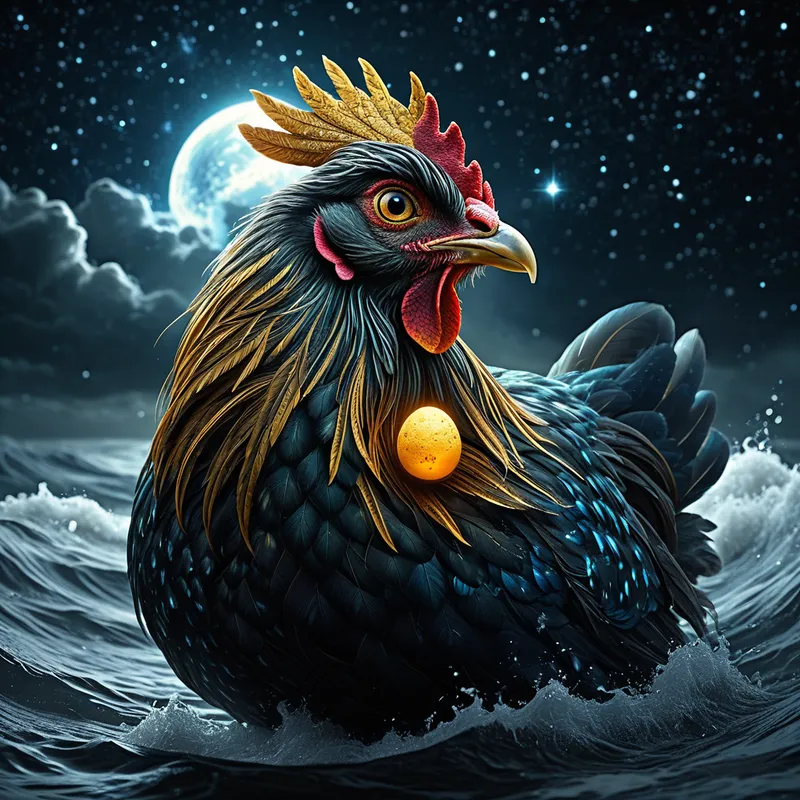
The Hen of the World in Slavic Myth Meaning & Symbolism
A cosmic hen broods on primordial waters, laying the golden egg from which the world is hatched, symbolizing creation from chaos and the nurturing of existence.
Read Myth →
Butterfly Metamorphosis Myth Meaning & Symbolism
A universal allegory of the soul's journey through dissolution, darkness, and radical transformation to emerge in its destined, winged form.
Read Myth →
John Montagu, 4th Earl of Sandwich Myth Meaning & Symbolism
A tale of a nobleman's hunger during a marathon card game, leading to the accidental creation of a simple, world-altering meal.
Read Myth →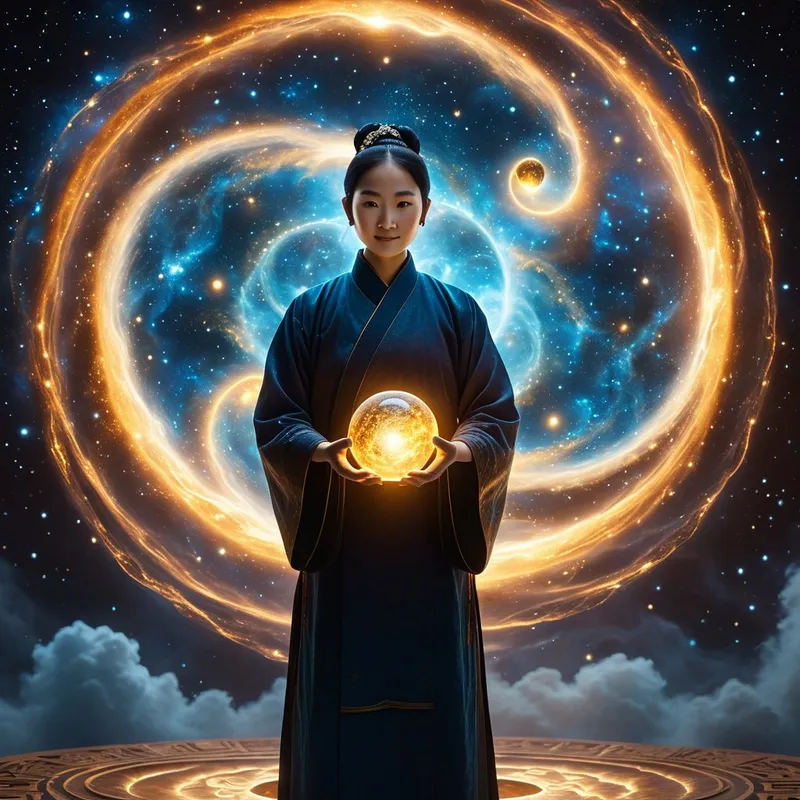
Baoding Balls Myth Meaning & Symbolism
A celestial artisan forges two perfect spheres from chaos, embodying the eternal dance of yin and yang to bring harmony to the human heart and cosmos.
Read Myth →
Anansi the Spider Creator
A West African trickster deity who creates worlds through cleverness and cunning, embodying wisdom and resourcefulness in mythology.
Read Myth →No myths match your search.
Showing 6 of 652
Discover Your Own Archetype
Take our comprehensive assessment to reveal the dominant and shadow archetypes governing your subconscious.
Start Free Assessment