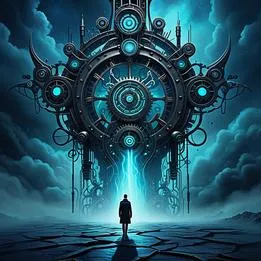
Mechanism
The Oracle's Essence
Represents the body's internal systems, emotional regulation, or psychological processes working together like a machine.
Interpretive Themes
Modern Visibility
Often linked to stress about bodily health, work-life balance, or feeling like a cog in a system. Reflects concerns about automation and human agency.
Cultural Lenses
Jungian
Learn More →Represents the psyche's self-regulating archetypal systems. The mechanism symbolizes how unconscious processes (like compensation) automatically maintain psychological balance, reflecting the dreamer's individuation journey.
Freudian
Learn More →Often symbolizes sexual functioning or repression. A broken mechanism may indicate psychosexual anxiety, while a well-oiled one suggests sublimated libidinal energy driving the ego's defenses.
Gestalt
Learn More →The dreamer IS the mechanism. Each part represents an aspect of self. Asking 'Which part am I?' reveals disowned projections about how one's emotions or body parts interact.
Cognitive
Learn More →Metaphor for information processing systems. Malfunctions reflect cognitive distortions or schema conflicts; smooth operation indicates effective emotional regulation and problem-solving strategies.
Evolutionary
Learn More →Primordial concern with bodily integrity and group coordination. Mechanism dreams activate threat detection for system failure or rehearse social coordination skills essential for survival.
Global/Universal
Learn More →Cross-cultural symbol for life force (prana, qi, pneuma) circulating. Historically seen in hydraulic (Galen) or clockwork metaphors; modern versions use computer analogies for mind-body connection.
East Asian
Learn More →In Daoist/Chinese medicine, represents meridian systems and organ networks (zang-fu). A balanced mechanism mirrors harmonious yin-yang flow; breakdown indicates qi stagnation requiring acupuncture or herbal correction.
South Asian
Learn More →Linked to chakra systems and koshas (sheaths). Mechanism precision reflects nadis (energy channels) alignment; rust symbolizes karma obstructing prana, requiring yogic or Ayurvedic purification rituals.
Middle Eastern
Learn More →Ancient Persian and Islamic medicine viewed body as microcosm of cosmic order. Dream mechanisms reflect humoral balance (akhlat); breakdown requires Unani Tibb herbal treatments or spiritual cleansing (wudu).
European
Learn More →Enlightenment-era clockwork metaphors for divine design persist. Romanticism added steam engine imagery for passions; modern psychoanalytic views see mechanisms as defense systems against existential anxiety.
African
Learn More →In many traditions, body mechanisms connect to ancestral vitality. Dream breakdowns may require sangoma divination to identify disrupted life force (seriti/ntu) and restore balance through ritual or herbalism.
Modern Western
Learn More →Biomedical model dominates: mechanisms represent neurochemical pathways or hormonal systems. Dreams reflect health anxiety amplified by wearable tech data, often triggering healthcare seeking behavior.
Contextual Nuances
Broken mechanism
Health or relationship crisis.
Overheating mechanism
Emotional overload imminent.
Precise mechanism
Life functioning well.
Rusty mechanism
Neglect of self-care.
Complex mechanism
Overwhelmed by life.
Questions for Reflection
- "What in your life feels 'automatic' versus consciously chosen?"
- "Where might you be ignoring warning signs of 'overheating' emotionally or physically?"
- "Which 'part' of your internal mechanism needs maintenance or attention most right now?"
Related Weavings
The Portal is Always Open
Every dream is a personalized dispatch from the deep. Don't let yours fade into static.
Interpret Full Dream