The Alchemy of Transition: When Your Dreams Map the Space Between
The Somatic Echo
It begins not as a thought, but as a tremor in the deep tissue of being. A low-grade hum of unease that has no single source. The stomach is a hollow chamber, not with fear, but with a strange, anticipatory gravity. The shoulders carry an invisible weight, the specific shape of which you’ve forgotten, yet your muscles remember its contour. There is a restlessness in the hands, a subtle vibration in the jaw—the body sensing a seismic shift long before the mind receives the memo. This is the somatic echo of transition: the physical premonition that the ground of your old self is becoming porous. You are not falling apart; you are becoming un-anchored. The internal family of parts—the inner critic, the perpetual child, the weary protector—all grow quiet, listening to a frequency only the nervous system can decode. It is the feeling of a door you cannot see, swinging open on silent hinges somewhere in the dark of you.
The Dreamer's Log
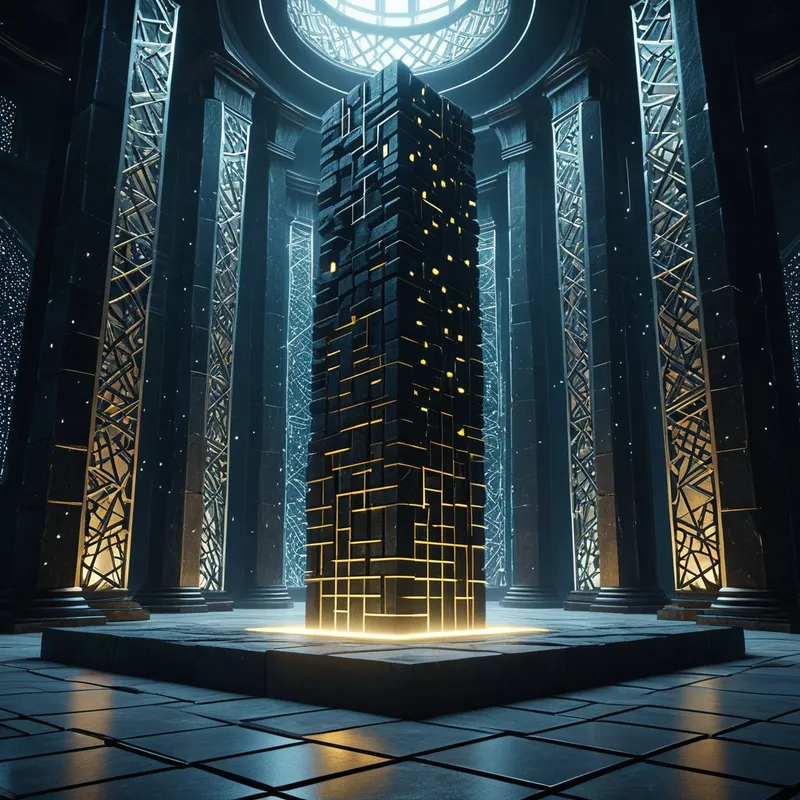
The dreamer stands in a cavernous, forgotten server room. Racks of humming black monoliths stretch into darkness. On a lone wooden desk, an archaic monitor glows. Its screen shows a complex, fractal map of a city—their life—but the streets are slowly dissolving into liquid light, pixel by pixel. The dreamer’s task is not to stop it, but to witness the un-mapping.
This is the alchemical dissolution of a personal paradigm; the conscious ego’s map is being rendered obsolete by the psyche’s deeper cartography.

The False Lead
Transition is not mere change. Change is external: a new job, a moved house, a shifted relationship. Transition is the internal, psychic re-architecture that must occur to metabolize that change. A dream of transition is not a prophecy of bad luck or a simple anxiety about an upcoming event. It is not the mind worrying in symbols. It is the soul building in symbols. To mistake this profound, structural shift for superficial worry is to hear a symphony as mere noise. The terror in a transition dream is not of the new, but of the necessary death of the old container—the familiar identity, the comfortable story—that can no longer hold who you are becoming.
Psychological Architecture
This is the Shadow work of release. Individuation demands we outgrow our own skin. The process feels like a civil war waged in silence. One part of you—the loyal soldier, the good child, the efficient manager—clings to the crumbling fortress of the known self. It has kept you safe, defined, and functional. To thank it and let it retire feels like treason. Another, quieter part—the nascent, unborn self—pulls from the future, a gravitational force wrapped in both promise and profound grief. To heed its call feels like stepping off a cliff into fog. The architecture of transition is this: the conscious ego, the “I” you know, must willingly de-center itself. It must become the witness to its own dismantling, holding the space while a more complex, more authentic structure is assembled from the inside out. You are not losing yourself. You are losing who you thought you were supposed to be, to make room for who you actually are.
Mythic Resonance
Consider the Sumerian goddess Inanna’s descent into the underworld. To meet her sister Ereshkigal, Queen of the Great Below, she must pass through seven gates. At each, she is stripped—her crown, her lapis beads, her royal robe—until she arrives naked and bowed. This is not punishment, but protocol. You cannot enter the realm of profound transformation wearing the regalia of your old station. Every identity, every badge of who you were in the upper world, must be surrendered. The myth echoes in the dream of the dissolving map, the abandoned house, the train leaving the station without you. It is the universal firmware for rebirth: to gain what is essential, you must consent to be stripped of everything that is merely ornamental.
Symbolic Nodes
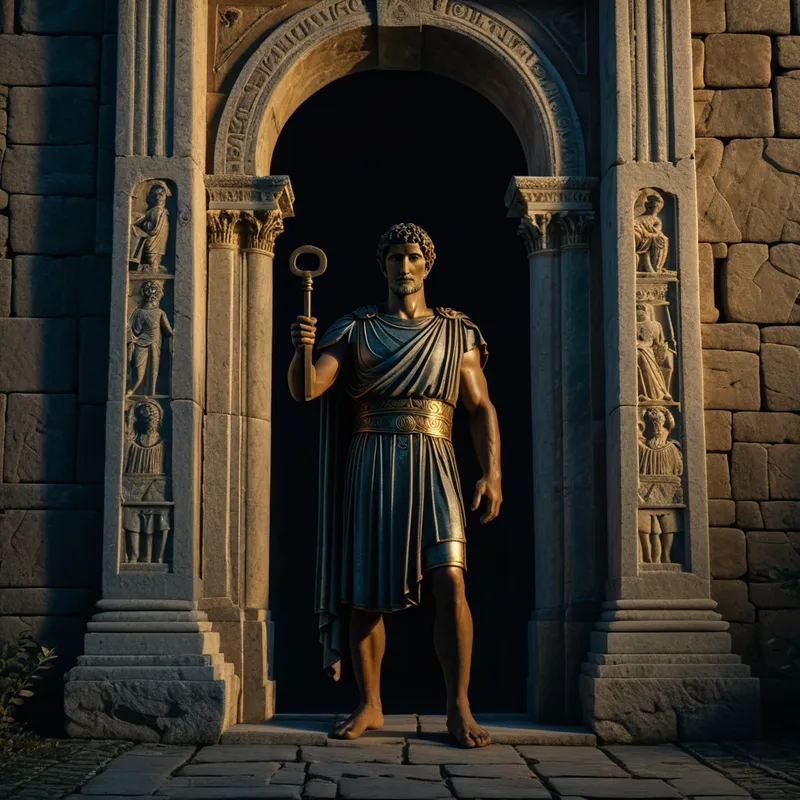
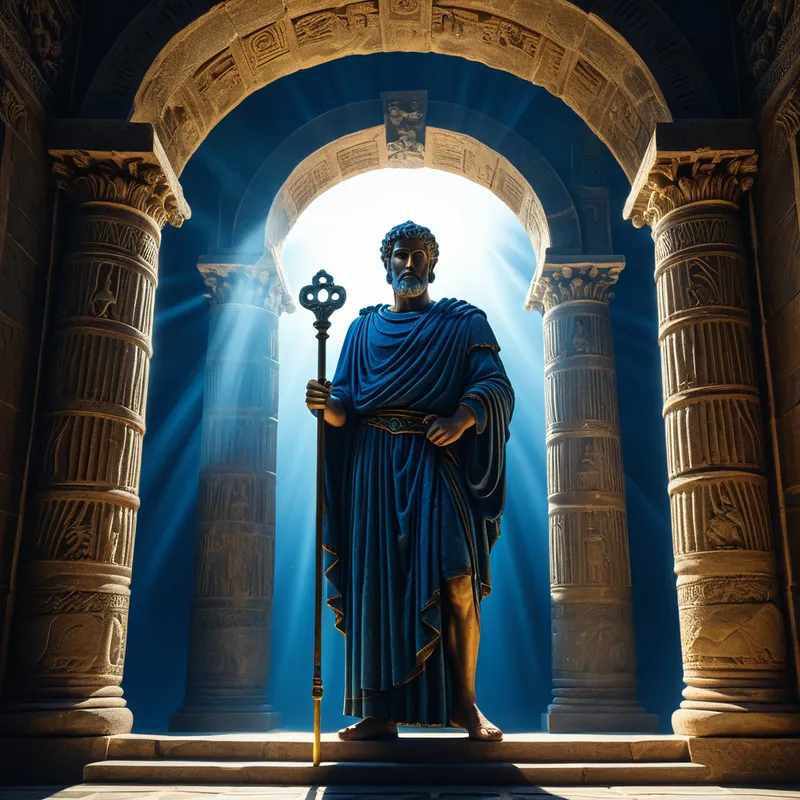
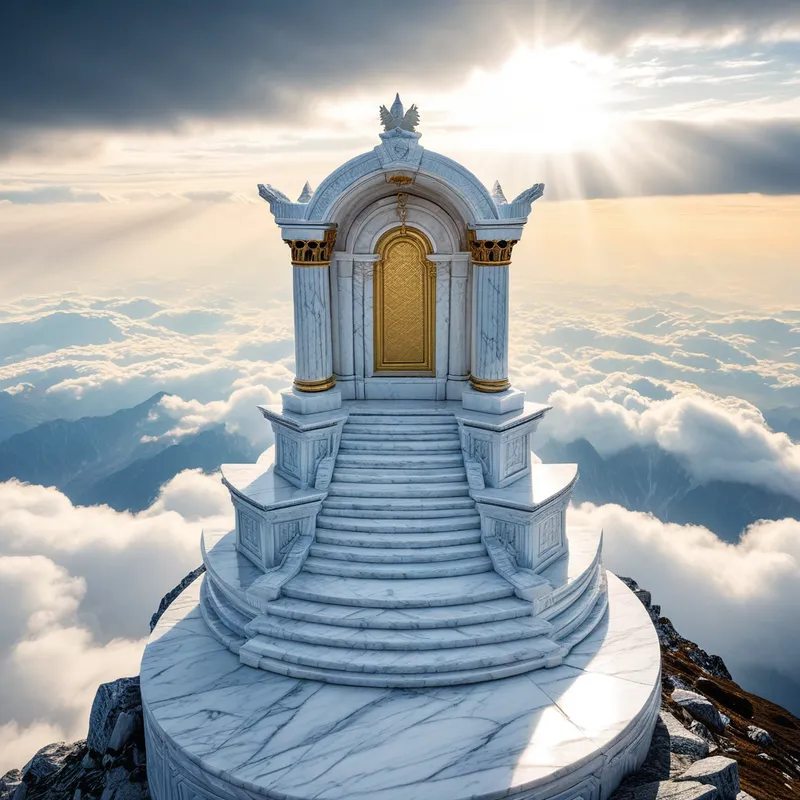
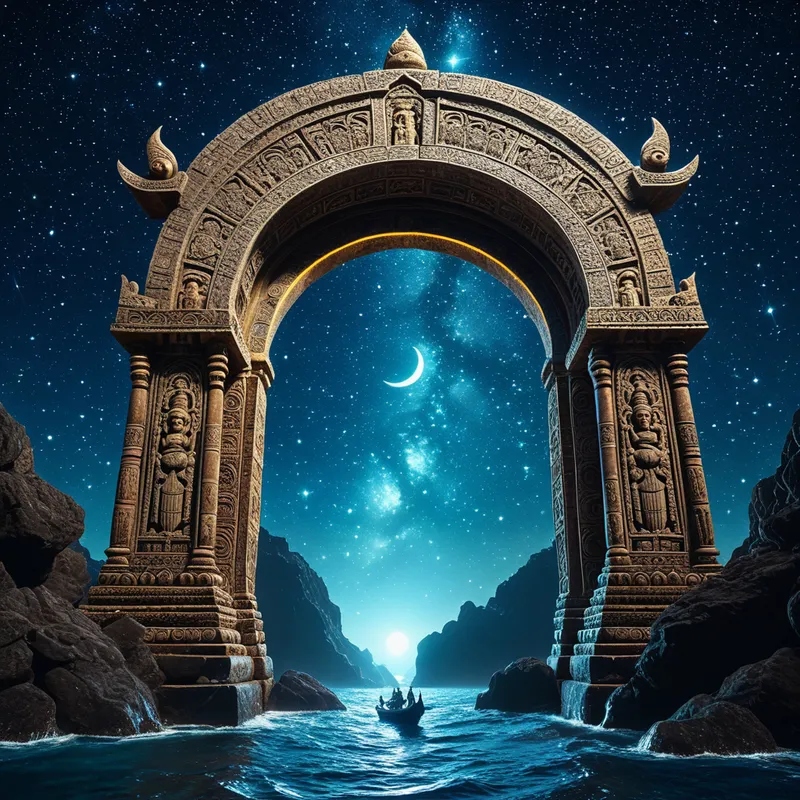
- Bridges, Thresholds, Doorways: The space between states, often fraught with tension or awe.
- Tunnels, Corridors, Passages: The visceral, sometimes claustrophobic, process of moving through the in-between.
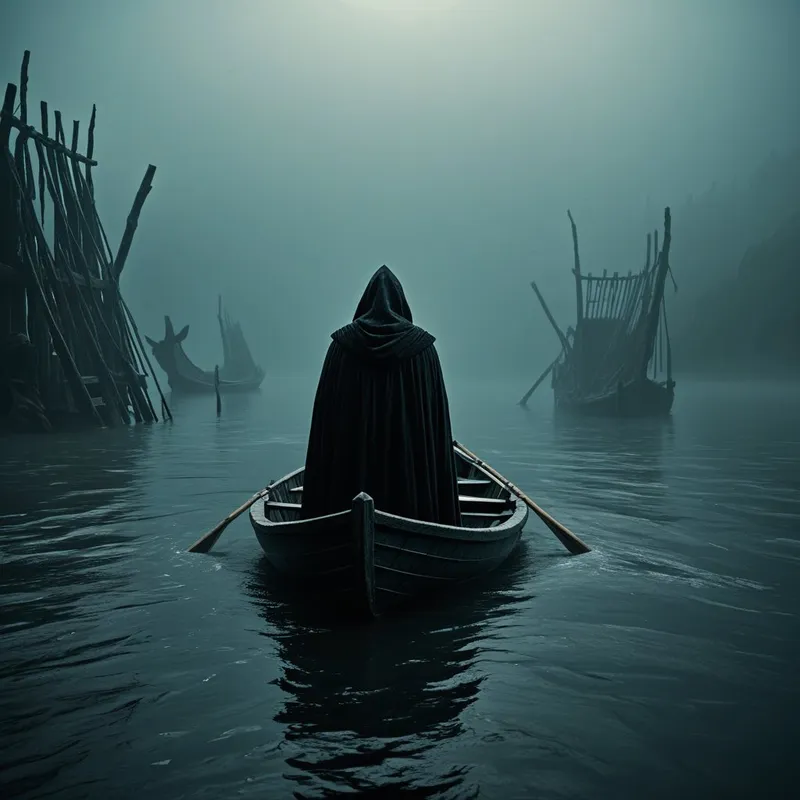
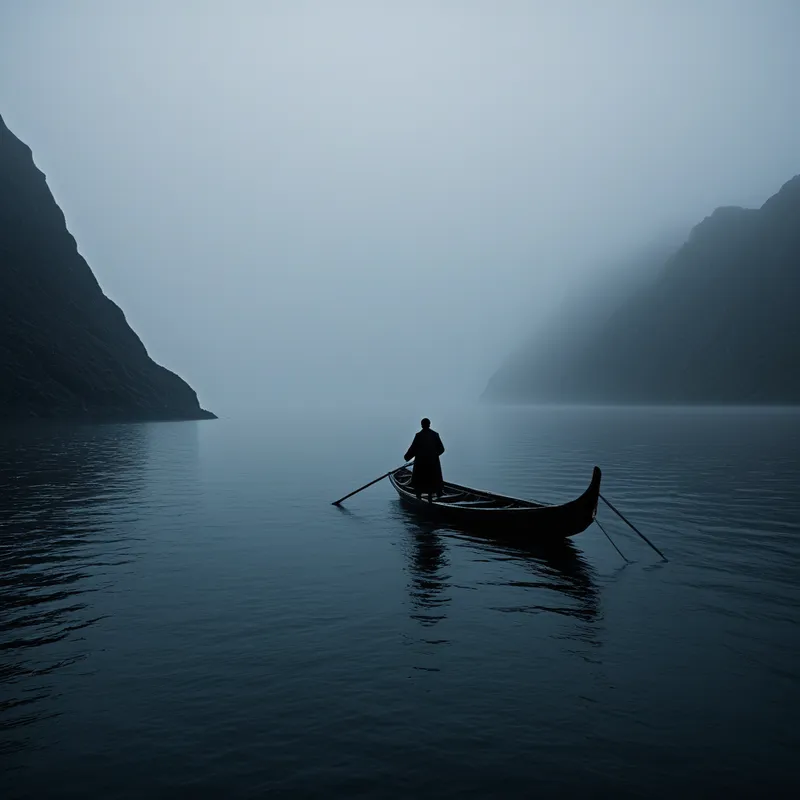
- Vehicles in Motion (Trains, Boats, Cars): The sense of being carried by a process larger than your will.
- Changing Seasons or Weather: The natural, cyclical metaphor for internal shift.
- Packing/Unpacking, Moving Houses: The literal sorting of psychic contents, deciding what to bring into the new life.
- Metamorphosing Animals (Caterpillar/Butterfly, Tadpole/Frog): The biological blueprint for radical transformation.
Archetypal Resonance
The energy of transition resonates most powerfully with The Explorer Archetype. Not its shadow form of the aimless wanderer, but its essential core: the Seeker who must leave the known village to find the uncharted territory where their true name is waiting. The somatic echo—that restlessness, that gravitational pull—is the Explorer’s compass vibrating in the chest. The alchemical potential lies in its courage to face the “terra incognita” of the self. Where the Hero conquers external dragons, the Explorer navigates internal wildernesses. This archetype does not fight the transition; it embodies it, understanding that the journey itself—the liminal space, the disorientation, the new vista—is the destination. Its gift is not a trophy, but expanded frontiers of being.
The Alchemical Process
The alchemy of transition is Solutio—the dissolving of solid form into liquid potential. The intense psychological heat is applied by the friction between “what was” and “what must be.” This is the pressure of existential grief: mourning the self you are leaving behind, even as you cannot yet see the one ahead. The terror is the solvent. You must submerge the hardened structures of your old identity—your rigid beliefs, your outgrown roles—into this bath of uncertainty and fear. It feels like annihilation. But in the alchemical vessel of conscious attention, dissolution is not an end. It is the necessary step where components are separated from their fixed bonds, freed to recombine into a new, more resilient, and more authentic compound. Sovereignty is born when you stop clinging to the shore and learn to float in the solution, trusting that your essence will reconfigure itself around a truer center of gravity.
The Integration Protocol
Question 1: What familiar part of my identity, my story, or my daily life is beginning to feel like a suit of clothes that no longer fits? What does it feel like to imagine taking it off?
Question 2: In the liminal space of my current transition, what is one small, old certainty I can consciously release today? Not with force, but with a sigh of thanks for its past service.
Question 3: If the part of me being born could send a message back to the part of me that is afraid, what would it be? What single word or image would it transmit?
Action 1 (Somatic Anchoring): For three minutes, sit in silence and place your hands on your lower abdomen. Breathe into that space. Do not seek a thought or answer. Simply feel the physical reality of your body as a container. Notice any sensation—hollowness, warmth, vibration, pressure. Your only task is to acknowledge it without judgment. This grounds the psychic shift in biological reality.
Action 2 (Unstructured Cartography): Take a large piece of paper. Without planning, draw two abstract landscapes. One represents the "old country" you are leaving (use shapes, colors, textures, not literal objects). The other represents the "new territory" you sense ahead. Then, in the space between, draw the passage—a bridge, a river, a storm, a beam of light. Let the image emerge from your hand, not your mind.
Action 3 (Ritual of Release & Welcome): Find two small objects: one representing an old pattern or identity to release (a stone, a specific key), and one representing a quality you wish to invite (a feather for lightness, a seed for potential). Go to a threshold—your front door, a garden gate, a bridge. With intention, leave the first object behind on one side. Cross the threshold holding the second object, and place it somewhere in your new space as an anchor for the becoming.
Final Validation
This is difficult work. It is the most difficult work there is: to die while still breathing, to grieve a self that has not yet left, to trust a process you cannot control. The disorientation is not a sign you are broken, but a sign you are in motion. The ache is not pathology; it is the growing pains of a soul expanding into its rightful shape. You are not lost in the transition. You are oriented by it. The bridge may be shrouded in mist, but every step you take is weaving its solidity beneath your feet. You are not crossing into the unknown. You are crossing into a deeper, more intricate knowing of yourself. Keep walking.