The Dream
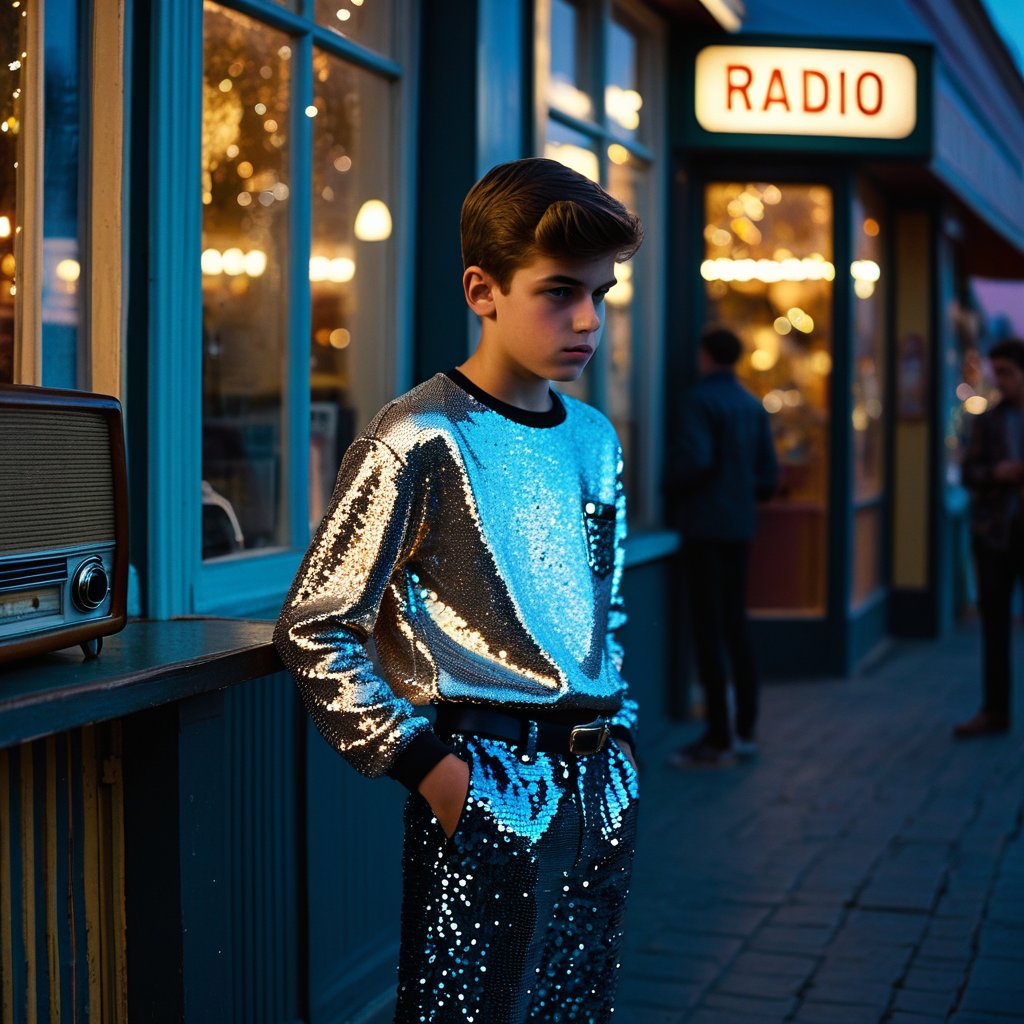
"There was a kid who I was hanging out with and thee kids was going to work in the parents store. He radioed the parents but they didn't want him to work because he was late. We decided we should go out dancing instead. I put on a good dancing outfit and he put on my sequined top and pants. I mentioned that was what I wore on new years and Thanksgiving. He went to get permission to go dancing. When he was gone I realized he couldn't even go to the bar because he was like 14 years old. I was trying to think of an alternate plan when he came back and wasn't allowed to go anyway. "
✨ Dream Analysis ✨
This dream is a beautiful and poignant map of a moment where obligation and spontaneity collide. At its heart, it’s about a plan that fails—not through malice, but through a simple, immovable reality: the boy is too young. You are the one dressed and ready, prepared for a joyful connection (the dancing outfit you associate with celebration), while the boy represents a part of you—perhaps a younger, more impulsive, or more playful self—who is not yet permitted to enter that space of adult social freedom (the bar).
The store, a place of work and transaction, is the initial obligation. The boy is "late," a signal that a sense of missed timing or a failure to meet an external expectation has already voided that duty. Your psyche swiftly pivots: if we can’t work, let’s dance. This is a wonderful instinct—to transmute duty into joy. You even share your celebratory clothes with him, symbolizing a willingness to lend your mature, festive identity to this younger part. But the plan is built on an oversight: his age. This is the dream’s core truth. You can dress him up, but you cannot force a part of yourself that isn’t ready, or isn’t allowed, into a role it doesn’t fit.
The repeated emphasis on dancing underscores a deep desire for expression, release, and connection. The repeated mention of work and parents highlights the internal authorities you’re negotiating with—the voices of duty and expectation. The boy radioing the parents is that part of you seeking external permission, while you, realizing the age limit, represent the internal wisdom that knows the real boundaries.
The ending isn’t a failure; it’s a clarification. The permission wasn’t granted, and the alternate plan wasn’t needed. This suggests you are in a phase of recognizing what is and isn’t possible for a specific part of your life or self. The dream asks: Where are you trying to force a celebration or connection with an aspect of yourself that, right now, simply isn’t old enough or permitted to join in? The closed door isn’t a punishment; it’s a definition. It returns you to the theme of navigating the space between a missed responsibility and a desired joy that remains just out of reach.
What Your Subconscious May Be Telling You
- A playful or less mature part of you (the boy) is feeling excluded from a "grown-up" sphere of joy or social freedom, but there may be a valid reason for that boundary.
- You are creatively trying to transform a sense of lateness or a missed obligation into a chance for celebration and connection.
- The authority figures (parents) and rules (age limit) in the dream likely reflect your own internal standards and permissions, which you are in the process of understanding and negotiating.
Reflection Questions
- In my life right now, what feels like the "store" I'm late for? What duty have I missed or released?
- What does "dancing" represent for me? Where do I crave that kind of expressive, joyful freedom?
- Who or what are the "parents" in my psyche whose permission I still seek?
- What part of me feels like the 14-year-old—eager but not quite ready or allowed to participate in an "adult" activity?
Suggested Actions
- Literally move your body. Put on music and dance alone in your room for one song. This honors the dream's desire for expression without needing anyone else's permission or participation.
- Identify one small "adult" responsibility you've been avoiding (the "store work"). Spend 20 minutes on it, not to complete it, but to symbolically show up and reset your internal sense of being "late."
Dream Archetype
Jungian Pattern Analysis
The dream centers on seeking freedom and autonomy through dancing and social engagement, with the dreamer actively searching for alternative plans when faced with restrictions. The themes of choice, access, and desire for new experiences align with the Explorer's pursuit of personal truth and liberation from constraints.
Echoes in Myth
Ancient stories that mirror your dream
Themes Present
Free account
Save your own dreams
Create a free account to interpret your dreams, save them to a private journal, and track recurring symbols over time.