The Alchemy of Desire: When Your Soul Sends a Want
The Somatic Echo
Before it is a thought, desire is a geography of the body. It is the hollow ache behind the sternum, a silent bell tolling in an empty chamber. It is the magnetic pull in the gut, a compass needle trembling toward a north you cannot name. It is the dry-mouthed thirst that water cannot quench, a heat in the palms that seeks a specific weight, a texture, a key. This is not the mind’s polite wanting; this is the visceral, pre-verbal language of the soul. It is the somatic echo of an absence that is, paradoxically, a presence—the ghost limb of a part of you that exists in potential, calling to be made real. To feel desire in this raw state is to stand at the threshold of your own becoming, sensing the blueprint of a more complete self etched into your very nerves.
The Dreamer's Log
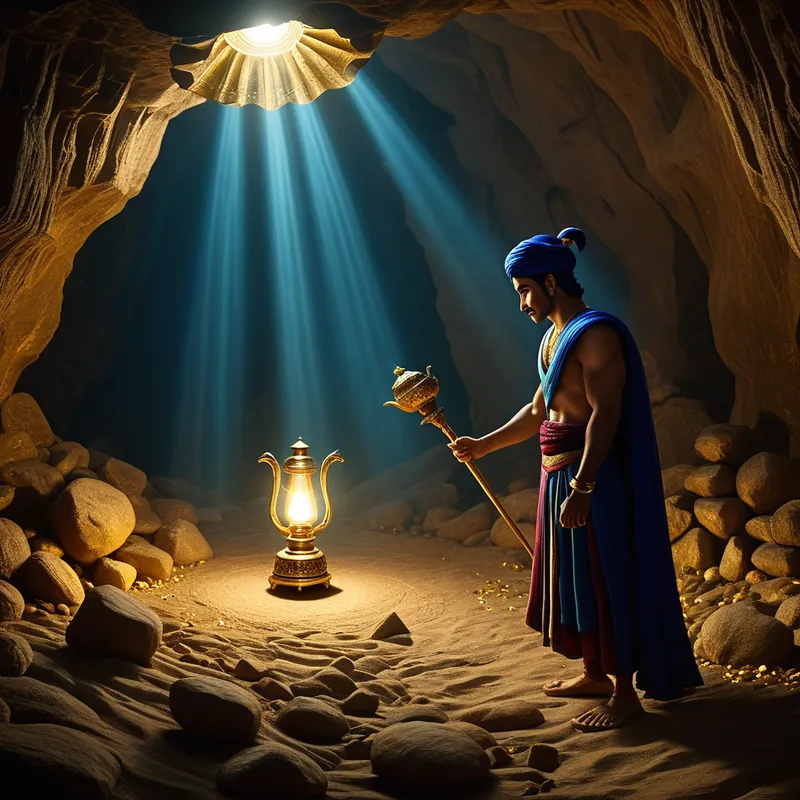
She walks through an endless, silent library where the books are made of polished obsidian. She cannot read them, but she knows one contains her true name. In the center of the vast room, on a pedestal of bone, floats a key of intricate, impossible geometry. It glows with a soft, internal light. She reaches for it, but her hand passes through as if through smoke. The key remains, luminous and just out of grasp.
This dream is not about failure, but about orientation. The key is the somatic echo given form; her reaching is the psyche mapping the exact coordinates of a wholeness she is not yet ready to hold.

The False Lead
Desire in dreams is not mere lust, ambition, or the ego’s shopping list. To mistake it for such is to confuse the map for the territory. A dream of unattainable wealth is rarely about money; it is about a felt sense of inner resource, security, or creative potency that has been exiled. A dream of erotic longing for a stranger is seldom about the person; it is about an encounter with an unknown, vital aspect of your own psyche—the Lover, the Rebel, the Creator—asking for recognition. The false lead is to pursue the object in the waking world. The true path is to turn inward and ask: What state of being does this object represent? What dormant self does this longing wish to resurrect?
Psychological Architecture
This is the shadow work of desire: the reclamation of exiled fire. Our longings are often banished in childhood—too much, too loud, too needy, too strange. These disowned parts don't vanish; they go underground, becoming the unconscious architects of our compulsions and attractions. The dream of desire is their diplomatic envoy. The unattainable key, the forbidden room, the distant figure on the hill—these are symbols for a structural component of your Self that you have walled off. The ache is the pressure of that self against the interior wall. Individuation here is not about getting what you want, but about becoming the one who can authentically hold that wanting. It is the slow, courageous process of dismantling the internal fortress to welcome back the exiled citizen, with all its chaotic, creative energy. The grief you feel is for the years spent believing you were incomplete; the terror is of the responsibility and transformation its arrival will demand.
Mythic Resonance
Consider the story of Eros and Psyche. Aphrodite, threatened by Psyche’s beauty, commands Eros to make her fall in love with a monster. Instead, he pricks himself with his own arrow and falls for her. Their union, however, must occur in darkness; Psyche is forbidden to see her lover’s face. This is the first contract of desire: we are drawn to what illuminates us, yet we are often required not to look at it directly, to experience it only as a feeling, a presence in the dark. Psyche’s eventual lighting of the lamp is not a betrayal, but a necessity—the move from unconscious longing to conscious recognition. She sees the god, and he flees. The long ordeal that follows—the impossible tasks—is the alchemical process. She must work to reclaim the union she once had passively, to integrate the beloved not as a nocturnal visitor, but as a conscious part of her world. Desire initiates the journey; conscious labor fulfills it.
Symbolic Nodes
- Unreachable Objects: Keys, stars, fruits on high branches, lights across a chasm.
- Forbidden Spaces: Locked rooms, walled gardens, private studies, off-limits floors.
- Mysterious Figures: The faceless lover, the guide who disappears, the figure seen only from behind.
- Consuming Elements: Drinking from an empty cup, eating ashes that taste like honey, breathing underwater.
- Vehicles of Pursuit: Trains leaving the station, cars with no brakes, running through treacle.
Archetypal Resonance
The Lover Archetype is the pure current of this theme. Its energy is the magnetic pull toward connection, beauty, passion, and ecstatic union—not merely with another person, but with life itself. The somatic echo of desire—the heart-hollow, the gut-pull—is the Lover’s native language, the body sensing the possibility of profound communion. In its shadow aspect, as the Obsessive or Promiscuous force, this archetype manifests as the futile pursuit of the object, hoping the next experience, person, or possession will finally fill the void. The alchemical potential lies in the Lover’s core truth: desire is not a problem to be solved, but a compass. Its true aim is the union of the ego with the soul, the integration of all that we find beautiful and meaningful into a coherent, passionate, and embodied life.
The Alchemical Process
The transmutation of desire is a process of sublimation—turning the leaden ache of lack into the gold of creative sovereignty. The heat required is the unbearable tension of holding the want without acting to prematurely discharge it. This is the nigredo, the blackening: sitting in the fullness of your longing, feeling its contours, its history, its grief, without rushing to satisfy it with a lesser substitute. The pressure is the conscious containment of that energy. As you hold it, a separation occurs. The crude, object-focused "wanting" begins to settle. What rises is the pure essence: the specific quality of aliveness you are missing—perhaps freedom, intimacy, potency, or peace. This essence is then consciously directed, not toward an external object, but into the forge of your own being. You channel it into a creative act, a deeper presence in your relationships, the cultivation of an inner state. The desire for a perfect sanctuary becomes the daily act of creating inner order. The longing for a transcendent lover becomes the practice of deep, non-judgmental intimacy with your own feelings. The object was always a symbol; you become the subject of your own transformation.
The Integration Protocol
Question 1: When you sit quietly with the physical sensation of this desire, if it were not seeking any external object or person, what state of being does it wish to inhabit? (e.g., "expansive," "enveloped," "radiant," "sovereign").
Question 2: What exiled part of your younger self—what passion, curiosity, or wildness—does this current longing most resemble? When and why did you first learn to send that part away?
Question 3: If this desire were fully integrated, not as a possessed thing but as a quality you embody, how would you walk, speak, and create differently? Describe the posture of that fulfilled self.
Action 1 (Somatic Cartography): For one week, when you feel the pang of desire (large or small), stop. Place a hand where you feel it in your body. Breathe into that space for three cycles. Do not analyze it; just map its texture, temperature, and movement. Journal only these physical descriptors.
Action 2 (Creative Evocation): Using any medium—clay, paint, collage, unstructured writing—express the essence of the desire, not its object. If the dream was about a key, do not draw a key. Draw the feeling of "unlocking," the texture of "opening," the color of "answer." Let the symbol decompose back into its emotional core and express that.
Action 3 (Ritual of Welcome): Create a simple, private ritual to welcome the exiled quality. If the essence is "sovereignty," light a candle and declare a small, internal kingdom where your word is law for one hour. If it is "bliss," spend twenty minutes doing something for pure, useless joy. Symbolically act as the ruler of that reclaimed state.
Final Validation
To feel deep, inexplicable desire is to be human. It is a sign of life, not lack. It is evidence that your soul has not settled, that it remembers a broader horizon of being. This ache is the engine of evolution. It is difficult because it asks everything of you: to stop projecting, to turn inward, to parent the orphaned parts of your spirit, and to finally become the source of what you seek. The journey from longing to wholeness is the oldest alchemy. You are not broken for wanting; you are alive. And that wanting, when met with conscious, creative courage, is the very substance from which you will forge your sovereignty.