The Sacred Tension: Goal Setting as the Soul's Blueprint
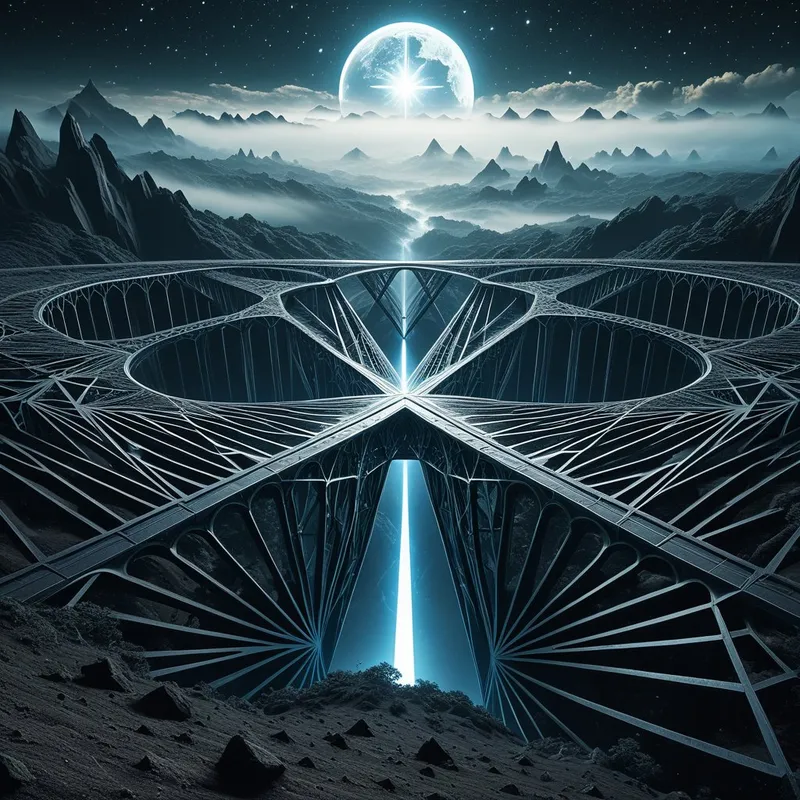
We speak of goals as destinations, as points on a map. But in the dreamscape, they are not places to arrive at, but living architectures we are asked to inhabit. The dream of goal setting is a somatic event before it is a cognitive one. It begins not as a thought, but as a Somatic Echo: a specific, resonant tension in the body. It is the tautness of a bowstring before the arrow is loosed, felt in the solar plexus—a gathering of potential energy. It is the hollow ache in the chest, the spaciousness that yearns to be filled with a new form. It is the subtle tremor in the hands, the body’s ancient knowledge that it is meant to shape something, to leave an imprint on the clay of reality. This is the pre-verbal language of becoming. The mind will later dress this sensation in images of ladders, maps, or distant peaks, but the origin is always this visceral pull between the self you are and the self you are called to crystallize.
The Dreamer's Log
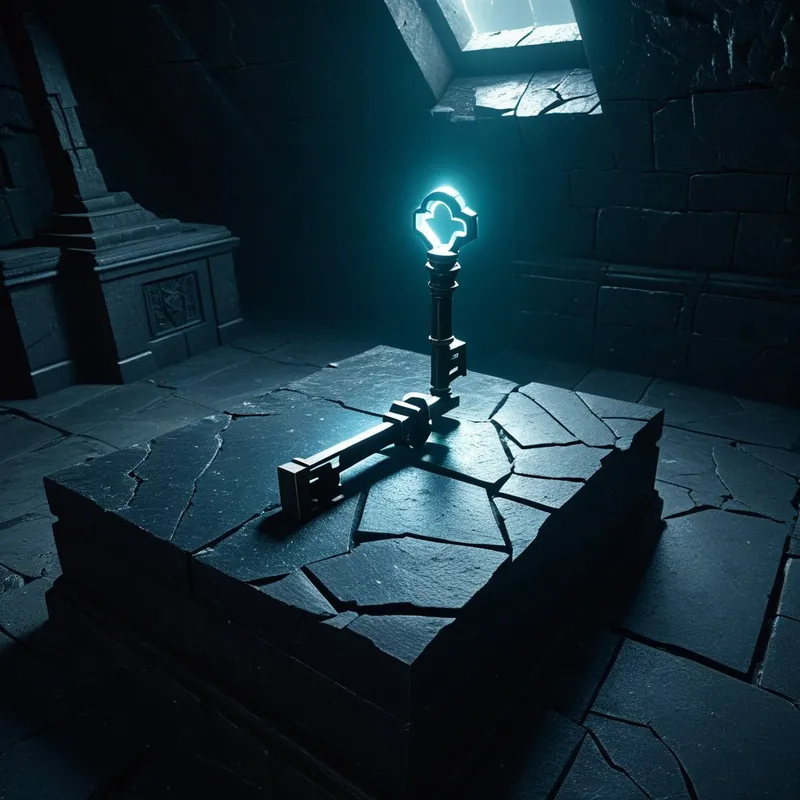
She finds herself in an endless, silent library of black marble. On a central plinth rests a single, ornate key made of light. A voice, her own yet not her own, echoes: “This opens the door you have been building your entire life.” She reaches, but her hand passes through the key. It is not yet solid. It is only a promise of a tool.
Alchemical Interpretation: The dream reveals that the true goal is not the door, but the forging of the hand—the self—capable of holding the key.
The False Lead
This theme is not about productivity hacks, five-year plans, or the ego’s checklist for validation. To interpret a dream of an unreachable summit as mere “fear of failure” is to mistake the sacred for the mundane. The terror is not of missing a target, but of confronting the profound structural shift required to become the archer. The grief is not for a lost prize, but for the version of yourself that must be dissolved so the new form can precipitate. The dream’s frustration is the friction of transformation, not the symptom of poor planning.
Psychological Architecture
Beneath the dream-image of the goal lies the silent, shadowed workshop of the psyche. Here, the internal family of subpersonalities convenes. The Orphan, who survived by setting small, safe objectives, pleads for caution. The Ruler demands a clear empire to govern. The Rebel scoffs at any externally imposed finish line. Goal setting in dreams is the psyche’s attempt to orchestrate a new sovereignty among these voices. It is shadow work of the highest order: to differentiate the soul’s authentic longing from the conditioned ambitions of the Caregiver who seeks to please, or the Hero who seeks only to conquer. The individuation process here is one of sacred distillation. You are not merely adding a new achievement to your collection; you are refining the very essence of the collector. The goal is the alembic, and you are the substance within, heated by desire, pressured by doubt, until only the essential gold remains.
Mythic Resonance
This process echoes in the hall of myths. Consider the labors of Heracles. Each task—slaying the Nemean Lion, cleansing the Augean Stables—was less about the external monster and more about the internal quality (courage, ingenuity) that had to be integrated to succeed. The goal was the catalyst for the hero’s transmutation. Similarly, in the quest for the Holy Grail, the knights are told the Grail can only be found by the “purest knight.” The entire arduous journey is not a search for a cup, but a relentless purification of the seeker until he becomes the vessel worthy of the divine. The goal, in the end, is a mirror.
Symbolic Nodes
- Unreachable Peaks/Ladders: The perceived gap between current and potential self.
- Maps with Missing Territories: The intuitive knowing of a path, absent conscious details.
- Tools That Are Broken or Ethereal: Unintegrated skills or nascent potentials.
- A Door, Gate, or Threshold: The point of irreversible psychological transition.
- A Blueprint or Seed: The encoded, potential form of a future self.
Archetypal Resonance
The energy most active in this theme is that of The Creator Archetype. The Creator is not merely an artist with a brush, but the fundamental architect of reality. Its somatic echo is that gathering tension, the urge to bring form from chaos. Its shadow—the Self-Centered or Mad Scientist—manifests in dreams as goals born of vanity, isolation, or a compulsive need to build towers to the self, not bridges to the world. The alchemical potential of the Creator lies in its sacred marriage of vision and discipline. It teaches that to set a true goal is to enter into a covenant with an unborn version of your reality, agreeing to provide the steady, loving attention and the resilient substance of your life until that vision takes root in the world. The goal is the Creator’s sketch; your lived experience becomes the canvas.
The Alchemical Process
The transmutation here is Crystallization. The raw, dissolved matter of your potential—your vague yearnings, unspoken loves, and latent powers—exists in a saturated solution. The intense psychological heat and pressure required is the sustained, focused attention you place upon the imagined goal. This attention is not frantic striving, but a deep, contemplative resonance. The grief you feel is the necessary precipitation of outdated identities; they must fall away as psychic sediment. The terror is the moment before the first crystal forms—the fear that nothing will solidify, that you will remain forever formless. But as you hold the tension between the vision (the seed crystal) and your current reality (the solution), a new structure begins to grow atom by atom. Sovereignty is achieved when you realize you are not the solution waiting to crystallize, but the entire alchemical vessel itself, capable of containing and directing the entire process.
The Integration Protocol
Question 1: When you feel the somatic pull of this goal in your body, what older, quieter longing does it whisper over? What is it trying to remember, not just achieve?
Question 2: Which inner voice (the cautious Orphan, the demanding Ruler, the rebellious Rebel) is most threatened by this goal, and what is it truly afraid of losing?
Question 3: If you achieved this goal by magic tomorrow, what fundamental way of being (not having or doing) would be required of you to not feel like an imposter in that new reality?
Action 1 (Somatic Blueprinting): For one week, do not write a goal. Instead, each morning, spend five minutes feeling the physical sensation of the goal in your body. Locate it. Give it a color, a texture, a temperature. This grounds the vision in your nervous system before your mind tries to commandeer it.
Action 2 (Unstructured Cartography): Without linearity, draw a map of this goal. Use symbols, textures, and colors—not words. Let the map be nonsensical. Place a representation of yourself somewhere on it. The act of externalizing the psychic landscape in abstract form reveals hidden relationships and blockages logic cannot see.
Action 3 (Threshold Ritual): Physically designate a threshold in your home—a doorway, a specific tile. Each time you cross it, pause. On one side, state one small, concrete action you will take toward the goal. On the other side, state one quality (e.g., patience, courage) you will cultivate to become the person who does that action. You are not just crossing a space; you are practicing the transition of self.
Final Validation
The path of a true goal is arduous because it is a path of rebirth. To feel its weight is not a sign of weakness, but a testament to the magnitude of the self you are consenting to shape. The frustration, the longing, the sheer impossibility of it all are the necessary fires of your forge. You are not failing to reach the summit. You are, with every labored breath, becoming the mountain.