The Somatic Echo
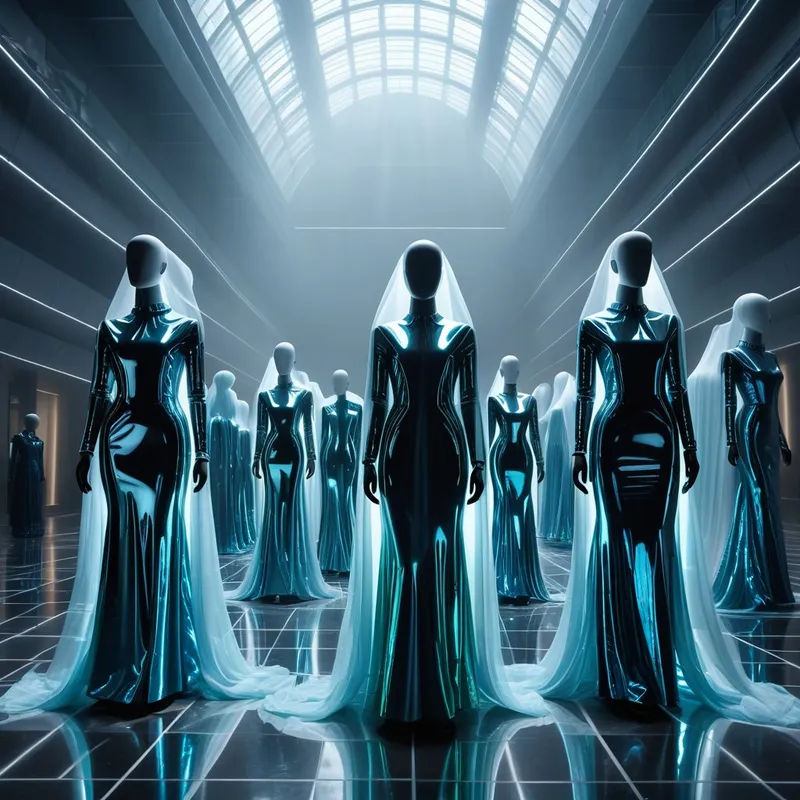
It begins not as a thought, but as a weight. A subtle, pervasive pressure across the shoulders, as if the air itself has thickened into a costume. There is a tightness in the jaw, a learned smile held just a moment too long. The breath becomes shallow, a polite sip of atmosphere rather than a full, claiming draught. This is the body’s memory of performance. It is the somatic ledger of every role you have inhabited—the dutiful child, the competent professional, the reliable friend, the composed partner. Before the dream images even form, the psyche registers this as a profound structural fatigue. The bones feel the architecture of expectation; the skin remembers the texture of the gaze. This is the echo of a self partitioned, a consciousness that has learned to speak in borrowed tongues and move in prescribed geometries. The dream of social roles is the soul’s deep tissue massage, pressing into the places where identity has calcified into posture.
The Dreamer's Log
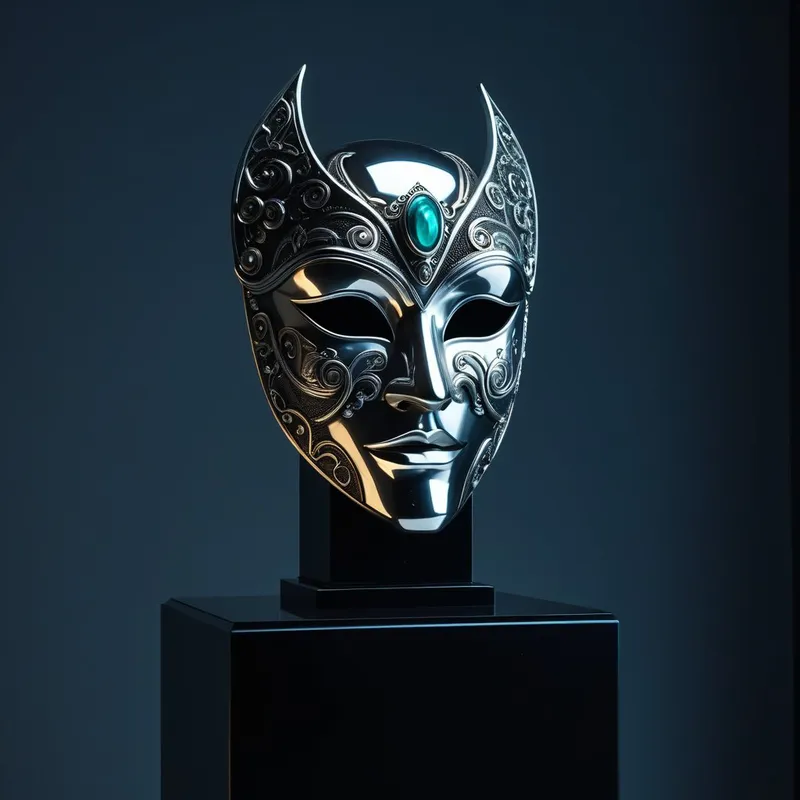
I am in a grand, silent gallery. On plinths of black stone rest dozens of exquisite masks—some laughing, some stern, some weeping. I am compelled to try each one on. With each mask, my entire body changes to match its expression, my clothes shifting into appropriate regalia. A curator, faceless and calm, nods approvingly at each transformation. I feel a rising panic, a sense that beneath the last mask, there will be nothing left of my own face.
Alchemical Interpretation: The dream is a stark revelation of the Self’s fragmentation, where the authentic face is buried beneath a museum of acceptable performances, curated by internalized societal approval.
The False Lead
This theme is not about social anxiety or a simple fear of judgment. To mistake it for such is to confuse the symphony for a single sour note. The discomfort of these dreams is not a signal that you are failing at a role, but that the role itself is failing you. It is not a call to perform better, but a profound question about who, or what, is doing the performing. The terror here is not of embarrassment, but of erasure; the grief is not for a lost reputation, but for a self that was never fully born. This is the psyche distinguishing the costume from the creature, the script from the soul.
Psychological Architecture
Beneath the theater of our daily lives lies the shadow work of social roles. This is the Individuation process in its most gritty, relational form. We are born into a web of expectations—familial, cultural, professional. To survive and belong, parts of our psyche take on these roles with fierce dedication. In Internal Family Systems terms, these are our “Managers” and “Firefighters”: the inner CEO who maintains competence, the inner Peacekeeper who smoothes conflict, the inner Jester who deflects depth with humor. They are not enemies; they are protectors who learned their parts in earlier acts.
But the dream of social roles emerges when the central, core Self—the silent, observing “I”—begins to stir. It feels the constriction of these well-worn costumes. The dream state becomes a liminal workshop where these protector parts are momentarily decommissioned, allowing the raw material of the psyche to surface. Here, you are not the role, but the one watching the role. This is the birth of psychological sovereignty: the agonizing, glorious moment when you realize you are both the actor on the stage and the vast, dark theater itself. The process is one of gentle, firm differentiation—thank the protector for its service, and then, with immense compassion, ask it to step aside so you can feel what it has been shielding.
Mythic Resonance
This universal firmware runs through the myth of The Two Faces of Janus. Janus, the Roman god of beginnings, gates, and transitions, gazes simultaneously into the past and the future. He is the archetypal guardian of the threshold, and his duality is not a contradiction but a function of his role. He must hold both perspectives to perform his duty. In our social lives, we are all Janus-faced, presenting one countenance to the world while privately holding another. The myth whispers that this duality is inherent to passage, to moving from one state of being to another. The danger, and the dream’s warning, arises when we forget we are the god of the gateway and become frozen as the gate itself, a static monument to bifurcation.
Similarly, the Norse tale of Tyr sacrificing his hand to bind the wolf Fenrir is a brutal allegory for the social contract. Tyr, the god of law and justice, gives his literal hand—his capacity for action, his sovereignty—to uphold the agreed-upon order. The dream asks: What essential part of your own agency have you willingly placed in the jaws of an agreement to keep the peace? What have you bound, and at what cost?
Symbolic Nodes
- Masks, Uniforms, Costumes: The most direct symbol of the persona, the interface between the inner self and the outer world.
- Empty Stages, Silent Auditoriums: The haunting space left when the performance ends, pointing to the question of identity beyond the role.
- Scripts You Cannot Read or That Keep Changing: The feeling of being unprepared, of the rules of engagement being opaque or fluid.
- Being Back in School or a Childhood Home: Regressing to environments where foundational roles (the good student, the obedient child) were first cemented.
- A Mirror Showing a Distorted or Unknown Face: A confrontation with the disorienting gap between how you perceive yourself and the "you" that performs.
- Trying to Speak but Your Voice is Muffled or Wrong: The suppression of authentic expression by the demands of the role.
Archetypal Resonance
The energy of this theme resonates most powerfully with The Orphan Archetype—specifically, its journey from the Shadow Orphan to the integrated Orphan.
The initial somatic echo—the weight, the pressure, the shallow breath—is the cry of the Shadow Orphan: the part that feels fundamentally alone in a crowd, performing for scraps of belonging, perpetually in the role of the adaptable survivor who fears that authenticity equals abandonment. This is the Victim energy, believing the self is defined solely by its reactions to external expectations. The alchemical potential, however, lies in the Orphan’s true strength: the Realist. This is the part that, through the raw, unflinching honesty of the dream, sees the social game for what it is. It does not flee the role or rage against it childishly; it acknowledges the necessity of the costume while knowing, in its bones, that it is not the skin. The integrated Orphan achieves a profound, grounded sovereignty—not by overthrowing the system, but by no longer deriving its identity from within it. It can wear the mask without becoming the mask, because it has finally come home to the Self that exists before all roles.
The Alchemical Process
The transmutation here is the conversion of Fragmentation into Conscious Orchestration. The base metal is the scattered, exhausted self, each part playing a isolated role in a cacophonous inner drama. The heat and pressure are applied by the dream itself, which forces a confrontation between these disparate parts. This is the nigredo, the blackening: the despair of feeling you are only a collection of functions, that there is no central "you."
The alchemical fire is the sustained, compassionate attention of the waking self—the core Self—turned inward. It is the heat of asking, in the quiet after the dream, "Which part of me felt like it had to wear that mask? What was it afraid would happen if it took it off?" This inquiry begins the albedo, the whitening: the separation of the essential from the contingent. As each protector part is heard and acknowledged, its rigid role begins to soften. The final transmutation, the rubedo or reddening, is not the destruction of social roles, but their re-contextualization. You become the conscious director of an inner ensemble. The professional, the caregiver, the leader—these become capacities you choose to employ, not identities that imprison you. The sovereignty born from this fire is the ability to move through the world with fluid authenticity, your core Self intact, using roles as tools rather than being used by them as cages.

The Integration Protocol
Question 1: In the dream, which role felt most constricting? If that role were a character in your inner world, what is its primary job? What is it trying to protect you from?
Question 2: When you feel the somatic echo of role-fatigue in waking life (the tight jaw, shallow breath), if you were to pause for one full minute, what authentic impulse or feeling is lying beneath that physical tension?
Question 3: Imagine you could design a role for yourself that required zero approval from anyone else. What would its first, most basic action be?
Action 1 (Somatic Reclamation): For one day, practice taking three deep, audible breaths before you enter a familiar social context (a meeting, a family call). Do not change your behavior; simply let the breath be a private signal to your body: "I am here, beneath the part that is about to perform."
Action 2 (Creative Unmasking): Take a large sheet of paper. Draw a rough circle in the center to represent your core, silent Self. Around it, draw smaller shapes or symbols to represent the primary social roles you play. Use color, texture, and size to show how each role feels. Then, draw lines of connection—are they chains, bridges, beams of light? This is not art; it is cartography of your inner society.
Action 3 (Ritual of Release): At the end of a day, stand before a mirror. Name aloud three roles you inhabited that day (e.g., "the fixer," "the diplomat," "the expert"). After each one, say firmly: "I thank you for your service. I am more than this role." The ritual is not to banish the part, but to consciously discharge its mandate, returning authority to the core Self.
Final Validation
It is exhausting, this constant, silent labor of being who you are expected to be. The grief that surfaces in these dreams is real—it is the mourning for the versions of you that were never given light, the gestures never made, the words never spoken. That fatigue is not a sign of weakness, but a testament to the immense energy required to maintain a fiction. Honor that exhaustion; it is your integrity rebelling against the performance. And within that very rebellion lies your liberation. For the moment you feel the weight of the mask is the very same moment you become aware of the face beneath it. The role was never the problem; the forgetting was. You are not the costume. You are the one who can finally, consciously, choose to wear it—or to lay it gently down, and step, naked and complete, into the truth of your own being.