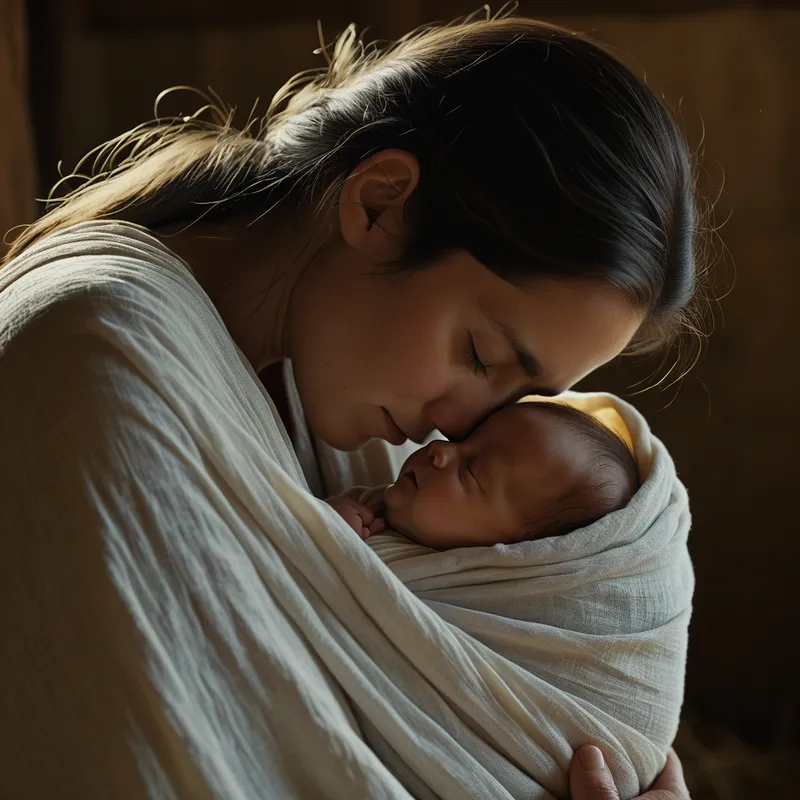
The Alchemy of Exposure: Dreaming of Vulnerability
The Somatic Echo
It begins not as a thought, but as a sensation. A cold, hollow space opening just beneath the sternum, as if a protective plate has been silently removed. The breath catches, not in the throat, but lower, where the diaphragm flutters like a trapped bird. There is a feeling of being seen through, of transparency—not the clarity of glass, but the raw exposure of an open wound or a nerve laid bare to the air. The skin prickles, not with fear’s chill, but with a hyper-awareness, as if every pore has become an ear listening for the approaching footfall. This is the body’s ancient log, recording the arrival of a truth the mind has long barricaded away: the fortress walls are down. You are, for this moment in the dreamscape, undefended. The somatic echo is the ghost of an armor you can no longer feel, and the terrifying, electric aliveness of what it was designed to contain.
The Dreamer's Log
I am in a vast, humming data center, the air cold and sterile. All the servers glow with a steady, reassuring blue. My task is simple: guard the central core. But I look down and see I am wearing no clothes. My skin is bare against the chill. Worse, my chest is transparent, and where my heart should be, there is a small, pulsing sphere of raw, golden light, unprotected and visible to anyone who might enter the room. I try to cover it, but my hands pass through the light. I can only stand there, exposed, waiting.
This dream is not about humiliation, but about the irreversible discovery of one’s own core luminosity, and the terrifying responsibility of its naked truth.

The False Lead
Vulnerability in dreams is not a sign of weakness, failure, or impending victimhood. It is not the psyche’s report of a security breach. To mistake it for such is to confuse the dismantling of a prison with an attack on the home. The feeling of exposure is not the prelude to an assault, but the necessary atmospheric pressure of an internal revolution. It is the difference between a castle whose walls have been bombarded and a castle whose gates have been willingly, agonizingly, opened from within. The dream is not showing you where you are weak; it is mapping the precise location where you are most authentically, potently real—and where that reality demands to be met, not defended.
Psychological Architecture
To dream of vulnerability is to stand at the precipice of the Shadow work of intimacy—not with another, but with the exiled parts of the self. The psyche operates like an internal family system, with various protectors, managers, and exiles. The managers—our achievements, our intellect, our personas—build elegant facades. The protectors—our cynicism, our anger, our withdrawal—stand guard with weapons of distance. Vulnerability occurs when these systems are temporarily offline, or when their futility is revealed. The exposed heart in the server room is the exiled child—the core feeling-self that holds our capacity for wonder, grief, and unreserved love—finally emerging into the light of consciousness.
This is the individuation process in its most tender phase: the conscious ego, which identified with the fortress, must now learn to identify with the luminous, vulnerable core it was built to obscure. It is a death of the old identity as a "fortified thing" and a birth into the identity of a "permeable being." The grief felt is for the loss of the illusion of separateness. The terror is of the connection that must now be felt—connection to one’s own depths, and by extension, to the world.
Mythic Resonance
Consider the Norse god Odin, who hung himself on the World Tree, Yggdrasil, pierced by his own spear, for nine nights. He offered his own body to itself in a ritual of extreme vulnerability to gain the runes—the fundamental codes of reality. He did not conquer the tree; he surrendered to it, allowing his own boundaries to dissolve into the structure of the cosmos. His gain was not a weapon, but a language of profound connection.
In the Greek tale, Achilles’ mother dipped him in the river Styx to make him invulnerable, holding him by the heel. His ultimate weakness was not the spot untouched by the magical waters, but the very premise of the invulnerability itself. It was his refusal to acknowledge his mortal, vulnerable humanity—his capacity for grief, love, and rage—that led to his tragic isolation and fall. The myth whispers that the attempt to seal oneself off from vulnerability is the seed of one’s own destruction. The dream of vulnerability is the Styx drying up, the magical armor dissolving, and the mortal, feeling flesh returning in all its perilous, beautiful sensitivity.
Symbolic Nodes
- Nakedness in a Formal Setting: The raw self amidst the structures of order and expectation.
- Houses with Missing Walls or Open Doors: The psyche’s living space becoming permeable.
- Transparent Body Parts or Chest Cavities: The interior world becoming visible, often revealing light, not organs.
- Being Unarmed Before a Threat: The conscious relinquishing of habitual defenses.
- Holding Something Fragile and Precious (e.g., a baby bird, a crystal): The nascent, tender aspect of the self coming into one’s care.
- Walking on a High, Narrow Path with No Rails: The necessity of moving forward without the guardrails of certainty.
Archetypal Resonance
The Innocent Archetype is the core energy activated in dreams of profound vulnerability. Not the Shadow Innocent in denial, but the essential Innocent in its most mature form: the one who, having known the world’s complexity, chooses to remain open. Its core is trust—not a naive trust that the world will not harm it, but a profound trust in its own capacity to feel and to be, regardless of what the world does. The somatic echo of the hollow chest is the Innocent’s empty cup, ready to be filled with experience, not defended against it. The alchemical potential here is the transmutation of experience—both joy and pain—into wisdom, without the hardening of the heart. The Innocent does not hide from the spear; it understands that the wound and the gift often flow from the same source.
The Alchemical Process
The alchemy of vulnerability is the process of Transmutation Through Permeability. The base metal is the ego’s rigid self-concept as a separate, defended entity. The heat and pressure are applied by life itself—through loss, love, failure, or beauty—events that strike at the exact point of our guardedness. In the dream state, this pressure manifests as the visceral scenarios of exposure.
The crucible is the moment of sustained, conscious tolerance. It is the act of not scrambling to rebuild the wall, not clothing the transparent flesh, not looking away from the pulsing, golden core. This conscious holding of the exposed state is the solve—the dissolution. The old form melts. Then, in that liquid, unbounded state, a new coherence emerges: the coagula. This is not a new armor, but a new principle of organization. Sovereignty is born here. It is not the sovereignty of the walled castle, but of the flowing river—defined not by its boundaries, but by its direction, its depth, and its capacity to hold and reflect the sky. The grief and terror are the fuels of this fire. To integrate them is to stop fighting the heat and become the flame itself.

The Integration Protocol
Question 1: In the dream, what was the nature of the space around my exposed self? Was it hostile, indifferent, or potentially receptive? What does this say about my unconscious expectation of the world when I am undefended?
Question 2: If the exposed part of me (the light, the fragile object, the naked skin) had a voice, what one sentence would it whisper about what it needs, not for protection, but for nourishment?
Question 3: What old, familiar defense—a thought pattern, a behavior, a story I tell myself—did I notice was absent in the dream? Can I thank it for its service while acknowledging it is no longer needed at the gate?
Action 1 (The Grounding Echo): For one minute upon waking, place a hand over your sternum. Do not try to change your breath. Simply feel the subtle movement of bone and muscle under your palm. This is the physical location of the somatic echo. Anchor the memory of the dream’s exposure here, in the simple, undeniable fact of your animal body.
Action 2 (Unstructured Mapping): With non-dominant hand, using crayons or charcoal, make an abstract drawing of the "exposed thing" from your dream. Let it be a shape, a smear, a cluster of lines—not a representation. Then, with your dominant hand, write words around it that describe its qualities (e.g., "hot," "trembling," "ancient," "quiet"). This bypasses the mind’s need to define and allows the exiled part to express its essence.
Action 3 (Ritual of Permeability): Go outside at dawn or dusk. Stand still. For five minutes, practice receiving. Feel the air on your skin as information, not as an assault or a comfort. Listen to sounds without labeling them. See light and shadow without narrating. Let the boundary between your sensing body and the sensed world become softly ambiguous. You are not withdrawing; you are practicing the art of being a conscious, permeable participant.
Final Validation
To dream of vulnerability is to touch one of the most challenging and sacred thresholds of a human life. The fear is real, the exposure is dizzying, and the impulse to rebuild the walls is a testament to how hard you have worked to feel safe. Honor that. And then, consider the impossible courage the dream itself represents: somewhere in the depths of you, a process has already begun that values truth over safety, authenticity over armor. The dream is not a report card on your defenses; it is an invitation to the most profound reunion you will ever know—the meeting between the one who built the fortress, and the luminous, untamed life that was waiting inside all along.