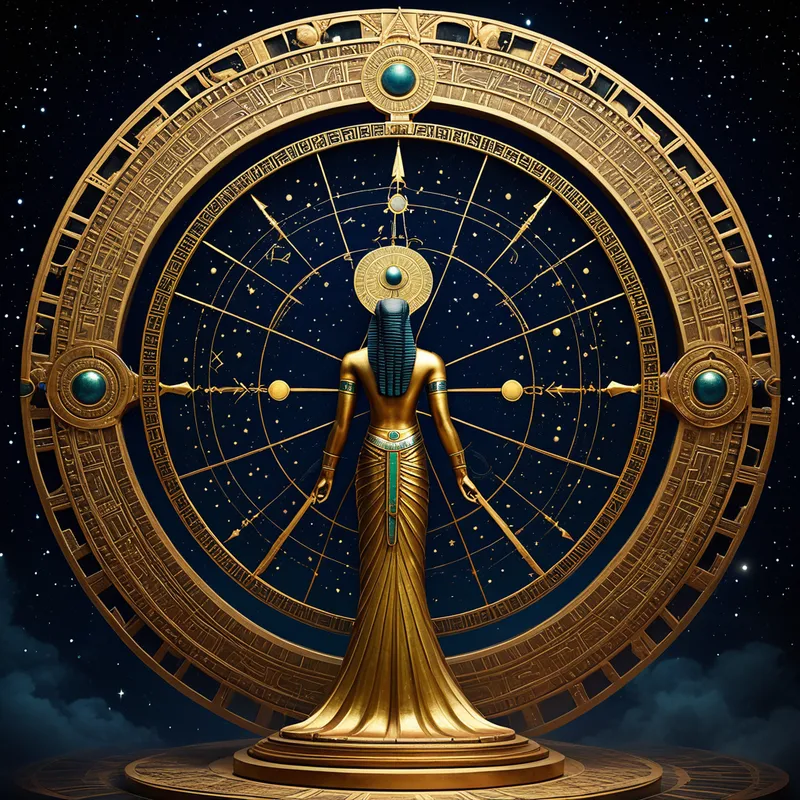
The Dream Theme of Cycles
The Somatic Echo
Before the mind can name it, the body knows the cycle. It is a deep, cellular hum, a rhythm felt in the marrow before it is seen in the world. It is the clenching of the stomach as you turn a corner and recognize a street you’ve never walked down. It is the tightness in the throat that appears when a new person speaks with an old, haunting cadence. It is the weary weight in the shoulders, not from a single burden, but from the familiar shape of the yoke being fitted once more. This is the somatic echo—the body’s ancient, pre-verbal memory of a pattern returning. It is not déjà vu; it is a deeper knowing, a resonance with a template that lives beneath your skin. The psyche’s loops are first etched in the nervous system, a groove worn so deep it becomes a home, even when it is a prison.
The Dreamer's Log
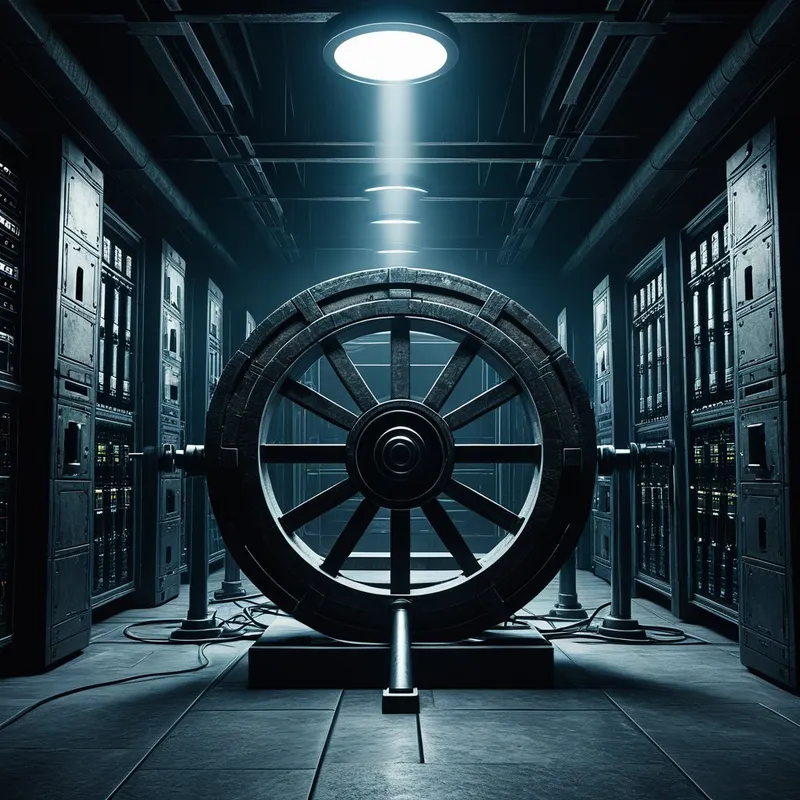
The dream is always the same. I am in a cavernous, forgotten server room, its walls humming with a low, electrical breath. In the center, on a sleek metal axle, spins a massive, ancient stone wheel. My task, which feels both sacred and futile, is to keep it turning. I push with all my might, my hands raw against the cold, gritty surface. With every revolution, a single, perfect drop of water falls from a crack in the ceiling, hitting the same worn groove on the wheel’s edge. The groove deepens, imperceptibly, eternally.
Alchemical Interpretation: The dream reveals the exhausting labor of maintaining a psychological structure that records its own erosion, mistaking motion for meaning.
The False Lead
A dream of cycles is not a prophecy of mere bad luck, nor is it a simplistic sign to "break the cycle" through sheer force of will. To interpret it as such is to stand at the ocean and command the tide to cease. The cycle is not the enemy; it is the medium. The terror lies not in the repetition itself, but in the feeling of being an unconscious component within it—the hand that pushes the wheel, believing it has chosen the direction. The false lead is to see only the external recurrence—the same argument, the same failure, the same longing—and to wage war on its symptoms. The true architecture is internal. The cycle is the visible tremor of a deep, foundational fault line within the Self, a psychic algorithm running its subroutine, seeking not to torment, but to be seen, to be integrated.
Psychological Architecture
To engage with a cycle is to be invited into the most profound kind of shadow work: the excavation of the pattern’s origin. Within the framework of Internal Family Systems, a cycle is often the domain of an exiled part—a fragment of consciousness frozen in a moment of trauma, grief, or unmet need. This exile, locked outside of time, continuously projects its unmet reality onto the present, recruiting other parts to play out its drama. The "Manager" parts push the stone wheel, striving for control. The "Firefighter" parts might sabotage progress to numb the pain of the futile labor. The cycle is their desperate, coordinated play to get your attention, to have their story witnessed. The individuation process here is not a linear escape, but a spiral descent into the center of the gyre. It asks: What ancient contract am I still fulfilling? What forgotten loyalty keeps my hands on this wheel? The work is to sit in the center of the spinning, to feel the centrifugal force that threatens to pull you apart, and to ask the wheel itself what it protects, what it remembers, what it needs you to know.
Mythic Resonance
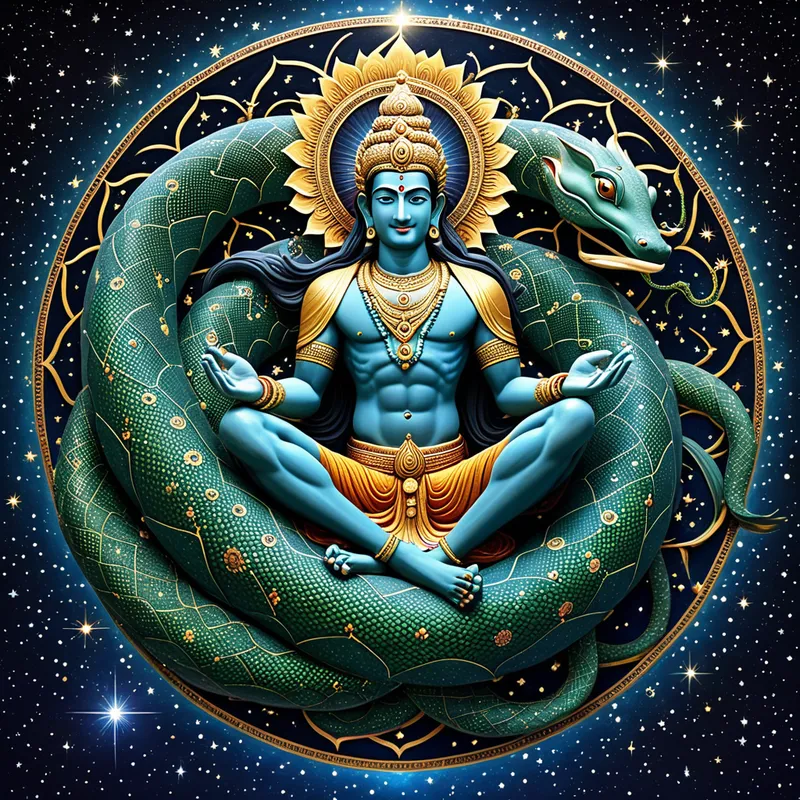
This is the territory of Sisyphus, yes, but not as the archetype of futile labor. The deeper myth is that of the Ouroboros, the serpent devouring its own tail. It is the symbol of the self-contained universe, of eternal return, of the cycle that fuels its own existence. In alchemy, the Ouroboros represents the prima materia, the chaotic, undifferentiated state of soul-stuff that contains within itself the potential for all transformation. The wheel in the server room, the serpent with its tail in its mouth—these are not images of punishment, but of a system in perfect, closed equilibrium. The grief comes from realizing you are both the serpent and the swallowed, the wheel and the pusher. The myth asks you to see the cycle not as a trap, but as the very boundary of your current being. To transform, you must first fully inhabit the circle, until its circumference becomes a horizon.
Symbolic Nodes
- Wheels, Gears, & Cogs: The machinery of fate, often felt as impersonal, grinding, and inescapable.
- Spirals & Labyrinths: The path that seems to lead in circles but actually moves toward a hidden center.
- Seasons & Tides: Natural, impersonal rhythms that highlight your alignment or resistance to a larger order.
- Looped Tracks/Paths/Monorails: A profound sense of predetermined journey, where agency feels like an illusion.
- Recurring Rooms or Landscapes: The stage upon which the internal drama is set, unchanged because the set designer (an unconscious part) has not been relieved of duty.
- Broken Records/Skipping Audio: The psyche’s literal representation of a thought or emotional fragment stuck on repeat.
Archetypal Resonance
The energy of the cycle is most potently embodied by The Magician Archetype, specifically in its Shadow aspect. The Shadow Magician is the unconscious architect, the manipulator of unseen forces who operates the levers of reality from a hidden control room, often to maintain a stagnant, self-referential system. This resonates perfectly with the cycle’s core energy: the feeling that an invisible intelligence is running a program you didn’t write, using the raw material of your life to fulfill an outdated agenda. The somatic echo—that hum of predetermined motion—is the Shadow Magician’s spell, a glamour of inevitability. Yet, within this lies the alchemical potential. To confront the cycle is to seize the controls from the Shadow Magician, not to destroy the machinery, but to learn its language. It is the arduous process of transforming from one who is spelled by cycles into one who understands their grammar and can, with profound sovereignty, rewrite the code.
The Alchemical Process
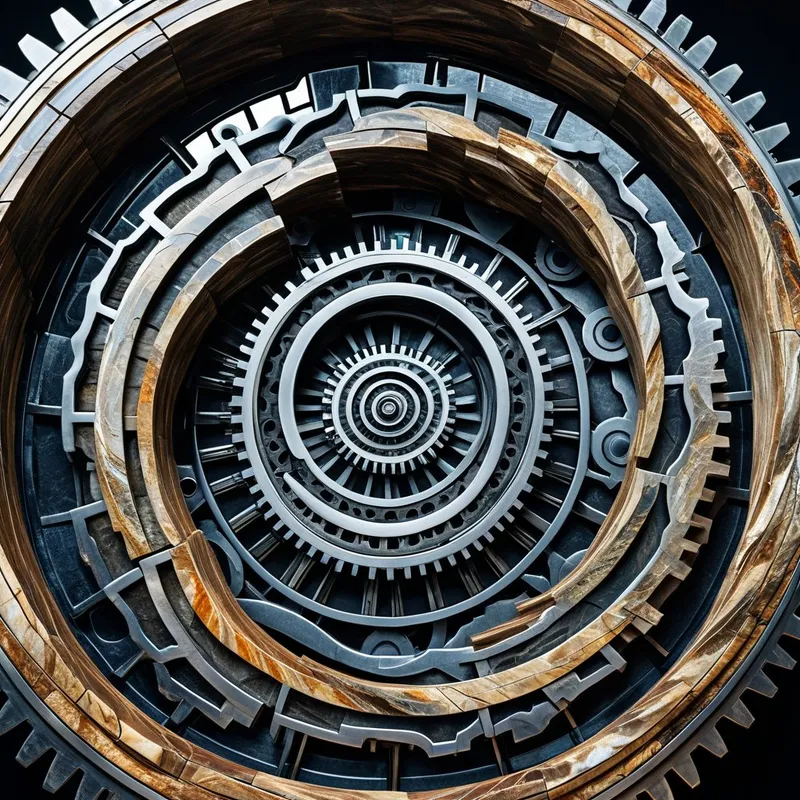
The transmutation of the cycle is an alchemy of Recognition and Re-contextualization. The base metal is the leaden feeling of predestination, the grief of seeing your life as a recording. The nigredo, the blackening, is the intense heat of this realization—the despair that comes when you truly see the wheel and your own blistered hands upon it. The pressure is the willingness to stop pushing, to let the wheel slow, and to endure the terrifying silence and the guilt of "not doing your part." This is the dissolution. The albedo, the whitening, is the moment of clear, merciless insight: you see the exile running the program. You see the loyalty, the protection, the love even, embedded in the futile motion. The cycle begins to be re-contextualized from a curse into a message, from a prison into a blueprint. The rubedo, the reddening, is the integration. It is not breaking the wheel, but changing your relationship to it. Perhaps you learn its true purpose and honor it with a ritual instead of labor. Perhaps you discover a release mechanism built into its axle all along. The gold produced is Sovereign Participation—the ability to engage with life’s rhythms consciously, to choose which cycles to sustain, which to alter, and which to release with gratitude, having learned all they had to teach.
The Integration Protocol
Question 1: Where in my waking life do I feel the most potent somatic echo of the cycle—the deep, bodily "here we go again"? Can I describe the sensation without judging it as good or bad?
Question 2: If the cycle in my dream were a system designed to protect something very vulnerable, what might it be protecting? What ancient fear or unmet need is its primary concern?
Question 3: What single, small action could I take that would be orthogonal to the cycle—not fighting against its momentum, but stepping gently off its well-worn track, even for a moment?
Action 1 (Somatic Mapping): For one week, carry a small notebook. When you feel the "cycle sensation" in your body, pause. Note the time, the physical sensation (e.g., "tight chest, shallow breath"), and the immediate context. Do not analyze. The goal is to map the pattern's physical signature, creating data separate from the story.
Action 2 (Creative Council): Using any medium—clay, collage, digital art, or unstructured writing—give form to the "wheel" or central object of your cycle dream. Then, create a second piece that represents the "exile" you imagine it serves. Place them facing each other. Sit with them for 10 minutes in silence, then write a dialogue between them.
Action 3 (Ritual of Acknowledgment): At the next natural transition (sunset, the end of a week, the new moon), perform a simple ritual. Light a candle. Speak aloud, to the empty air, one full sentence that acknowledges the cycle: "I see the pattern of X. I acknowledge it has been trying to show me something." Blow out the candle. The ritual is not to break it, but to formally recognize its existence, separating it from your unconscious identity.
Final Validation
The weariness is real. The frustration of seeing the same landscape pass by, again, is a valid and profound grief. It is the grief of the soul that knows it is capable of more than repetition, yet feels bound to a familiar orbit. Honor that fatigue; it is the friction that generates the heat for change. This theme does not arrive to punish you, but to initiate you into a deeper order of authorship. The cycle is not your cage; it is the loom. And you, in your conscious, aching, glorious humanity, are being shown how to become the weaver. The pattern awaits your new design.