The Dream of War: The Psyche's Call to Sovereignty
The Somatic Echo
It begins not with a sound, but with a pressure. A tectonic grinding deep in the chest, a silent alarm in the marrow. The breath becomes shallow, a reconnaissance mission in hostile territory. The shoulders brace, not against a physical blow, but against an impending verdict from some internal tribunal. There is a metallic taste on the tongue—the taste of adrenaline and old iron, the currency of conflict. This is the body’s prelude, the somatic score written before the mind projects its images of trenches, explosions, and faceless enemies. It is the feeling of a system under siege, not from without, but from within. The war has already been declared in the silent chambers of your being; the dream is merely its first, vivid dispatch.
The Dreamer's Log
The console is dead, a slab of cold obsidian in a derelict server-hub. Vines of glowing code, like phosphorescent kudzu, have cracked through the floor and now strangle the terminals. I am not fighting soldiers, but silence. My mission, screamed into a dead mic, is to "re-establish the core protocol," but the only sound is the drip of data-condensation and the hum of a single, corrupted glyph pulsing on a screen—a symbol I somehow know means "connection severed."
This is the alchemy of grief for a lost internal alliance, where the dreamer must cease transmitting into the void and instead become the signal itself.

The False Lead
The dream of war is not a prophecy of external conflict, nor is it a simple replay of daily stress or an argument left unresolved. To interpret it as a forecast of literal battle or mere "bad luck" is to mistake the map for the territory. This is not the psyche reporting on the world’s chaos; it is the psyche initiating a necessary chaos of its own. The conflict is not an intrusion, but an emergence. It is the sign of a profound structural shift, the old psychological government refusing to abdicate peacefully as a new, more authentic sovereignty prepares to claim its throne.
Psychological Architecture
Beneath the imagery of battle lies the Shadow work of disintegration. The psyche, in its drive toward wholeness (Individuation), must first dismantle the false treaties and fragile alliances that have maintained a precarious inner peace. Think of your mind not as a kingdom, but as a council. For years, the Orphan part, the pragmatic survivor, may have struck a deal with the inner Tyrant, trading freedom for a semblance of security. The Caregiver may have silenced the Rebel to keep the family system calm.
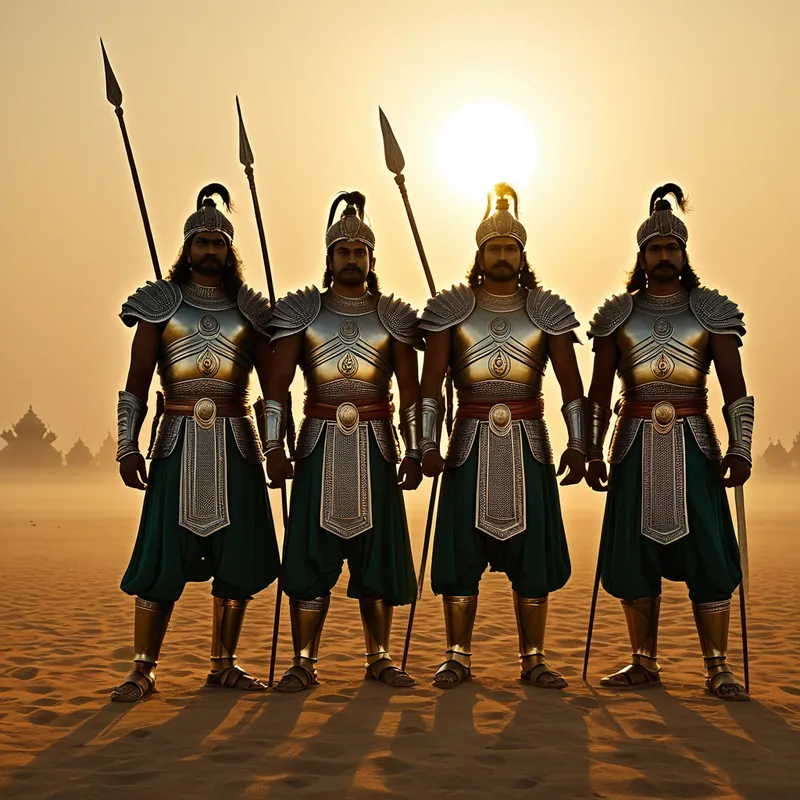
A war dream signals the collapse of these shadow agreements. The exiled parts—your buried courage, your unexpressed rage, your forbidden grief—are now storming the gates. They are not invaders; they are liberation armies of your own soul, demanding recognition. The terror of the dream is the terror of the old self dying, of seeing the carefully curated portrait of "you" scorched by the truth of what you have disowned. The battlefield is the liminal space where the persona, the mask you present to the world, is being shelled by the artillery of your authentic Self.
Mythic Resonance
We see this internal war reflected in the myth of the Hindu Goddess Kali. She is often depicted dancing on the corpse of her consort, Shiva, her tongue lolling, a garland of skulls around her neck. She is not a goddess of mindless destruction, but of the necessary annihilation of illusion, ego, and outdated forms. She destroys to make space for creation. Your war dream is a visitation from this Kali-energy within—a fierce, terrifying, yet utterly sacred force that comes not to harm you, but to dismantle the prison you have mistaken for a palace. Similarly, the Greek Titanomachy, the great war where the Olympian gods overthrew the old Titan rulers, mirrors this internal coup: a new order of consciousness (the integrated Self) must violently depose the archaic, rigid structures of the past (the complex-ridden ego).
Symbolic Nodes
- Trenches/Fortifications: Psychological defenses, rigid boundaries, feeling trapped in a position.
- Mist/Fog of War: Confusion, lack of clarity about the true nature of the internal conflict.
- Broken Communications: The failure of internal dialogue between different parts of the self.
- Maps/Strategies: The mind's attempt to rationalize and control the Individuation process.
- Deserted Battlefields: The aftermath of an internal struggle, a landscape of integration awaiting renewal.
- An Enemy That Shapeshifts: The protean nature of the Shadow, which takes many forms until integrated.
Archetypal Resonance
The core energy of the war dream is the furious, catalytic force of The Shadow Rebel. In its integrated form, the Rebel archetype is the revolutionary who dismantles corrupt systems to build something true. But in its shadow aspect—the Outlaw or Anarchist—it manifests as inner chaos, a scorched-earth policy against the self’s own structures. The somatic echo of bracing and metallic taste is the Rebel’s defiant adrenaline. This archetype resonates because the war dream is, at its heart, an insurrection. It is the part of you that would rather see the whole internal kingdom burn than live one more day under a false ruler. Its alchemical potential lies in its pure, undiluted refusal. The heat of this rebellion, when consciously directed, does not destroy the self; it forges the sovereign will necessary to govern the whole psyche.
The Alchemical Process
The alchemy here is the transmutation of chaos into sovereignty. The prima materia, the base matter, is the raw, undirected energy of conflict—the fear, rage, and grief of civil war. The furnace is the unbearable tension of holding opposing inner forces without prematurely siding with one or annihilating the other. This is the nigredo, the blackening, where all seems lost in internal ruin.
The process requires you to sit in the headquarters of the conflict. Not to flee the feeling, nor to blindly enlist in one side, but to become the general who can hold the entire, terrible battlefield in their awareness. The pressure is to feel the full force of the Rebel’s destruction and the Tyrant’s control simultaneously, without collapsing into either. From this intense, conscious suffering, a third thing emerges: not a victor, but a witness-consciousness. This is the philosopher’s stone—the birth of an "I" that is larger than any single warring faction, an "I" capable of true governance. The shattered pieces of the old self are not discarded; they are re-forged into the crown of a sovereign who has earned their throne through civil war.

The Integration Protocol
Question 1: If the battlefield in the dream is a map of my inner world, what two exiled or silenced parts of myself are in the most violent opposition?
Question 2: What outdated treaty or agreement (e.g., "I must be quiet to be safe," "I must be perfect to be loved") is this conflict attempting to nullify?
Question 3: If I could speak not as a soldier, but as the land upon which this war is fought, what would I say the conflict is truly trying to cultivate or clear?
Action 1 (The Ceasefire Broadcast): For five minutes, sit in silence and internally announce a ceasefire. Then, using a voice memo app or journal, allow each "side" of the conflict to state its case, its fear, and its deepest desire. Do not judge or respond. Simply record the intelligence.
Action 2 (Cartography of the Front): Create an abstract drawing or collage. Let one color or texture represent one warring faction, and another its opponent. Let them interact on the page—collide, merge, repel. The goal is not art, but to externalize the conflict's geography from your body onto a surface you can observe.
Action 3 (Sovereignty Ritual): Find a stone. Hold it, and name it the "Cornerstone of the New Treaty." Bury it somewhere, or place it on your altar. This act physically marks the end of the old war and the conscious laying of a foundation for the inner peace you are now building from the rubble.
Final Validation
To dream of war is to be entrusted with a profound and terrifying honor: the honor of your own revolution. It is not a sign of brokenness, but of a bravery so deep it must first look like devastation. The fear is real. The exhaustion is real. The landscape of your soul may feel scarred and smoking. But this is the sacred ground from which your sovereignty is born. You are not falling apart; you are being assembled, piece by fierce, reclaimed piece, into a whole that could only ever be forged in this particular fire. The war ends not when one side wins, but when you realize you are the country they were fighting for.