The Call from the Depths: The Alchemy of the Quest Dream
The Somatic Echo
It begins not with a thought, but with a vibration in the marrow. A low-grade hum of elsewhere. You feel it as a subtle magnetic pull in the solar plexus, a gentle, insistent tugging away from the familiar coordinates of your daily life. It’s the somatic signature of a vector—a direction without a destination. The body knows it first: a restlessness in the hands, a slight quickening of the pulse at dusk, a sense that the air in your own room is thinning, demanding you seek a different altitude. This is the pre-linguistic summons. Before the mind conjures maps, riddles, or sacred objects, the nervous system has already received the dispatch: You are needed elsewhere. A part of your own wholeness has gone missing, and its absence creates a silent, gravitational ache.
The Dreamer's Log
The dream is always the same: I am walking the endless, rain-slicked streets of a city I both know and do not know. The assignment is clear—find the key. Not a key to a door, but a key that is itself the lock. I feel its resonance like a forgotten melody in my teeth. I search through abandoned transit hubs and neon-lit alleys, the weight of the search a cold stone in my coat pocket. I wake with my fingers curled, grasping for a shape just dissolved from memory.
The alchemical interpretation: The dreamer is not seeking an external tool, but the internal mechanism—the precise psychic pattern—required to decode and reassemble a fragmented aspect of their own authority.

The False Lead
This is crucial: the dream quest is not a metaphor for ambition, a to-do list, or a spiritualized version of career advancement. To mistake it for such is to take the symbol literally and lose its soul. It is not about achieving a societal milestone (the promotion, the relationship, the completed project), though those may be the worldly arenas where the quest’s energy attempts to manifest. The false lead is believing the object of the search is out there. The true peril is in projecting the inner necessity onto an external goal, thus embarking on a lifetime of hollow victories that never silence the marrow-deep hum. The quest is an intra-psychic event first; its external echoes are secondary.
Psychological Architecture
The quest is the primary engine of Individuation—the process of becoming an integrated, sovereign self. It represents the psyche’s innate drive to reclaim its exiled territories. Think of your inner world not as a unified kingdom, but as a scattered archipelago. Over a lifetime, through trauma, adaptation, and socialization, parts of the self are sequestered. The fiery rebel is locked in a basement cell. The vulnerable child is hidden in a remote forest. The innate sage is silenced in a soundproof room. These are not mere memories; they are living, sentient sub-systems—what we might call, in a modern mystic’s tongue, your Internal Family.
The quest dream is the dispatch from the central self, the core consciousness, to the ego, the part of you that navigates waking reality. Its message: "An ambassador from a lost province has arrived at the border. It carries a piece of the royal seal. You must journey into the interior, through the shadowlands where the exiles dwell, to retrieve it and restore the realm." The terror and grief are not obstacles; they are the terrain. The grief is for the wholeness you sense you once possessed. The terror is of the shadows you must befriend to get it back.
Mythic Resonance
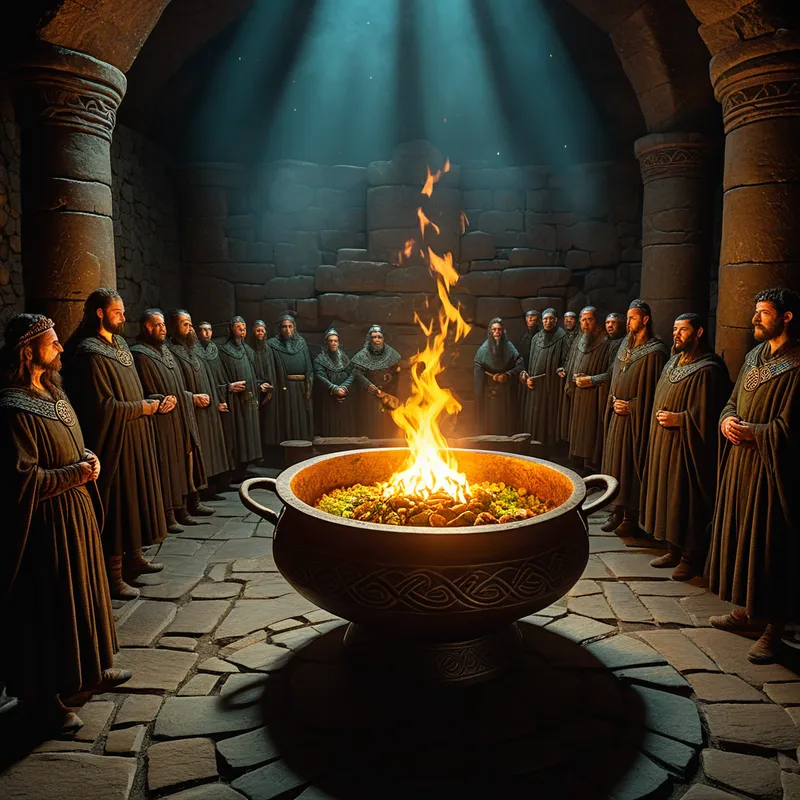
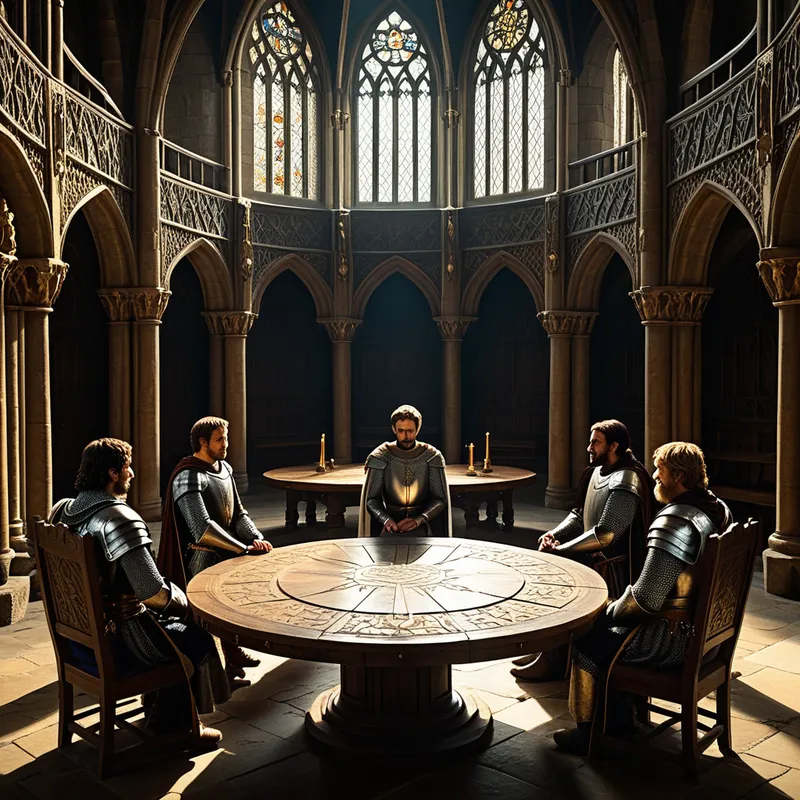
This architecture is our oldest story, etched into the human firmware. Consider the Grail Quest. The knights do not seek a fancy cup, but the question that heals the wounded king and the barren land—"Whom does the Grail serve?" The entire arduous journey culminates not in possession, but in the realization of a sacred relationship, a restoration of right order within and without. Similarly, Inanna’s descent into the underworld is not a capricious adventure. The Queen of Heaven strips herself of every emblem of her power at each of the seven gates to stand naked before her shadow sister, Ereshkigal. She dies. She is hung on a hook. Her quest is for depth, for the raw, unadorned core of being, and her return—contingent on finding a substitute—speaks to the brutal economy of psychological integration. Something must be consciously sacrificed to keep what you have retrieved.
Symbolic Nodes
- Maps, Scrolls, or Glowing Coordinates: The psyche’s own non-linear blueprint for the journey.
- Broken or Partial Objects (Key, Sword, Chalice): The fragmented Self, the function that is incomplete.
- Guide or Ambiguous Stranger: An aspect of your own intuition or deeper knowing, often in disguised form.
- Impossible Geography (Staircases to nowhere, forests that shift, endless corridors): The labyrinthine structure of the unconscious itself.
- Veils, Gates, or Thresholds: Points of no return, decision points between levels of consciousness.
- A Persistent, Unseen Pursuer: The pressure of unlived life, the urgency of the call, often felt as shadow.
Archetypal Resonance
The energy of the quest is most purely distilled in The Explorer Archetype. This is not the tourist, but the essential Seeker, the one for whom the horizon is a biological imperative. The somatic echo of restlessness is the Explorer’s engine idling. Its core drive is the discovery of the authentic self through experience of the unknown, both external and, more critically, internal. In its full expression, it gifts freedom, autonomy, and the profound self-knowledge that comes only from direct encounter with the edges of your being. Its shadow—the Aimless or Alienated wanderer—manifests when the quest is externalized and divorced from its integrative purpose, leading to a perpetual, hollow search that never turns inward to claim what is found.
The Alchemical Process
Here lies the crucible: the quest’s transmutation occurs in the sacrificial pivot. The initial phase is all nigredo—the blackening. You feel the lack, the pull, the frustration of the search. You encounter obstacles that are mirrors. The heat is applied through sustained disorientation—the feeling that you are getting nowhere, that the map is wrong, that the guide has abandoned you. The pressure is the growing, unbearable tension between who you are and who you are summoned to become.
The alchemical turn, the albedo or whitening, happens at the moment of deepest despair, when the ego’s project of "finding it" collapses. It is the moment you stop searching for and begin to listen from. You realize the key is not hidden in the city; the city is the key. The landscape of the quest is a precise hologram of your own psychic structure. The monster guarding the bridge is your own defended fear. The transmutation is the realization that the seeker, the search, and the sought are one substance. You integrate the quest by becoming it—by allowing the journey to rewire your perception from seeking wholeness to operating from it.

The Integration Protocol
Question 1: Where in my waking life do I feel that same somatic "pull" or restlessness? If I followed it like a thread, without a practical goal, where would it lead me internally?
Question 2: What is the one thing I am most afraid to find—or to admit I have lost—on this inner quest? What exiled part of me might that fear be protecting?
Question 3: If the object of my dream search (the key, the stone, the word) is not a tool but a part of my own consciousness, what function does it represent? What does it unlock or activate within me?
Action 1 (Somatic Cartography): For one week, carry a small, smooth stone in your pocket. Whenever you feel that familiar, questing restlessness or "pull," stop. Place the stone in your other hand. Feel its weight, temperature, texture. This simple, grounding transfer ritual physically anchors the nebulous search, teaching your nervous system that the quest has a home in the body, not just in the horizon.
Action 2 (Dreamscape Transcription): Create a non-linear map of your quest dream. Do not write a story. Draw, paint, or collage. Place the central symbol (the key, the forest, the city) in the middle. Let other elements radiate out like spokes or landmasses. Use intuition, not logic. This act externalizes the psyche's architecture, allowing you to see its structure and relationships, not just its plot.
Action 3 (The Intentional Wander): Once a week, embark on a 30-minute "quest walk" with no destination. Your only rule is to follow curiosity—an interesting doorway, a side street, the sound of water. At the end, find a quiet spot and ask: "What did the path reveal today that my agenda would have missed?" This cultivates the Explorer in waking life, training you to trust the intelligence of the journey itself.
Final Validation
The path is never straight. The map will fade. You will, at times, feel profoundly lost, a wanderer in the ruins of your own expectations. This is not failure; it is the necessary dissolution. Honor the difficulty. The very ache that propels you is evidence of the wholeness that calls to itself. The quest is not a test you pass or fail. It is the ongoing, sacred conversation between the part of you that remembers and the part of you that is learning to become. You are not solving a riddle. You are learning to speak its language. The destination was never a place on a map. It is the depth of presence you forge with every conscious, bewildered, and courageous step you take into the uncharted heart of your own being. The treasure is the seeker, transformed.