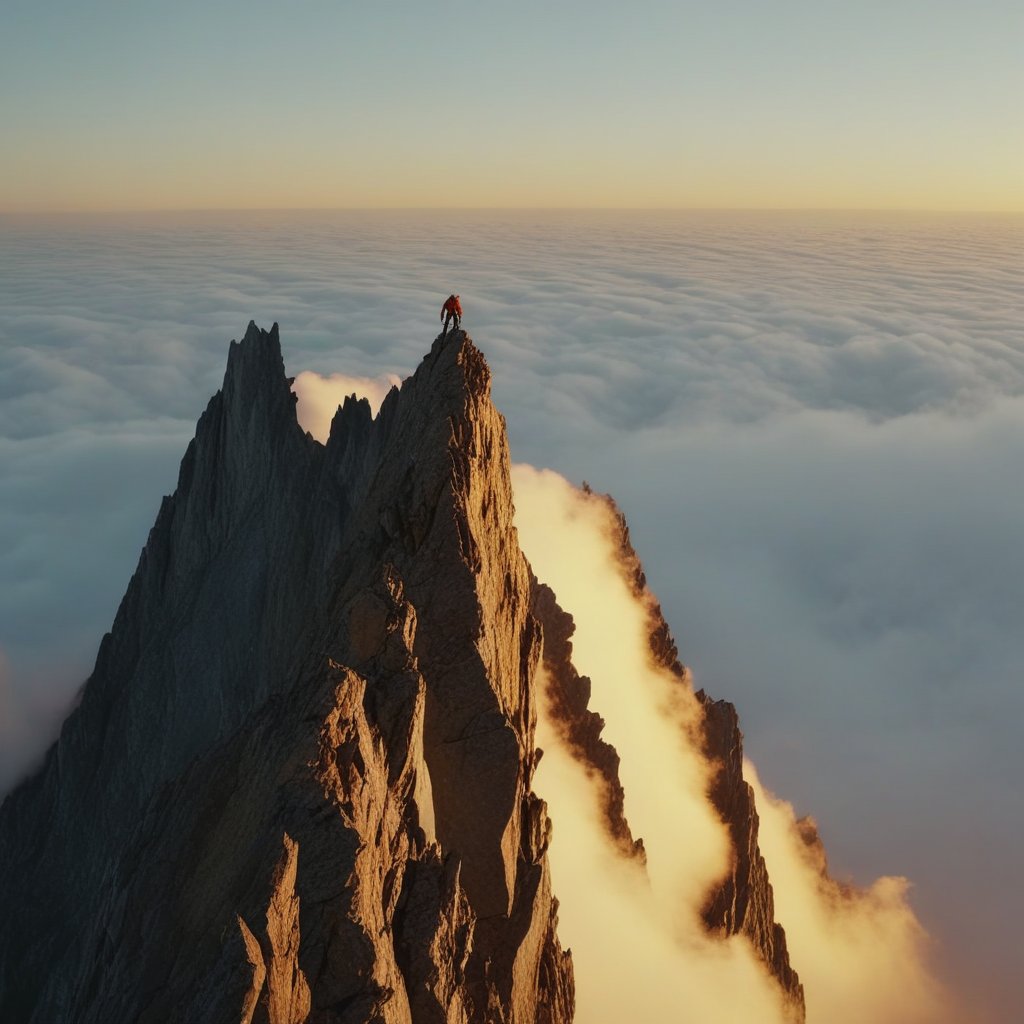
The Explorer Archetype
"Don't fence me in."
Motto
"Not all those who wander are lost."
Desire
Freedom to find out who you are through exploring the world.
Fear
Getting trapped, conformity, and inner emptiness.
Strategy
Journey, seeking new things, escaping boredom.
Shadow
Aimless wandering, becoming a misfit.
The Psychological Core & Essence
The Explorer (also known as the Seeker, Iconoclast, Wanderer, or Pilgrim) represents the Soul’s yearning for Autonomy. While the Innocent wants safety (Eden) and the Orphan wants belonging (Tribe), the Explorer leaves the village to find out what else is out there.
This is the first “Soul Archetype.” It marks the transition from “Who does society want me to be?” (Ego) to “Who am I really?” (Soul). The Explorer believes that the Answer is not found in books (Sage) or in power (Ruler), but in Experience.
The Foundational Drive: Freedom as Oxygen
For the Explorer, “Freedom” is not a political concept; it is a biological necessity. When an Explorer feels “fenced in”—by a job, a marriage, or a mortgage—they experience physical symptoms of anxiety and suffocation. They need the Open Road. They are allergic to “The Script.”
The Call to Adventure
The Explorer is awakened by Discontent. They look at their “perfect” life (white picket fence) and feel a gnawing emptiness. This is not ingratitude; it is the soul signaling that it is time to molt. The Explorer must leave the known to find the unknown.
The Jungian Perspective: Individuation
Carl Jung believed that the Explorer is the primary engine of Individuation. To become a “Self,” one must separate from the collective. The Explorer is the “Separatio” phase of alchemy.
- The Persona vs. The Self: The Explorer realizes that their social identity (Lawyer, Mother, Son) is just a mask (Persona). The journey is the process of peeling off the mask to see the face beneath.
- The Encounter with the Shadow: You cannot explore the world without exploring your own darkness. Travel brings out the worst in us (exhaustion, fear, prejudice). The Explorer uses these moments as mirrors.
The Psychology of Awe
Why do Explorers climb mountains? Not to conquer them, but to feel small.
- The Overview Effect: Astronauts report a cognitive shift when seeing Earth from space. They lose their identification with nations/tribes and identify with the Planet. The Explorer seeks this “Overview Effect” on the ground.
- Dopamine vs. Serotonin: The Shadow Explorer chases Dopamine (Novelty). The Healthy Explorer chases Serotonin (Contentment/Awe). The shift from “Newness” to “Now-ness.”
Deep Historical & Mythological Roots: The Odyssey

The history of humanity is the history of the Explorer.
Odysseus (The Wanderer)
The Odyssey is the foundational text of the Western Explorer. Odysseus spends 10 years wandering the ocean. He is constantly tempted to “settle” (with Calypso or Circe), but his soul drives him forward. However, his journey is circular—the goal is to return home, but changed. (See “The Return”).
Siddhartha (The Seeker)
Before he became the Buddha, Prince Siddhartha was the ultimate Explorer. He left his palace (Innocent/Ruler world) to encounter old age, sickness, and death (Orphan world), and then wandered as an ascetic monk. He tried every path—hedonism, asceticism, philosophy—before finding his own “Middle Way.” The Explorer must try everything to know what is true for them.
Ibn Battuta (The Global Wanderer)
While Marco Polo is famous in the West, Ibn Battuta traveled three times as far (75,000 miles). He explored the entire Islamic world, from Africa to China.
- The Insight: He traveled alone but was never lonely because he was part of a “Super-Tribe” (The Ummah). He shows us that the Explorer can be a cosmopolitan citizen, at home everywhere.
Sir Ernest Shackleton (The Endurance)
The “Golden Age of Exploration” gave us figures like Shackleton, who ventured into the Antarctic knowing they might die, simply because it was there. This highlights the Explorer’s willingness to endure extreme hardship for the sake of Discovery.
The Silk Road: The First Globalization
The Explorer is not just a lonely wanderer; they are the pollinator of civilization. The Silk Road was not just a trade route; it was an artery of ideas. Explorers like Marco Polo and Ibn Battuta walked thousands of miles, carrying not just spices, but mathematics, philosophy, and religion.
- The Lesson: The Explorer’s purpose is synthesis. They take the best of Culture A and mix it with Culture B to create something new.
The Age of Discovery vs. Colonialism (The Collective Shadow)
We cannot talk about the Explorer without addressing the dark side of history. The “Age of Discovery” was also the Age of Conquest.
- The Shadow: When Exploration becomes Exploitation. The Shadow Explorer (Conquistador) looks at a new land and asks, “How can I own this?” The Healthy Explorer looks and asks, “What can this teach me?”
- Modern Parallel: This plays out today in “Overtourism” and “Gentrification.” Are we visiting a place to honor it, or to consume it?
Amelia Earhart (The Sky Queen)
“Adventure is worthwhile in itself.” Earhart represents the Explorer who breaks the Gender Barrier. The Explorer archetype was traditionally male (Odysseus), while the woman was the “Destination” (Penelope). Earhart claimed the sky for the Feminine.
The Star Trek Mythos
Star Trek is the ultimate modern Explorer myth. The Prime Directive (“Do not interfere”) is the ethical core of the advanced Explorer. We observe, we learn, we connect, but we do not dominate. This is the evolution from Conquistador (Colonizer) to Xenologist (Student).
Modern Manifestations: The Digital Nomad & The Great Resignation
In a world where physical maps are complete, the Explorer has turned inward or digital.
The Van Life Movement
#VanLife is the purest modern aesthetic of the Explorer. It rejects the “Mortgage Trap” for a life of mobility and minimalism. It prioritizes Experiences over Things.
- The Shadow: The Instagram version of Van Life often hides the “Orphan” reality (loneliness, no shower) behind a “Innocent” filter.
The Psychonaut
The Explorer of Inner Space. People using psychedelics, meditation, or holotropic breathwork to map the “Terra Incognita” of the human mind. They are seeking the same thing as Columbus—a New World—but they are looking inside.
Musk & The Mars Mission
Space is the final frontier. The obsession with Mars is the Explorer archetype projected onto the cosmos. It is the drive to ensure the survival of the species by finding a “Plan B,” but deeper than that, it is the drive to see the red horizon.
The “FIRE” Movement (Financial Independence, Retire Early)
This is a sophisticated Explorer strategy. By living frugally and investing aggressively (Stoicism), the FIRE adherent buys their freedom. They hack the system (Orphan) to escape the system (Explorer).
- The Archetypal Goal: It’s not about being rich; it’s about owning your time. “I don’t want a Ferrari; I want to never set an alarm clock again.”
The Great Resignation
In 2021, millions of people quit their jobs. Why? Because the pandemic (Orphan event) triggered a collective Explorer awakening. We realized that life is short and “Pretending to work” is a waste of a soul. This was a mass exodus from the “Village” of corporate capitalism.
Bio-Hacking and Transhumanism
The Explorer does not just explore the planet; they explore the Body.
- The Quantified Self: Using technology to map the body’s data.
- Longevity Research: The quest for “Immortality” is the new Gilgamesh epic. Bryan Johnson and the “Blueprint” movement are Explorers trying to map the frontiers of aging.
Space Tourism: The Billionaire’s Quest
Jeff Bezos and Elon Musk are playing out the Explorer archetype on the grandest scale.
- The Shadow: Is this exploration or just “Ego escape”? Exploring Mars while Earth burns is the ultimate “Spiritual Bypassing” on a planetary scale.
- The Light: Humanity cannot stay in the cradle forever. The Explorer must push us to become a multi-planetary species.
The Anti-Tourism Movement
A new wave of Explorers who refuse to fly (Flight Shame) and travel by train or boat. They prioritize Slow Travel. “If you didn’t see the landscape change, you didn’t really arrive.” This is a return to the pilgrimage.
The Archetype in the Dream World: The Map

Common Symbols
- Flying: The ultimate symbol of freedom and perspective.
- Labyrinths/Mazes: The search for the center (The Self).
- Searching for a Room: Dreams where you discover a new room in your house that you didn’t know existed. This represents a new potential or talent you are discovering.
- Climbing a Mountain: The ascent to higher consciousness.
The Nightmare Scenario: The Cage
Being locked in a prison, buried alive, or stuck in a traffic jam that never moves. This is the Explorer’s hell: Stagnation.
Archetypal Tension & Polarity: Freedom vs. Belonging
The Tension of the Explorer is Loneliness.
- The Lover wants intimacy (Connection).
- The Explorer wants autonomy (Separation). The Tension: “I want to be with you, but I don’t want to be tied down.” This creates the classic “Commitment Phobe” dynamic. Integration: The Partnered Journey. Finding a partner who is also an Explorer, so you can travel side-by-side rather than face-to-face.
Life Stages & Triggers: The Mid-Life Crisis
The “Quarter-Life Crisis” (Age 25)
“Is this it?” The realization that the corporate ladder leads nowhere. This often triggers a “Gap Year” or a radical career change.
The Mid-Life Awakening (Age 45)
Often called a “crisis,” but for the Explorer, it is an Unbinding. The kids leave home (Orphan moment), and the parents realize, “I can finally do what I want.” They buy the motorcycle not to look young, but to feel free.
Signs of Arrival & Waking Synchronicity
- Restlessness: You can’t sit still. You reorganize furniture constantly.
- The Purge: You suddenly want to throw away all your “stuff.” Minimalism becomes attractive.
- Curiosity: You start reading about random topics (Astrophysics, Permaculture) that have nothing to do with your job.
- The “Call”: You feel a vibrating pull to a specific place (e.g., “I need to go to Peru”) with no logical reason.
The Shadow Side: The Tourist

When the Explorer refuses to go deep, they become The Tourist.
The Tourist vs. The Traveler
- The Tourist: The Tourist wants the sensation of travel without the risk of travel. They stay in the resort, which is effectively a “Golden Cage.” They demand that the food tastes like home and that the staff speak their language. They take photos not to remember, but to prove to others that they were there. The Tourist treats the world as a backdrop for their own ego.
- The Shadow: This is Commoditized Experience. It is the consumption of a place without relationship. It is “checking boxes” on a bucket list. The Shadow Explorer collects countries like stamps, but never actually knows any of them. They are skimming the surface of the world.
- The Traveler: The Traveler wants Truth, even if it is uncomfortable. They eat the street food, risking illness. They get lost in the dangerous part of town. They learn the language, however poorly. The Traveler allows the place to change them. They do not demand the world conform to their expectations; they surrender to the reality of the Other.
Spiritual Materialism
Ideally, the Explorer seeks spiritual truth. But the Shadow Explorer becomes a “Spiritual Shopper.”
- The Mechanism: This is the act of collecting gurus, crystals, and certifications (Yoga Teacher, Reiki Master) like boy scout badges. It is the belief that if I just buy the right mala beads, I will be enlightened.
- The Trap: Using “spirituality” to bolster the Ego. “I am so much more enlightened than you because I went to India and you just went to Florida.” This is the ultimate dead end. It is using the tools of liberation to build a new, shinier prison of superiority. Chogyam Trungpa Rinpoche warned that this is the most dangerous trap for the Seeker, because it is so subtle.
The Flake & The Misfit
- The Eternal Wanderer (Peter Pan): They never land. They start ten projects and finish zero. They have shallow relationships because as soon as things get “real” (heavy), they run away. They mistake Escapism for Freedom. They are terrified of being “pinned down,” so they float. But because they float, they never build anything of lasting value. They are the tumbleweed—moving, yes, but dead.
- The Adrenaline Junkie: The Explorer needs higher and higher doses of novelty to feel alive. This can lead to addiction (drugs, gambling, extreme sports). They are running from the boredom of their own mind. They cannot sit in a room alone for ten minutes without reaching for a phone or a plane ticket. They are chasing a high that always recedes.
The Explorer’s Toolkit: Orienteering for Life
- Minimalism (The one-bag life): The less you own, the less owns you. If you can pack your life into 40 liters, you are free. This is not just about luggage; it is a philosophy of mind. Do not carry emotional baggage. Do not carry the expectations of others. Travel light in all things. If you have to pay for a storage unit to keep stuff you never use, you are funding your own prison.
- The “Yes” Day: Once a month, say “Yes” to everything (within safety reasons). If a stranger invites you to a wedding, go. If you see a weird food, eat it. If you want to turn left, turn left. Break your routine. The brain creates “prediction loops” to save energy; the “Yes” Day shatters these loops and forces neuroplasticity. You become alive again.
- The “Solo Trip”: You must travel alone at least once. Not with a friend, not with a partner. Alone. It forces you to meet yourself. When there is no one else to talk to, you must talk to the voice in your head. You realize that you are your own best company. You learn self-reliance in a way that is impossible in a group.
- Journaling: The Explorer needs to map their internal geography. “What did I learn today?” A map is useless if you don’t know where you are on it. The journal is your GPS. It records the trajectory of your soul. Write down the synchronicities, the strange meetings, the feelings of awe. These are the breadcrumbs that lead you home.
- Vipassana (Stillness): The hardest journey for the Explorer is sitting still. Master the art of “traveling without moving.” Meditation is exploration of the Inner Continent. Use your curiosity to explore the landscape of your own anxiety, your own boredom, your own joy. The breath is the path.
- The Psychogeography Walk: Walk your own neighborhood but take every left turn instead of right. Break the pattern of your commute to see the invisible city. Look up at the cornices of buildings. Look down at the weeds in the cracks. Realize that you have been sleepwalking through your own life. Wake up to the wonder that is right under your nose.
Integration & Empowerment Rituals: The Quest
Ritual 1: The Dérive (Drift)
A Situationist practice. Walk through your city with no destination. Let your instinct (“That blue door looks cool”) guide you. Re-enchant your mundane reality.
Ritual 2: The Digital Detox
Unplug for 24 hours. The internet gives you “Pseudo-Exploration” (scrolling). You need Real Exploration (walking).
Ritual 3: The Vision Quest
Go into nature alone for 3 days. Fast. Pray. Ask for a vision. This is the ancient rite of passage for the Seeker.
Specific Dream Scenarios & Decodings
-
The Endless Hotel Corridor: You are wandering down a hallway looking for your room.
- Meaning: You are “In Between” identities. The hotel is a transient space. You haven’t found your “Home” (Self) yet.
- Action: Stop looking for the room number. sit down in the hallway. Realize you are already home in your body.
-
Missing the Flight: You are running to the gate, but the plane pulls away.
- Meaning: Fear of Missing Out (FOMO). You feel the “Great Adventure” is leaving without you.
- Action: Realize there is another flight in hour. Or maybe you are supposed to take the train. The universe is redirecting you.
-
Discovery of a Hidden Room: You open a door in your childhood home and find a vast library or garden.
- Meaning: This is the classic Expansion Dream. Your soul is bigger than you think. The room represents a talent or capacity you have repressed.
- Action: What is in the room? If it’s music, play music. If it’s books, read.
-
Flying/Levitation:
- Meaning: The ultimate Explorer high. You have transcended the “Gravity” of the Ego (Rules/Fear).
- Action: Anchor this feeling. When you wake up, try to recall the sensation of weightlessness. Use it when you feel stressed.
-
The Map that Changes: You look at a map, but the roads keep moving.
- Meaning: You are learning to navigate by Intuition, not by Plan. The territory is alive.
- Action: Trust your gut today. Throw away the plan.
The Explorer’s Code of Ethics: The Pilgrim’s Vow
The Explorer is not lawless; they just follow a higher law.
- Leave No Trace: In nature and in relationships. Do not damage what you explore.
- The Truth at All Costs: Better to be alone and real than popular and fake.
- Honor the Stranger: Every person is a map I haven’t read yet. Treat them with curiosity.
- Keep Moving: When a place (or job/relationship) ceases to grow you, you must leave. Staying out of guilt is a sin against the Soul.
- Share the Map: When you find water in the desert, you must tell others where it is.
Deep Philosophy: The Existentialist Hero
The Explorer is the philosophical descendant of Existentialism.
- Soren Kierkegaard: “Anxiety is the dizziness of freedom.” The Explorer feels anxiety because they realize anything is possible. This is terrifying, but it is also the only way to be alive.
- Nietzsche: “Become who you are.” The Explorer knows that the Self is not something you “find”; it is something you create through courageous action.
- The Hero vs. The Explorer: The Hero fights the Dragon to save the village. The Explorer befriends the Dragon or rides it. The Explorer realizes the Dragon is just a part of the ecosystem.
Cinematic Case Studies: The Pilgrim
Into the Wild (Christopher McCandless)
The tragic Explorer. He rejects society completely to find truth in Alaska. He finds it (“Happiness is only real when shared”) but too late. A warning against the Shadow Isolation.
Moana (Moana)
The Explorer/Ruler. She hears the call of the ocean (“How far I’ll go”). She defies the tradition of her island to save it. She shows that the Explorer is often the Savior of the community because they bring back new knowledge.
Interstellar (Cooper)
“We’ve always defined ourselves by the ability to overcome the impossible.” Cooper leaves his family to save them. The tension between Love (Murph) and Mission (Mars) is the core conflict.
The Secret Life of Walter Mitty (Walter Mitty)
The “Armchair Explorer” who wakes up. Walter Mitty spends his life in daydreams (Shadow) to escape the dull reality of his job. But when he is forced to find the missing negative (the Essence), he embarks on a journey that takes him to Greenland, Iceland, and the Himalayas.
- The Lesson: The scene where he skateboards towards the dormant volcano is the quintessential Explorer initiation. He drops the “safety” of the paved road for the “flow” of the moment. He stops dreaming about being a hero and starts being one.
Nomadland (Fern)
A raw, realistic look at the Explorer in late capitalism. Fern loses everything (her husband, her job, her town) but finds a community of fellow wanderers. It shows the difference between being “Homeless” and being “Houseless.”
- The Insight: Fern discovers that “Home” is not a physical structure; it is the web of relationships she carries with her. She becomes a modern-day Bedouin, finding dignity in mobility. The film validates the choice to opt out of the “American Dream” when that dream becomes a nightmare.
The Explorer’s Library: Essential Reading
To master the art of getting lost, you need the right maps.
-
On the Road by Jack Kerouac.
- The Vibe: Jazz, speed, and the open night.
- Why read it: This is the Bible of the Beat Generation. It captures the frantic, ecstatic energy of the Seeker who burns like a “fabulous yellow roman candle.” It is less about the destination and more about the rhythm of the journey. Kerouac shows us that the road itself is a spiritual practice.
-
Siddhartha by Hermann Hesse.
- The Vibe: Meditative, river-like, profound.
- Why read it: The ultimate spiritual blueprint. Siddhartha rejects the teachings of the Buddha (Sage) because he knows that wisdom cannot be taught; it must be experienced. He learns more from a river ferryman than from the holiest monks. A reminder that your life is your only scripture.
-
Wild by Cheryl Strayed.
- The Vibe: Gritty, painful, redemptive.
- Why read it: Strayed hikes the Pacific Crest Trail with no experience and a backpack that is too heavy (a metaphor for her grief). It is a brutal look at the physical cost of the journey. It teaches us that nature does not care about our problems, and that indifference is exactly what heals us.
-
The Alchemist by Paulo Coelho.
- The Vibe: Fable, magical realism, simple.
- Why read it: The concept of the “Personal Legend.” It argues that the universe is wired to help you achieve your destiny, if you have the courage to pursue it. “When you want something, all the universe conspires in helping you to achieve it.”
-
Vagabonding by Rolf Potts.
- The Vibe: Practical, philosophical, stoic.
- Why read it: The manual for long-term travel. Potts argues that you don’t need to be rich to travel; you just need to prioritize time over money. He dismantles the excuses we make for staying home. “The value of your money is how much freedom it buys you.”
-
The Art of Travel by Alain de Botton.
- The Vibe: Intellectual, witty, observant.
- Why read it: De Botton asks why we go. He explores the psychology of anticipation, the disappointment of reality, and the beauty of liminal spaces like service stations and airports. He teaches us how to look at the world, not just move through it.
Archetypal Synergy: The Allies
- Explorer + Creator: The Artist. “I explore the world to find inspiration for my art.” (Picasso).
- Explorer + Sage: The Anthropologist. “I explore to understand the systems of the world.” (Darwin).
- Explorer + Lover: The Tantra. “I explore the universe through the body of another.”
The Explorer in the Workplace: The Intrapreneur
The Explorer is often allergic to the 9-to-5, but they are vital to the modern economy.
- Best Roles: Freelancer, Consultant, Journalist, R&D Scientist, Field Researcher, Pilot, Digital Nomad.
- Management Style: “Laissez-faire.” The Explorer Manager hires good people and gets out of their way. They trust their team to find their own path.
- The Trap: Boredom. An Explorer in a repetitive data-entry job is a time bomb. They will either quit without notice or self-sabotage just to create chaos (novelty).
- The Intrapreneur: If you want to keep an Explorer, give them a “Skunkworks” project. Let them build the thing that might not work. They are the R&D department of the human race.
FAQ: Understanding the Seeker
Q: Can an Explorer have a stable family life? A: Yes, but it requires negotiation. The Explorer needs a “Long Leash.” A partner who tries to monitor their every move will cause them to bolt. But an Explorer who is trusted will always return.
Q: Is the Explorer just escaping responsibility? A: Sometimes (Shadow side). But true Exploration is the ultimate responsibility. It is taking responsibility for finding one’s own truth, rather than accepting the pre-packaged truth of the culture.
Q: How do I know if I am an Explorer or a Rebel? A: The Rebel wants to destroy the old structure; The Explorer just wants to leave it. The Rebel fights the King; The Explorer walks away from the kingdom to find a new one.
Q: What is the difference between an Explorer and a Sage? A: The Sage seeks Truth through knowledge (books/study); The Explorer seeks Truth through experience (travel/doing). The Sage wants to know the Map; The Explorer wants to walk the Territory.
Q: I feel lost. Is that normal? A: For an Explorer, feeling lost is not a bug; it is a feature. “Not all those who wander are lost.” Being “lost” means you have left the old map but haven’t drawn the new one yet. It is a sacred space. Trust it.
The Neurobiology of the Seeker: The “Wanderlust Gene”
Science is beginning to validate the Explorer archetype.
- The DRD4-7R Receptor: Often called the “WikiLeaks Gene” or “Wanderlust Gene.” It correlates with high novelty-seeking and risk-taking behavior. It is found in higher frequencies in migratory populations.
- The Dopamine Loop: The Explorer’s brain is wired to release dopamine not upon acquisition (getting the gold) but upon anticipation (seeing the horizon). This is why “Arrival” is often a letdown for the Explorer. The joy is in the hunt.
The Explorer’s Relationship Guide: Loving a Ghost
Dating an Explorer is difficult.
- The Conflict: The Explorer needs Distance to feel safe; the Lover needs Closeness.
- The Solution: “Parallel Play.” Do not try to merge identities. Be two ships sailing in the same direction.
- The “Anchor” Dynamic: Often, an Explorer pairs with a Caregiver or Ruler. The Partner provides the “Base Camp,” and the Explorer returns to tell stories. This works if the Partner does not resent the leaving.
The Explorer in Pop Culture: From Indiana Jones to The Mandalorian
- Indiana Jones: The Academic Explorer. He seeks artifacts, but really he is seeking the supernatural (The Ark, The Grail). He is always torn between the University (Sage) and the Field (Explorer).
- Lara Croft: The aristocratic Explorer. She shows that exploration is often a form of “reclaiming the father” (healing the Orphan wound).
- The Mandalorian: The Explorer/Warrior. “This is the Way.” He wanders the galaxy with no home, guided only by a code. Grogu becomes his “Compass.”
- Doctor Who: The ultimate Explorer. A being who can go anywhere in time and space but chooses to help people. The TARDIS is the ultimate Explorer vehicle—bigger on the inside (Inner Space).
The Crisis of Meaning: Why We Need Explorers Now
The Crisis of Meaning: Why We Need Explorers Now
We live in a “Meaning Crisis.” The old maps (Religion, Nationalism) have burned up. We are lost.
- The Explorer’s Role: To make new maps. The Explorer is the Scout for the species. We venture into the chaos of the unknown to find new values, new ways of living (e.g., Permaculture, Bitcoin, Poly-amory).
- The Return: The Explorer does not just drift; they discover. They bring back the “seeds” of the future.
The Explorer’s Playlist: Anthems for the Road
Music is the fuel of the Explorer.
- “Society” by Eddie Vedder: The ultimate anthem of walking away from the “Greed” of civilization to find truth in the wild.
- “Roam” by The B-52s: A joyous celebration of wanderlust for its own sake. “Roam if you want to.”
- “Horse with No Name” by America: The feeling of anonymity in the desert. “In the desert, you can remember your name.”
- “Born to be Wild” by Steppenwolf: The heavy metal thunder of the open highway. The visceral need for speed and motion.
- “Free Bird” by Lynyrd Skynyrd: The definitive statement of the Explorer’s inability to settle. “Lord knows I can’t change.”
Conclusion: The Return to the Self
The paradox of the Explorer is that the further you travel, the closer you get to your own center.
“We shall not cease from exploration, and the end of all our exploring will be to arrive where we started and know the place for the first time.” — T.S. Eliot
The Explorer eventually realizes that the “New World” is not a place on a map; it is a state of mind. They return to the village, not to settle, but to Unsettle the others—to show them that the cage door was open the whole time.
Next, we move from the freedom of the road to the revolution of the streets with The Rebel.
Discover Your Own Archetype
Take our comprehensive assessment to reveal the dominant and shadow archetypes governing your subconscious.
Start Free Assessment