The Architecture of the In-Between: Dreaming in Liminal Space
The Somatic Echo
It begins not as a thought, but as a hollow resonance in the solar plexus. A low-grade hum of static, a feeling of being unmoored from your own weight. The body knows the threshold before the mind can name it. You feel it in the slight vertigo of a held breath, in the peculiar lightness of a foot hovering over a step that isn't there. It’s the somatic signature of a system in suspension—the old operating parameters have been wiped, but the new code has not yet compiled. There is a grief here, a quiet terror of the void, but beneath it, a cellular anticipation. Every atom is holding its breath, waiting for the signal to coalesce into a new form. This is the feeling of being a verb, not a noun. A process, not a person. It is profoundly disorienting, and it is the precise sensation of the psyche preparing for transmutation.
The Dreamer's Log
You stand in a vast, deserted train station at midnight. The departure board flickers, cycling through names of cities you’ve never heard of. In your hand, you hold a single, ornate brass key that fits none of the thousand identical lockers lining the walls. The air smells of ozone and old dust. You are neither arriving nor departing; you are the station itself.
This dream is the psyche’s alchemical vessel: the old identity has been decommissioned, but the new destination is not yet legible, forcing a sacred pause in the core of the self.

The False Lead
This is not mere indecision or a streak of bad luck. The liminal dream is not about being lost; it is about being between maps. The anxiety it provokes is not a symptom of failure, but the necessary friction of a profound structural shift. To mistake this for simple stagnation is to pathologize the chrysalis. The terror is not of emptiness, but of the immense potential that emptiness contains—a potential that demands you relinquish the comforting, known shape of who you were. This is the work of dissolution, the nigredo of the soul, where all solid forms must soften into possibility.
Psychological Architecture
To walk this threshold is to engage in the deepest Shadow work: the voluntary deconstruction of the persona. The "I" you have carefully curated—the competent professional, the reliable friend, the defined personality—is seen for what it is: a temporary scaffold. In the liminal space, that scaffold is dismantled plank by plank. You meet the exiled parts: the orphaned child who never chose this life, the rebel who rages against all structure, the innocent who is terrified of the dark. This is not a breakdown, but a breakthrough into a more complex internal family system. The psyche’s old government is in recess; a constitutional convention of all your inner selves is being held in the dark. Individuation here is not about adding more to the self, but about surrendering the illusion of a centralized, monolithic self to become a conscious ecosystem.
Mythic Resonance
Consider the Babylonian goddess Inanna, who descends through seven gates to the underworld. At each gate, a piece of her regalia—her crown, her lapis beads, her royal robe—is stripped away. She arrives naked and prostrate before her sister, Ereshkigal, and is hung on a hook as a corpse. This is the ultimate liminal journey: the willing surrender of every marker of identity and status to pass into the raw, formless state of non-being. Only from that utter dissolution can she be resurrected. Similarly, the Wandering Jew or the Flying Dutchman myths speak of a different facet—the eternal liminal, a curse of transition without arrival. These are not punishments, but profound portraits of the psyche stuck in its own threshold, unable to complete the alchemical cycle, teaching us that the goal is not to escape the in-between, but to learn its sacred laws.
Symbolic Nodes
- Endless corridors, hallways, or bridges leading into fog.
- Airports, train stations, bus terminals at deserted hours.
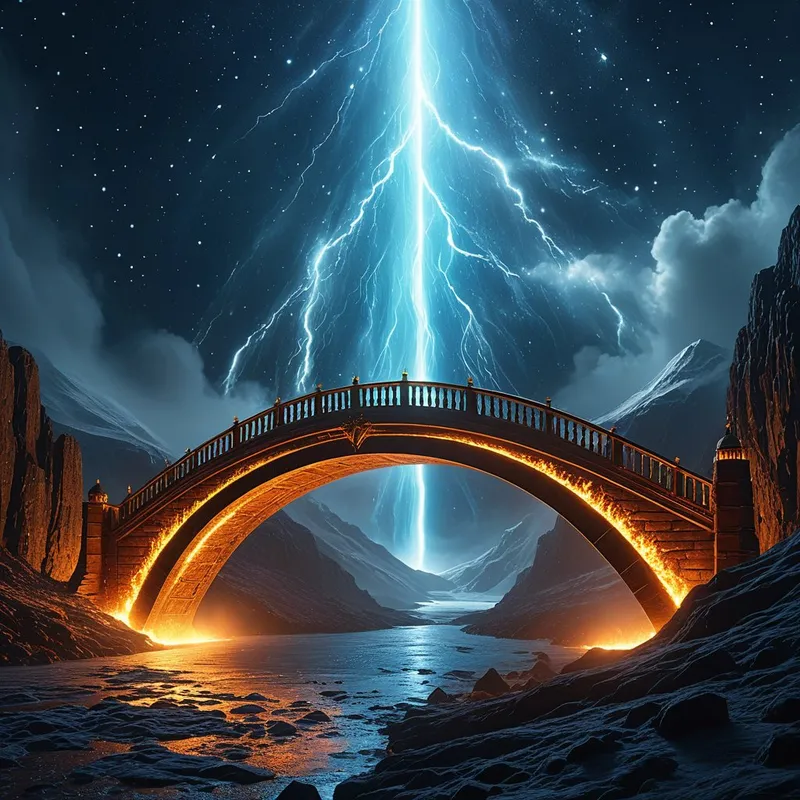
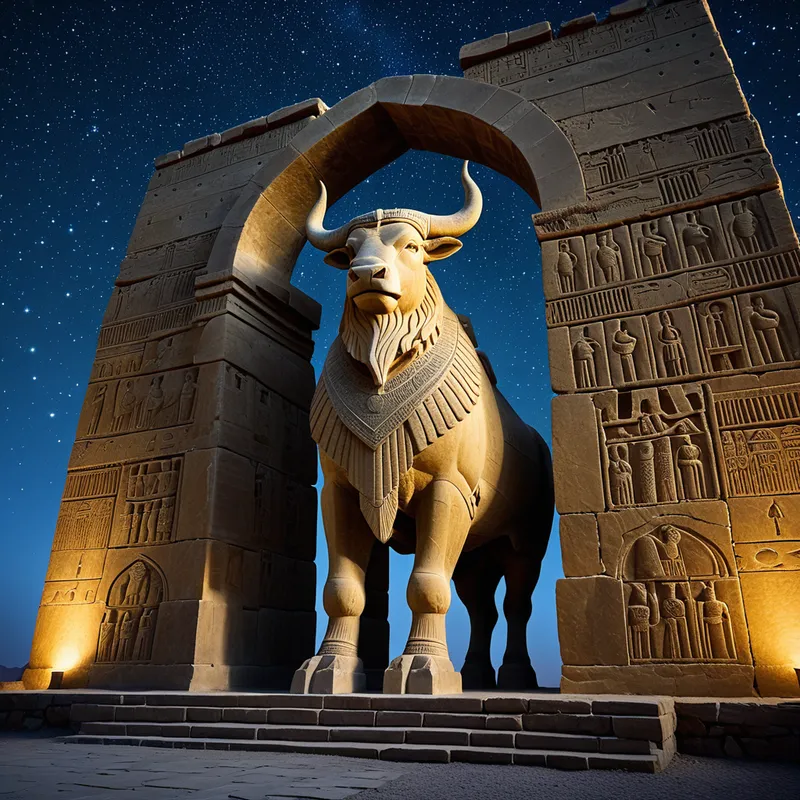
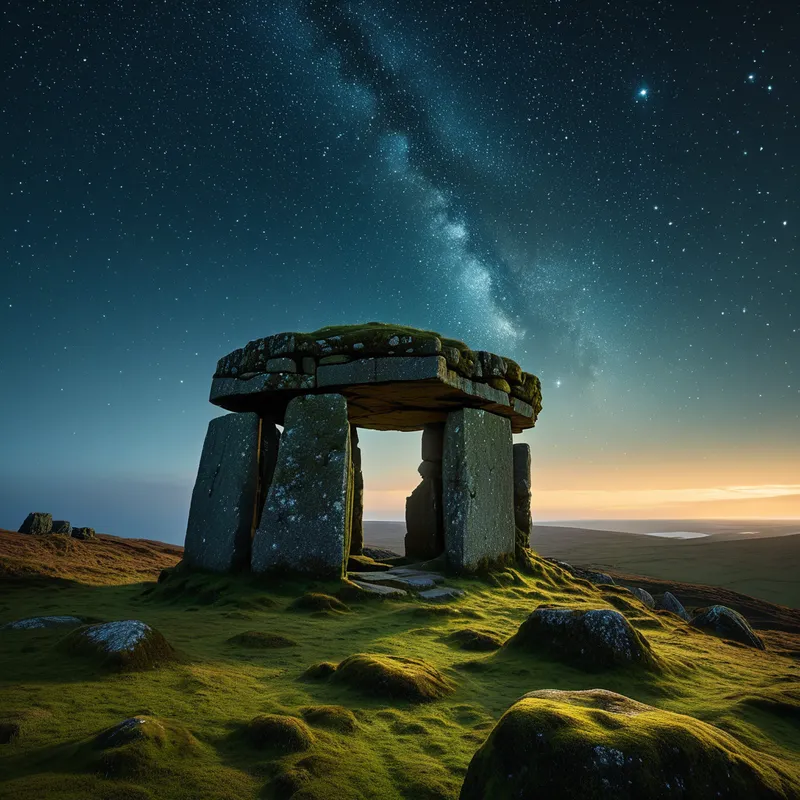
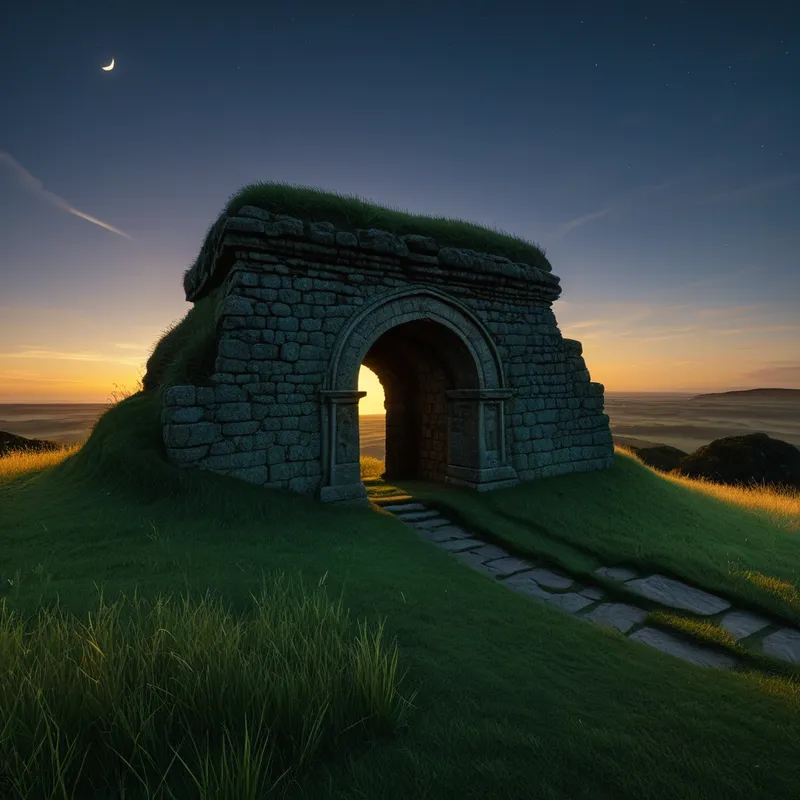
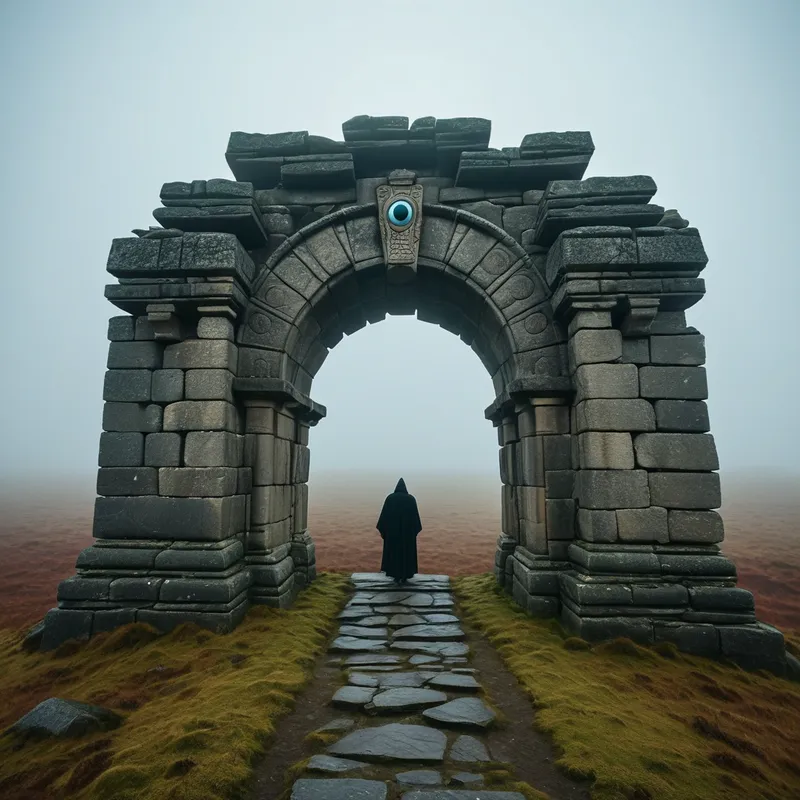
- Thresholds: doorways, gates, arches, veils you cannot cross or must pass through.
- Empty elevators moving between unmarked floors.
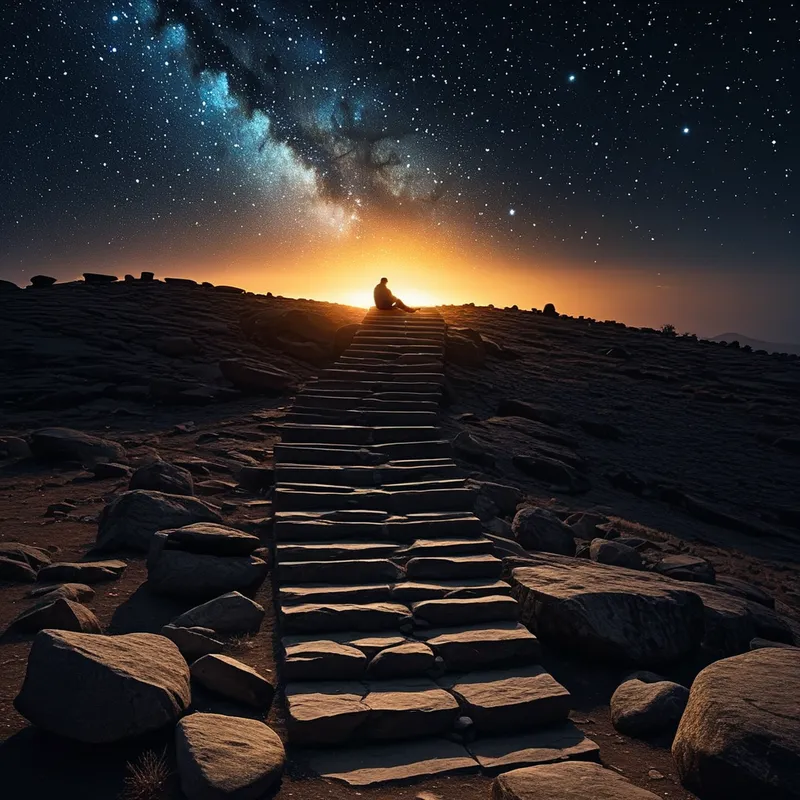
- Staircases that spiral into darkness or lead nowhere.
- Waiting rooms, lobbies, and antechambers.
- Shorelines, riverbanks, the space between high and low tide.
- Dawn and dusk—the "between" light.
Archetypal Resonance
The Magician Archetype is the sovereign of liminal space. Not the stage illusionist, but the deep alchemist. This archetype understands that true power lies not in the solid objects of reality, but in the invisible potentials of the threshold—the quantum field between electron shells where transformation is possible. The somatic echo of liminality is the Magician’s raw material: that humming, charged potential in the gut. The terror of the void is the Magician’s crucible. Its shadow—the Manipulator or Illusionist—arises when we try to fake the transformation, to paste an old identity over the gap, or to control the unfolding rather than surrendering to it. The active Magician does not flee the empty station; they sit in its center, listening for the new frequency being born from the silence, knowing they are both the laboratory and the experiment.
The Alchemical Process
The transmutation here is from Structure to Essence. The intense psychological heat—the calcinatio—is applied by sustained uncertainty. It is the pressure of not-knowing, of having no title, no plan, no validating story to tell. This fire burns away the non-essential, the borrowed identities, the "shoulds" that once propped you up. The grief that surfaces is for these burning forms. The alchemical secret is that you are not the forms being burned; you are the fire itself, and the space in which the fire burns. The leaden feeling of being "nowhere" is the prima materia, the base substance. By enduring the heat without rushing to solidify, you allow the essence—your core, irreducible nature—to separate from the slag of conditioned identity. Sovereignty is claimed not by building a new castle on the old spot, but by realizing you are the land upon which any castle could be built, or none at all.
The Integration Protocol
Question 1: In my waking life, what familiar "room" have I recently left, and what new "room" am I refusing to enter? What is the nature of the hallway I am currently inhabiting?
Question 2: Which part of me is most terrified of this emptiness? Can I sit with that part, not as a problem to be solved, but as a child of my psyche who needs to be witnessed in its fear?
Question 3: If my current state of transition had a single, necessary purpose for my soul's evolution, what might that purpose be? Not a job or a role, but a quality of being (e.g., "to learn deep patience," "to reclaim softness").
Action 1 (Threshold Marking): Physically demarcate a small threshold in your home—a doorway, the space between two rugs. For one week, each time you cross it, pause for three full breaths. Feel the transition. Be neither in the room you left nor the room you enter. Inhabit the crossing.
Action 2 (Map of the In-Between): Engage in unstructured, non-linear writing or drawing. Let the pen move without a goal. Doodle shapes, write fragmented phrases, layer ink. The only rule: it cannot depict a recognizable scene or tell a coherent story. It must be a cartography of the liminal itself—a map of the fog, not the territory.
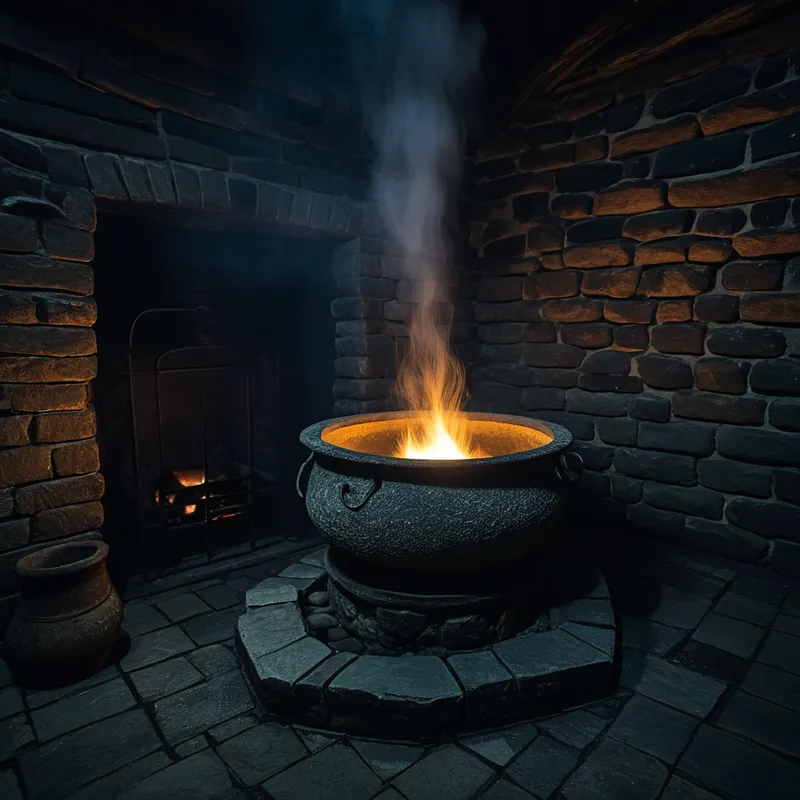
Action 3 (Ritual of the Empty Vessel): Find a bowl or cup. At dusk, fill it with clean water. Hold it, feeling its weight and potential. At dawn, pour it out onto the earth (or a houseplant), symbolically releasing the form the water took overnight. You are practicing being a vessel that can hold formlessness without needing to define it.
Final Validation
It is hard, this work. To be between stories is to feel ghostly, insubstantial, as if you are fading from the world's picture. The mind will scream for resolution, for a label, for a return to solid ground. Honor that fear; it is the old self clinging to the shore. But know this: you are not disappearing. You are being distilled. The universe does not create profound change within the comfort of a furnished room. It requires the empty cathedral, the silent platform, the unbuilt foundation. Your dreams of liminality are not omens of loss, but blueprints delivered in the dark. They are proof that your psyche is brave enough to dismantle its own house to build a truer home. You are not stuck. You are in sacred rehearsal. The curtain has not yet risen because you are still becoming the stage.