The Sacred Cross Roads
A powerful myth where crossroads serve as portals between worlds, embodying choice, destiny, and communion with ancestral spirits in African diaspora traditions.
The Tale of The Sacred Cross Roads
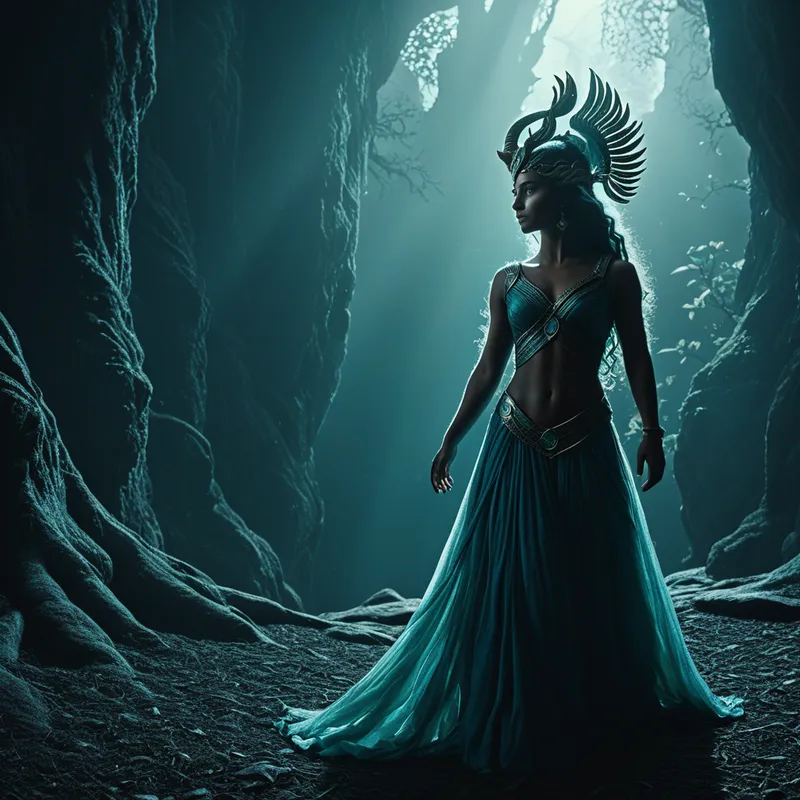
The story does not begin with a king or a hero, but with a person standing alone in the twilight. The air is thick, humming with the silence that is not silence, but the breath of the world waiting. Before them, the path splits. It is not a neat, geometric intersection, but a place where ways worn by countless feet and countless sorrows meet in the soft earth. This is the Sacred Cross Roads.
Here, the veil is worn thin as moth-wing. It is said that at the moment of decision—or more truly, at the moment of surrender—the ancestors draw near. Their presence is not seen with earthly eyes, but felt: a chill up the spine that is not fear, a warmth at the back of the neck that is not sun. The seeker comes burdened—with a question that has no answer, a grief that has no bottom, a talent that feels like a curse. They come because the straight road has ended, and only the intersection offers a way through.
In the traditions of the diaspora, carried across the ocean in the marrow of memory, this is where one might meet the Trickster who is also a teacher. He may appear as an old man with a limp, or a sharp-dressed stranger with a knowing smile. He offers no easy bargains. Instead, he mirrors the seeker’s own heart back to them, revealing the hidden choices already made in the secret chambers of the soul. The ritual is performed—a simple offering of rum, a few coins, a whispered truth buried for years. It is not payment, but communion. An acknowledgment that to move forward, one must first meet what stands at the center of oneself.
The myth tells that at the precise moment of offering, the roads themselves shimmer. The path to the north might glow with the cool light of forgotten moons, the east with the fierce gold of dawning potential, the south with the deep, fertile darkness of the earth, and the west with the somber, reflective sheen of twilight waters. The seeker does not simply choose a road. They choose a conversation with a particular lineage of spirit, a specific quality of destiny. To step onto the glowing path is to step into a dialogue with the unseen world, where every footfall is both a question and an answer, and the destination is not a place, but a state of being—transformed.
Cultural Origins & Context
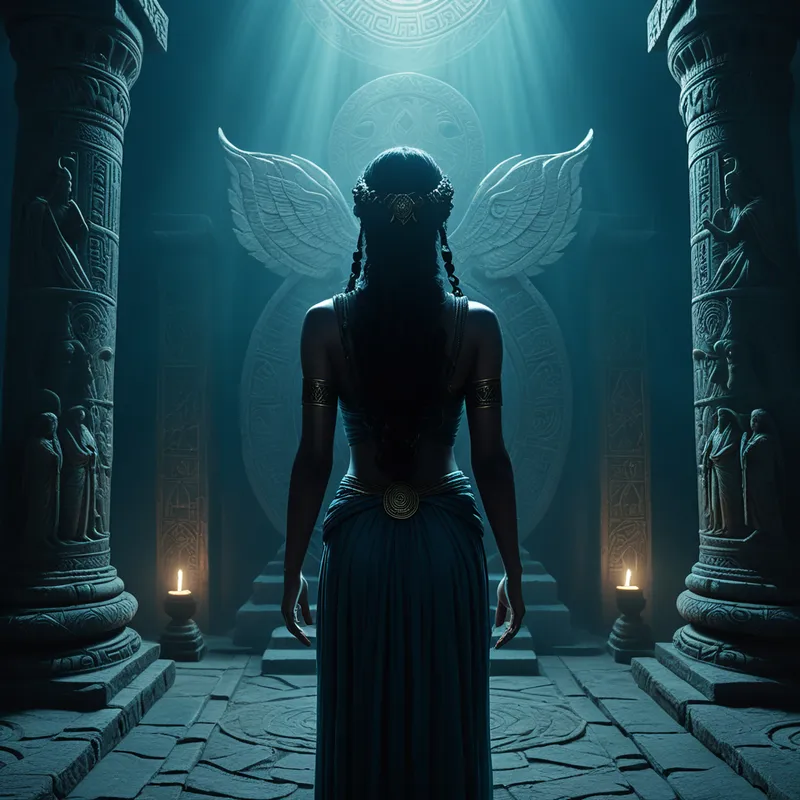
The power of the crossroads is a foundational pillar in the spiritual cosmologies of West and Central Africa, from where it was forcibly transplanted to the Americas and the Caribbean. In Yoruba tradition, the orisha Eshu-Elegba is the unequivocal master of the crossroads, the divine linguist who interprets between the human and the divine, the one who opens and closes doors of opportunity and fate. In the Kongo cosmogram, the dikenga, the crossroads is the central point of intersection between the worlds of the living (ku nseke) and the dead (ku mpémba), the dynamic center where spiritual force (nkisi) is activated.
Within the crucible of the diaspora—amidst the unspeakable rupture of the Middle Passage and the brutal institution of slavery—this symbol did not weaken; it intensified. The crossroads became a psychological and spiritual necessity. It represented the literal intersections in strange, hostile lands where covert rituals could be held. It symbolized the existential crossroads of identity: the forced adoption of a new world while clandestinely preserving the old. In Haitian Vodou, Papa Legba guards the gate. In Hoodoo and other African American folk traditions, the crossroads is where one goes to “make a deal” for skill, most famously with the blues, transforming deep suffering into art. It became the archetypal space for negotiating a destiny that was constantly under threat, a sacred locus for reclaiming agency in a world designed to deny it.
Symbolic Architecture
The crossroads is the ultimate symbol of liminality. It is not a place of residence, but of passage and profound interaction. Its symbolic architecture is built on paradox: it is both a point of connection and a point of separation; a place of meeting and a place of parting; a center and a periphery.
It is the embodied “and.” It refuses the tyranny of “or.” Here, the ancestor and the living, the past and the future, the choice made and the choice abandoned, all coexist in a tense, creative harmony.
This is why it is sacred to the Trickster archetype, the deity who embodies ambiguity itself. The vertical axis of the crossroads speaks to the connection between the celestial and the chthonic, heaven and earth. The horizontal axis maps the human journey through time and community. The center—the point of intersection—is the still point of the turning world, the eye of the storm where one stands to perceive the whole pattern. To stand there is to be stripped of certainty, which is the necessary precondition for any true encounter with the numinous, with fate, or with the depths of the self.
The Dreamer's Resonance
To dream of a crossroads is to dream of the self at a critical juncture. Psychologically, it represents a moment of conscious confrontation with one’s own destiny. It is the psyche’s theater for the drama of decision, where unconscious contents (the ancestors, the spirits) press toward consciousness, demanding recognition and integration.
The dream-crossroads often appears when a longstanding attitude or life direction has become sterile, when the persona is cracking under the weight of an unlived life. The anxiety felt there is not merely fear of the unknown, but the profound disorientation of the ego when it is no longer at the helm. The different paths represent potentialities within the dreamer’s own psyche—unexplored talents, repressed memories, future selves waiting to be born. The figure met there, whether benevolent or challenging, is an aspect of the dreamer’s own spirit, a guide from the inner depths. To engage with this dream is to engage in active imagination, to willingly enter a dialogue with the soul’s own directions. It is a call to spiritual accountability, where one must declare, through action or sacrifice, which potential self they will feed and follow.

Alchemical Translation
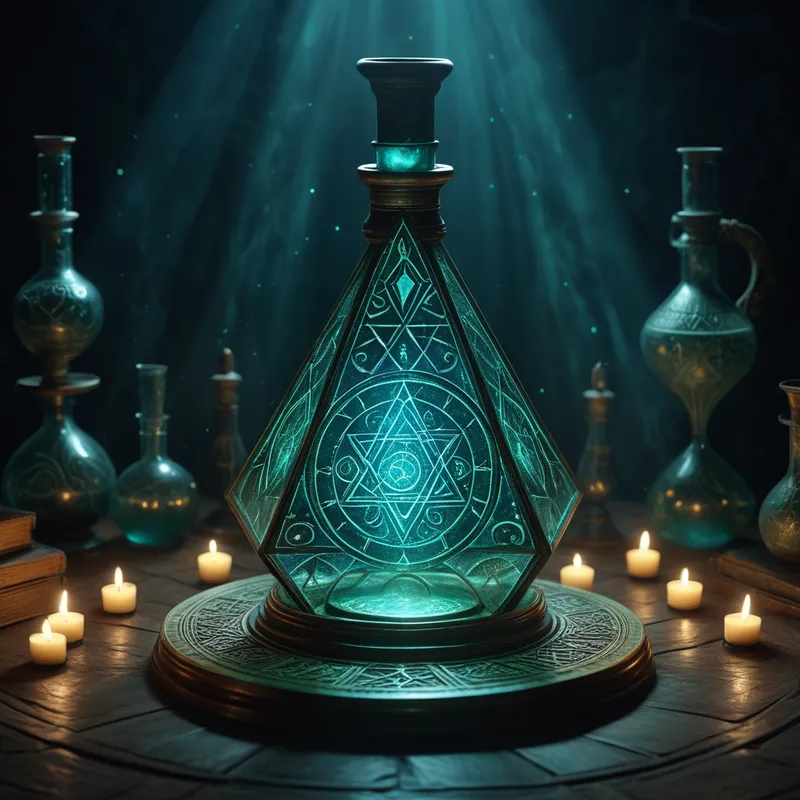
The alchemical process mirrored in the crossroads ritual is the nigredo—the blackening, the descent into chaos and confusion that precedes transformation. The seeker arrives in a state of dissolution, where old structures of meaning have collapsed. The crossroads itself is the vas or vessel where this dissolution is contained and becomes productive.
The offering made is the prima materia, the base substance of one’s pain, pride, or desire, willingly surrendered to the transformative fire of the encounter. The moment of meeting is the coniunctio oppositorum—the sacred marriage of conscious intention and unconscious wisdom.
The choice of a road is not the end, but the beginning of the albedo, the whitening. It is the first conscious step on a newly clarified path, now infused with the blessing and insight of the ancestral realm. The entire operation turns on the principle that one must lose one’s way to find it; one must be broken open to be remade. The destiny forged here is not a predetermined script, but a co-creation between human will and the deeper currents of the ancestral and spiritual world. It is the alchemy of fate into destiny, where what is given is actively shaped by the hands and heart of the one who receives it.
Associated Symbols
Explore related symbols from the CaleaDream lexicon:
- Crossroads — The primal symbol of intersection, choice, and the liminal meeting point between worlds, where destiny is negotiated and transformed.
- Ancestor — The living presence of the departed, who offer wisdom, protection, and a bridge to the spiritual realm from the crossroads of memory and lineage.
- Trickster — The ambiguous guardian of thresholds who presides over the crossroads, testing, teaching, and facilitating communication between all realms of existence.
- Destiny — Not as a fixed fate, but as a dynamic path co-created at the intersection of choice, ancestral influence, and spiritual communion.
- Threshold — The metaphysical doorway embodied by the crossroads, a space of transition where one state of being is left behind for another.
- Key — The insight, offering, or ritual act that unlocks the potential of the crossroads, opening the way to a new phase of the journey.
- Shadow — The unacknowledged aspects of the self that are often met and confronted in the solitary, revealing space of the crossroads.
- Drum — The heartbeat that calls the spirits to the crossroads, its rhythm syncing the pulse of the living with the timeless pulse of the ancestors.
- River — A flowing, ever-changing path that mirrors the journey of life, often intersecting with other streams at symbolic crossroads of decision.
- Moon — The luminary of the night, governing cycles, intuition, and the unseen, casting its transformative light on the choices made at the crossroads.