Jacob's Pillar Myth Meaning & Symbolism
A fugitive dreams of a ladder to heaven, anoints a stone as a pillar, and names the place where the divine and human worlds meet.
The Tale of Jacob's Pillar
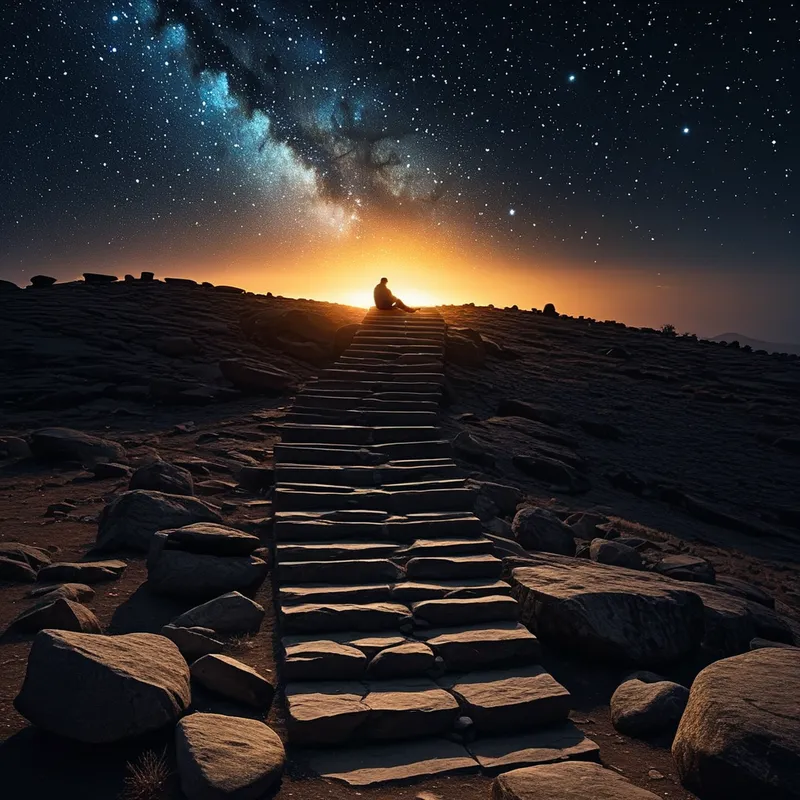
Listen. The story begins in the dust of flight, in the taste of fear. Jacob, son of Isaac, grandson of Abraham, is a man with a stolen blessing on his back and a brother’s murderous rage at his heels. He flees into the wilderness, a fugitive from his own past. The sun bleeds out over the hills of Haran, and the world shrinks to the crunch of gravel underfoot and the vast, indifferent dome of the coming night.
He finds a place—not a home, just a place—where the ground is hard and strewn with stones. One stone, larger than the others, calls to his weary bones. He takes it, this cold, unfeeling piece of the earth, and places it beneath his head. It is his pillow. The earth is his bed, the sky his blanket. Here, at the nexus of exhaustion and terror, sleep takes him.
And then, the veil tears.
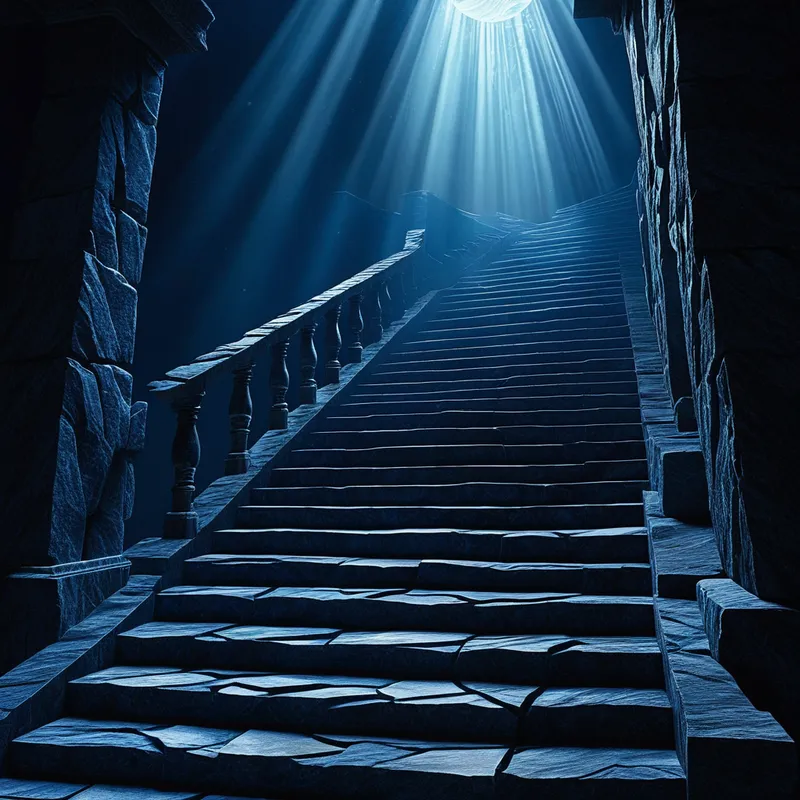
In the country of his dreams, the solid world dissolves. There, against the black velvet of the night, a structure appears—a sullam—its base planted in the very dust where he lies, its top lost in the shimmering heights of heaven. And upon it, ascending and descending in a silent, radiant procession, are the malakim of God. They move with purpose, a celestial traffic between the realm of the Absolute and the realm of the fugitive.
Then, a Voice. Not in the ear, but in the marrow of his soul. It is the voice of the God of his fathers, but now it speaks directly to him, Jacob the deceiver, the runner. The voice makes promises: this land, numberless descendants, a blessing for all families of the earth. And a promise more immediate than any: "I am with you. I will keep you."
Jacob wakes. But he is not the same man who lay down. The air is charged, thick with presence. The ordinary light of dawn feels like the afterglow of a furnace. He looks at the common stones around him, and his breath catches. "Surely Yahweh is in this place," he whispers, awe cracking his voice, "and I did not know it." A sacred terror seizes him. "How awesome is this place! This is none other than the house of God, and this is the gate of heaven."
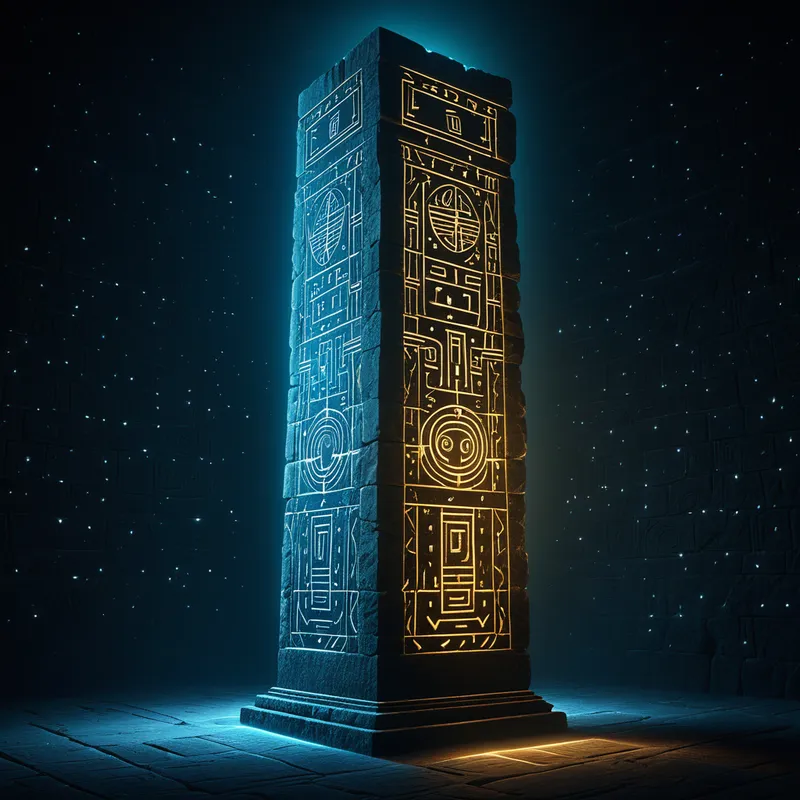
In the first light, he takes the stone—the humble pillow that bore his head during the revelation. He sets it upright, anointing it with oil, transforming a piece of the wilderness into a pillar, a matzevah. He consecrates the ground around it. He names the place Bethel. And he makes a vow, a pact born of awe and trembling hope: If God will be with him, then this stone, this pillar, shall be God’s house.

Cultural Origins & Context
This story, found in the book of Genesis (Chapter 28), is a foundational etiological narrative. It comes from the heart of the patriarchal traditions, a story told around campfires to explain the sanctity of specific locations in the landscape. Bethel became a major cultic site in the northern kingdom of Israel, and this myth provided its divine pedigree, anchoring its holiness not in a temple built by human hands, but in a direct, ancestral encounter with the divine.
The narrative functioned on multiple levels. For a tribal people, it explained why this stone, this hill, was different. It established a theology of place where the divine could intersect with the human journey, often at its most precarious point. Furthermore, it served as a crucial identity marker for the character of Jacob, transitioning him from a cunning trickster operating within a family drama to a patriarch who carries a direct, experiential covenant. The story was likely preserved and shaped by priestly and wisdom traditions, emphasizing that revelation often comes not in the temple, but in the wilderness of the soul.
Symbolic Architecture
The myth is a masterclass in symbolic density. Every element is a psychic coordinate.
The Wilderness & The Stone: Jacob is in a literal and psychological liminal space—between homes, identities, and destinies. The stone represents the hard, unconscious foundation of the Self, the unadorned, factual core we must rest upon when all comfort is stripped away. It is the bedrock of reality upon which revelation is built.
The Ladder & The Angels: The sullam is the axis of connection. It symbolizes the permeable boundary between the conscious and the unconscious, the personal and the transpersonal. The angels are not independent beings but personified movements of psychic energy—insights, intuitions, and communications flowing continuously between the depths of the psyche (the earth) and its highest potential (heaven).
The pillar is not a barrier marking a boundary, but a witness erected at the precise point where the boundary was revealed to be an illusion.
The Anointed Pillar: This is the central act of psychic alchemy. Jacob takes the raw, unconscious material (the stone he slept on) and, through a conscious act of recognition and consecration (pouring oil, setting it upright), transforms it into a symbol. The matzevah is no longer just a rock; it is a memory made solid, a testament to the encounter. It represents the ego's attempt to structure and memorialize a numinous experience, to create an inner touchstone for future orientation.
The Dreamer's Resonance
When this myth pattern activates in the modern psyche, it often manifests in dreams of profound transition or crisis. The dreamer may be fleeing something, or simply feel utterly lost and alone. The dream landscape is often barren, a "nowhere" place.
To dream of such a ladder or staircase is to experience the psyche offering a vision of connection in the midst of disintegration. It suggests the unconscious is actively building bridges, offering resources (the angels) from depths beyond the ego's current understanding. The somatic feeling upon waking is often one of awe, a "holy dread," or a deep, vibrating certainty that something fundamental has been communicated.
Dreaming of setting up a stone, pillar, or marker indicates a powerful inner imperative to acknowledge a transformative moment. The psyche is demanding that the dreamer "name the place"—to consciously recognize and honor a shift in their internal landscape, to build an inner Bethel where before there was only fugitive fear.
Alchemical Translation
The journey of Jacob models the early, critical stage of individuation: the confrontation with the shadow (his deceit, his brother's wrath) forces a rupture with the familiar world, leading the ego into the desert of the Self.
Here, the alchemical work begins. The "stone" is the prima materia—the worthless, heavy burden of one's flawed reality and base nature. The act of using it as a pillow is an acceptance, a humble submission to this foundation. The divine dream is the coniunctio, the sacred marriage of the human and the transpersonal that occurs not through striving, but through receptive exhaustion.
The vow is the psychic seal. It is the ego, having tasted the numinous, willingly binding itself to the process it has glimpsed, transforming a passive experience into an active covenant.
The final, crucial step is the "anointing of the pillar." This is the act of giving symbolic form to the experience. For the modern individual, this translates to the creative act that follows insight: writing in a journal, creating art, making a life decision, or simply adopting a new inner attitude. It is the process of taking the raw, shocking experience of the Self and erecting a stable, inner monument to it—a point of orientation to which one can return when the path becomes obscure once more. One does not live on the ladder, but at the pillar. The ladder is the revelation; the pillar is the integrated memory that makes the revelation a lasting part of the soul's geography.
Associated Symbols
Explore related symbols from the CaleaDream lexicon: