The Dream of Community: The Architecture of Belonging
The Somatic Echo
It begins not as an image, but as a pressure. A hollow ache in the solar plexus, a phantom weight on the shoulders that feels like a shared burden—or a shared absence. It is the body remembering its first ecology: the rhythm of another’s heartbeat, the resonance of a shared breath. This is the somatic echo of community, a deep, cellular memory of connection that hums beneath the skin. Before the mind conjures a town square, a family dinner, or a circle of strangers, the body knows the territory. It registers the warmth of inclusion as a softening in the chest, a release in the jaw. It registers exile as a cold draft along the spine, a subtle clenching in the hands, preparing to hold what no one else will. This visceral landscape is the true dreamscape; the images that follow are merely its translators.
The Dreamer's Log (Case Vignette)
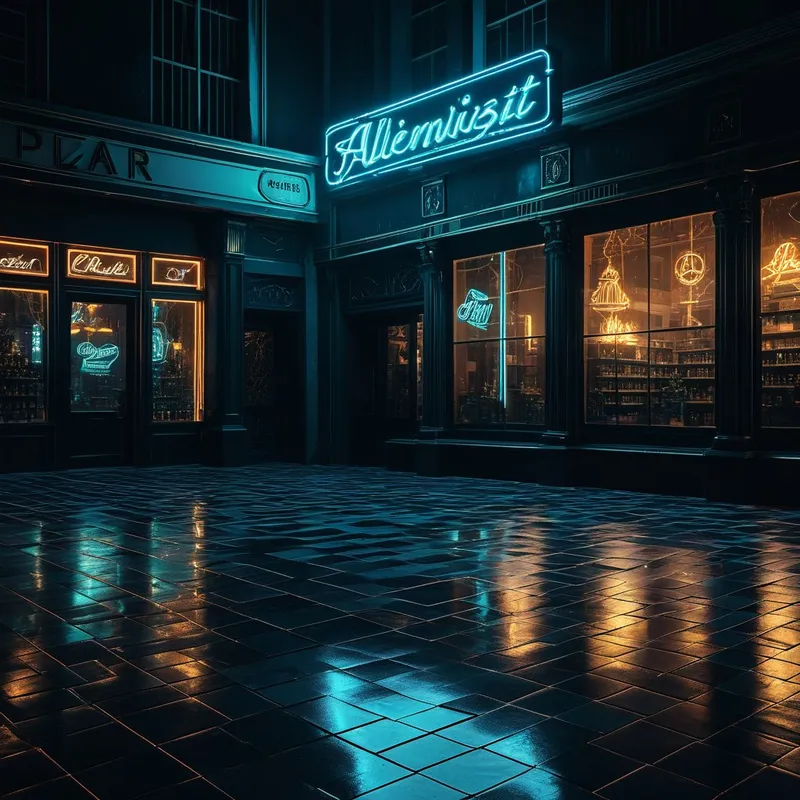
I am standing in the central plaza of a city I built. Every brick, every lamp post, I laid with my own hands. But the plaza is utterly deserted. The shops are shuttered, the fountain dry. A single neon sign flickers above a café, spelling out a word I can’t read. I know, with a certainty that cracks my ribs, that I am the last citizen. I am the mayor, architect, and sole resident of a ghost town of my own making.
The alchemy here is one of profound recognition: the dreamer has constructed a world capable of holding others, but has not yet issued, or perhaps even recognized, the invitation from within their own solitude.
The False Lead
A dream of community is not a simple instruction to socialize more. It is not a diagnosis of loneliness to be cured by adding contacts or attending events. The barren plaza, the silent feast, the closed circle that turns away—these are not indictments of your social calendar. They are x-rays of your internal social contract. The dream points not to a quantity of connection, but to its architecture and quality. It asks: What are the unspoken bylaws of your inner society? Who holds power? Who is exiled to the outskirts? The terror of these dreams is not about being alone in the world, but about discovering which essential parts of yourself you have left standing alone in the cold within your own psyche.
Psychological Architecture
This is the core shadow work of community: the confrontation with our internal exiles. We each contain a bustling, often conflicted, inner population. There is the inner orphan, craving protection; the exiled rebel, silenced for causing trouble; the hidden jester, afraid its truth will offend. To dream of a fragmented or hostile community is often to witness the civil war within our own Internal Family System. The process of individuation in this realm is not about becoming a solitary monolith. It is about moving from a fragmented inner collective—where parts are disowned and projected onto others—toward an integrated inner commonwealth. It is the arduous, compassionate work of repatriating your outcasts, hearing the petitions of your neglected citizens, and establishing a governance of conscious awareness rather than reactive tyranny. Sovereignty is born when you can host the full, messy parliament of your soul without needing anyone outside to play a specific, imprisoning role.
Mythic Resonance
Consider the myth of the Tower of Babel. Its common moral is a punishment for hubris. But seen through the psyche, it is a profound myth of internal community breakdown. A unified people, speaking one language, build a structure to reach heaven—a symbol of a singular, ego-driven aspiration that ignores the diversity of the soul. The divine response is not a petty punishment, but a forced individuation: the "confusion of tongues." This is the psyche’s own corrective measure. When the inner community is forced into a monolithic, rigid purpose, it must shatter into a multiplicity of perspectives, drives, and "languages" to survive. The dream of a community where no one understands you is not a curse; it is the birth pangs of your own psychic diversity, the necessary fragmentation that precedes a more authentic, complex, and conscious unity.
Symbolic Nodes
- Empty Plazas & Town Squares: The prepared space for connection, awaiting its inhabitants.
- Shuttered Windows/Locked Doors: Parts of the self that are closed off, either to others or to internal connection.
- A Feast with No Guests / A Table Set for One: Prepared generosity with no recipient, highlighting a blockage in the flow of giving and receiving.
- A Circle that Won’t Let You In (or Out): The dynamics of inclusion/exclusion, and the felt sense of rigid social or internal rules.
- A Malfunctioning Communication Device (static phone, garbled intercom): Breakdown in the ability to express need or understand the needs of others within the system.
- A Map of a City You Don’t Recognize: The unknown, uncharted territory of your own relational blueprint.
Archetypal Resonance
The most active archetype in the theme of Community is The Orphan Archetype.
The Orphan’s core wound is the primal fracture of belonging, the original sense of being cast out from the garden of unconditional connection. Its energy resonates perfectly with the somatic echo of the hollow ache and the dream’s central question: Where is my tribe? Where is my home? Yet, the Orphan’s journey is not one of perpetual victimhood; its alchemical potential lies in its profound realism and hard-won resilience. By fully feeling the grief of its exile—not just from family or society, but from parts of itself—the Orphan gathers the raw, authentic materials needed to build a true community from the ground up. It learns that belonging is not found, but forged, first within the self. The integrated Orphan becomes the ultimate survivor, not by building walls, but by laying the foundations for a sanctuary where every exiled part of the self, and by extension every authentic other, can finally come home.
The Alchemical Process
The alchemical transmutation of the community dream requires the intense heat of conscious belonging. The base material is the leaden grief of exile—the orphan’s cry. The pressure is applied by holding two contradictory truths in the same heart: the absolute truth of your own sovereign individuality, and the absolute truth of your inescapable interdependence. The fire is stoked by the courageous act of turning inward not to hide, but to host. You must sit in the empty plaza of your own making and feel its desolation. You must listen to the silence until it begins to differentiate into the whispers of the parts you silenced: the needy child, the arrogant ruler, the fearful innocent. The transmutation occurs when you stop waiting for an external citizenry to fill your square and begin, with immense compassion, to welcome your own internal populace. The gold that emerges is not a crowd of admirers, but the unshakeable experience of being a complete ecosystem unto yourself, which paradoxically makes genuine connection with other complete ecosystems not only possible, but inevitable.

The Integration Protocol
Question 1: In the dream of community, who exactly is missing? Is it a quality (like playfulness, support, challenge), a specific person from your past, or an unnamed archetype? Describe the silhouette of the absence.
Question 2: If your inner world were a town, what would its primary export be (e.g., careful analysis, fierce protection, creative beauty)? What would it need to import to thrive (e.g., spontaneity, rest, boundaries)?
Question 3: What is one unspoken, non-negotiable law in your internal community? (e.g., "Don't cause trouble," "Always be productive," "Never appear needy"). Who enforces it, and who suffers under it?
Action 1 (Somatic Cartography): For one day, track the somatic echo. Without judgment, note in a small notebook each time you feel that subtle clench of isolation or warmth of connection in your body. What triggered it? A thought, a memory, an interaction? Don't analyze, just map.
Action 2 (Internal Amnesty Proclamation): Engage in a creative, unstructured writing session. Write a short decree from the "sovereign" of your psyche, granting amnesty to one exiled "citizen" (e.g., your laziness, your anger, your vulnerability). Describe what reintegration looks like. What role might this part play in a healthier inner society?
Action 3 (Ritual of the Empty Chair): At a meal, set a place for an empty chair. This chair holds the space for the "missing" element from your dream community—be it a forgotten part of yourself, an ancestor, a future friend, or the archetype of connection itself. Eat in its silent company, practicing the art of hosting absence without needing to fill it.
Final Validation
To dream of community in its fractured, longing, or ghostly forms is to touch one of the deepest nerves of the human experience. It is profoundly difficult because it speaks to our first wound and our ultimate aspiration. This ache is not a sign that you are broken or failing at belonging; it is the sign of a psyche that is ripe, that is straining toward a more authentic and integrated wholeness. The empty plaza is not your failure. It is your blueprint. It is the sacred, cleared space within you, prepared by your own hands, now waiting for the most important reunion of all: the homecoming of every part of you, so that you may finally, and fully, belong to yourself. From that unshakable inner commonwealth, all true community in the world begins.