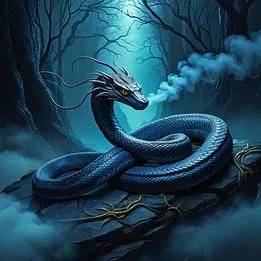
Serpent
The Oracle's Essence
A powerful symbol of transformation, wisdom, and primal energy, often representing hidden knowledge, healing, or temptation.
Interpretive Themes
Modern Visibility
In contemporary culture, the serpent often symbolizes psychological depth, personal transformation, or environmental awareness, appearing in media and wellness symbolism.
◈ Mythological Resonance
Aido-Hwedo the Rainbow Serpent Myth Meaning & Symbolism
West African traditionThe primal, coiling energy of life and the unconscious that forms the foundation of all manifested reality.
Abraxas Myth Meaning & Symbolism
Gnostic traditionRepresenting the chthonic, instinctual wisdom and cyclical energy that forms the very foundation of Abraxas, as depicted in his serpentine legs, connecting the highest spirit to the deepest earth.
Ahriman's Creation of Evil Myth Meaning & Symbolism
Persian traditionA primary creature of Ahriman's counter-creation, symbolizing stealth, poison, and the insidious, coiling nature of deceit and corruption.
Aji Saka Myth Meaning & Symbolism
Indonesian traditionThe devouring, chthonic force of untamed nature and unconscious instinct, represented by the monstrous hunger of the demon king.
Antaboga the World Serpent Myth Meaning & Symbolism
Indonesian traditionThe primordial, creative force of the unconscious; the foundational energy that precedes and gives birth to form, representing both chaos and potential.
Bakunawa the Sea Serpent Myth Meaning & Symbolism
Filipino traditionThe core form of Bakunawa, embodying primal energy, envy, transformation, and the shadowy force that challenges static order.
Bathala Myth Meaning & Symbolism
Filipino traditionUlilang Kaluluwa, embodying the chthonic, possessive, and fertile powers of the deep unconscious and instinctual life.
Badr Basim and the Sea Myth Meaning & Symbolism
Arabian traditionThe primal guardian of the threshold between worlds, embodying the transformative power of the deep unconscious that must be confronted and integrated.
Bima's Journey to the Underworld Myth Meaning & Symbolism
Indonesian traditionAppearing as both minor obstacles and the great dragon Nagabanda, the serpent symbolizes primal, coiled energy—kundalini, instinct, and the transformative power that is terrifying until consciously faced.
Cihuacoatl Myth Meaning & Symbolism
Aztec traditionThe primal symbol of cyclical transformation, earth wisdom, and the shedding of old skins, directly embodying Cihuacoatl's name and her connection to the regenerative forces of the underworld.
Coyolxauhqui Moon Goddess Myth Meaning & Symbolism
Aztec traditionRepresented in Coatlicue's skirt and Huitzilopochtli's weapon, symbolizing both the chthonic, creative life force and the transformative, destructive fire of insight.
Hushang and Fire Discovery Myth Meaning & Symbolism
Persian traditionThe chthonic threat Hushang confronts, symbolizing the untamed unconscious, primal instinct, and the chaotic forces of nature that must be engaged to spur evolution.
Iblis the Fallen Angel Myth Meaning & Symbolism
Islamic traditionA later symbolic association of the tempter, connecting Iblis to the archetypal symbol of cunning, forbidden knowledge, and the catalyst for conscious choice.
Ibalon Myth Meaning & Symbolism
Filipino traditionRepresents the cunning, ancient, and transformative wisdom of the unconscious, as embodied by Oryol, which must be allied with, not destroyed.
Ix Chel Moon Goddess Myth Meaning & Symbolism
Mesoamerican traditionA symbol of Ix Chel's power of transformation, healing, and rebirth, as she sheds her identity like a snake sheds its skin to emerge renewed.
Kay Pacha Uku Pacha Hanan Pacha Myth Meaning & Symbolism
Incan traditionThe primal creature of Uku Pacha, representing subterranean wisdom, cyclical time, instinctual energy, and the healing force that can ascend.
Kukulkan Myth Meaning & Symbolism
Mesoamerican traditionThe foundational energy of the myth, representing the primal earth, the unconscious, cyclical time, instinct, and the potential for transformative healing and rebirth.
Manaia Guardian Spirit Myth Meaning & Symbolism
Maori traditionManifest in the Manaia's tail, symbolizing primal earth wisdom, unconscious forces, cyclical energy, and connection to the chthonic underworld.
Mimbi Caves Creation Myth Meaning & Symbolism
Aboriginal Australian traditionThe embodiment of the Rainbow Serpent herself, symbolizing primal creative energy, cyclical time, wisdom, and the transformative force that shapes chaos into ordered, living form.
Oshumare the Rainbow Serpent Myth Meaning & Symbolism
Yoruba traditionThe primal, cyclical, and earth-connected aspect of Oshumare, symbolizing regenerative energy, wisdom, and the binding force of the cosmos.
Perun Myth Meaning & Symbolism
Slavic traditionThe form of Veles, representing the chthonic, instinctual, and magical forces of the unconscious, as well as cyclical transformation and hidden wisdom.
Perun and Veles
Slavic traditionThe primary form of Veles, symbolizing the chthonic life force, primal wisdom, cyclical time, and the unconscious mind in its potent, ambivalent totality.
Temu the Evenki Creator Myth Meaning & Symbolism
Siberian traditionThe primordial chaos and raw creative potential that must be engaged and shaped to form the foundation of the conscious world.
Tepeu and Gucumatz Myth Meaning & Symbolism
Mesoamerican traditionEmbodies the earthly, instinctual, and cyclical wisdom of Gucumatz, representing the foundational energy and transformative power coiled at the root of creation.
The Ancestors of Kakadu Myth Meaning & Symbolism
Aboriginal Australian traditionThe transformative, life-giving, and potentially destructive power of the deep unconscious and instinctual energy, carving the waterways of the psyche.
The Ceiba World Tree Myth Meaning & Symbolism
Mesoamerican traditionThe chthonic energy coiled in the roots of Xibalba and the celestial form in the branches, representing cyclical transformation and the conduit between realms.
The Carib Creation Myth Meaning & Symbolism
Amazonian traditionThe primordial, self-sacrificing creator force, representing undifferentiated consciousness, cyclical time, and the transformative power that arises from the depths.
The Cosmic Anaconda of the Tukano Myth Meaning & Symbolism
Amazonian traditionThe primal, transformative life force and instinctual wisdom that creates order through its own dynamic movement and sacrifice.
The Dreamtime Creation Myth Meaning & Symbolism
Aboriginal Australian traditionRepresents the Rainbow Serpent, a primal creative and destructive force, symbolizing the deep, shaping energy of the unconscious that forms the world.
The Eagle and Serpent Vision Myth Meaning & Symbolism
Aztec traditionThe chthonic wisdom of the earth and unconscious, representing primal instinct, latent vitality, and the transformative power that must be engaged and integrated.
The Dragon King Zahhak Myth Meaning & Symbolism
Persian traditionThe specific manifestation of the corrupting pact, representing knowledge turned poisonous, insatiable appetite, and a growth that is both part of the self and alien to it.
The Five Suns Aztec Myth Meaning & Symbolism
Aztec traditionThe form taken by Quetzalcoatl and Tezcatlipoca to tear apart the earth goddess, symbolizing transformative, primordial power.
The Fon Creation Myth Meaning & Symbolism
West African traditionThe cosmic serpent Aido-Hwedo represents the foundational, often unconscious life force that supports and shapes reality, a symbol of the primal energy that must be integrated for creation to stand.
The Founding of Tenochtitlan Myth Meaning & Symbolism
Aztec traditionThe chthonic, chaotic force of the unconscious and the untamed earth; its conquest symbolizes the ordering of primal chaos to create a foundation for consciousness.
The Greenstone Pounamu Legend Myth Meaning & Symbolism
Maori traditionEmbodies the taniwha Poutini; a symbol of primal instinct, possessive love, guardianship of hidden treasures, and the transformative power of the deep psyche.
The Great Serpent Boiuna Myth Meaning & Symbolism
Amazonian traditionThe primordial form of the Boiuna, representing the instinctual, chthonic wisdom of the unconscious, the cycle of death and rebirth, and the transformative power of the deep psyche.
The Haitian Revolution and Bois Caiman Myth Meaning & Symbolism
African Diaspora traditionAs Damballa Wedo, it is the primal, wise, and cosmic force witnessing the pact, symbolizing the connection to ancestral wisdom, life energy, and the cyclical nature of death and rebirth.
The Majapahit Creation Myth Meaning & Symbolism
Indonesian traditionThe instinctual wisdom and foundational power of the unconscious, the guardian of the depths who must be engaged, not conquered.
The Lus Savdag Water Spirits Myth Meaning & Symbolism
Mongolian traditionThe classic form of the Lus, symbolizing primal wisdom, cyclical time, instinctual energy, and the hidden, coiling power of the unconscious depths.
The Mayan World Tree Myth Meaning & Symbolism
Mesoamerican traditionEmbodies the Vision Serpent, the dynamic, coiling energy of transformation and communication that moves between the roots, trunk, and branches of the cosmic tree.
The Python God of Dahomey Myth Meaning & Symbolism
West African traditionThe broader archetype of transformative, cyclical wisdom and primal energy, of which the python is a specific, culture-bearing instantiation.
The Rainbow K'uychi Myth Meaning & Symbolism
Incan traditionThe chthonic, transformative aspect of the K'uychi, embodying cyclical renewal, wisdom from the depths, and the healing power of integration.
The Serpent as Liberator Myth Meaning & Symbolism
Gnostic traditionThe embodiment of subversive wisdom and the instinctual force that catalyzes the awakening from unconscious bondage, representing the divine messenger within creation.
The Sethians Creation Myth Myth Meaning & Symbolism
Gnostic traditionThe bringer of liberating knowledge, not of sin; it represents the disruptive, healing insight that awakens the self from the dream of the world.
The Spirit World of the Shipibo Myth Meaning & Symbolism
Amazonian traditionRepresents the cosmic creator Ronin, the source of all sacred design, and the healing, transformative power of shedding old patterns.
The Wheel of Life Myth Meaning & Symbolism
Tibetan Buddhist traditionOne of the three animals at the wheel's hub, symbolizing aggression, aversion, and hatred, a core poison that fuels the cycle of suffering.
The World Tree Siberian Myth Meaning & Symbolism
Siberian traditionThe guardian of the roots and the underworld, representing the primal, instinctual wisdom that must be confronted and integrated for wholeness.
The World Tree Slavic Myth Meaning & Symbolism
Slavic traditionEmbodies the chthonic wisdom of the underworld, the guardian of secrets and life force, and the necessary, transformative energy of the deep unconscious (Nav).
Tokoyo the Eternal Land Myth Meaning & Symbolism
Shinto traditionThe primal, chthonic guardian of the deep, representing the untamed forces of the unconscious that must be faced and recognized as part of the whole.
Veles Myth Meaning & Symbolism
Slavic traditionThe primary form of Veles as the challenger; represents cunning, transformation, chthonic wisdom, and the cyclical shedding of the old.
Volkh Vseslavich Myth Meaning & Symbolism
Slavic traditionThe chthonic father and source of Volkh’s power, representing primal wisdom, cyclical transformation, and the deep, instinctual roots of the self.
Womba the Mad Moon Myth Meaning & Symbolism
Aboriginal Australian traditionThe primordial force of chaos and forgetting that instigates the loss, representing the unpredictable, traumatic event that swallows meaning.
Yaldabaoth Myth Meaning & Symbolism
Gnostic traditionThe symbol of hidden wisdom and rebellious knowledge that challenges the demiurge's order, often representing the liberating call of gnosis itself.
Yagan and the Spirit World Myth Meaning & Symbolism
Aboriginal Australian traditionThe transformative guardian of the deep unconscious, embodying death, rebirth, and the potent, often fearsome, energy of psychic change.
Batara Guru
Indonesian traditionThe primal, coiled energy of the unconscious that serves as the foundational support for conscious creation and spiritual authority.
Damballa Wedo
African Diaspora traditionThe primordial coil of life-force, wisdom, and cyclical renewal, representing the foundational energy that moves through all creation.
Damballa the Serpent
West African traditionThe primordial symbol of cyclical time, regeneration, earthly wisdom, and the potent, coiled energy at the foundation of life.
Etana and the Eagle
Babylonian traditionThe wisdom of the earth, cycles, and instinctual life; a force betrayed when the spiritual seeks to dominate rather than cooperate.
Gilgamesh at the World's End
Babylonian traditionThe agent of transformation whose theft of the plant demonstrates the cyclical, renewing nature of life that Gilgamesh’s linear quest for permanence could not grasp.
Huitzilopochtli Defeats the Four Hundred Stars
Aztec traditionThe dual-natured force of destruction and renewal; as the Xiuhcoatl, it is the weapon of solar fire that purges and scatters the old order.
Inanna and the Huluppu Tree
Sumerian traditionA primal symbol of the chthonic earth, instinct, healing, and the transformative power of the deep unconscious.
Lilith in Jewish Folklore
Jewish traditionThe embodiment of forbidden knowledge, primal wisdom, and transformative energy that moves outside sanctioned paths.
Naga Basuki
Indonesian traditionThe primordial symbol of cyclical time, instinctual wisdom, and the transformative power of the life force, often guarding hidden knowledge or sacred thresholds.
Quechua Star Constellations
Incan traditionA primal symbol of cyclical time, healing, transformation, and the chthonic wisdom that moves between the underworld, earth, and sky.
Quetzalcoatl and Tezcatlipoca Rivalry
Aztec traditionThe embodiment of earthly wisdom, cyclical time, and the instinctual force that must be integrated with the spiritual (the bird’s feathers) to achieve wholeness.
Sinbad's Seven Voyages
Arabian traditionA dual symbol of deadly danger and secret wisdom, often guarding profound treasures or hidden passages within the self.
Susanoo Slays Yamata no Orochi
Shinto traditionThe multi-headed form of primal, cyclical, and devouring nature, representing an unconscious complex or undifferentiated life force that consumes without order.
The Amazon River Creation
Amazonian traditionA primal emblem of transformation, cyclical time, and the mysterious, winding currents of instinct and unconscious knowledge that underpin the visible world.
The Apocryphon of John
Gnostic traditionOften a symbol of wisdom and redemption in Gnostic thought, representing the enlightening force that urges Eve and Adam toward knowledge, against the Demiurge’s commands.
The First Pulque
Aztec traditionThe feathered form of Quetzalcoatl, representing wisdom, duality, and the cyclical shedding required for transformation.
The First Fire Amazon
Amazonian traditionThe guardian of deep, chthonic knowledge and the instinctual world, representing wisdom, cycles of death and rebirth, and the ambivalent power of the unconscious.
The Garuda Tibetan
Tibetan Buddhist traditionThe primal, coiling energy of the unconscious, representing both the poison of ignorance and the latent kundalini force that can be transformed into wisdom.
The Great Tree of Life Amazon
Amazonian traditionA symbol of cyclical time, healing, and primal wisdom, often depicted entwined with the World Tree, representing the energy coiled at the base of existence.
The Hypostasis of the Archons
Gnostic traditionThe embodiment of subversive wisdom and healing knowledge that liberates consciousness from imposed ignorance.
The Leviathan
Hebrew traditionThe coiled, instinctual wisdom and latent energy of the deep, a smaller-scale cousin to the Leviathan’s immense power.
The Mo'o Water Dragons
Hawaiian traditionA symbol of cyclical time, healing, transformation, and the primal energy that moves through the earth and the body.
The Naga Serpent Spirits
Tibetan Buddhist traditionThe universal symbol of transformative life force, cyclical renewal, and primal wisdom, embodying the Naga’s essential form and dynamic energy.
The Origin of the Stars Amazon
Amazonian traditionThe transformative, cosmic force that disrupts stasis, embodying both creative power and destructive potential.
The Plant of Immortality
Babylonian traditionAn ancient symbol of cyclical renewal, healing, and chthonic wisdom, often acting as the guardian of life’s deepest mysteries and the agent of transformative loss.
The Templo Mayor Myth
Aztec traditionA creature of the earth and primal waters, embodying cyclical time, regeneration, and the chthonic forces that must be engaged with and transformed.
The Three Worlds of the Amazon
Amazonian traditionThe primal inhabitant of Uku Pacha, representing transformative power, healing, and the chthonic wisdom of the earth.
Tiamat and Apsu
Sumerian traditionAs one of the monster-species birthed by Tiamat, embodying chthonic power, chaos, and the untamed, coiling energies of the deep.
Wawalag Sisters
Aboriginal Australian traditionThe cosmic being of transformation, embodying both the terrifying chaos of the deep and the source of all life and cyclical renewal.
Yurlunggur the Copper Python
Aboriginal Australian traditionThe eternal cycle of life, death, and rebirth; primal wisdom and the foundational energy that shapes worlds from the formless void.
Cultural Lenses
Global/Universal
Learn More →Nearly universal symbol appearing in creation myths, healing traditions, and wisdom stories across continents, representing both life-giving and destructive forces in human consciousness.
Jungian
Learn More →Archetype of the collective unconscious representing primal wisdom, instinctual energy, and the transformative process of individuation through integration of shadow aspects.
Freudian
Learn More →Phallic symbol representing repressed sexual energy, unconscious desires, and the tension between civilization's restrictions and primal instinctual drives seeking expression.
Gestalt
Learn More →Projection of the dreamer's own slippery, transformative, or dangerous aspects that need integration, representing parts of self that feel foreign or threatening.
Cognitive
Learn More →Mental representation of threat detection, pattern recognition for danger, or metaphorical processing of complex, winding problems requiring careful navigation in waking life.
Evolutionary
Learn More →Primordial threat detection mechanism hardwired from ancestral environments where snakes represented immediate danger, activating deep survival instincts and heightened awareness.
East Asian
Learn More →Dragon-serpent hybrids in Chinese mythology represent imperial power, wisdom, and celestial forces; in Japanese tradition, serpent deities (orochi) control water and weather.
South Asian
Learn More →In Hinduism, serpents (nagas) are divine beings guarding treasures and wisdom; Shiva wears serpents as ornaments representing conquered death and cosmic energy.
Middle Eastern
Learn More →Ancient Mesopotamian serpent symbols represented healing and eternal life; in Abrahamic traditions, the serpent embodies temptation, forbidden knowledge, and moral testing.
European
Learn More →Greek Asclepius's healing staff features serpents; Norse Jörmungandr encircles the world; Celtic traditions associate serpents with earth wisdom and regeneration cycles.
African
Learn More →Rainbow serpent creator deities in West Africa; Egyptian Wadjet as protective goddess; many traditions view serpents as ancestors, rain bringers, and wisdom keepers.
North American
Learn More →Native American traditions feature horned serpents as water guardians, Pueblo plumed serpents as rain bringers, and various tribes viewing serpents as healing and transformation symbols.
Contextual Nuances
Serpent in water
Emotional depth processing.
Serpent shedding skin
Personal transformation occurring.
Serpent biting you
Sudden awakening needed.
Serpent coiled sleeping
Latent potential awaiting.
Serpent speaking
Wisdom revelation moment.
Questions for Reflection
- "What aspect of yourself feels slippery or difficult to grasp?"
- "Where in your life are you experiencing transformation that feels both frightening and necessary?"
- "What hidden wisdom might you be guarding or seeking?"
- "How are you navigating between instinct and reason?"
- "What cycles in your life need completion or renewal?"
Related Weavings
The Portal is Always Open
Every dream is a personalized dispatch from the deep. Don't let yours fade into static.
Interpret Full Dream