The Dream Theme of Perfection: Dissolving the Crystalline Prison
The Somatic Echo
It begins not as a thought, but as a held breath in the architecture of the self. A subtle, pervasive tension, a hum of static in the marrow. The body becomes a museum of potential errors, every muscle a sentinel on high alert. There is a brittleness to the joints, a sense that any spontaneous gesture—a laugh too loud, a step off the prescribed path—might cause a catastrophic fracture. The breath is shallow, held in the upper chest, as if the diaphragm fears the messiness of a full, sighing release. This is the somatic echo of Perfection: not the thrill of achievement, but the deep, cellular dread of a system calibrated to an impossible standard. It is the feeling of being a flawless, frozen lake, beautiful from a distance, but screaming underneath with the pressure of the unfathomable depth and life it has sealed away.
The Dreamer's Log (Case Vignette)
I am in my apartment, but it is sterile and silent, every surface a blinding white. A single, perfect porcelain cup sits on a glass table. I know, with absolute certainty, that I must not touch it, for my fingerprint would be a desecration. Yet, I am compelled to lift it. As my fingers make contact, a hairline crack appears, spiderwebbing across its surface with a sound like breaking ice. I wake with a gasp, my hand tingling.
This is the alchemy of the first fracture: the psyche’s forced, terrifying initiation into the truth that wholeness requires the admission of flaw.

The False Lead
Do not mistake this theme for a simple desire for excellence or a fear of failure. Those are its shadows, its crude translations. The dream of Perfection is not about avoiding mistakes; it is about avoiding existence in its fluid, unpredictable, and beautifully corruptible form. It is a profound structural shift away from life-as-process and toward life-as-artifact. A dream of a "perfectly bad" outcome—a flawlessly executed tragedy—carries the same signature energy as one of sublime achievement. The core is not the content, but the rigid, crystalline structure imposed upon the content. It is the ego’s final, desperate bid for sovereignty through total control, a kingdom where it is both the tyrannical ruler and the only prisoner.
Psychological Architecture
Beneath the gleaming surface of the Perfection complex lies a deep strata of Shadow work. This is the territory of the internal exiles: the clumsy child, the passionate fool, the vulnerable animal, the wildly creative mess-maker. These parts have been deemed "imperfect" and locked away in the psyche’s basement to preserve the pristine order of the upper floors. The dream of the cracking cup is the sound of their revolt. Individuation here is not about building a better, shinier self. It is a process of controlled collapse—the alchemical solve et coagula (dissolve and coagulate). You must descend, not to repair the foundation, but to dissolve it. To meet the exiled parts not with tools of correction, but with the solvent of unconditional witness. The goal is to transmute the crystalline, brittle structure of the Perfectionist into the resilient, adaptive, and fluid intelligence of the Sovereign—one who can hold chaos and order in dynamic tension without shattering.
Mythic Resonance
We see this firmware update in the myth of Pygmalion, the sculptor who fell in love with his own perfect creation, Galatea. His prayer to Aphrodite was not for a real woman, but for his ideal to be granted the mere illusion of life, so he might possess it without the risk of its autonomy. The goddess, in her mischief, granted his wish—but in doing so, introduced the ultimate imperfection: a will of its own. The statue became a woman, a being capable of change, opinion, and flaw. The myth does not end with their perfect life; it ends with the beginning of a real one, inherently messy and unknown. Perfection dreams are our personal Galatea moment: the terrifying, necessary animation of our own frozen ideals.
Symbolic Nodes
- Immaculate, Empty Rooms or Landscapes: The psyche as a museum, life as a exhibit.
- Fragile, Untouchable Objects (glass, porcelain, ice): The protected self-concept.
- Mirrors that Reflect an Idealized or Distorted Self: The gap between the persona and the shadow.
- Geometric, Repetitive Patterns: The mind's attempt to impose order on chaos.
- Hairline Cracks, Stains, or Smudges on Pristine Surfaces: The eruption of the repressed, the first sign of life.
- Being Judged by a Silent, Faceless Audience: The internalized critic projected outward.
Archetypal Resonance
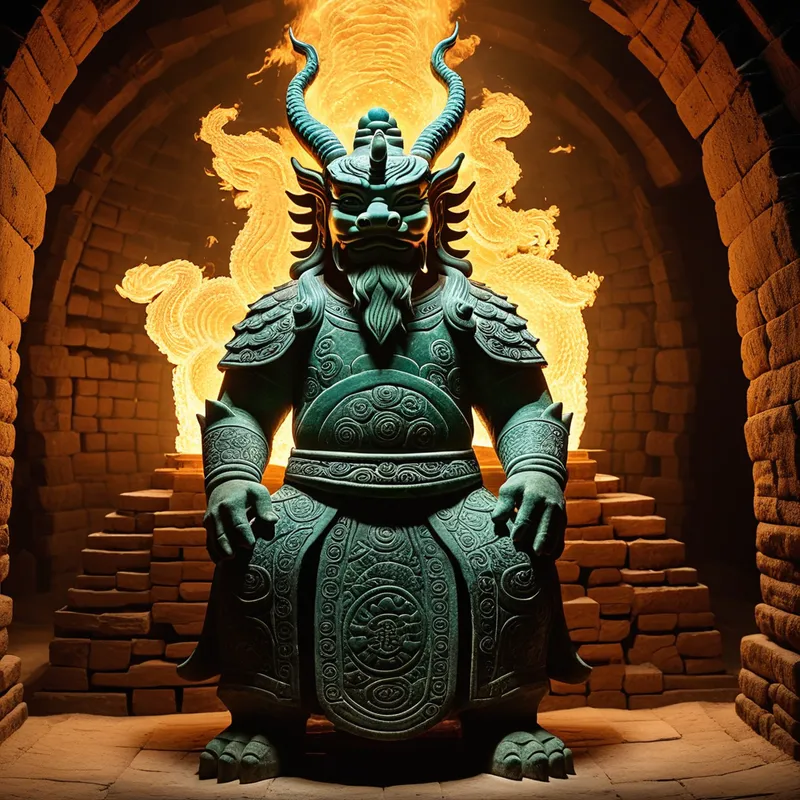
The energy at the core of the Perfection theme is that of The Shadow Ruler Archetype. The Shadow Ruler does not seek harmonious order; it demands absolute control to stave off a perceived existential chaos. Its sovereignty is a tyranny, its kingdom a sterile prison. The somatic echo—the held breath, the brittle tension—is the body living under this internal dictatorship, where every cell is a subject under surveillance. The alchemical potential lies in confronting this tyrant not to destroy it, but to mature its drive for order. The heat of this confrontation transforms the Shadow Ruler’s rigid control into the true Ruler’s capacity for wise governance—the ability to hold space for all parts of the inner kingdom, the messy and the sublime, with compassion and authentic authority.
The Alchemical Process
The transmutation of Perfection requires the heat of conscious suffering. You must willingly step into the furnace of the gap—the agonizing space between "how things are" and "how they should be." This is not the cold suffering of despair, but the hot, active suffering of engagement. The pressure is applied by relentlessly asking, "Who suffers if this is not perfect?" and then staying with the exiled part that answers. The alchemical vessel is your own attentive awareness. As you hold the tension between the ideal and the real, the crystalline structure of perfection begins to sweat. Its sharp edges soften. The grief of releasing an impossible dream and the terror of embracing a flawed reality become the prima materia, the raw substance. In this heat, the spirit trapped within the perfect form—your wild, creative, unpredictable vitality—is liberated. It rises not as a new ideal, but as a vapor of potential, ready to coagulate into a more fluid, resilient, and authentic form of being: the integrated self.

The Integration Protocol
Question 1: Where in my waking life do I feel the same brittle, vigilant stillness I felt in the dream? What small, "imperfect" action is that stillness designed to prevent?
Question 2: If the flawless object in my dream (the cup, the room, the mirror) could speak, what one sentence would it whisper about the cost of its perfection?
Question 3: What exiled part of me—what clumsy, passionate, or "unacceptable" aspect—is trying to announce itself through the appearance of the crack, the stain, or the flaw?
Action 1 (The Deliberate Smudge): Choose a small, ritualistic act of intentional "imperfection." Leave your bed unmade with a sense of purpose. Write a note with your non-dominant hand and do not correct the scrawl. Consciously place an object slightly off-center on a shelf. Observe the somatic and emotional echo that follows.
Action 2 (Creative Excavation - Unstructured Writing): Set a timer for 10 minutes. Write continuously, without lifting your pen or correcting a single word, on the prompt: "The thing I am not allowed to be is..." Let the writing be messy, illogical, and raw. The goal is not a product, but the process of bypassing the internal censor.
Action 3 (The Sovereignty Ritual): Find a private outdoor space. Hold a small, natural object—a stone, a leaf, a twig. Acknowledge its "flaws": its asymmetries, its discolorations, its breaks. Speak aloud, to the object and yourself, one true statement of its worth that has nothing to do with its perfection. Then, release it back to the earth.
Final Validation
The path out of the crystalline prison is paved with the shards of your own broken ideals. It is painful, disorienting work. To feel the terror of the crack is to be profoundly human, not failing. Your psyche is not breaking down; it is initiating a controlled demolition of a structure that has become too small for the spirit trying to live within it. The dream of Perfection is not your enemy, but a severe and precise diagnosis. It shows you the location of the wall. Your sovereignty begins not when the wall is rebuilt more perfectly, but in the moment you choose to feel the sunlight on your skin through the breach.