Doppelgänger Myth Meaning & Symbolism
A spectral double, a harbinger of fate, emerges from the twilight of the self, forcing a confrontation with the unseen mirror of the soul.
The Tale of the Doppelgänger
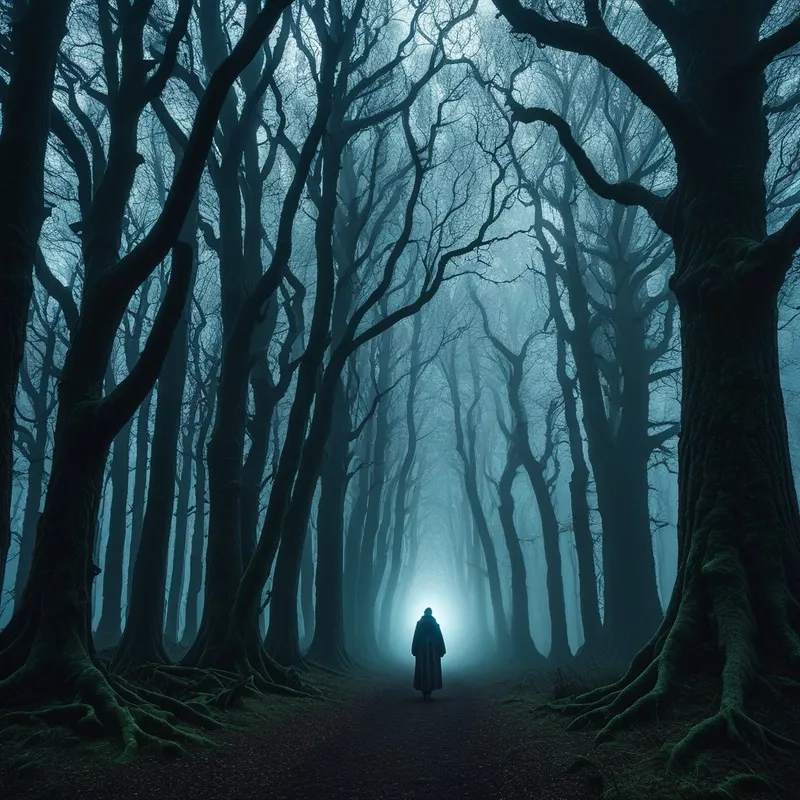
Listen, and let the hearth-fire grow low. In the deep, whispering heart of the Black Forest, where the mist clings like a shroud and the roots of the world remember older gods, there walks a man. His name is lost to us, but his fate is not. He is a man of substance, of firm hand and clear thought, known in his village. Yet, as the sun bleeds into the western hills and the long shadows of the pines become one with the coming night, a chill touches his spine that has nothing to do with the air.
He is walking the old hunter’s path, the one that skirts the standing stones. The only sound is the crunch of his boots on frost and the distant cry of a raven. Then, a second set of footsteps echoes his own. He stops. The steps stop. He walks on. They walk on, a perfect, mocking mimicry a few paces behind. His breath plumes white in the gloom. He whirls around, hand on his knife-hilt.
There is no one.
But from the corner of his eye, a flicker. A shape detaches itself from the trunk of a great oak. It steps into the path. The man’s blood turns to ice. The figure wears his face, his clothes, the very set of his shoulders. But its eyes are voids, windows into a cold, silent elsewhere. It does not speak. It only watches him, a living portrait painted in the pigments of dread.
The man stumbles back, his courage shattered. The double does not pursue. It simply turns and walks slowly, deliberately, back into the forest’s embrace, fading into the gathering dark. The man flees home, his heart a trapped bird. For days, he is haunted. He sees his own face in the well-water, flinching. He hears his own voice whispering from empty rooms. Then, a fortnight later, as he crosses the village square at noon, he sees it again. His double stands across the way, amidst the market crowd, yet untouched by the bustle. It meets his gaze and, for the first time, smiles—a thin, sorrowful curve of the lips.
That night, the man falls into a fever. In his delirium, he dreams he is standing over his own still body on the hearthstone. He wakes to the sound of the death-watch beetle in the wall. Three days hence, they find him cold in his bed, his own hand clutched to his chest, his face a mask of quiet astonishment. The double was never the killer. It was the herald, the silent bell that tolls only for one soul—its own.

Cultural Origins & Context
The Doppelgänger is not a myth with a single, canonical story like those of the Æsir. It is a pervasive folk belief, a narrative ghost that haunted the Germanic world from the misty realms of Norse lore to the candlelit studies of German Romantic poets. It belongs to the twilight category of the wraith or fetch—an apparition of a living person.
These tales were passed down not in grand sagas but in hushed tones by the hearth, warnings from grandmother to grandchild. They served a profound societal function: to give form to the ineffable terror of premonition, the uncanny disruption of identity, and the intimate knowledge of one’s own mortality. In a culture deeply attuned to omens—from the flight of birds to the patterns of entrails—the Doppelgänger was the ultimate personal omen. It was often considered a hamingja, a kind of externalized fetch or guardian spirit that could appear separately from its owner, but its appearance was almost invariably a portent of crisis or death. This belief wove the individual’s fate inextricably into the visible world, making the self a public spectacle of impending destiny.
Symbolic Architecture
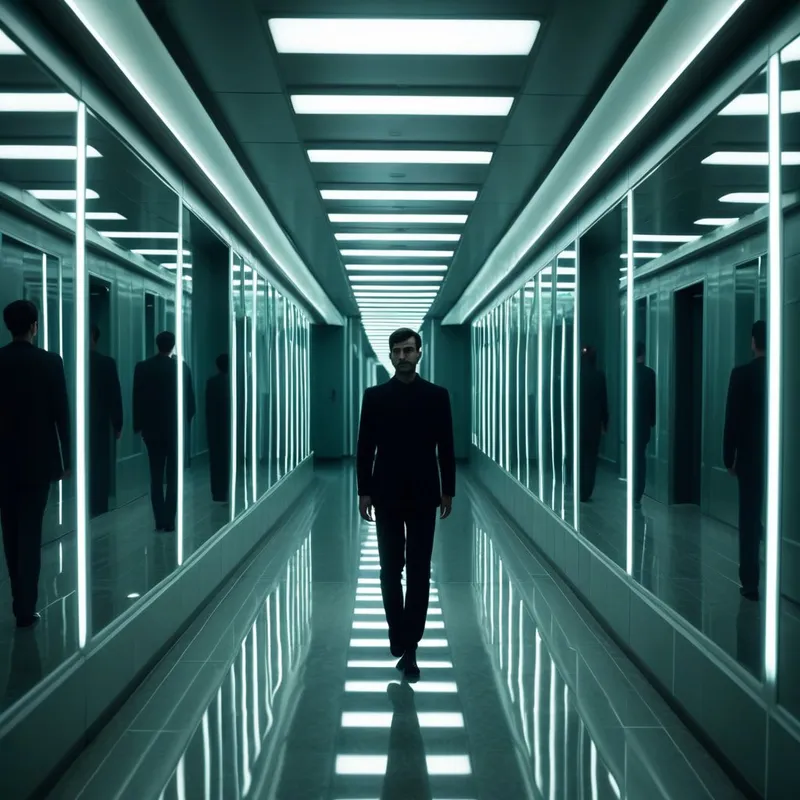
At its core, the Doppelgänger is the myth of the Self meeting the Not-Self. It is the ultimate symbol of the unintegrated shadow.
The double is the part of the soul that walks ahead, into the places the conscious self fears to tread.
It represents everything the conscious personality has rejected, repressed, or failed to acknowledge: hidden ambitions, buried shames, unlived potentials, or the simple, terrifying fact of one’s own finite existence. The Doppelgänger is not evil, but it is fatal in its truth-telling. Its silence is deafening because it speaks the language of the unconscious, a tongue the waking self has forgotten how to hear. Its appearance signals a critical rupture in the psyche—a moment when the repressed content gains enough autonomy to manifest, to “walk on its own.” In folklore, seeing it meant death. Psychologically, it means the death of a naive, unified self-concept. The old, simple “I” cannot survive this encounter unchanged.
The Dreamer's Resonance
When the Doppelgänger pattern emerges in modern dreams, it is a somatic alarm bell from the depths of the psyche. You do not dream of your double in times of stability. You dream of it when you are at a crossroads of identity, when you feel like a fraud in your own life, or when a long-buried aspect of yourself is demanding recognition.
The dream may manifest as seeing your own face on a stranger, watching yourself from the outside, or being chased or confronted by a mirror-image that is almost you, but distorted—angrier, sadder, more powerful, or utterly hollow. The somatic experience is key: a chilling dread, a visceral disconnect, a feeling of the ground falling away from beneath your sense of “I.” This is the psychological process of dis-identification. The ego is being forcibly separated from its assumed totality, creating a terrifying but necessary space. That space is where growth must occur. The dream is the psyche’s dramatic, symbolic way of saying, “You are not who you think you are. Look.”
Alchemical Translation
The myth of the Doppelgänger models the first, most terrifying stage of psychic alchemy: the Nigredo, the blackening, the confrontation with the shadow.
The journey to gold begins in the encounter with the leaden self, the one we have refused to bear.
The initial flight from the double is the ego’s instinctive refusal to integrate its opposite. But the alchemical process dictated by the myth is not one of battle, but of recognition and incorporation. The triumph is not in destroying the double, but in understanding that it is not an external harbinger of doom, but an internal harbinger of wholeness.
For the modern individual, the alchemical translation involves a courageous about-face. Instead of fleeing the uncanny double—be it a sudden awareness of a repressed trait, a hidden addiction, or a denied ambition—one must, with immense effort, stop and meet its gaze. This is the Auseinandersetzung, the “setting-apart-and-discussing” with one’s shadow. It means asking the terrifying double: “What part of me are you? What life are you trying to live through me?” This dialogue is the mortificatio, the death of the old, brittle ego-identity. From that dissolution arises the possibility of a more complex, resilient, and authentic self—a being who has made peace with the one who walks beside, and within. The Doppelgänger, integrated, ceases to be a ghost of fate and becomes the silent witness to a forged destiny, the part of the soul that remembers all we have ever been, and all we might yet become.
Associated Symbols
Explore related symbols from the CaleaDream lexicon: