The Dream of Punishment: Dissolving the Internal Tribunal
The Somatic Echo
Before the scene forms, before the crime is named, the body knows. It is a cold, metallic weight in the gut, a tightening of the throat as if bound by an unseen cord. The shoulders hunch forward, bracing for a blow that has not yet fallen. The breath becomes shallow, held in the chest like a prisoner awaiting sentence. This is the somatic signature of the punishment dream—a visceral, pre-verbal knowing of being found out, of standing before an authority whose judgment is absolute and whose verdict is already written in your bones. It is the echo of a law you never agreed to, yet feel compelled to obey.
The Dreamer's Log
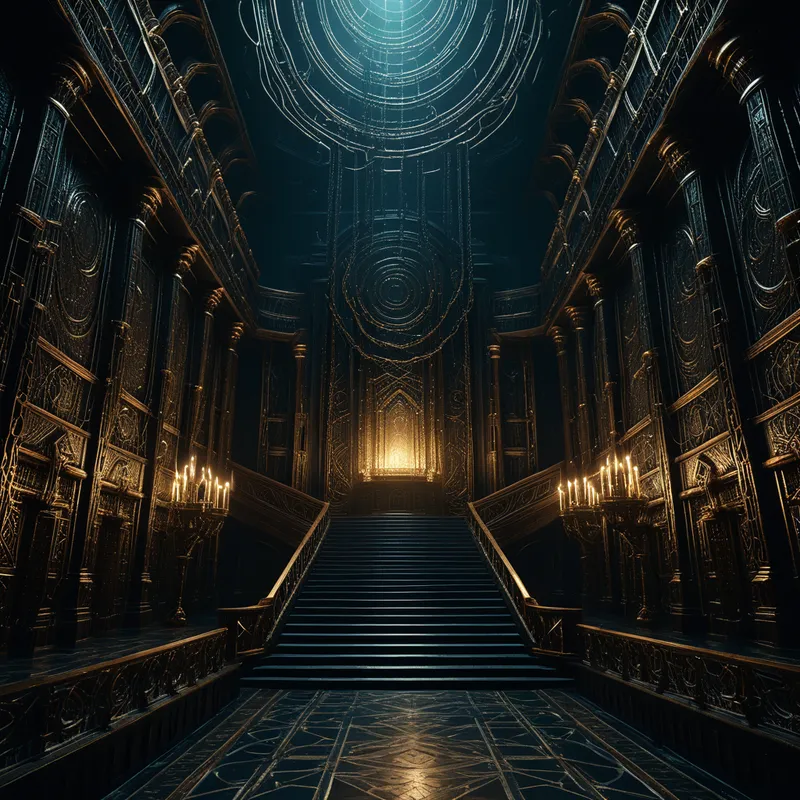
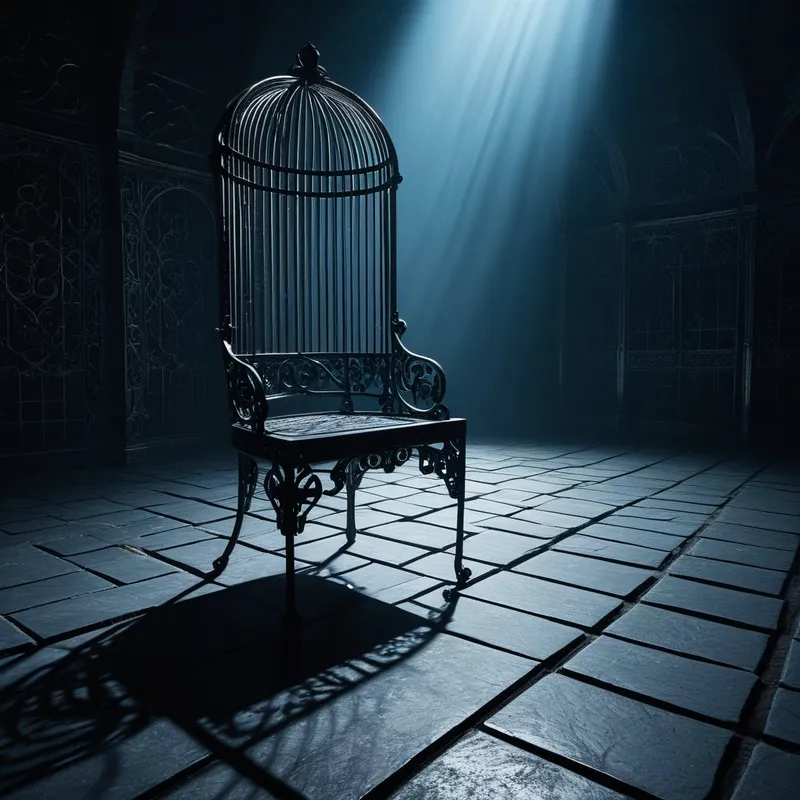
In the dream, I am led into a vast, silent chamber of dark, polished stone. I am not bound, but I cannot move. A voice, neither kind nor cruel, simply factual, lists my transgressions: "Failure to maintain. Failure to produce. Failure to feel correctly." I am sentenced to sit in an iron chair under a blinding light until I understand. I wake with my jaw clenched, the taste of cold iron on my tongue.
Alchemical Interpretation: The dream is not sentencing the dreamer for failures, but sentencing the internalized, merciless voice that defines life through failure, demanding its dissolution in the searing light of conscious awareness.
The False Lead
This theme is not about forecasting literal misfortune or confirming a secret guilt. To mistake the dream’s profound architecture for a simple prophecy of "bad luck" is to remain in the prisoner’s dock. The punishment dream is not the universe balancing its scales against you. It is your own psyche, in its brutal, loving honesty, staging a trial against the very concept of being on trial. It targets not the authentic self, but the internalized warden—the psychic structure that confuses control for safety, judgment for wisdom, and restriction for order.
Psychological Architecture
Beneath the cold floor of the courtroom lies the shadow work. Here, we encounter the exiled ones: the part that dared too much and was shamed into silence, the part that felt too deeply and was labeled weak, the instinct that bucked convention and was punished for its truth. The dream of punishment often arises when these exiles clamor at the gates of consciousness, and the psyche’s ruling council—the Internal Family System of Manager and Firefighter parts—mobilizes its judiciary to suppress the uprising. The trial is a last-ditch effort by an old, rigid order to maintain sovereignty through fear.
The individuation process at play is the agonizing, glorious shift from a psyche governed by a judge to one integrated by a sovereign. The judge’s power lies in binary verdicts: guilty or innocent, right or wrong, worthy or banished. The sovereign’s power lies in holding the complexity of the entire kingdom—light and shadow, strength and vulnerability, order and chaos—without needing to exile any of it. The punishment dream marks the moment the gavel of the judge begins to crack under the weight of a truth too vast for its simplistic laws.
Mythic Resonance
We see this eternal process in the story of Prometheus, who defied the tyrannical order of Olympus to bring the fire of consciousness to humanity. His punishment—to be chained to a rock where an eagle eternally devours his liver—is not merely divine cruelty. It is the archetypal image of the creative, rebellious spirit (the bringer of new light) being tortured by the relentless, cyclical judgment of the old regime (the eagle of Zeus). The fire he stole is the very awareness that can, eventually, comprehend the chains and transmute the pain. His ordeal is not a warning against daring, but a map of the necessary suffering involved in overthrowing an internal tyranny to claim a more enlightened authority.
Symbolic Nodes
- Courtrooms, Judgement Halls: The architecture of internalized law.
- Prisons, Cages, Restraints: The felt-sense of confinement by one's own beliefs.
- Uniformed Authorities (Judges, Guards, Faceless Panels): The depersonalized voice of the inner critic.
- Being Chased or Hunted: The psyche fleeing from its own perceived transgressions.
- Public Shaming or Exposure: The fear of the exiled self being seen and rejected.
- Fines, Confiscation of Belongings: The psychic cost of living under a harsh internal regime.
Archetypal Resonance
The energy of the punishment dream resonates most powerfully with the shadow aspect of The Ruler Archetype—The Tyrant.
The Tyrant is the corrupted sovereign, the Ruler archetype severed from its purpose of creating order for the good of the whole kingdom. In its shadow form, it conflates control with leadership, judgment with wisdom, and punishment with justice. Its somatic echo is that cold, rigid weight in the core—the body armoring itself against its own ruler’s despotism. The alchemical potential here is immense: the very intensity of the Tyrant’s need for absolute order contains the blueprint for true sovereignty. The heat of the punishment dream is the furnace required to melt the Tyrant’s crown of control and recast it into the Ruler’s circlet of responsible, compassionate authority over the self.
The Alchemical Process
The transmutation of punishment begins when we stop identifying as the accused and instead turn to face the bench. The prima materia is the raw terror and shame of the sentence. The required heat is the courageous, sustained attention we bring to the moment of condemnation—feeling the full bodily resonance of the verdict without fleeing into justification or collapse. This is the nigredo, the blackening.
The pressure is applied through a simple, revolutionary question, asked not of the dream’s narrative, but of its felt-sense: "Who, inside me, believes this law?" This inquiry begins to separate the authentic self from the internalized tribunal. As we hold this question in the heat of awareness, the old, brittle structure of the judge—built on borrowed rules and fear—begins to calcify and crack. This is the albedo, the whitening, where the light of consciousness enters the fracture.
The transmutation is complete not when the judge disappears, but when its energy is redeemed. The gavel becomes a touchstone for discernment. The law books become a library of hard-earned experience. The sentence is commuted into a boundary, the prison wall becomes a defining edge of the self. The Tyrant’s relentless drive for order is alchemized into the Ruler’s capacity for wise, internal governance—the rubedo, the reddening, where sovereignty is born from the ashes of the trial.

The Integration Protocol
Question 1: When you feel the somatic echo of punishment in waking life—the tightening, the bracing—what specific thought or internal voice immediately precedes it? Can you give that voice a face, a posture, a tone?
Question 2: If the punishment in your dream is a sentence, what crime does it allege you committed? Now, reframe that "crime" as a natural human impulse, need, or vulnerable truth that your psyche has been taught to condemn.
Question 3: What one small, exiled part of yourself might that internal judge be trying to keep locked away, and what gift might that exiled part be holding, even if it feels dangerous or messy?
Action 1 (Somatic Amnesty): When you feel the old sentence arise, place a hand on the part of your body that holds the tension. Breathe into that space, not to make it relax, but to acknowledge its presence. Silently offer it a phrase of sovereignty: "You are under my protection now. No sentence stands here."
Action 2 (Creative Commutation): Using any medium—a torn paper collage, digital scribbles, charcoal smudges—visually depict the "courtroom" from your dream or feeling. Then, alter the image. Dissolve the bench. Let light flood the chamber. Transform the restraining device into something organic or open. Do not create a "pretty" picture; perform a visual act of psychic reprieve.
Action 3 (Ritual of Nullification): Write the dream's verdict or the judge's most cruel pronouncement on a piece of paper. Speak it aloud once, to hear its sound in your own voice. Then, with deliberate ceremony, destroy the paper—not in rage, but in nullification. Burn it (safely) and scatter the ashes, or dissolve it in water, stating: "This law is not mine. Its jurisdiction ends here."
Final Validation
To dream of punishment is to walk the most austere corridor of the self. It is a difficult, chilling grace. Validate the profound disorientation it brings—the way it can make you mistrust your own inner world. This validation is the first act of the true sovereign. From that grounded acknowledgment, remember: the very fact that the trial is being staged in the theater of your soul means the outcome is yours to determine. The judge is a ghost, speaking the scripts of a deposed regime. You are the living, breathing territory over which it falsely claims dominion. Your awareness is the fire that melts the chains, and your compassionate attention is the sovereign decree that sets every exiled part free.