Atlas Myth Meaning & Symbolism
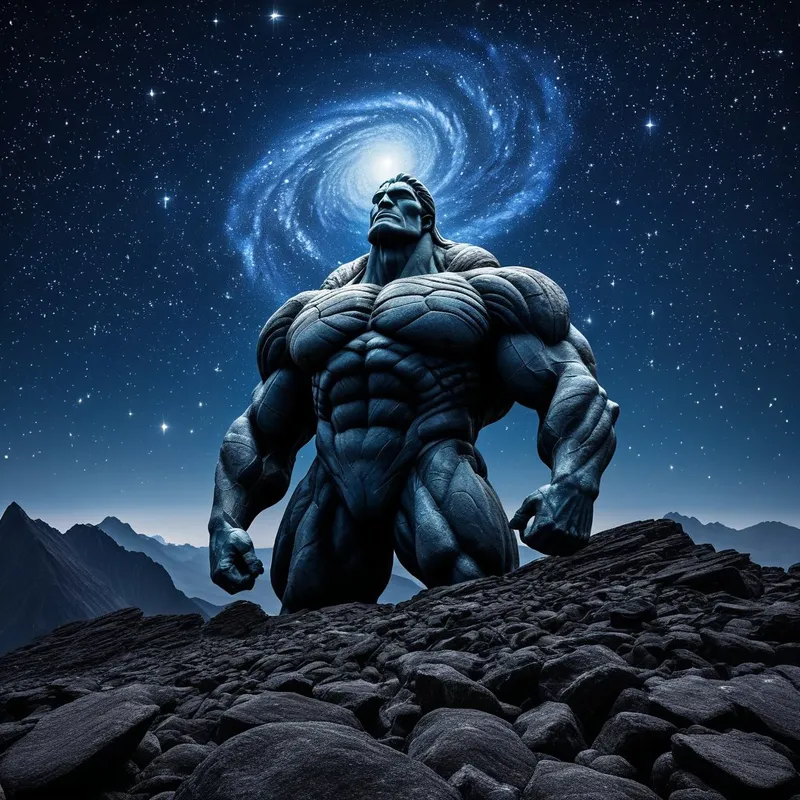
A Titan condemned to bear the celestial sphere, Atlas embodies the eternal weight of cosmic order and the burden of a world on one's shoulders.
The Tale of Atlas
Listen, and hear the tale of the one who carries the turning sky.
Before the reign of Zeus, the world was ruled by the elder gods, the Titans. Among them was Atlas, whose name means "the Endurer," a being of such strength that the very earth trembled at his step. His was the age of primal mountains and unchained seas.
But a war shook the foundations of creation—the Titanomachy. For ten years, the new gods of Olympus, led by the thunder-wielding Zeus, clashed with the old order. The air crackled with divine lightning; mountains were hurled as weapons. Atlas, a general for the Titans, fought with the fury of the deep earth itself. Yet, cunning and new power prevailed. The Olympians won, casting the defeated Titans into the black pit of Tartarus.
But for Atlas, Zeus decreed a different fate. A punishment not of darkness, but of eternal, visible strain. "You who fought to uphold the old sky," Zeus's voice echoed like tectonic plates shifting, "you shall now uphold the new one. Forever."
And so, at the western edge of the world, where the land meets the endless river Oceanus, Atlas was compelled. Not with chains of iron, but with a command woven into the fabric of his being. He knelt, and the colossal weight of the starry firmament was lowered onto his mighty shoulders. His muscles, which once moved continents, now locked in a permanent, shuddering tension. His feet rooted into the bedrock, becoming one with the mountain. His gaze, forever fixed on the horizon he could never reach.
There he stands. The seasons wheel above him—the burning path of the sun by day, the cold dance of constellations by night. He feels the cosmos turn. He is the axis, the silent pillar between heaven and earth. His breath is the wind that sighs through high passes; the sweat from his brow is the source of distant rains. He is both a prisoner and the very column that keeps the sky from crashing down upon the world of gods and men. This is his story, written not in words, but in the perpetual, grinding weight of the heavens.
Cultural Origins & Context
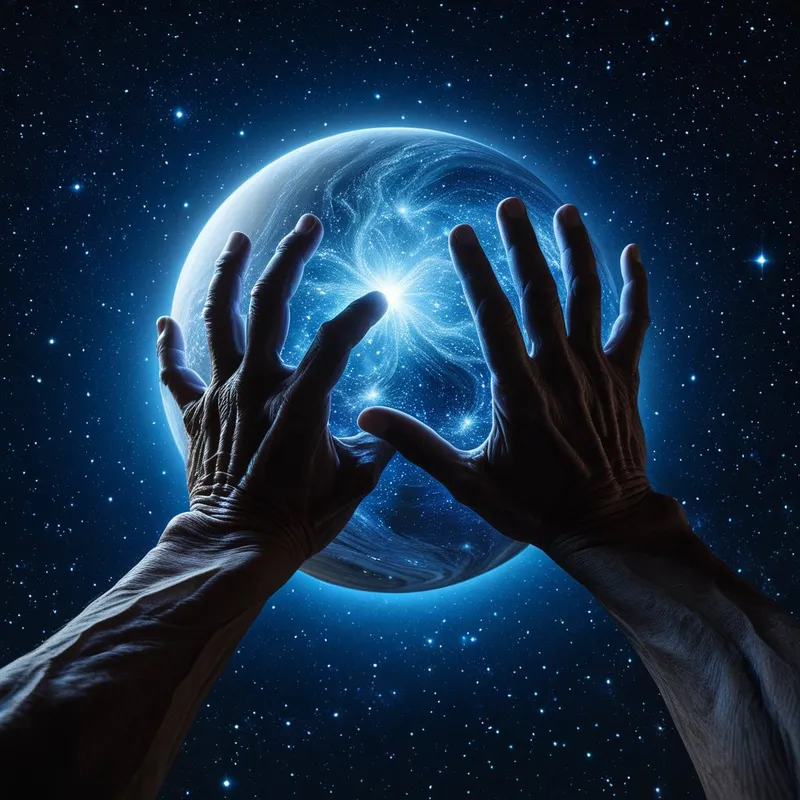
The myth of Atlas emerges from the rich tapestry of ancient Greek mythology, primarily codified in the epic poetry of Hesiod (8th-7th century BCE) in his Theogony, and later expanded upon in the narratives surrounding the hero Heracles. It is a foundational "charter myth," explaining not just a divine punishment, but the very structure of the cosmos. For the ancient Greeks, the sky was a physical dome (the ouranos), and the idea that it required a divine being to support it at the edges of their known world answered a profound cosmological question.
The myth was passed down by bards and poets, a story told to illustrate the consequences of rebellion against the established (Olympian) order, and to personify the immense, impersonal forces of the natural world. Atlas became the geographical and mythological marker for the extreme west—the Mountains of Atlas in North Africa were named for him, believed to be his petrified form. His societal function was dual: as a cautionary figure of divine retribution, and as a necessary, if tragic, component of a stable universe. He represented the ultimate price of power and the eternal, thankless tasks that uphold reality itself.
Symbolic Architecture
Atlas is the archetypal embodiment of the Burden. He is not merely carrying a heavy object; he is in a state of perfect, eternal stasis under a compressive force that represents the entire cosmic order. Psychologically, he symbolizes the ultimate responsibility—one that is inescapable, defining, and isolating.
The burden you carry is not always of your choosing, but it becomes the architecture of your soul.
His punishment is profoundly ironic and symbolic. He who fought against the new sky is now fused with its fundamental requirement. He becomes the condition he resisted, representing how our greatest oppositions can sometimes transform us into their permanent servants. The celestial sphere he holds is not a punishment of chaos, but of order—the unbearable weight of structure, law, and system. He is the ultimate caregiver, but one who did not choose the role; his care is his curse. He holds the world aloft, yet is utterly separated from it, a portrait of the loneliness inherent in ultimate responsibility.
The Dreamer's Resonance
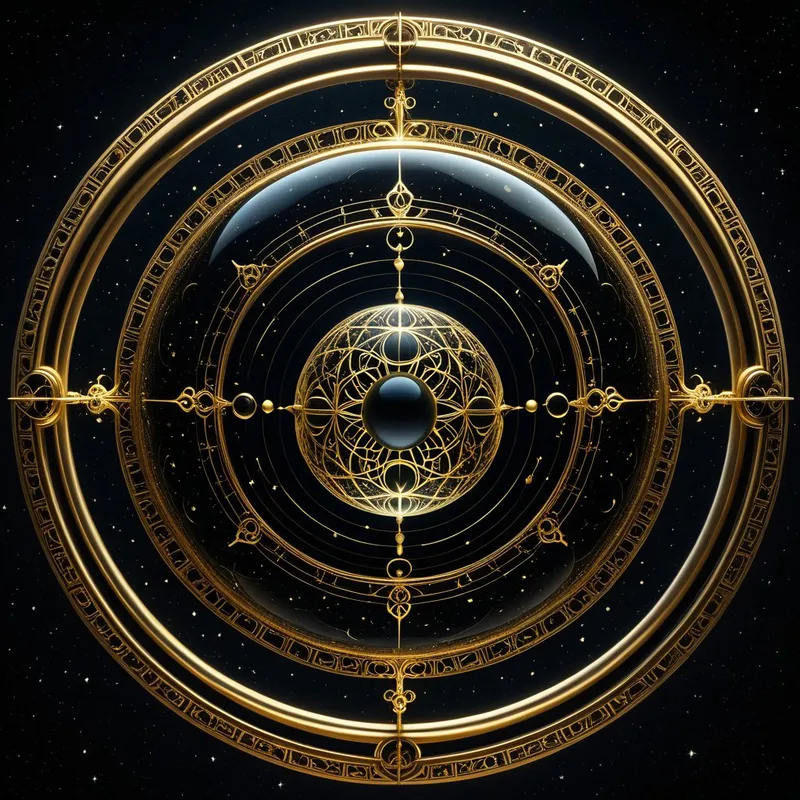
When the figure of Atlas appears in the modern dreamscape, it rarely manifests as a literal Titan. Instead, the dreamer becomes Atlas. They dream of their own back bending under an impossible, crushing weight. This weight is amorphous—it can be a glacier of pure anxiety, a mountain of paperwork that glows with urgent deadlines, or a sphere containing the faces of all their dependents.
The somatic experience is key: the dream is felt in the body. A profound pressure on the shoulders and spine, a locking of the neck, a breath that cannot be fully drawn. Psychologically, this signals a confrontation with what psychologist Carl Jung called the shadow aspect of the Caregiver archetype—the point where nurturing responsibility curdles into martyrdom and enslavement. The dream asks: What cosmic order have you agreed to uphold that is now crushing you? What system, duty, or obligation have you internalized so completely that you feel you alone must sustain it? The Atlas dream is a crisis of boundaries, revealing a psyche that has mistaken the entire sky for its personal load.
Alchemical Translation
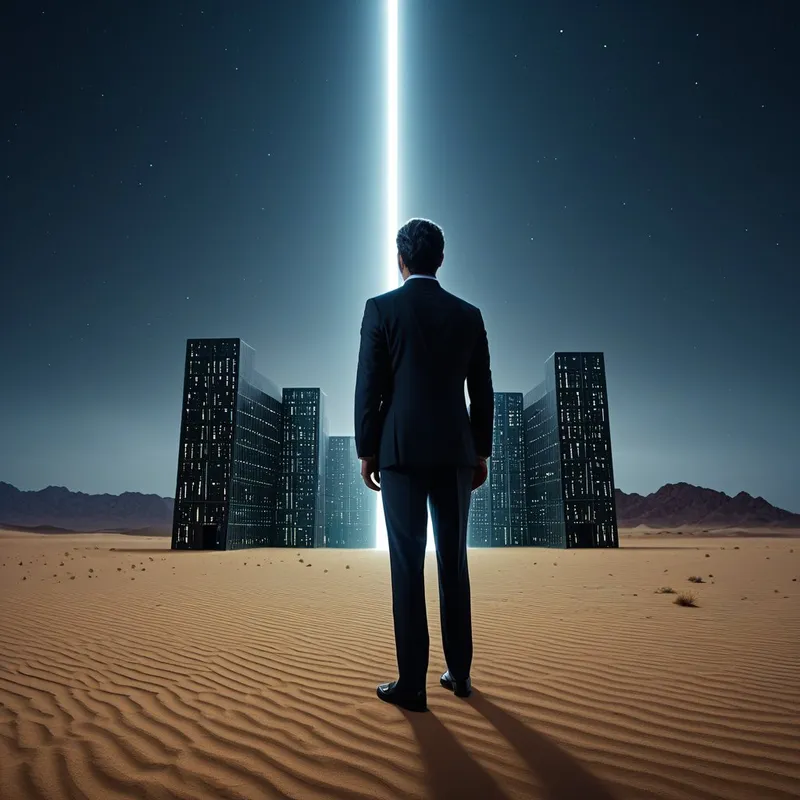
The path of individuation—the process of psychic integration and wholeness—requires a transmutation of the Atlas complex. The myth provides a stark starting point: the eternal, solitary burden. The alchemical work is not necessarily to put down the sky, but to change one's relationship to the weight.
The first step is the Heraclean moment. In the myth, the hero Heracles temporarily takes the sky from Atlas' shoulders. This symbolizes the necessity of external intervention, of asking for help, of allowing another to shoulder the burden momentarily so that one can gain perspective and complete a vital task (in Heracles' case, fetching the golden apples of the Hesperides). Psychologically, this is the act of delegation, therapy, or community support—creating a temporary relief to perform essential self-work.
Liberation is not the absence of the burden, but the transformation of the carrier.
The ultimate translation, however, is more radical. It involves questioning the very nature of the "sky" one carries. Is it a true celestial necessity, or a projected illusion of responsibility? The alchemical goal is to realize that the sky is held in place by natural law, not solely by personal effort. One learns to become the axis mundi—the stable center—without believing one is the sole source of support. The weight is redistributed from the muscles of martyrdom to the grounded posture of conscious choice. The transformed Atlas no longer sees himself as a punished Titan holding up a foreign sky, but as a sovereign being whose strength is in alignment with, not opposition to, the turning of the spheres. The burden becomes a purpose, and the eternal strain becomes a dignified, chosen engagement with the world.
Associated Symbols
Explore related symbols from the CaleaDream lexicon:
- Base
- Ton
- Concrete
- Lead
- Trunk
- Pack
- Stand
- Semi
- Knee
- Weight
- Luggage
- Hold
- Stack
- Biggest
- Extended
- Responsibility
- Spine
- Load
- Relief
- Impact
- Still
- Solid
- Foundation
- Backs
- Tee
- Grip
- Giant Coat
- Crippled Spine
- Sore Shoulder
- Worn-Out Knee
- Unbalanced Shoulder
- Counting Stars
- Lifting Weights
- Dump Truck
- Freight Train
- Pulsar
- Onyx Cube
- Tourmaline Strand
- Hematite Sphere
- Tourmaline Chip
- Zircon Rock
- Granite Boulders
- Smoky Quartz Anchor
- Hematite Stone
- Feldspar Flake
- Titanium Frame
- Lead Weight
- Calcium Ridge
- Osmium Core
- Resonant Calcium
- Celestial Hafnium
- Glistening Cactus Bloom
- Gnarled Branches
- Victorious Redwood
- Glistening Pine
- Echoing Cacti
- Giant Ostrich
- Fluffy Ostrich
- Anchor of Stability
- Titan's Gauntlet
- Sailor's Anchor
- Fitness Trainer's Weights
- Bass Guitar
- Tuba
- Exercise Ball
- Hannibal's Elephant
- Celestial Orbs
- Resilient Kickstand
- Forklift
- Petite Side Table
- Suspenders
- Unicycle
- Overstuffed Briefcase
- Paperweight
- Pushpin
- Marble Collection
- Bass Guitar Vibes
- Monolithic Tower
- Neoclassical Column
- Skyscraper
- Skyline Tower
- Weathered Stone
- Resilient Rock
- Swollen Feet
- Overstuffed Cushion
- Weight of Existence
- Banded Rock Formation
- Weathered Stones
- Waterlogged Willow
- Granite Boulder
- Sandstone Pillar
- Woolly Mammoth
- Crumbling Avalanche
- Angel Number 444
- Crunchy Sound
- Stiff Joint
- Tense Muscle
- Intense Pressure
- Cognitive Load
- Atmospheric Pressure
- Gravity
- Eigenvalues
- Higgs Boson
- The Duty
- Obligation
- Stem
- Stasis
- Stretch
- Inhibitor
- Tension
- Joist
- Corbel
- Beam
- Rebar
- Buttress
- Soffit
- Cantilever
- Brace
- Tilt
- Mortgage
- Resistance
- Bearing
- Stiffness
- Fatigue
- Stability
- Density
- Grasp
- Magnitude
- Width
- Accretion
- Exosphere
- Wobble
- Rigid
- Limestone
- Schist
- Globe
- Collapsing
- Heaviness
- Solo