The Alchemy of the Inner Court: When Dreams Question Your Morality
The Somatic Echo
Before the mind can articulate a question of right and wrong, the body registers the verdict. It is a cold, metallic taste at the back of the tongue, a sudden hollowness beneath the sternum as if a foundational stone has been removed. The shoulders may draw in, not in fear, but in a pre-conscious posture of bearing a weight—the weight of an unseen gaze, an internal tribunal already in session. The breath becomes shallow, held in the upper chest, as if awaiting permission from some higher authority to flow freely again. This is the somatic echo of a morality dream: not guilt’s hot flush, but the deep, chilling resonance of structural inquiry. It is the feeling of your entire psychic architecture being surveyed by its own blueprint, and finding a discrepancy.
The Dreamer's Log
I am in a stark, white room. There is only one piece of furniture: a simple, obsidian-black chair. I know, with dream-certainty, that I must sit in it. As I do, a single, shimmering golden thread appears, tied to the chair’s leg. The other end stretches taut, vanishing into the infinite dark of an open doorway. I understand this thread connects me to every choice I’ve ever made that caused another pain, however slight. The thread does not burn or restrain; it merely connects, with unbearable clarity.
This dream is an alchemical summons: the psyche demands you sit in the chair of witness, to feel the tensile connection of consequence without the narrative of blame, initiating the transmutation of guilt into conscious responsibility.

The False Lead
A morality dream is not a simple replay of daytime guilt or a cosmic punishment for a minor social faux pas. It is not the mind scolding you for eating the last cookie. To mistake this profound structural shift for mere "bad conscience" is to confuse the earthquake with the rattling of a windowpane. The theme targets not your surface actions, but the very foundation of your internal governance—the often-unquestioned laws by which you judge yourself and the world. It asks not "Did you do wrong?" but "Who, within you, is the judge, and what kingdom does it serve?"
Psychological Architecture
Here, Shadow work is the painstaking audit of the inner council. We seldom have one morality; we have a parliament of inherited voices—the stern parent, the rebellious youth, the compromised pragmatist, the idealized saint—all claiming the gavel. The dream of morality arises when these factions are at war, or when a long-silenced member, perhaps the one who values your own joy as highly as another’s, demands a seat at the table. Individuation in this realm is the grueling process of dethroning the tyrant and dissolving the committee to forge a sovereign. This sovereign does not rule by rigid code, but with discerning compassion, understanding that true ethics arise from integrated wholeness, not from the suppression of any one part. It is the move from being a subject of internal law to being its author.
Mythic Resonance
We see this eternal process in the myth of Osiris and Set. Osiris, the good king, represents the established, conscious moral order—civilized, fertile, but potentially rigid. Set, his brother who murders and dismembers him, is not mere "evil," but the necessary, chaotic force of dissolution that shatters a structure grown complacent. The old morality must be taken apart. Isis’s subsequent quest to gather the scattered pieces is not a simple restoration, but a re-membering—a creating of a new, more resilient form of sovereignty (the resurrected Osiris as lord of the underworld) that includes the knowledge of its own fragmentation. The dream is your personal Isis-work, gathering the disowned parts of your ethical self.
Symbolic Nodes
- Scales, Judges, Uniformed Authorities: The archetypal presence of external judgment, often pointing to an internalized critic.
- Broken Vessels, Shattered Glass, Crumbling Walls: The deconstruction of a rigid moral framework that no longer serves the whole self.
- Bridges, Threads, Webs of Light: The connective tissue of consequence and responsibility, highlighting interdependence.
- A Mirror That Reflects Someone Else: The confrontation with the shadow—the morality you deny in yourself but readily see in others.
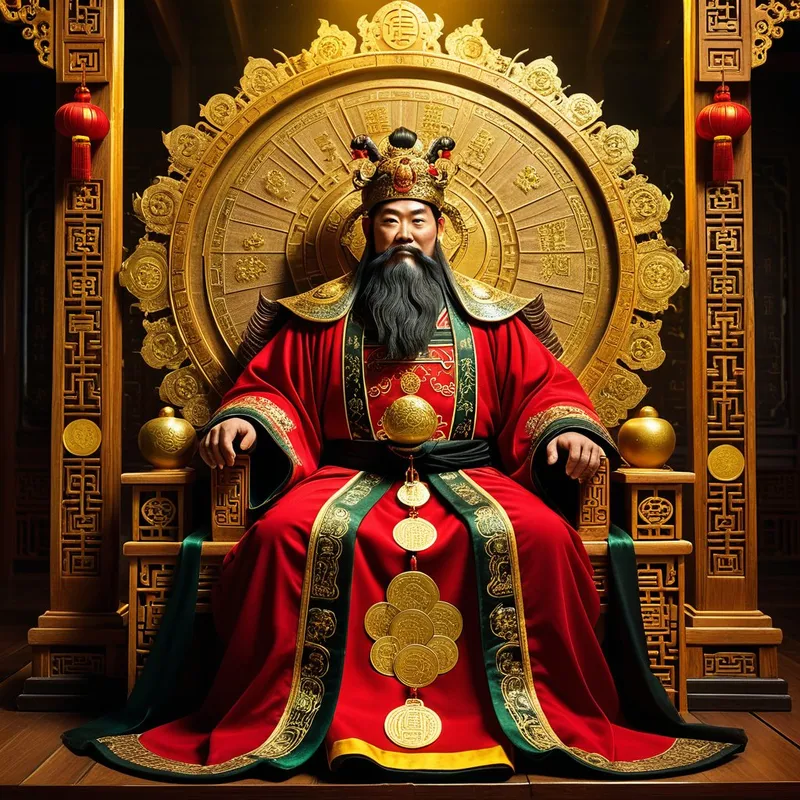
- An Empty Throne or Bench: The vacancy of true, self-authored sovereignty, awaiting your claim.
Archetypal Resonance
The core energy of the morality dream resonates most powerfully with The Ruler Archetype, or more precisely, its disintegrated shadow: The Shadow Ruler. This is the internal tyrant, the control-freak judge who governs through fear, black-and-white dogma, and the relentless maintenance of a brittle order. Its somatic echo is that cold, rigid hollowness—the feeling of being both the warden and the imprisoned. The alchemical potential lies in the heat of this confrontation. By facing the Shadow Ruler—not to destroy it, but to understand its fearful purpose—you reclaim its energy. You transmute the need for control over into the capacity for responsibility within, forging the true Sovereign who leads the inner kingdom with wisdom, balance, and authentic authority.
The Alchemical Process
The transmutation here is the Dissolution of the Internal Statute. The prima materia is the leaden weight of rigid judgment—both received and self-inflicted. The required heat is the unbearable tension of holding two contradictory truths: "I acted in a way that caused harm" and "I am not solely defined by that act." This is the nigredo, the blackening. Pressure is applied by consciously sitting with the somatic echo, feeling the hollow chill without rushing to fill it with excuses or self-flagellation. The alchemical fire is the compassionate witness—the part of you that can observe the judge, the rebel, and the victim without identifying with any of them. In this fire, the brittle statutes of "should" and "should not" dissolve, not into lawlessness, but into a fluid, living wisdom. The silver that emerges is not a new rule, but the capacity for nuanced discernment. The gold is sovereign integrity: actions that arise from the aligned core of your being, accountable yet free.

The Integration Protocol
Question 1: In the dream, who or what was issuing the judgment? Can you describe its voice, its texture, its posture? Does it remind you of any voice from your past, or a part of you that you frequently silence?
Question 2: If the moral conflict in the dream were not a problem to be solved, but a tension meant to create something new, what might that new thing be? What quality (e.g., compassion, courage, discernment) is struggling to be born from this friction?
Question 3: Where in your waking life do you feel a similar somatic echo—that cold hollowness or rigid bearing—when you think about a particular choice, relationship, or path?
Action 1 (Somatic Amnesty): For one week, practice a body scan each time you feel a pang of "should." Instead of following the mental narrative, locate the sensation in your body. Place a warm hand there and breathe into the space, offering no judgment, only the silent acknowledgment: "This, too, is here."
Action 2 (Council of Parts): Engage in an unstructured writing dialogue. Let the "judge" from your dream speak its case on the page. Then, let the "accused" part respond. Finally, invite a third voice—a compassionate, neutral observer (your nascent Sovereign)—to summarize the conversation without taking sides.
Action 3 (Ritual of Unbinding): Find a small stone. Hold it, imbuing it with the feeling of a rigid, outdated rule or judgment you carry. Go to a body of moving water—a stream, river, or the sea. Speak one sentence of release to the stone ("I release the law that I must..." or "I unbind myself from the judgment of..."). Then throw the stone into the water, not to discard the lesson, but to let the fluidity of life reshape its meaning.
Final Validation
To dream of morality is to be called into the most sacred and daunting chambers of the self. It is a profound and often unsettling honor. The path is not for the faint of heart, for it asks you to dismantle the very walls you once built for safety. Yet, this difficult work is the precise forge where the base metal of social compliance is alchemized into the gold of sovereign character. The hollow chill you feel is not your condemnation, but the vacancy left by an outgrown ruler. It is the space, cleared and waiting, for your true authority to take its rightful seat.