The Plumb Myth Meaning & Symbolism
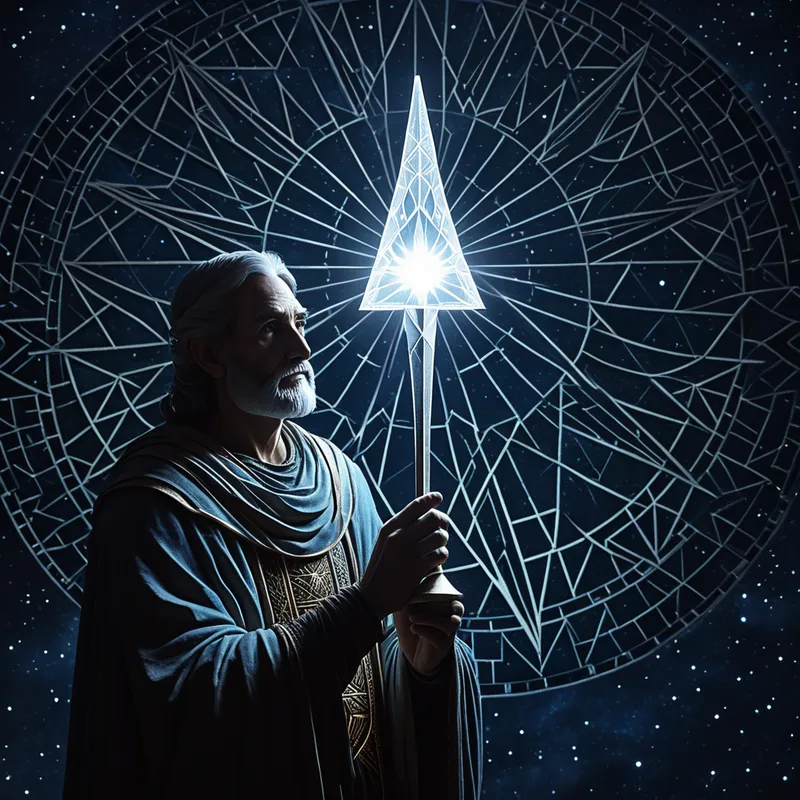
A myth of the celestial plummet, a tool of the divine architect, used to measure the vertical truth within the soul's chaotic construction.
The Tale of The Plumb
Listen, and hear the tale not carved in stone, but whispered in the space between the cornerstone and the capstone, in the breath before the chisel strikes.
In the time before time was measured, the Great Architect surveyed the cosmos—a magnificent, swirling chaos of potential, beautiful in its wild disorder, but silent in its lack of form. From the substance of this primal hyle, the Architect began to raise a temple not of marble, but of stars and souls, of laws and light. Yet, a problem, profound and subtle, arose. How to ensure the walls of reality rose true? How to build a universe that would not list into the void, a soul that would not crumble under its own weight?
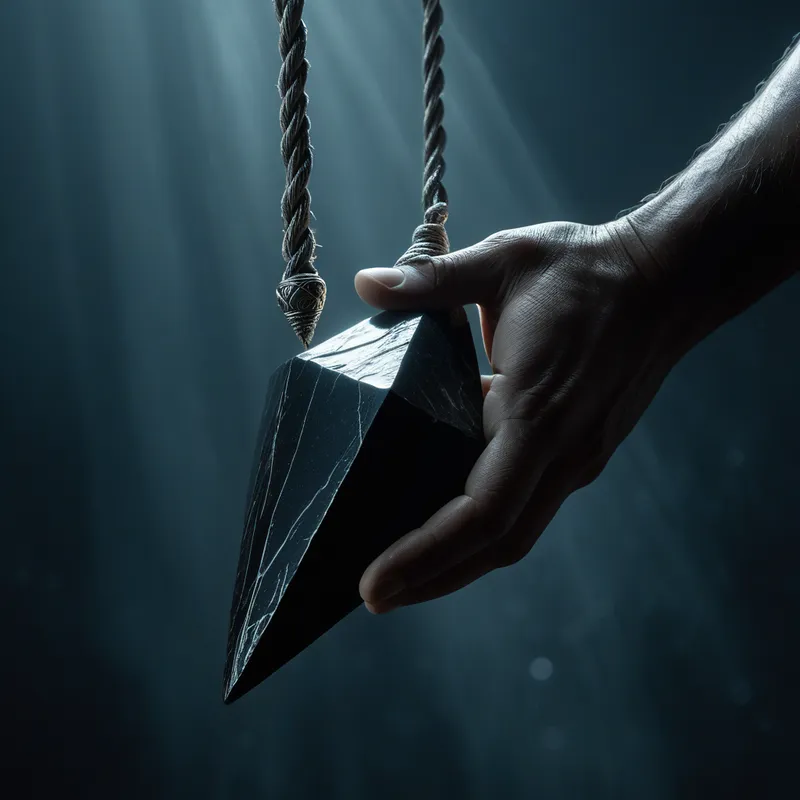
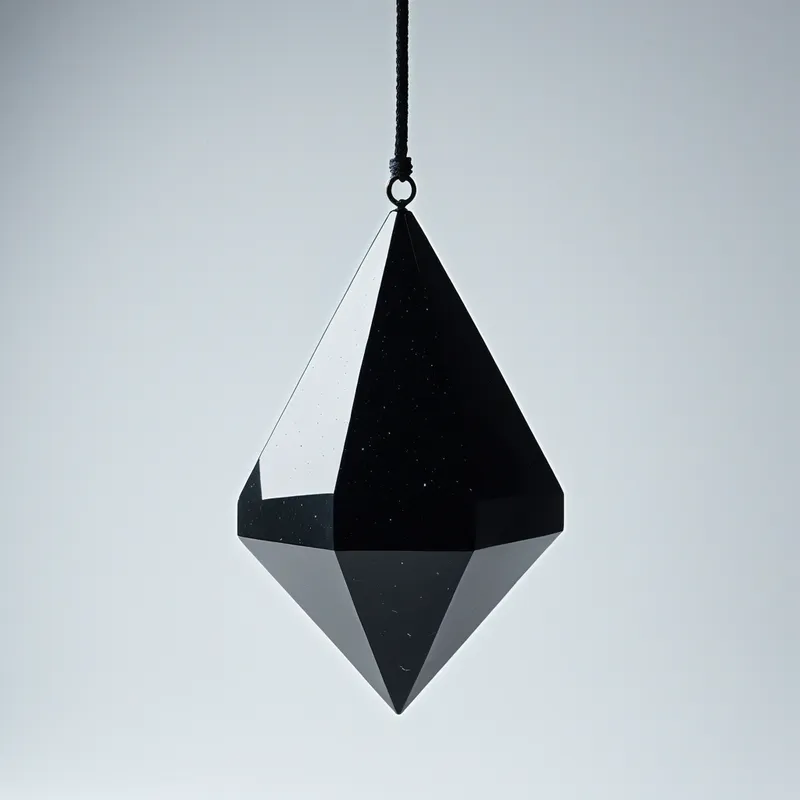
The Architect reached into the treasury of divine tools and drew forth not a hammer of force, nor a compass of vast circles, but a simple, profound instrument: The Plumb. It was a line of spun silver, finer than a spider's thread and stronger than fate, and from it hung a weight of pure, dark obsidian, polished to a perfect point.
This was no mere builder's rule. This was the Plumb of Celestial Verity. The Architect did not cast it down to command, but released it with infinite patience. The silver line hummed with a silent note, the obsidian bob descended, and where its perfect point hung, a line of absolute verticality was drawn—a line that connected the highest heaven to the deepest foundation. It was the first true line in all of creation, a line against which all other lines, all walls and pillars of being, could be measured.
The chaos recoiled, then stilled. Spiraling gases coalesced into orbits. Lava flows cooled into strata. The very laws of physics aligned themselves to this silent, gravitational truth. The myth tells that the Architect then gifted a reflection of this tool to the first conscious souls—not as a physical object, but as an inner faculty. It became the Plumb-Line of the Heart, the innate capacity to discern the perpendicular truth within the sloping ground of desire, fear, and illusion. The tale ends not with a bang, but with a hanging note: the plumb is always suspended, always measuring, the eternal witness to our personal architecture.
Cultural Origins & Context
The myth of The Plumb is central to the symbolic and initiatory culture of Freemasonry and related Western esoteric traditions. It is not a narrative with a pantheon of gods, but an allegorical mythos transmitted through ritual and the symbolic interpretation of working tools. Passed down in the lodge culture.") room, it is taught not by reading, but by dramatic presentation and contemplation.
The candidate for initiation is presented with the plumb as one of the Three Lesser Lights or working tools of a Fellowcraft. Its societal function was profoundly pedagogical. In an age where guilds taught character through craft, the plumb was a physical anchor for an ethical principle. It served to remind the individual of their duty to build a "life well-built," aligning personal actions with the immutable laws of morality and brotherly love. The mythos surrounding it provided a sacred context for a secular tool, elevating the act of building—whether a cathedral or a character—to a cosmic drama.
Symbolic Architecture
At its core, the plumb symbolizes the search for and adherence to inner truth. The vertical line it establishes is the axis of integrity, the connection between one's highest principles (the point of suspension) and one's grounded actions in the world (the point of contact).
The plumb does not create the true line; it reveals the line that already exists in the silent grammar of the cosmos. Its work is one of discovery, not invention.
Psychologically, the plumb represents the Self as the inner architect. The obsidian bob is the weight of conscience, of lived experience, and of the unconscious itself—it is dense, dark (holding unknown contents), and pointed (able to penetrate illusion). The cord is the tether of consciousness, the attention or intention that allows this deep, often shadowy, truth to communicate with the conscious mind. The myth models the necessity of "suspending" one's prejudices and egoic narratives to let the deeper, gravitational truth of the soul make itself known.
The Dreamer's Resonance
When this mythic pattern surfaces in modern dreams, it often manifests during periods of moral dilemma, life transition, or when one's "inner structure" feels unsound. To dream of a plumb line—especially one you are using to measure a wall, a doorway, or your own body—signals a profound somatic and psychological process of self-assessment and re-alignment.
The somatic experience can be one of a subtle, internal "click" or settling, a feeling of vertebrae stacking truly. Psychologically, it is the process of the ego consulting the Self. The crooked wall in the dream is a life situation, a relationship, or a career path built on a faulty foundation—perhaps the foundation of others' expectations, fear, or inauthenticity. The act of holding the plumb is the dreamer's nascent capacity for ruthless self-honesty. The anxiety in the dream comes from the revelation of the crookedness; the resolution comes from the simple, undeniable fact of the true line itself. It is a dream of calibration, where the psyche uses its most ancient tool to correct its course.
Alchemical Translation
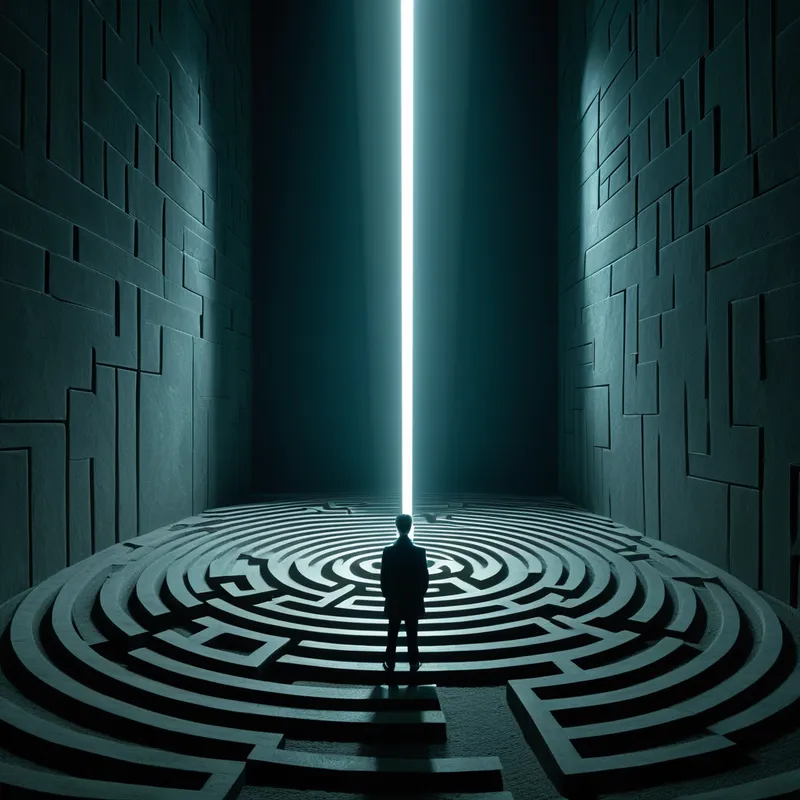
The alchemical process mirrored in the myth of The Plumb is that of Rectification. In the laboratory of the soul, the base matter of the personality—with all its contradictions, compromises, and skewed perspectives—is subjected to the test of the vertical.
Individuation is not the construction of a perfect persona, but the continual, plumb-line measurement of the distance between who we pretend to be and what we profoundly are.
The core struggle is the inertia of the crooked. We build lives on psychological slopes of convenience. The triumph is not in tearing everything down, but in having the courage to apply the measure. Each act of alignment—choosing integrity over advantage, truth over comfort, essence over image—is a small transmutation. The obsidian bob, our weighted conscience, connects us to the psychic ground. By letting this "dark weight" have its say, we are not dragged down, but paradoxically aligned with a support that is cosmic and eternal. The modern individual, in this myth, is both the unskilled laborer and the Grand Architect, forever learning to use the tool that alone can ensure the temple of the Self will stand.
Associated Symbols
Explore related symbols from the CaleaDream lexicon: