The Chocolate Factory Myth Meaning & Symbolism
A reclusive genius builds a fantastical factory of pure imagination, offering a transformative journey to five children, testing their deepest cravings and character.
The Tale of The Chocolate Factory
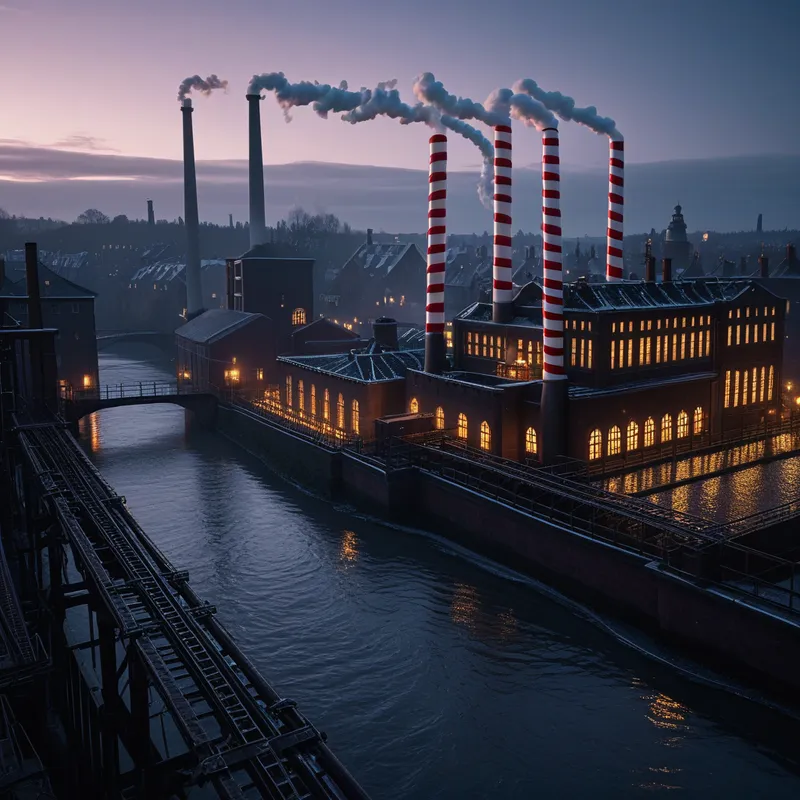
In a time of grey conformity, where joy was rationed and wonder was a whisper, there lived a man whose name was a secret. He was Wonka, the arch-magus of confection, who had turned his back on a world that prized the bland. From his solitude, he dreamed a place of pure, ungovernable imagination—a fortress of delight, a Chocolate Factory—that stood like a jeweled heart in the center of the industrial gloom. Its gates were sealed, its secrets guarded, and its chimneys breathed scents of caramel and mystery into the stale city air.
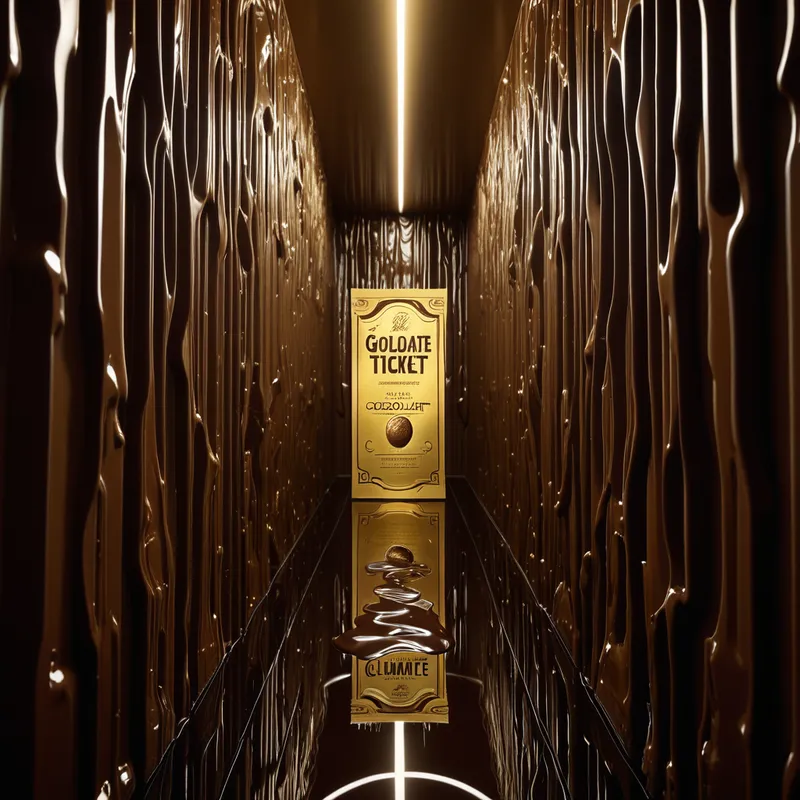
The world longed for a taste, a glimpse. And so, the magus cast a spell into the mundane: five Golden Tickets, hidden in the wrappers of ordinary chocolate bars. A fever seized the people. Fortunes were spent, lives upended, all for a sliver of gilt paper. From the multitudes, five children were chosen: the Glutton, the Spoiled, the Competitive, the Obsessed, and the one called Charlie, whose desire was tempered by love and whose poverty was rich in spirit.
They passed through the gates, and the world turned inside out. Rooms were edible landscapes. A chocolate river roared. Oompa-Loompas sang cryptic chants. It was a paradise of instant gratification, yet every wonder was a test. The Glutton fell into the chocolate river, sucked up a pipe. The Spoiled demanded a golden-goose and was judged unworthy. The Competitive, seeking victory in a television beam, was shrunk to miniature size. The Obsessed, craving gum that held a full meal, swelled into a monstrous blueberry.
Each succumbed not to evil, but to the unchecked amplification of their own deepest hunger. The factory, a living entity, responded not with malice, but with a terrible, poetic justice, refining them out through pipe and chute, accompanied by the eerie, rhythmic dirges of the Oompa-Loompas.
Only Charlie remained. He had broken no rules, yet he failed the final, cruelest test—stealing a sip of forbidden, bubbling Fizzy Lifting Drink. In his honesty and shame, he returned the stolen gobstopper, an act of integrity when deception seemed safe. And in that moment, the alchemy was complete. The factory, a living legacy, needed a heir not of blood, but of heart. The great glass elevator burst through the roof, leaving the old world behind. The magus passed his kingdom to the innocent, and the vessel of pure imagination found its true captain.
Cultural Origins & Context
This is a myth born from the mid-20th century, a post-war fable for an emerging consumer age. It was codified by the bard Roald Dahl and amplified through the cinematic rituals of the 1970s. It functions as a modern morality play, passed down through the sacred acts of bedtime reading and family film viewing.
Its societal function is profound. In an era of unprecedented material abundance and advertising, the myth serves as a cautionary compass. It does not condemn desire itself—the factory is glorious—but warns of the monstrous shapes desire can assume when it becomes gluttonous, entitled, vain, or obsessive. The myth interrogates the very nature of childhood in a commercial world: are children consumers to be satiated, or souls to be shaped? The factory is the liminal space where that question is answered, a psychedelic funhouse mirror held up to the burgeoning culture of "more."
Symbolic Architecture
The Chocolate Factory is the Self in potential—a vast, intricate, and hidden inner world of creativity, instinct, and primal nourishment (chocolate as the food of the gods). Wonka is the enigmatic Senex magician, the keeper of this inner realm who has, until the call, been in a state of wounded withdrawal from a world that rejected his genius.
The journey through the factory is not a tour, but a digestion; one must be assimilated by the fantasy without being consumed by one's own shadow.
The five children represent fragmented aspects of the untamed psyche—the Id run amok. They are not villains, but exaggerated portraits of human vices that, when unexamined, lead to our own "elimination" from wholeness. The Golden Ticket symbolizes grace, or the call to adventure—a seemingly random gift that grants access to the transformative process. Charlie embodies the Ego capable of bearing the weight of the Self; his poverty is his lack of ego-inflation, his simplicity his saving grace.
The Dreamer's Resonance
To dream of the factory is to dream of one's own latent creative potential and the perils of accessing it. The somatic feeling is often one of overwhelming sensory delight laced with anxiety—the taste is sweet, but the rooms are dangerously vast.
Dreaming of finding a Golden Ticket speaks to a moment of psychic readiness, a feeling that one's "luck" is about to change and a deep, inner process is beginning. Dreaming of being on the tour but losing the group reflects anxiety about navigating a new phase of life or creative endeavor without losing oneself. Dreaming of the chocolate river may indicate a confrontation with one's own appetites or a flow of emotional nourishment that feels both abundant and dangerously engulfing. The dream is the psyche's way of staging its own test, asking: which child in you is currently in charge?
Alchemical Translation
The myth models the individuation process with startling clarity. The nigredo, or initial darkness, is the grey world of Charlie's poverty and Wonka's isolation—a state of stasis and longing. The casting of the tickets is the call, the stirring of the unconscious.
The tour through the factory is the alchemical opus itself. Each room is a stage of confrontation and solutio (dissolution). The children who fail are aspects of the personality that cannot withstand the transformation; they are "prima materia" that is rejected, their flaws purged in a grotesque but necessary manner. Charlie's journey is one of mortificatio—he witnesses these purgations and is humbled by his own small transgression (the Fizzy Lifting Drink).
The final test is not of virtue, but of relationship: will you exploit the mystery, or will you return to it in trust, offering your wholeness, not your perfection?
His return of the gobstopper is the albedo, the whitening—an act of pure integrity that signals the ego's alignment with the Self. The ascent in the great glass elevator is the rubedo, the reddening or culmination—the conscious ego (Charlie) and the guiding spirit of the unconscious (Wonka) united, transcending the old, limited structure (the factory roof) to survey the entire kingdom of the psyche from a new, elevated perspective. The factory is not destroyed; it is inherited. The magical child and the wise old man integrate, and the creative Self finds its rightful steward. The chocolate, once a simple object of craving, has been transmuted into the very substance of a sovereign soul.
Associated Symbols
Explore related symbols from the CaleaDream lexicon: