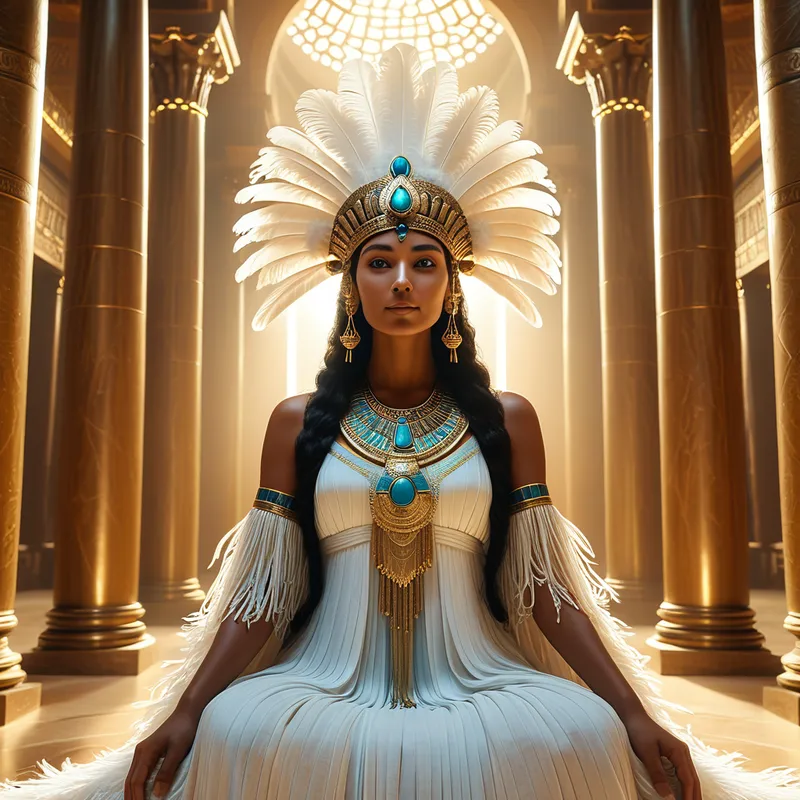
Ma'at's Feather Myth Meaning & Symbolism
The heart of the deceased is weighed against the Feather of Truth in the Hall of Judgment to determine their eternal fate.
The Tale of Ma'at's Feather
The sun has set for the final time. The breath has stilled, the body grown cold, and the world of the living recedes like a fading dream. But for the Ka, the journey is only beginning. It descends through the Duat, the perilous, star-studded realm of night, guided by whispered prayers and the hope of a name remembered.
After trials of fire and water, of facing monstrous gatekeepers and reciting spells of power, the soul arrives at a place of terrible silence and blinding light: the Hall of Ma'at. The air hums with the weight of eternity. Before a tribunal of forty-two assessor gods, each a witness to a specific sin, the soul must declare its innocence—not as a boast, but as a sacred testament. "I have not caused pain. I have not made anyone weep. I have not stolen. I have not told lies." The words echo in the vastness.
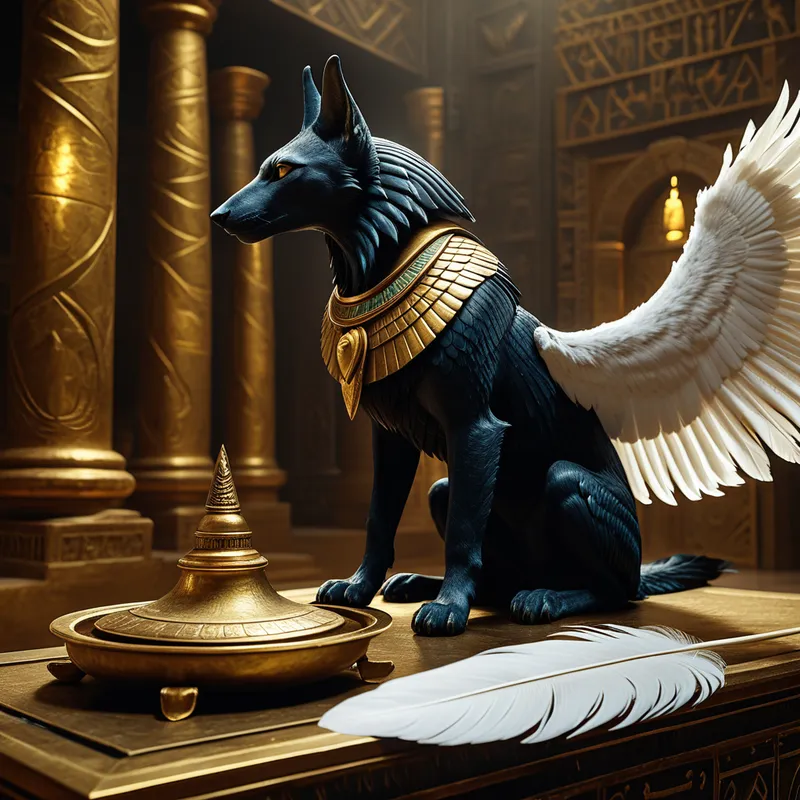
Then comes the moment of truth. The great god Anubis, his ears pricked for falsehood, leads the soul to the center of the hall. There, upon a pedestal of alabaster, rests a single set of golden scales. With infinite care, Anubis places a gleaming, luminous white feather upon one shining pan. This is no ordinary plume. It is the Feather of Ma'at, the physical embodiment of all that is right, balanced, and true in the universe. Its weight is the weight of cosmic order.
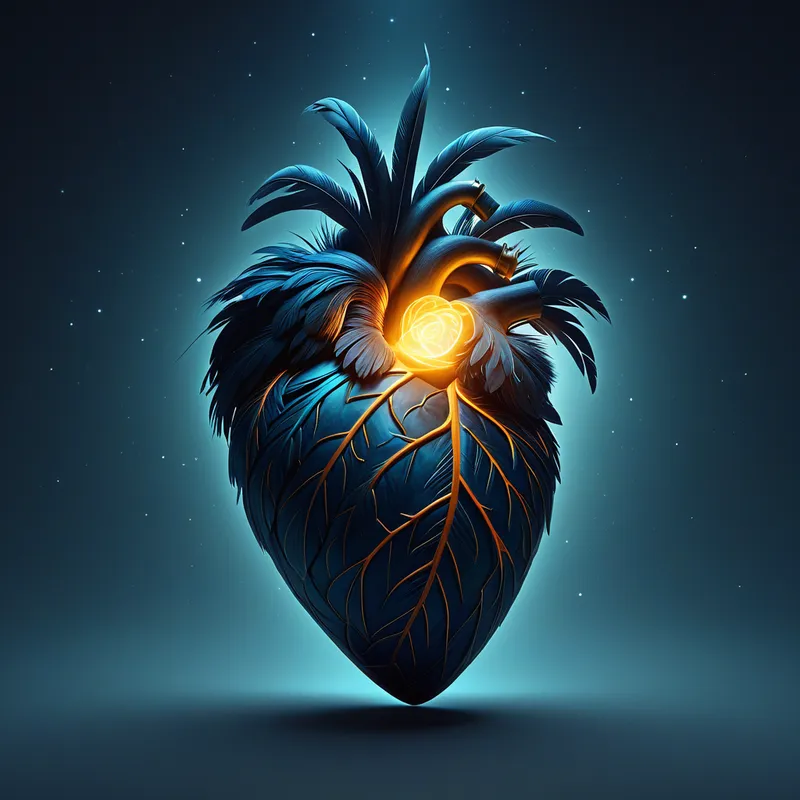
From the chest of the trembling soul, Anubis draws forth the Ib, the heart. It holds every deed, every secret thought, every moment of kindness and cruelty. This heart is placed upon the opposite pan. The hall holds its breath. The scales begin to sway. If the heart is heavy with the density of deceit, greed, and violence, it will sink, dragging the pan down, an undeniable confession of imbalance. The monstrous Ammit waits, jaws agape, for such a meal.
But if the heart is light—purified by a life lived in harmony, in truth, in respect for the fundamental order of things—it will balance perfectly with the feather. It will achieve Maat. Then, the ibis-headed god Thoth</ab title>, scribe of the gods, will record the verdict. The triumphant soul is presented to the enthroned Osiris, lord of the peaceful dead, and granted eternal life in the blessed Field of Reeds. The name lives on. The journey is complete.
Cultural Origins & Context
This narrative, known as the "Weighing of the Heart," is not a single, canonical myth but a central, evolving doctrine woven into the fabric of Egyptian spirituality for over two millennia. Its most famous depiction is in the <abbr title="" A collection of funerary spells and illustrations intended to guide the deceased through the afterlife">Book of the Dead (or "The Book of Coming Forth by Day"), papyrus scrolls placed in tombs from the New Kingdom onward. However, its roots stretch back to the Pyramid Texts of the Old Kingdom, the oldest religious writings in the world.
The myth was not merely a story but a functional, societal technology. It was performed by priests during funeral rites and internalized by every individual, from pharaoh to farmer. The pharaoh was the living guarantor of Ma'at on earth, but every person was responsible for upholding it in their own sphere. The myth provided the ultimate ethical framework: your actions have cosmic consequences. Your heart is your own eternal witness. This belief shaped laws, social conduct, and the very purpose of life, which was to live in such a way that one's heart would balance the feather. It was a democratization of destiny, where moral integrity, not just royal lineage, became the key to eternity.
Symbolic Architecture
The symbolism here is an exquisite, multi-layered architecture of the psyche. The Feather is not just an object but a principle—the irreducible core of truth, the fundamental pattern of a harmonious universe. It represents objective reality, the law of consequences, and the innate moral compass.
The Feather of Ma'at is the universe's plumb line; the heart is the building we have spent a lifetime constructing.
The Heart (Ib) is the accumulated record of the self—not just emotions, but conscience, memory, and intention. It is the sum of our choices. The Scales are the mechanism of divine, impartial justice, but also of self-revelation. We are not judged by an external tyrant, but by the inherent weight of our own being when placed against the standard of truth.
The monster Ammit represents the ultimate psychological terror: total annihilation of the self, the complete dissolution of identity into non-being. This is the fate of the unexamined, unintegrated life. Conversely, Osiris—the god who was murdered, dismembered, and resurrected—represents the potential for integration and eternal life that comes from passing through this judgment successfully. He is the archetype of the Self that has been reassembled and made whole.
The Dreamer's Resonance
When this myth stirs in the modern dreamer, it seldom appears with Egyptian iconography. Instead, the psyche uses contemporary imagery to stage the same profound drama. You may dream of being on trial in a stark, modernist courtroom where the evidence is your own diary entries. You may dream of standing on a giant, digital scale that flashes a readout of your life's "impact score." You may simply dream of holding your own heart in your hands, feeling its alarming heaviness or its surprising lightness.
These dreams signal a critical moment of self-assessment. The psyche is conducting its own "weighing." It often occurs during life transitions—the end of a relationship, a career change, a moral crisis, or in the shadow of a personal failure. The somatic feeling is one of exposure, of being laid utterly bare. There is anxiety, a fear of the "devourer" (which may manifest as depression, burnout, or a profound sense of meaninglessness). This is the soul's imperative for an honest audit. The dream is asking: Does the life you are living align with your deepest truth? What is the weight of your unlived life, your unspoken words, your compromises?
Alchemical Translation
In the alchemical vessel of individuation—the process of becoming a whole, integrated Self—the Hall of Ma'at is the nigredo, the blackening. It is the necessary stage of ruthless self-confrontation. We must descend into our own Duat, face our personal forty-two assessors (our complexes, our shadows, our repressed truths), and submit our heart to the scale.
The alchemical gold is not found by avoiding the scale, but by crafting a heart light enough to balance with the feather.
This is the work of psychic transmutation. We must "lighten" the heart not through denial, but through integration. We take the heavy, leaden elements of our shadow—our greed, our envy, our deceit—and through conscious acknowledgment and responsibility, we transform their density. We integrate them, understanding their origin, thereby robbing them of their autonomous, weighty power over us. We cultivate the "feather" within—a commitment to inner truth, to integrity, to living in accordance with our own authentic nature, which is a microcosm of the cosmic order.
The triumphant outcome is not perfection, but balance. It is the state where the conscious ego and the unconscious Self are in harmony. The "Field of Reeds" is the psychic state of fertile, peaceful inner ground where one's true nature can flourish. To pass this internal judgment is to achieve a profound inner authority. You are no longer at the mercy of external opinions or the tyranny of a guilty conscience. You have stood before your own ultimate truth and been found, if not perfect, then whole. You have earned your own name.
Associated Symbols
Explore related symbols from the CaleaDream lexicon: