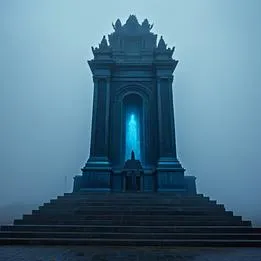
Monument Dream Meaning
A structure built to commemorate a person, event, or idea, often representing legacy, memory, and cultural identity.
Common Appearances & Contexts
| Context | Emotion | Interpretation |
|---|---|---|
| Discovering a monument | Awe | Encountering significant legacy. |
| Building a monument | Pride | Creating lasting impact. |
| Monument crumbling | Anxiety | Fear of forgotten history. |
| Defacing a monument | Anger | Rejecting imposed narrative. |
| Monument in fog | Confusion | Unclear historical memory. |
| Crowd at monument | Belonging | Shared cultural identity. |
| Abandoned monument | Melancholy | Lost or neglected past. |
| Monument glowing | Hope | Inspirational legacy. |
| Monument too large | Intimidation | Overwhelming authority. |
| Personal name on monument | Validation | Desire for recognition. |
| Monument moving | Unease | Shifting historical ground. |
| Monument as home | Security | Foundations in tradition. |
Interpretive Themes
Cultural Lenses
Jungian Perspective
View Context →Represents the Self archetype or a symbol from the collective unconscious, marking a point of individuation or connection to timeless human experience.
Freudian Perspective
View Context →Often a phallic symbol representing paternal authority, societal superego, or a desire for immortality and overcoming mortality anxiety.
Gestalt Perspective
View Context →The monument is an aspect of the self—perhaps a rigid belief, a proud achievement, or a fixed part of identity needing integration or reassessment.
Cognitive Perspective
View Context →A mental schema for memory consolidation, representing how the brain organizes and retrieves significant personal or cultural information.
Evolutionary Perspective
View Context →Relates to territorial marking, status display, and group cohesion mechanisms, serving functions of memory preservation and social bonding for survival.
East Asian Perspective
View Context →In traditions like Confucianism, represents filial piety and ancestral reverence; stupas in Buddhism mark sacred sites for enlightenment and memory.
South Asian Perspective
View Context →Ancient stupas, temples, and Ashokan pillars symbolize dharma, spiritual attainment, and imperial edicts, blending religious and historical commemoration.
Middle Eastern Perspective
View Context →Ziggurats, pyramids, and Islamic mausoleums like the Taj Mahal represent divine connection, royal legacy, and poetic immortality in art and architecture.
European Perspective
View Context →From Roman triumphal arches to war memorials, signifies conquest, national identity, and collective mourning, often reflecting classical ideals of permanence.
African Perspective
View Context →Great Zimbabwe, Egyptian pyramids, and standing stones often represent ancestral spirits, kingdom legitimacy, and cosmological alignment in ritual landscapes.
North American Perspective
View Context →Indigenous mounds and totems honor ancestors and nature spirits; modern monuments like Mount Rushmore reflect contested narratives of nation-building.
Latin American Perspective
View Context →Pre-Columbian pyramids (e.g., Teotihuacan) symbolize cosmic order; colonial churches and modern murals blend indigenous, European, and revolutionary memory.
Interpret Your Full Dream
Beyond this symbol, every dream carries a unique story. Share your dream for a personalized AI-powered interpretation.