The Dream of Paradise: A Map to the Exiled Self
The Somatic Echo
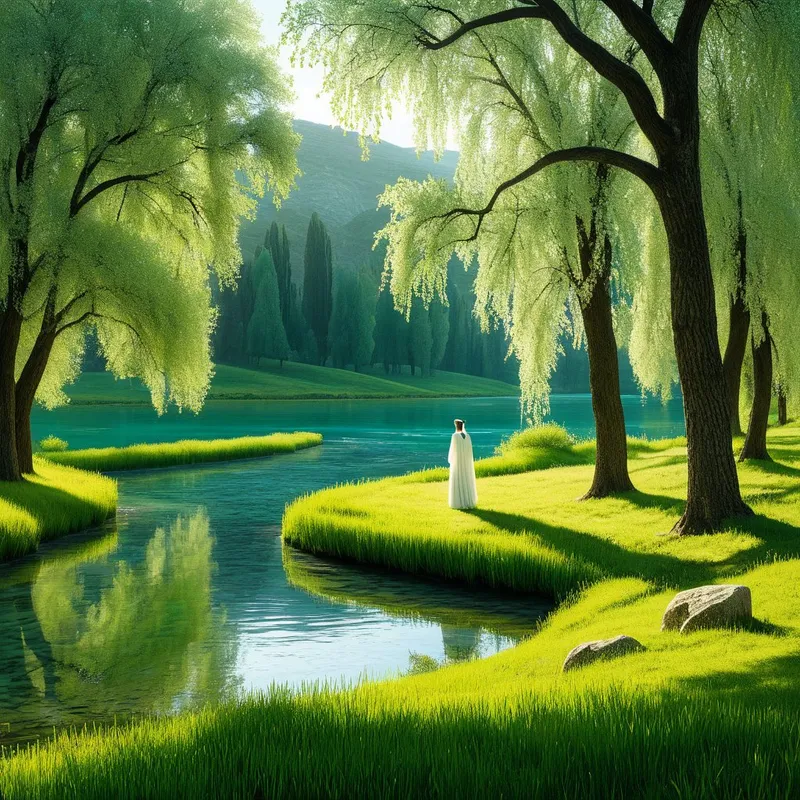
Before the mind paints the lush garden or the sun-drenched shore, the body knows paradise. It is a deep, cellular sigh of homecoming. The shoulders drop from a tension you forgot you carried. The breath finds a rhythm older than worry, a tidal flow in the chest. There is a warmth in the palms, a softening behind the eyes. It is not excitement, but a profound cessation—the silent hum of a system finally operating at its intended frequency. This is the somatic echo: the visceral memory of a state where effort and defense are obsolete. It is the feeling of a door, long sealed within the musculature, swinging open on oiled hinges. The mind will later furnish this space with images, but the initial signal is pure physiology—a whisper from the nervous system that says, This. This is how it is meant to be.
The Dreamer's Log (Case Vignette)
I stood in the ruins of an old server farm, all cold concrete and dead cables. In the center of the room, from a crack in the floor, grew a single tree made of light. Its roots were copper and its leaves were fragments of code that sang when they touched. I knew, with absolute certainty, that this was the only safe place left in the world, and that I had to protect its location with my life.
The dreamer’s paradise is not a retreat from the modern world, but its alchemical transmutation—finding the sacred, singing core within the very architecture of their perceived desolation.

The False Lead
A dream of paradise is not a simple wish-fulfillment fantasy, nor is it a spiritual bypass promising eternal bliss without cost. To interpret it as mere escapism is to commit a profound error. This is not the psyche daydreaming of a vacation. It is the psyche presenting its own completed blueprint. The terror of the paradise dream often lies in its perfection, which highlights, by stark contrast, the fractured nature of our waking reality. It is not a message about what you lack, but a direct experience of what you are, in your most fundamental, unpartitioned state. The grief that can follow upon waking is not for a lost Eden, but for the exiled parts of the self that remember how to live there.
Psychological Architecture
The paradise dream is an act of profound Shadow work disguised as a gift. It is the Self, in its wholeness, extending an invitation to the conscious ego. To accept is to begin the individuation process—not by battling monsters in the dark, but by reconciling with the brilliance you have been forced to disown. We exile parts of ourselves to survive: our boundless creativity becomes "impractical," our innate peace becomes "naive," our sensual joy becomes "indulgent." These exiled qualities do not die; they coalesce into an internal paradise, a psychic preserve. Dreaming of it is the preserve sending a beacon. The work is not to get to paradise, but to repatriate it—to allow the warmth, the safety, the effortless belonging you felt there to dissolve the internal borders you erected to keep those very feelings at bay. It is the slow, often painful, reintegration of splendor into your daily constitution.
Mythic Resonance
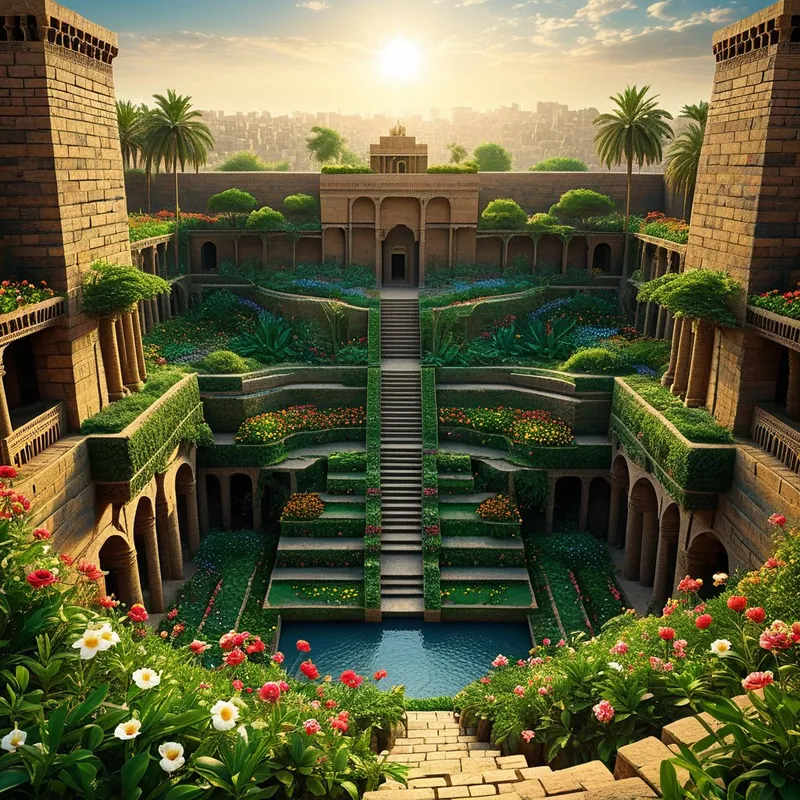
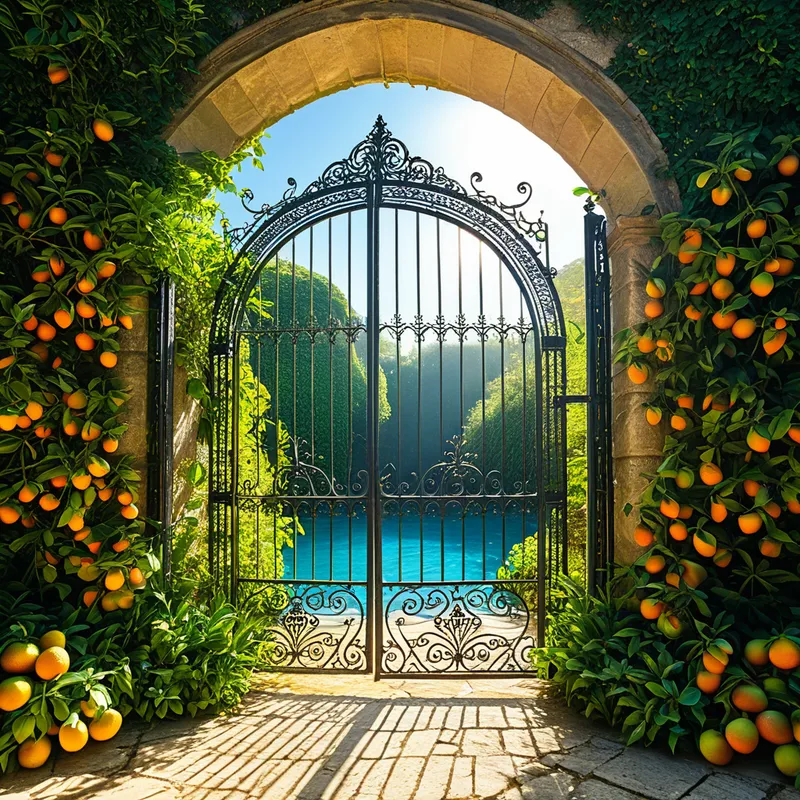
This dynamic echoes in the myth of the Hanging Gardens of Babylon, not as a lost wonder, but as a psychological structure. Legend says King Nebuchadnezzar built the gardens for a wife who longed for the green mountains of her homeland. The paradise was an architectural act of love, a container built to hold another's exiled sense of home. In our psyche, the Self builds these hanging gardens for our own orphaned inner figures—the parts of us that ache for a landscape we've forgotten. Similarly, the Garden of the Hesperides from Greek myth, with its golden apples guarded by a dragon, teaches that paradise is never unearned. The treasure is real, but it exists in dynamic tension with a protective, often fearsome force (our own defenses). The myth insists that the garden and the dragon are part of the same system; to integrate the paradise is to befriend the guardian.
Symbolic Nodes
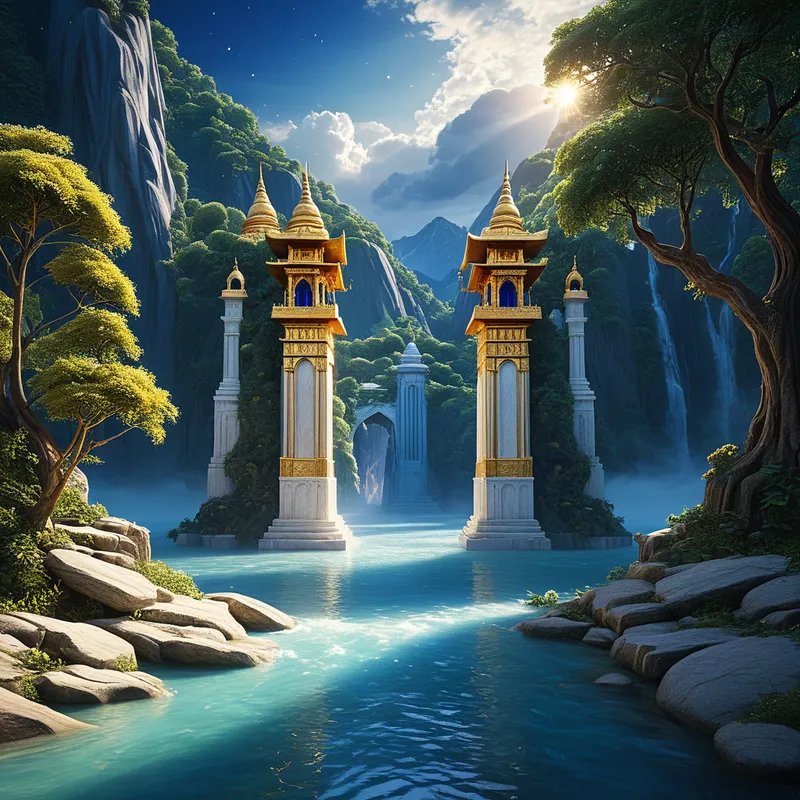
- Lush, Impossible Gardens: Where biology and technology, or order and wildness, fuse seamlessly.
- Sanctuary Rooms/Hidden Chambers: Discovered within familiar, mundane settings (a closet, a basement).
- Animals at Peace: Predators and prey resting together, or mythical beasts acting as guides.
- A Singular, Radiant Source: A tree, a pool, a crystal, or a machine emitting a benevolent, unifying light.
- Gates or Portals That Vanish/Reappear: Emphasizing the conditional and internal nature of the access.
Archetypal Resonance
The paradise dream is the sovereign call of The Innocent Archetype. Not the shadow innocent of denial, but the core Innocent in its full, empowered expression: the one who knows belonging as a birthright and operates from a foundation of inherent trust in the fabric of existence. The somatic echo—the deep sigh, the released tension—is the body remembering the Innocent's state of unarmored being. This archetype does not fight for paradise; it emanates from it, and its activation in the dream is an alchemical catalyst. It offers the potential to transmute the cynicism and hyper-vigilance of the adult ego back into a grounded, resilient faith—not in a perfect world, but in the fundamental okay-ness at the core of the self. The dream is the Innocent's map, showing the way back to the internal homeland.
The Alchemical Process
The alchemical transmutation here is From Exile to Embassage. The intense psychological heat is generated by the unbearable contrast: the perfect, felt reality of the dream against the fragmented reality of waking life. This pressure is not to be avoided; it is the crucible. The grief you feel upon leaving the dream is the solvent. The process is to let that grief dissolve the mental structures that insist paradise is "out there," lost, or only for the pure. Instead, you must perform the ultimate alchemical act: you appoint the exiled paradise as the internal ambassador of your wholeness. You grant that felt-sense of peace and belonging diplomatic immunity within your own psyche. It is no longer a memory to yearn for, but a living, internal presence that informs your negotiations with the world. You stop trying to return to the garden and start allowing its climate to regulate your internal weather.

The Integration Protocol
Question 1: In the dream, what one quality (e.g., safety, wonder, unity) was most palpable in my body? Where in my waking life have I felt even a 5% echo of that sensation recently?
Question 2: If the paradise in my dream required a guardian (like the dragon of the Hesperides), what part of my own personality currently acts as that guardian, and what is it trying to protect?
Question 3: What practical, daily rule or "law" of my current life would be completely null and void inside the logic of my dreamed paradise?
Action 1 (Somatic Anchoring): For one minute, three times a day, stop and recall the physical sensation of the dream (the sigh, the warmth, the lightness). Do not visualize the scene; just inhabit the feeling. Let it be a brief, somatic reset.
Action 2 (Creative Repatriation): Using any medium—a sketch, a collage, a piece of music, unstructured writing—create a "passport" or "diplomatic seal" for your exiled paradise. Let it be an abstract symbol that represents its essence. Place this where you will see it, as a reminder of its official status within you.
Action 3 (Ritual of Embassy): Choose a small, routine object (a mug, a pen, a doorknob). For one week, each time you touch it, let it be a momentary "handshake" with your internal ambassador. Let the object become a tactile anchor point for the paradise-state's presence in your mundane reality.
Final Validation
The ache you feel upon waking from paradise is not a sign of weakness, but a testament to your depth. It is the pain of a wholeness remembered, brushing against the partitions of a life built for survival. This grief is the most honest part of you confirming that the dream was real—not as a place, but as a state of your own being. Do not pathologize the longing; honor it as a divine homesickness for the self. The integration is not about erasing the contrast between dream and waking life, but about building a bridge of conscious breath, small rituals, and creative acts so that the ambassador of your wholeness can finally, and permanently, take up residence in the everyday. You are not failing to reach paradise; you are learning to let it live through you.