The Ideal City Myth Meaning & Symbolism
A vision of perfect harmony, where geometry, divinity, and human reason unite to create a celestial blueprint for the soul and society.
The Tale of The Ideal City
Listen, and let your mind’s eye see. Not a city of stone and mortar, but a city born of a sigh from the heart of the cosmos itself.
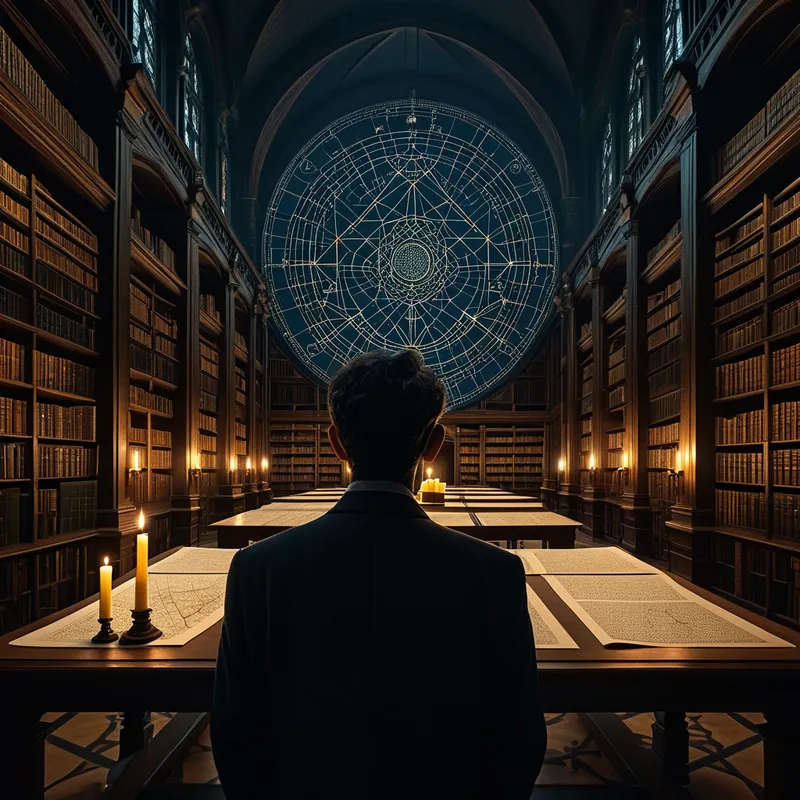
In the beginning, there was a longing—a divine discontent. The great Anima Mundi, gazing upon the scattered, striving works of humanity, felt a pang of celestial sorrow. The world was a beautiful chaos, a garden overgrown with both splendor and suffering. From this sorrow, a dream was spun, a vision so potent it demanded form. It was whispered into the ear of a sleeping philosopher, not as words, but as a perfect, silent geometry—a feeling of sublime proportion that vibrated in the very marrow of his soul.
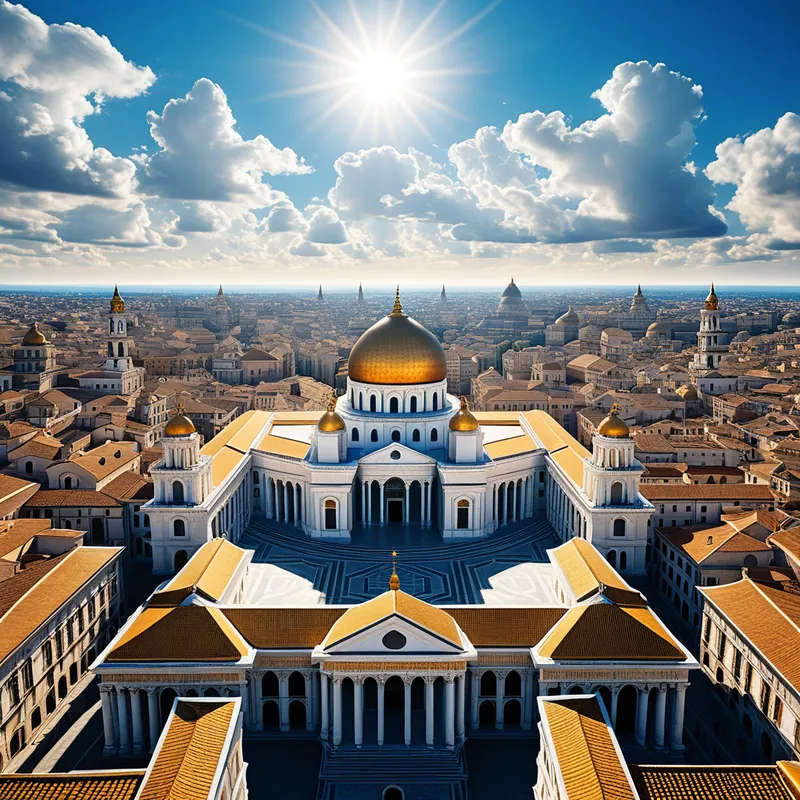
He awoke not to dawn, but to a memory of light. His name is lost, for he became merely the vessel. We shall call him the Dreamer. The vision haunted him. He could taste the cool, shadowless air of its plazas, smell the faint, clean scent of marble warmed by a rational sun. He saw streets that did not meander like streams, but flowed with the certainty of axioms, converging upon a central space where a temple stood—not to a god of thunder, but to Harmony itself. Its dome was not just a roof, but a perfect hemisphere, a echo of the celestial vault, inscribed with the silent music of the spheres.
The Dreamer took up his compass and straightedge, tools of divine law. He drew the first circle on virgin parchment, the primum mobile of his creation. But a vision is a jealous seed. It demanded not just a plan, but a place. The Dreamer journeyed, seeking the locus where earth consented to heaven. He found a vast, empty plain beneath a sky of profound blue, a blank slate awaiting the first stroke of cosmic grammar.
He laid the foundation stone at the exact center, a point containing all potential. As the first walls rose, perfectly perpendicular, a strange stillness fell. The wind itself seemed to pause, then change its course to flow along the new, ordained avenues. Sunlight, which had fallen randomly, now began to carve precise, elongated shadows that told the time not in hours, but in philosophical principles. The city was not built; it was unfolded, like a perfect flower from the bud of an idea.
Yet, as the last column was set upon the central temple, a profound silence descended. The city was complete, a masterpiece of proportion, a hymn in stone. But it was empty. Its perfect colonnades echoed only with the steps of the Dreamer. He stood in the vast, immaculate plaza and felt not triumph, but a terrifying question. The Ideal City was a mirror, and in its flawless surface, he saw only his own solitude, the immense gap between the blueprint and the breath of life. The myth ends here, not with a celebration, but with the Dreamer’s silent vigil, waiting in the perfect, uninhabited city for the first citizen to arrive—a citizen who must come from the imperfect world outside, bearing the messy, glorious, and chaotic gift of life itself.
Cultural Origins & Context
This is not a myth from antiquity, whispered around campfires. It is a myth of the waking mind, born in the studiolos and workshops of the 15th and 16th centuries. The “Ideal City” is a quintessential Renaissance dream, a collective vision articulated by architects like Leon Battista Alberti, artists like Piero della Francesca (whose enigmatic paintings of such cities survive), and philosophers steeped in the rediscovered works of Plato and Vitruvius.
It was passed down not through epic poetry, but through theoretical treatises, architectural drawings, and perspective paintings. Its tellers were humanists, who believed that through the application of reason, mathematics, and a deep study of classical antiquity, humanity could rebuild itself and its world in the image of a lost, perfect order. The myth functioned as a societal lodestar. In an age of political strife, plague, and religious upheaval, the Ideal City was a psychological anchor—a promise that chaos was not final. It was a blueprint for the perfect polis, the perfect prince’s realm, and, ultimately, the perfect human soul, all reflecting the orderly mind of a geometric God.
Symbolic Architecture
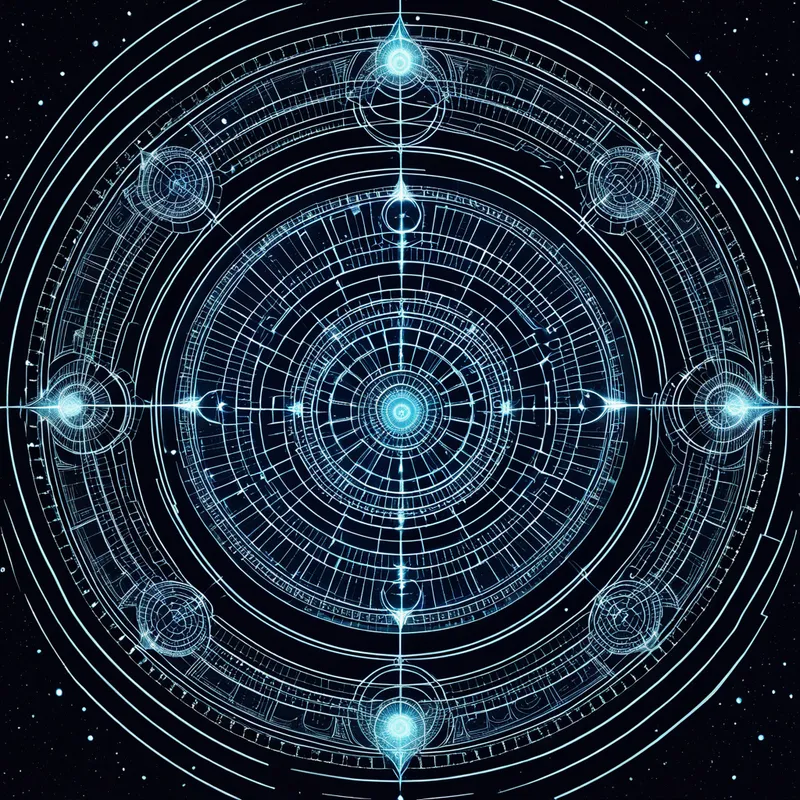
The Ideal City is not a place, but a state of being. Its straight streets symbolize the path of right reason, unswayed by passion or caprice. The central, domed temple represents the Nous, or the higher Self, from which all order radiates. The perfect proportions—the echoes of the Harmony of the Spheres—are the hidden syntax of the universe, made visible.
The city’s emptiness is its most profound symbol. It represents the terrifying gap between the ideal and the actual, the blueprint and the lived experience.
The myth’s central figure, the Dreamer-Architect, is the archetypal human consciousness attempting to impose order on the chaos of existence. He is reason, vision, and will. But his ultimate confrontation with the empty plaza is the crucial moment of kenosis—an emptying out. The perfect form, once achieved, reveals its own limitation: it is sterile without the infusion of the unpredictable, living spirit. The city is the Self, but a Self not yet inhabited by the full spectrum of the personality.
The Dreamer's Resonance
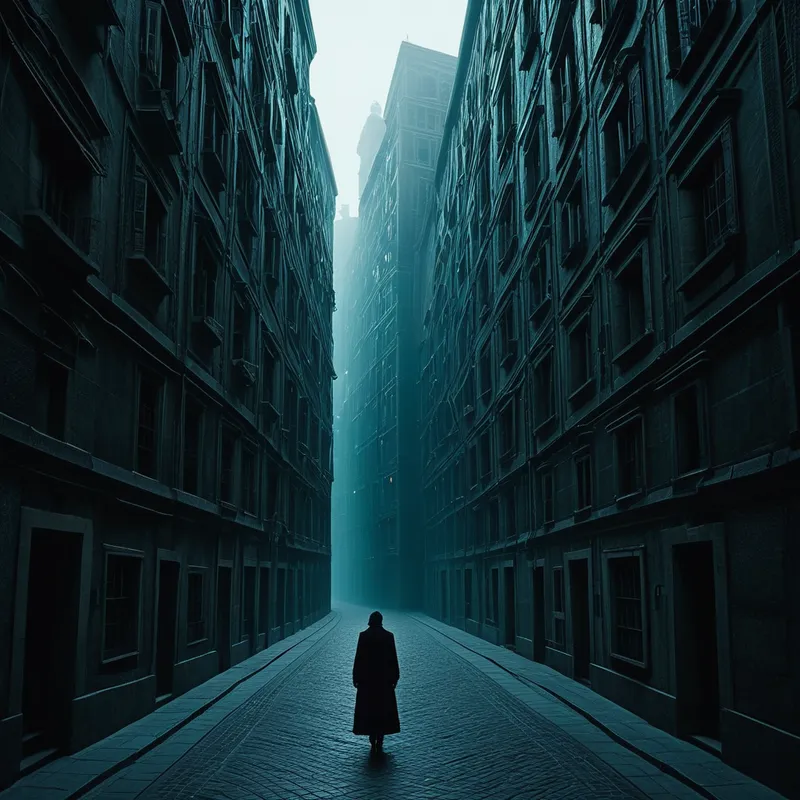
When this myth stirs in the modern unconscious, it manifests in dreams of stark, beautiful, yet unsettling places. One might dream of a brilliantly lit, empty museum; a silent, ultra-modist apartment with perfect lines; or a vast, geometric plaza under a too-perfect sky. The somatic feeling is often one of awe mixed with profound isolation, a chill in the spine amidst beauty.
Psychologically, this dream pattern signals a process of over-structuring. The dreamer is likely in a phase where they have constructed a perfect plan for their life—a career path, a relationship ideal, a self-image—based on pure logic, external models, or “shoulds.” The psyche is presenting the consequence: a life perfectly built, yet devoid of the messy, authentic, emotional, and instinctual “inhabitants” that make it alive. The dream is a warning from the soul that the pursuit of an external, flawless ideal can lead to a magnificent, but lifeless, inner landscape. The anxiety is the soul’s longing to move in.
Alchemical Translation
The alchemical process modeled here is not the nigredo of dissolution, but the albedo—the whitening, the purification into a pristine, ordered state. The Dreamer has successfully distilled the raw material of his experience into a pure, white crystal of intention. This is a necessary stage in individuation: creating a conscious structure, an ego strong enough to provide stability.
The transmutation occurs in the confrontation with the emptiness. The true gold is not the perfect city, but the courage to leave its gates and invite the shadow, the animal, the fool, and the lover inside.
The final, and most difficult, operation is the rubedo—the reddening. This is the infusion of the blood of life into the white stone. For the modern individual, this translates to the integration of what the perfect plan excludes: the flawed body, the irrational emotion, the creative mistake, the vulnerability of relationship. The Ideal City must be desecrated by life to become a home. One must allow the straight streets to develop a charming, unexpected curve, let ivy climb the perfect column, and hear the laughter of children—not just the echo of footsteps—in the plaza. The triumph is not in achieving static perfection, but in creating a dynamic, living order that can contain both the compass-drawn circle and the wild, beating heart. The citizen who finally arrives is the integrated Self, bearing the gift of wholeness.
Associated Symbols
Explore related symbols from the CaleaDream lexicon: